Published: October 26, 2023
In the rapidly evolving energy landscape, coal-to-liquid (CTL) technology has emerged as a critical pathway for converting abundant coal reserves into synthetic fuels, reducing dependence on crude oil imports and enhancing energy security. At the heart of any efficient CTL process lies the coal grinding mill, a specialized equipment responsible for pulverizing raw coal into fine powder with precise particle size distribution, which is essential for downstream gasification or liquefaction reactions. Liming Heavy Industry Co., Ltd., a pioneering manufacturer with over 30 years of expertise in crushing and grinding machinery, offers a comprehensive range of mills designed to meet the stringent requirements of coal-to-liquid applications. From vertical roller mills capable of handling large capacities to advanced Raymond and European-type mills for finer grinding, our solutions integrate drying, grinding, and classification in a single system, ensuring high efficiency, low energy consumption, and compliance with environmental standards. This article explores the critical role of coal grinding mills in CTL processes, the technological advantages of our flagship products, and practical considerations for selecting the right mill for your project.
The Role of Coal Grinding in Coal-to-Liquid Processes
Coal-to-liquid technology converts solid coal into liquid hydrocarbons through two primary routes: direct liquefaction (e.g., Bergius process) and indirect liquefaction (e.g., Fischer-Tropsch synthesis). Both routes demand coal feedstocks that are finely ground to a specific particle size, typically below 100 microns, to maximize surface area for reactions, ensure uniform heat and mass transfer, and optimize catalyst utilization. In direct liquefaction, coal powder is mixed with a solvent and hydrogen under high pressure and temperature; insufficient grinding can lead to incomplete conversion and lower yields. In indirect liquefaction, pulverized coal is gasified to produce syngas, requiring consistent particle size to maintain stable gasifier operation and minimize slagging issues.
The grinding process also plays a vital role in removing impurities. During pulverization, liberation of mineral matter from coal macerals facilitates downstream ash removal, reducing catalyst poisoning and equipment wear. Additionally, integrating drying with grinding allows handling of high-moisture coals typical of many deposits, preventing blockages and improving energy efficiency. Therefore, selecting the right coal grinding mill is not merely a matter of reducing particle size—it is a strategic decision that directly impacts overall plant economics, product quality, and environmental footprint.
Liming Heavy Industry’s Coal Grinding Solutions
Liming Heavy Industry Co., Ltd., headquartered in Zhengzhou’s HI-TECH Industry Development Zone and operating a 67,000 m² workshop in Shangjie Industrial Park, has been at the forefront of grinding technology since 1987. As a modern joint-stock company integrating research, manufacturing, and sales, we have developed several mill models tailor-made for coal-to-liquid operations. Below are the most relevant products, each designed to address specific capacity, fineness, and energy efficiency requirements.
LM Vertical Roller Mill: The Workhorse for Large-Scale CTL Plants
For coal-to-liquid projects requiring massive throughput, the LM Vertical Roller Mill stands out as the optimal solution. This mill integrates drying, grinding, powder selection, and conveying in a single compact unit, eliminating the need for separate drying systems and reducing auxiliary equipment footprint. With a capacity range of 10–400 t/h and input size up to 55 mm, the LM mill can handle the full spectrum of coal grades, from lignite to bituminous. Its automatic electric control system ensures stable operation and consistent product fineness (typically R0.08 ≤ 12%), which is critical for maintaining gasifier performance. The mill’s innovative milling device minimizes wear rates, extending service intervals and reducing maintenance costs—a crucial advantage for base-load CTL facilities.
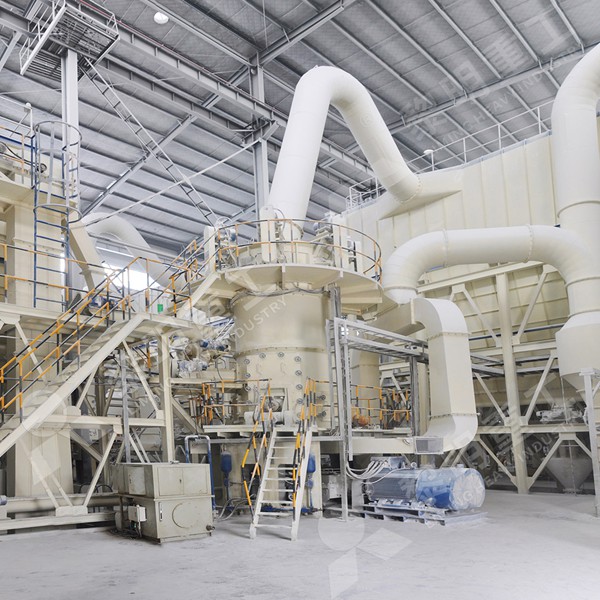
European Type Trapezium Mill (MTW): Precision Grinding for High-Value Products
When the coal-to-liquid process demands finer particle sizes with strict uniformity, the MTW European Type Trapezium Mill delivers. As the upgraded successor to traditional Raymond and pendulum mills, MTW incorporates patented trapezium grinding ring and roller geometry that increases grinding efficiency by 20–30% compared to legacy designs. With capacity from 3 to 55 t/h and input size up to 50 mm, this mill is ideal for mid-scale CTL projects or as a secondary grinder in integrated facilities. Its closed-loop pneumatic system, combined with a pulse dust collector, ensures dust emissions remain far below regulatory limits, meeting the strictest environmental standards. The MTW mill also offers rapid fineness adjustment (from 1.6 mm down to 0.045 mm), allowing operators to switch between coal types or product specs with minimal downtime.
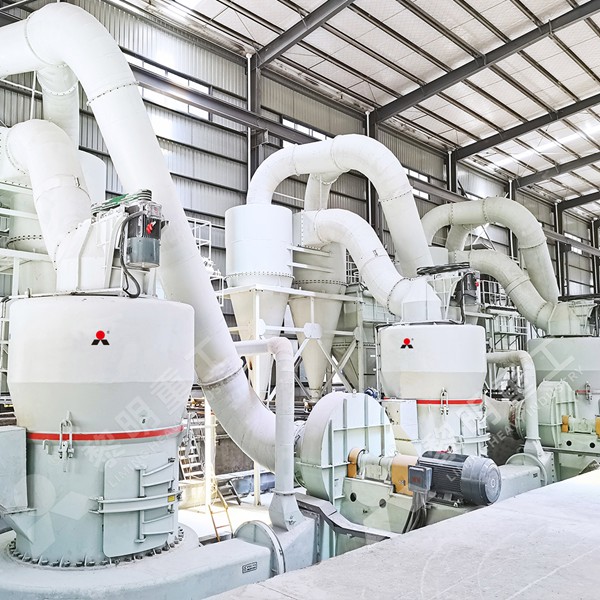
Raymond Mill and Micro Powder Mill: Specialized Options
For smaller CTL pilot plants or niche applications, the traditional Raymond Mill remains a reliable choice, with capacity of 1.2–4.5 t/h and fineness adjustable between 44–613 μm. Its robust construction and low operational complexity make it suitable for coals with below 6% moisture. On the other hand, the MW Micro Powder Mill excels when ultra-fine grinding (to 5 μm) is required, such as for coal slurry preparation in direct liquefaction catalysts. Its medium-speed design with dozens of rollers against a raceway ring achieves energy-efficient superfine grinding, though at lower capacities (0.5–25 t/h). Both mills benefit from Liming’s advanced metallurgy and wear parts, extending service life in abrasive coal environments.
Ball Mill: The Traditional Contender
While ball mills are less common in modern CTL due to higher energy consumption, they remain relevant in certain coal preparation circuits, especially where simultaneous grinding and blending is required. Liming’s ball mill, with capacity 0.65–50 t/h and input size ≤25 mm, offers reliable performance for cement, coal, and desulfurization applications. Its horizontal rotating drum with steel balls provides impact and attrition grinding, and the discharge board ensures continuous operation. For CTL plants with existing ball mill infrastructure, our company provides retrofit services for improved efficiency.
Key Considerations for Selecting a Coal Grinding Mill for CTL
Choosing the appropriate grinding mill for a coal-to-liquid project involves evaluating several factors:
- Feed coal properties: moisture content, Hardgrove Grindability Index (HGI), abrasiveness, and ash fusion temperature dictate the mill type and wear protection needs.
- Required capacity: Larger plants naturally gravitate toward vertical roller mills, while smaller facilities may find Raymond or ball mills more cost-effective.
- Target fineness: Fischer-Tropsch synthesis may need 80–90% passing 75 μm; direct liquefaction often requires even finer grinding under 50 μm, favoring MTW or MW mills.
- Energy efficiency: Vertical roller mills typically consume 30–50% less energy than ball mills for the same throughput, translating into significant operational savings.
- Environmental regulations: Modern mills with pulse dust collectors and closed-loop air systems ensure compliance with emission standards for particulate matter and noise.
Liming Heavy Industry provides comprehensive technical support, including material testing, process design, and after-sales service, to help clients select the mill configuration that optimizes return on investment.
Conclusion
Coal grinding mills are indispensable for coal-to-liquid technology, enabling efficient conversion of solid coal into synthetic fuels. Liming Heavy Industry’s portfolio—from the high-capacity LM Vertical Roller Mill to the precision MTW and versatile Raymond mills—offers solutions that balance throughput, fineness, energy consumption, and environmental performance. With decades of engineering experience, a strong scientific research team, and a commitment to innovation, we empower CTL operators worldwide to achieve lower production costs and higher product quality. As the energy transition continues, our grinding mills will remain a cornerstone of clean coal utilization technologies.
Frequently Asked Questions
- Q: What is the typical coal fineness required for a coal-to-liquid gasifier?
A: For most Fischer-Tropsch and gasification systems, the target is 80–90% passing 75 μm (200 mesh). Direct liquefaction often requires 90% passing 50 μm or finer, achievable with our MTW or MW mills. - Q: Can the LM Vertical Roller Mill handle high-moisture coals common in CTL projects?
A: Yes, the LM mill integrates a drying system that accepts feed coal with moisture up to 15–20% by utilizing hot gas from the process, pre-drying the material during grinding without additional equipment. - Q: How does Liming Heavy Industry support mill maintenance in remote CTL plant locations?
A: We provide comprehensive spare parts packages, remote monitoring options, and on-site training programs. Our global service network ensures rapid response for emergency repairs and routine inspections. - Q: What is the typical lifespan of grinding rollers and liners in an MTW mill processing bituminous coal?
A: With proper operation and our wear-resistant materials (e.g., high-chromium alloy), roller and ring lifespan ranges from 3,000 to 8,000 operating hours, depending on coal abrasiveness. We offer refurbishment services to extend component life. - Q: Are your mills compliant with International Electrotechnical Commission (IEC) safety standards for coal grinding?
A: Absolutely. All our mills are designed with explosion-proof electrical components, inert gas injection options, and pressure relief panels to mitigate coal dust explosion risks, meeting IEC and ATEX guidelines.


