2025-04-09
Liming Heavy Industry Co., Ltd., a pioneer since 1987 in manufacturing large and medium-sized crushing and grinding equipment, presents a comprehensive suite of high density barite powder making machines designed to meet the rigorous demands of modern mineral processing. Our state-of-the-art machinery, including LM Vertical Roller Mill, Raymond Mill, MTW European Type Trapezium Mill, MW Micro Powder Mill, and Ball Mill, delivers exceptional performance in grinding barite to high density specifications, with capacities ranging from 0.5 T/H to 400 T/H and fineness adjustable from 44 μm down to ≤5 μm. These systems integrate advanced features such as automatic electric control, pulse dust collection, and closed-circuit air flow, ensuring energy efficiency, environmental compliance, and superior product consistency. With over three decades of innovation, a headquarters spanning 80,000 m² in Zhengzhou’s HI-TECH Zone, and an additional 67,000 m² workshop, Liming Heavy Industry stands as a global leader in machinery manufacturing, committed to elevating your barite grinding operations through reliable, high-output solutions.
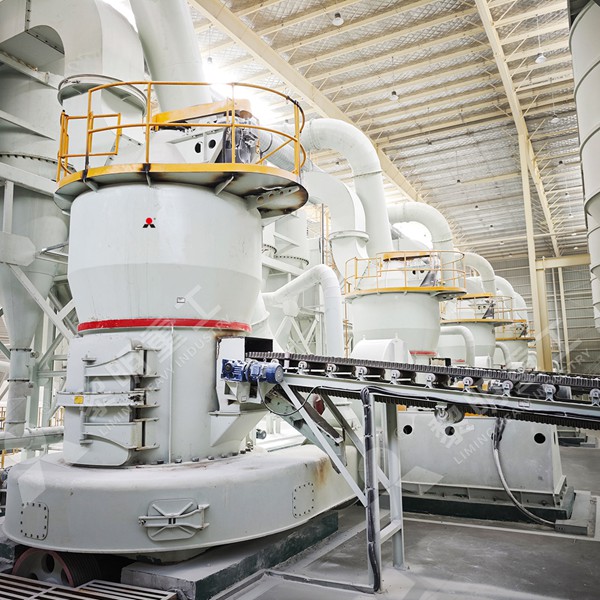
The high density barite powder making machine category at Liming Heavy Industry encompasses multiple grinding systems, each optimized for specific throughput, fineness, and application requirements. Barite, a barium sulfate mineral (BaSO4), is widely used in oil and gas drilling as a weighting agent to control formation pressures and prevent blowouts, as well as in paints, plastics, and radiation shielding. Achieving high density (>4.2 g/cm³) requires precise grinding to a uniform particle size distribution, minimizing fines while maintaining bulk density. Our machines excel in this area, utilizing innovative milling mechanisms such as roller-ring contact, centrifugal force grinding, and ball impact to produce barite powder with consistent specific gravity. For instance, the MTW European Type Trapezium Mill, an upgrade of traditional Raymond and pendulum mills, delivers capacities of 3-55 T/H with input sizes of 30-50 mm, ideal for large-scale barite processing. Its patented technology ensures stable performance and low energy consumption, while the integrated separator classifies particles, allowing only those meeting fineness criteria (613-44 μm) to pass, thus maintaining density targets. Similarly, the LM Vertical Roller Mill, with its drying, grinding, and conveying integration, handles barite with high moisture content, achieving capacities up to 400 T/H and input sizes up to 55 mm, making it suitable for cement and chemical industries where high-density barite is critical.
Our Raymond Mill, a longstanding workhorse in mineral processing, grinds barite of Mohs hardness under 7 and humidity below 6% to fineness between 613 μm and 44 μm, at capacities of 1.2-4.5 T/H. While lower in throughput compared to the LM or MTW mills, it remains a reliable choice for medium-scale operations, offering simplicity and ease of maintenance. For superfine barite powder, the MW Micro Powder Mill stands out, absorbing advanced Swedish grinding technology to achieve fineness up to d97 ≤ 5 μm (equivalent to 325-3250 mesh). Its medium-speed micro-grinding action, driven by a reducer that rotates dozens of rollers against the raceway ring, produces ultra-fine particles ideal for high-density applications in plastics and rubber fillers. The pulse precipitator ensures dust-free operation, aligning with stricter environmental norms. Each machine in our lineup—from the ball mill for large-volume beneficiation with capacities up to 50 T/H, to the European-type grinding mills for specialized non-metallic mineral powder making—incorporates features to prevent over-grinding, which is crucial for maintaining barite particle density. The closed-circuit systems recycle air flow and collect finished products via pulse dust collectors, minimizing waste and enhancing yield. Liming’s commitment to scientific research, with a mature team tackling industry technology frontiers, ensures these machines continue to evolve, incorporating automation and energy-saving designs that reduce operational costs while maximizing output quality. Whether your barite powder targets drilling mud densities of 4.2-4.5 g/cm³ or finer grades for industrial fillers, our equipment delivers precise control over particle size distribution, enabling you to meet stringent customer specifications.
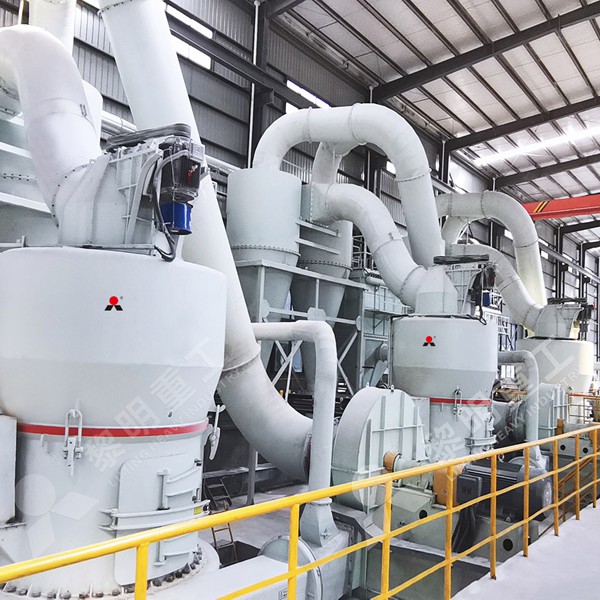
The working principles behind these high density barite powder making machines emphasize efficiency and adaptability. In the MTW Trapezium Mill, for example, big barite lumps are first crushed by a jaw crusher to the required size (30-50 mm), then fed via a variable-frequency belt feeder into the mill. Inside, materials are ground between rings and rollers, and particles move upward with air flow. Those that cannot pass the separator fall back for re-grinding, while approved particles are collected as finished product. Air returns to the blower in a closed loop, conserving energy and reducing emissions. This system ensures minimal loss of barite’s specific gravity, as grinding is gentle yet effective. For the MW Micro Powder Mill, small material crushed by a hammer crusher is elevated to a hopper, then fed via vibrating feeder to the central turnplate. Centrifugal force pushes material to the raceway ring, where dozens of rollers rotate to crush it into fine powder. The adjustable separator allows precise final fineness control, vital for high-density barite applications requiring 325 mesh to 3250 mesh. Our Ball Mill, a horizontal rotating device, uses steel balls lifted by centrifugal force to impact and grind barite, achieving capacities from 0.65 to 50 T/H with input sizes under 25 mm. This is ideal for bulk grinding where moderate fineness suffices, such as in construction materials or desulfurization. Each system’s component—whether jaw crusher, vibrating feeder, electric cabinet, or pulse dust collector—is engineered for durability and easy maintenance, supported by Liming’s 30-plus years of manufacturing expertise. Our modern scientific management system ensures precision manufacturing, from sheet metal fabrication to final assembly at our Zhengzhou headquarters and Shangjie workshop. This infrastructure, combined with a focus on production-learning-research integration, positions Liming Heavy Industry as a trusted partner for global barite processing companies seeking reliable, high-density powder making solutions. With our machines, you gain not only equipment but also decades of applied knowledge to optimize your grinding processes.
Frequently Asked Questions (FAQs)
Q1: Which Liming machine is best for producing high density barite powder for oil drilling applications?
Our MTW European Type Trapezium Mill is highly recommended due to its capacity range of 3-55 T/H and fineness control (613-44 μm), which maintains barite density above 4.2 g/cm³. Its stable performance and patented technology ensure consistent particle size distribution critical for drilling mud weighting.
Q2: Can your high density barite powder making machine handle barite with moisture content?
Yes, the LM Vertical Roller Mill is ideal for moist barite as it integrates drying, grinding, and conveying. It can handle input sizes up to 55 mm and capacities up to 400 T/H while achieving required density through its advanced airflow system.
Q3: What fineness can I achieve with the MW Micro Powder Mill for barite?
The MW Micro Powder Mill can produce barite powder fineness down to d97 ≤ 5 μm (3250 mesh). This ultra-fine grade is suitable for specialized high-density applications in plastics and rubber, with adjustable settings from 325 mesh to 3250 mesh.
Q4: How does Liming ensure environmental compliance during barite grinding?
All our machines, especially the MTW and MW mills, are equipped with pulse dust collectors that capture fine particles, meeting national environmental standards. The closed-circuit air flow system further reduces emissions and noise, ensuring greener production.
Q5: What input size does the Ball Mill require for barite powder making?
The Ball Mill requires an input size of ≤ 25 mm, with capacities ranging from 0.65 to 50 T/H. It is suitable for bulk barite grinding where high throughput is needed, such as in beneficiation and construction material production.


