Summary: Dolomite is an important carbonate mineral used in cement raw mix to supply calcium and magnesium oxide. Grinding dolomite for cement requires a mill that can produce a consistent, fine powder while handling moderate abrasion and variable moisture. Liming Heavy Industry Co., Ltd. offers a complete range of grinding solutions, including the LM Vertical Roller Mill, MTW European Type Trapezium Mill, Raymond Mill, MW Micro Powder Mill, and Ball Mill, with capacities from 0.5 to 400 t/h. This article reviews the role of dolomite in cement raw mix, key grinding challenges, equipment options, process integration, and practical optimization tips. It also explains how Liming's engineering experience since 1987 can help cement producers achieve stable operation, high output, and environmental compliance.
Why Dolomite Is Used in Cement Raw Mix
Dolomite, chemically expressed as CaMg(CO3)2, is a double carbonate of calcium and magnesium. In cement production, it is included in the raw mix to adjust the magnesia content of clinker and to affect the burning behavior of the kiln feed. A controlled amount of MgO can act as a flux and improve liquid-phase formation, which helps clinker nodulization. Too much free MgO, however, may cause expansion and unsoundness in concrete. For this reason, the raw mix must be proportioned accurately and ground to a uniform fineness so that dolomite particles are evenly distributed. If coarse or segregated dolomite particles remain, they can create local MgO-rich zones and weaken the final product.
The role of the grinding mill is therefore not only to reduce particle size but also to provide a homogeneous raw meal. A stable particle size distribution ensures that the kiln feed reacts predictably, lowers the risk of ring formation or coating problems, and helps maintain clinker quality. This is why a dolomite grinding mill for cement raw mix must be selected with care, based on capacity, feed size, moisture, abrasiveness, and target fineness.
Key Grinding Challenges for Dolomite
Dolomite has a hardness of about 3.5 to 4 on the Mohs scale and a specific gravity of roughly 2.85. It is harder and more abrasive than soft limestone, but not as difficult as quartz. Still, repeated grinding causes wear on rollers, grinding rings, tables, and classifiers. If the raw material has surface moisture, the mill must be able to dry and grind in a single operation. If the target fineness is very high, specific energy consumption increases and the mill may need internal classification to avoid over-grinding.
- Abrasion: Dolomite particles can wear grinding elements, so the mill should use wear-resistant materials and offer easy maintenance access.
- Moisture: Damp dolomite can cause sticking in feeders and mill inlets. A drying-capable mill such as the LM vertical roller mill or MTW trapezium mill uses hot gas to remove surface moisture.
- Fineness stability: Cement raw meal is often controlled by residue on a 90-micron or 200-micron sieve. The mill separator must be precise and adjustable.
- Capacity range: A large cement line may need 100 to 400 t/h of raw meal, while a small plant or additive station may need only 1 to 20 t/h. Liming offers products that cover both extremes.
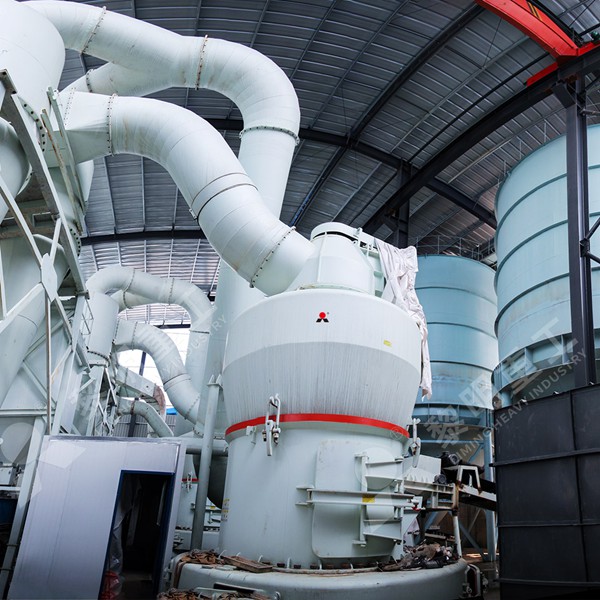
Mills for Dolomite Grinding in Cement Raw Mix
Liming Heavy Industry has manufactured grinding equipment for more than three decades. For dolomite raw mix preparation, the following machines are available.
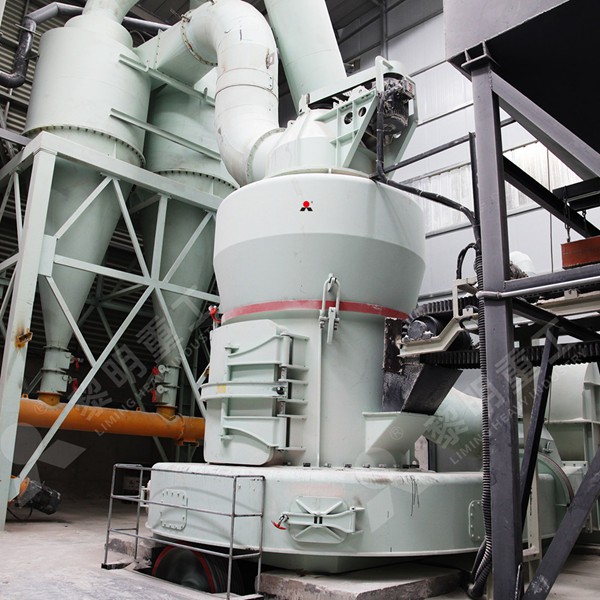
LM Vertical Roller Mill
The LM vertical roller mill is a large-capacity solution that integrates drying, grinding, powder selection, and conveying in one unit. It uses a new milling device and an automatic electric control system. The machine is widely used in cement, electricity, metallurgy, chemical, and non-metallic mineral industries, with a focus on non-metallic minerals, coal, and slag. Capacity is 10 to 400 t/h and input size is 30 to 55 mm. For a modern cement plant, the LM vertical mill produces a stable raw meal and consumes less power than a conventional ball mill. It is able to use hot gas to dry feed materials, which is valuable when dolomite is stored outdoors or has high surface moisture.
MTW European Type Trapezium Mill
The MTW European Type Trapezium Mill is the upgraded product of the traditional Raymond mill and pendulum mill. It has patented technology, stable performance, high productivity, energy saving, and environmental protection. Capacity is 3 to 55 t/h and input size is 30 to 50 mm. The grinding system includes a jaw crusher, vibrating feeder, hopper, mill, separator, air blower, dust collector, pipe, powder collector, and electric cabinet. Large lumps are crushed by the jaw crusher, then fed evenly by a variable-frequency belt feeder into the mill. Materials are ground between the ring and rollers, lifted by air flow, and separated. Oversize particles fall back for another grinding cycle, while fine particles are collected as finished product. The air loop is closed, and a pulse dust collector keeps emissions low. For medium-sized cement raw mix projects, the MTW mill offers a good balance of capacity and fineness.
Raymond Mill
The Raymond mill is a conventional grinding machine suitable for non-flammable and non-explosive minerals with a Mohs hardness below 7 and humidity under 6%. Output fineness can be set between 613 and 44 microns, which covers the particle sizes commonly used for cement raw mix. Capacity is 1.2 to 4.5 t/h and input size is 15 to 25 mm. Raymond mills are often used in small plants or for preparing separate mineral additives. They are easy to operate and maintain, and they provide a cost-effective option for lower throughputs.
MW Micro Powder Mill
The MW Micro Powder Mill, also known as a medium-speed micro-grinding mill, absorbs advanced Swedish grinding technology and is suitable for superfine powder processing. The finished product can reach d97 less than or equal to 5 microns, and fineness is adjustable from 325 mesh to 3250 mesh. Capacity is 0.5 to 25 t/h and input size is 10 to 20 mm. In cement works, the MW mill is not usually the primary raw mill, but it can be used to prepare fine dolomite powder for blended cement, concrete admixtures, or special filler applications. With a pulse precipitator, the production process is greener and more environmentally friendly.
Ball Mill
The ball mill is one of the most common grinding machines in the cement industry. It is a key piece of equipment used after materials are crushed, and it can grind all kinds of ores and other materials. Capacity is 0.65 to 50 t/h and input size is less than or equal to 25 mm. The ball mill is a horizontal rotating device driven by an outer gear. Materials enter the grinding chamber through a quill shaft and are impacted by steel balls lifted by the rotating barrel. The ground material is then discharged through the discharge board. Ball mills are reliable and flexible, but their energy efficiency is generally lower than that of a vertical roller mill. For cement plants that already operate a ball mill, it can still produce an acceptable dolomite raw mix, especially when the project scale is moderate.
Process Flow and System Integration
All Liming grinding systems follow a similar process concept. Raw dolomite is first crushed by a jaw crusher or hammer crusher to match the mill input size. The crushed material is transported by elevator to a hopper, then fed by a vibrating feeder or variable-frequency belt feeder into the mill. Inside the mill, material is compressed, sheared, and ground by the grinding elements. A stream of air carries the ground particles upward to the separator. Particles that reach the target fineness pass through the separator and are collected in a dust collector or powder collector. Oversize particles return to the grinding area for another pass. The air circulation is closed, which helps save fan energy and contains dust.
Practical Tips for Optimizing Dolomite Grinding
In my experience, the best results come from looking at the whole grinding circuit, not just the mill. Here are some practical points:
- Control feed size. Pre-crush dolomite to the input size range of the selected mill. This protects the grinding elements and keeps throughput stable.
- Manage moisture. If the dolomite is wet, use the drying ability of the mill. For LM and MTW, hot gas can be drawn through the mill. For Raymond and ball mills, pre-drying may be required.
- Set the separator correctly. A higher separator speed gives a finer product, but it also reduces mill output. Test the raw mix and adjust to the required residue.
- Maintain a stable material bed. In vertical mills, a stable bed absorbs vibration and improves grinding efficiency. Check the dam ring height and keep the grinding pressure properly adjusted.
- Inspect wear parts regularly. Rollers, rings, liners, and scraper blades will wear over time. Scheduled inspections prevent emergency stops and keep product quality consistent.
- Keep the system airtight. False air reduces air flow efficiency and can increase dust emission. Check pipes, flanges, and inspection doors periodically.
- Use automatic control. Liming mills are equipped with automatic electric control systems that help maintain a constant feed rate, grinding pressure, and differential pressure.
Energy and Environmental Benefits
Cement producers are under pressure to reduce energy consumption and dust emissions. A modern grinding mill can help in both areas. The LM vertical roller mill uses a compact grinding bed and internal classification to minimize over-grinding. The MTW European mill operates in a closed air circuit and is equipped with a pulse dust collector, complying with national environmental standards. The MW micro powder mill includes a pulse precipitator for cleaner production. By selecting an energy-efficient mill and keeping the system well maintained, cement plants can lower their specific kilowatt-hours per ton of raw meal and reduce carbon emissions associated with grinding.
Why Choose Liming Heavy Industry
Liming Heavy Industry Co., Ltd. was founded in 1987 and mainly manufactures large and medium-sized crushing and grinding equipment. It is a modern joint-stock company combining research, manufacturing, and sales. The headquarter is located in the HI-TECH Industry Development Zone of Zhengzhou and covers 80,000 square meters. Another workshop in Shangjie Industry Park covers 67,000 square meters. Over the past 30 years, the company has followed a modern scientific management system, precision manufacturing, and continuous innovation. It has become a leader in the domestic and overseas machinery manufacturing industry.
Liming also carries out a strategy of scientific research and development focused on improving product competitiveness. With a mature research team, the company develops products at the technological frontier of the industry. Whether you need a single mill or a complete dolomite grinding system, Liming can provide engineering support, equipment selection, installation guidance, and after-sales service.
Conclusion
Dolomite is a useful raw mix component in cement production, but it must be ground correctly to avoid quality problems and excessive energy costs. The ideal mill depends on the scale of the plant, the moisture of the feed, the required fineness, and the existing process layout. Liming Heavy Industry offers a broad portfolio, from the high-capacity LM vertical roller mill to the medium-capacity MTW trapezium mill, the compact Raymond mill, the superfine MW micro powder mill, and the classic ball mill. With decades of experience and a complete engineering system, Liming can help cement producers improve their dolomite raw mix preparation and build a more efficient, sustainable operation.
Frequently Asked Questions
1. What is the best dolomite grinding mill for cement raw mix?
There is no single answer for every plant. For large cement lines, the LM vertical roller mill is usually the most efficient because it combines drying, grinding, and classification in one system. For medium output, the MTW European Type Trapezium Mill is a reliable choice. For small capacity, a Raymond mill or ball mill may be more suitable.
2. Can the LM vertical roller mill handle moist dolomite?
Yes. The LM vertical roller mill is designed to dry and grind in one unit. Hot gas can be introduced into the mill to remove surface moisture from dolomite while it is being ground, which is a major advantage for cement raw mix preparation.
3. What fineness should dolomite be ground to for cement raw mix?
Cement raw meal fineness is often checked by the residue on a 90-micron or 200-micron sieve. The exact target depends on the kiln system and raw mix design. Liming mills have adjustable separators that can produce different fineness levels to match the process requirement.
4. Does Liming provide a complete dolomite grinding system?
Yes. A complete system can include a jaw crusher, vibrating feeder, hopper, mill, separator, air blower, dust collector, pipes, powder collector, electric control cabinet, and motors. Liming can design the system according to the customer's raw material conditions and production goals.
5. How can we reduce energy consumption during dolomite grinding?
Important steps include controlling feed size, minimizing moisture to the extent possible, maintaining a stable material bed, avoiding over-grinding, keeping the system airtight, and choosing an energy-efficient mill such as the LM vertical roller mill. Regular maintenance of wear parts and automatic process control also help reduce energy use.


