Published: April 27, 2026
Summary: Dolomite is more than a common roadstone. It is one of the essential minerals for magnesia production, and the efficiency of a magnesia plant often starts with the grinding mill. A well-chosen dolomite grinding mill determines feed uniformity, thermal reactivity, energy consumption and final product quality. This article explains why dolomite grinding matters for magnesia production, reviews the Liming Heavy Industry grinding equipment options, and offers practical selection guidance for plant operators and project engineers.
Why Dolomite Grinding Matters for Magnesia Production
Dolomite is a calcium magnesium carbonate mineral whose chemical formula is CaMg(CO3)2. During magnesia production, dolomite is heated to decompose the carbonate into calcium oxide and magnesium oxide. The particle size of the dolomite feed has a direct effect on calcination speed, gas release and reactivity of the produced magnesia. If the feed is too coarse, the cores may remain undercalcined. If the feed is too fine, dust loss may increase. Therefore, the grinding process must be controlled to produce a stable particle size distribution. In short, the dolomite grinding mill is not auxiliary equipment; it is the decision point that shapes every downstream reaction.
Where Does the Grinding Mill Sit in the Plant
A typical magnesia production line starts with mining or receiving raw dolomite. The material first passes through a jaw crusher to reduce large rocks to a size that the mill can accept. For Liming mills, this can mean an input size of 10 mm to 55 mm depending on the model. The crushed dolomite is then fed into a grinding mill, either directly or through a vibrating feeder and hopper. The mill produces fine dolomite powder, which is transported to a calcination kiln or reactor. After calcination, the material may be further processed to light burned magnesia, dead burned magnesia, or high-purity magnesia. In some flowsheets, the same mill can also grind the calcined magnesia product to the required sales fineness.
Technical Challenges in Dolomite Grinding
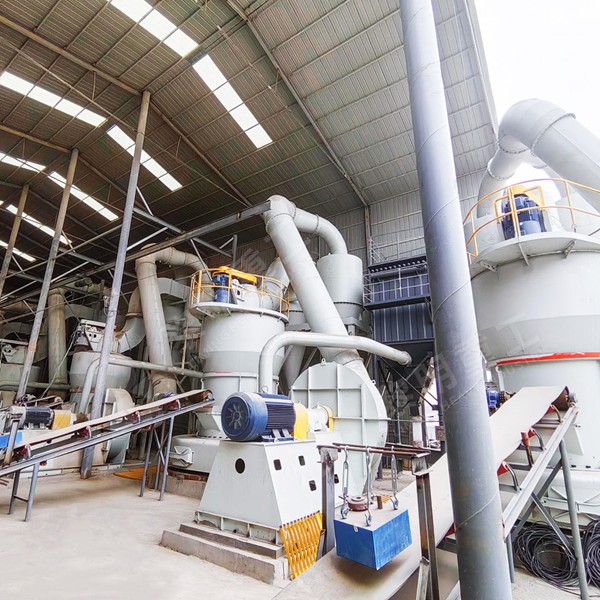
Dolomite has a hardness of about 3.5 to 4 on the Mohs scale. It is not extremely hard, but it is abrasive. The grinding equipment must therefore be built with wear-resistant parts. Moisture is another factor. When dolomite is stored outdoors, its surface moisture can rise; most Raymond and trapezium mills can handle materials with less than 6% moisture. If the moisture is higher, a vertical roller mill with integrated drying may be a better choice. Another challenge is the required fineness. In magnesia production, common target sizes are around 100 to 200 mesh, but some downstream processing requires 325 mesh or even finer. Finally, the grinding system must comply with environmental standards. Fine dolomite dust is easy to generate, so pulse dust collectors and closed-loop air systems are necessary.
Liming Heavy Industry Grinding Mills for Dolomite and Magnesia
Liming Heavy Industry Co., Ltd. was founded in 1987 and is a modern joint-stock company integrating research, manufacturing and sales. The company mainly produces large and medium-sized crushing and grinding equipment. Its headquarters is in the HI-TECH Industry Development Zone of Zhengzhou, covering 80,000 square meters, and it also operates a 67,000-square-meter workshop in the Shangjie Industry Park. Over the past three decades, the company has focused on scientific management, precision manufacturing and continuous innovation, which has made its grinding equipment widely used in domestic and overseas mineral processing industries.
LM Vertical Roller Mill
For large-scale dolomite grinding, the LM Vertical Roller Mill is often the first choice. It integrates drying, grinding, powder selection and conveying in one unit. The LM mill has a capacity of 10 to 400 tons per hour and accepts feed sizes of 30 to 55 mm. In magnesia production, this is suitable when the plant needs continuous feed to a large rotary kiln or multiple shaft kilns. The automatic electric control system makes operation stable, and because the mill uses roller pressure to grind material, the energy consumption is usually lower than in a ball mill with the same capacity.
MTW European Type Trapezium Mill
If the required output is in the medium range, the MTW European Type Trapezium Mill is a strong candidate. It is the upgraded product of traditional Raymond and pendulum mills. The MTW mill has a capacity of 3 to 55 tons per hour and accepts feed sizes of 30 to 50 mm. Its patented technology and stable performance make it suitable for large-scale non-metallic mineral powder making, including dolomite grinding for magnesia production. The system can be arranged with a jaw crusher, vibrating feeder, hopper, dust collector, pipe, powder collector and electric cabinet. In this closed system, the air flow is recycled through the separator and air blower, helping to reduce dust emission and energy loss.
Raymond Mill
The Raymond Mill remains a practical solution for smaller magnesia production units or pilot plants. It is suitable for non-flammable and non-explosive materials under 7 Mohs hardness and less than 6% humidity. Its output fineness is between 613 and 44 microns, which covers a wide range of dolomite powder requirements. With a capacity of 1.2 to 4.5 tons per hour and an input size of 15 to 25 mm, the Raymond mill is easy to operate and simple to maintain.
MW Micro Powder Mill
For magnesia product that requires superfine powder, the MW Micro Powder Mill is a good option. This medium-speed micro-grinding mill absorbs advanced Swedish grinding technology. It can produce powders up to d97 not larger than 5 microns, with fineness adjustable from 325 mesh to 3250 mesh. Capacity is 0.5 to 25 tons per hour and the input size is 10 to 20 mm. A pulse precipitator is equipped as standard, making the production process greener and more acceptable for modern environmental regulations.
Ball Mill
The Ball Mill is common in many mineral processing plants. It is key equipment for milling after materials are crushed. For dolomite and magnesia, the ball mill can be used both for raw dolomite grinding and for fine grinding of calcined magnesia. The machine has a horizontal rotating device driven by an outer gear. Materials enter the chamber through the quill shaft, and steel balls are carried to a certain height by barrel rotation. The impact and grinding action reduce material to the desired size. The capacity range is 0.65 to 50 tons per hour, and the input size is up to 25 mm. Ball mills are valued for their robust structure and reliability, which are important in continuous magnesia production lines.
How to Select a Dolomite Grinding Mill for Magnesia Production
Choosing the right machine begins with defining the process requirements. Capacity is the first criterion. A large integrated magnesia plant with a rotary kiln will probably need an LM vertical roller mill. A small processing line can use a Raymond mill. The second criterion is feed size. The plant should install a jaw crusher or adjust the crusher setting so that the mill receives material within the allowed input range. The third criterion is fineness. If the calcination process accepts coarse powder, a ball mill or MTW mill works well. If the final magnesia must have controlled ultra-fine particle size, the MW micro powder mill will be better.
Moisture is also important. If the dolomite is washed or stored in rainy conditions, an LM vertical roller mill with drying capability can save the cost of a separate dry system. For dry and stable feed, MTW and Raymond mills are simpler and more cost-effective. Environmental control should not be forgotten. Every dry grinding process creates dust. Therefore, the mill should be combined with a pulse dust collector, a closed air circulation system and proper sealing at all connection points.
Working Principle and System Configuration
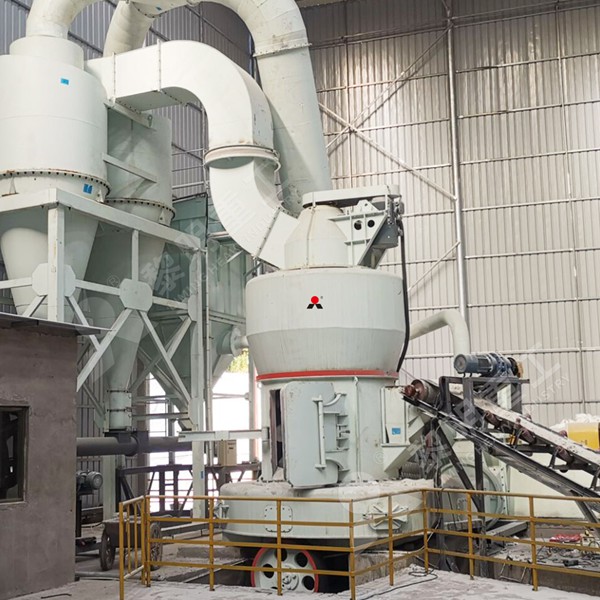
To give a clearer picture, I will use the MTW system as an example. Big lump dolomite is first crushed by a jaw crusher. The crushed material is transported to a hopper. A variable-frequency belt feeder then sends it evenly and continuously into the grinding mill. Inside the mill, material is ground between the ring and rollers. The ground powder moves upward with the air flow. A separator checks the particle size; particles that are too coarse fall down and are ground again, while fine particles pass and are collected as finished product. The air flow that passes through the separator goes back to the air blower for recycling. This is a closed-loop system. A pulse dust collector at the discharge point ensures that emissions meet national environmental standards. This arrangement not only reduces dust pollution but also lowers the loss of valuable fine powder.
In my experience, the difference between a successful dolomite grinding system and a problematic one is rarely the brand of the mill. It is how carefully the whole line is designed. The crusher, feeder, hopper, mill, dust collector and piping have to work as one. That is why Liming offers complete systems for dolomite grinding for magnesia production, rather than only a single machine.
Company Strength and After-Sales Perspective
Liming Heavy Industry has been doing this for more than thirty years. The company focuses on scientific research and development, with the aim of improving product competitiveness. It follows the main lines of solving technical problems, making technological progress and combining production, learning and research. A mature scientific research team supports the development and innovation of new grinding equipment. This means that when a customer needs a special fineness or a particular plant layout, the engineering team can adapt the equipment and process configuration. For magnesia producers, this kind of support is essential because dolomite quality varies from quarry to quarry.
Conclusion
A dolomite grinding mill for magnesia production must not be selected purely on rated capacity. The operator should evaluate the feed size, product fineness, moisture, environmental constraints and the ability of the entire system to run continuously. Liming Heavy Industry offers a range of grinding mills that cover almost every capacity and fineness requirement in dolomite-to-magnesia processing. The LM vertical roller mill is ideal for large capacity and drying needs; the MTW European type trapezium mill is a dependable medium-scale solution; the Raymond mill serves small plants well; the MW micro powder mill handles superfine magnesia products; and the ball mill remains a robust choice for many process arrangements. With the right design and dust control, a Liming dolomite grinding system can help magnesia producers achieve stable output, consistent quality and cleaner production.
Frequently Asked Questions
Q1: What size mill can handle a small magnesia plant?
A1: For a small plant, a Raymond Mill or a small ball mill is usually enough. The Raymond Mill has a capacity of 1.2 to 4.5 tons per hour, while the Ball Mill starts at about 0.65 tons per hour, so they are suitable for pilot or modular production lines.
Q2: Can the vertical roller mill dry wet dolomite?
A2: Yes, the LM Vertical Roller Mill integrates drying with grinding, powder selection and conveying. If your dolomite has high surface moisture, the LM mill can remove the moisture while grinding, which is an advantage in rainy climates or when raw material is washed.
Q3: What fineness is usually needed for dolomite before calcination?
A3: It depends on the kiln type. Many magnesia producers grind dolomite to about 100 to 200 mesh for calcination. For higher-grade magnesia products, a fineness of 325 mesh or finer may be needed, and the MW Micro Powder Mill can provide that range.
Q4: Does Liming supply a complete grinding system or only the mill?
A4: Liming can supply the whole system, including jaw crusher, vibrating feeder, hopper, mill, air blower, dust collector, powder collector, electric cabinet, pipes and motors. This is more reliable than combining equipment from different sources because the capacities and pressure balances are already designed together.
Q5: How does the grinding system control dust in magnesia production?
A5: The mill is connected to a pulse dust collector, and the air flow in the system is recycled in a closed loop. Fine dolomite dust is collected instead of escaping into the workshop. This protects operators and helps the plant meet environmental standards.


