When it comes to manufacturing high-quality wall putty, the grinding stage cannot be treated as an afterthought. The mineral filler, usually dolomite, must be reduced to a fine, uniform powder that binds smoothly with cement and polymer modifiers. A dolomite grinding mill for putty is not simply a crushing machine; it is an integrated system that combines feeding, grinding, classification, and dust collection. At Liming Heavy Industry Co., Ltd., we have spent more than three decades building this kind of equipment, from Raymond mills and MTW European type trapezium mills to vertical roller mills and micro powder mills. In this article, we explain what makes a dolomite grinding mill suitable for putty, how our main models differ, and what to consider before building or upgrading your putty powder production line.
Why Dolomite Powder Is Essential for Putty
Dolomite is a naturally occurring carbonate mineral composed of calcium magnesium carbonate, CaMg(CO3)2. When ground into a fine powder, it serves as a technically important filler in wall putty. It improves covering power, smoothness, and workability. It also reduces shrinkage cracking and helps control consistency during application. For putty manufacturers, the goal is not simply to produce fine powder; it is to produce powder with a stable particle size distribution. Overly coarse powder creates a rough putty film and increases the risk of cracking. Overly fine powder can absorb more binder and raise production costs. Therefore, a grinding mill with adjustable fineness and stable output is the heart of a successful putty powder plant. Dolomite putty powder is commonly required to meet specifications between 200 mesh and 600 mesh, although some premium products demand even finer sizes.
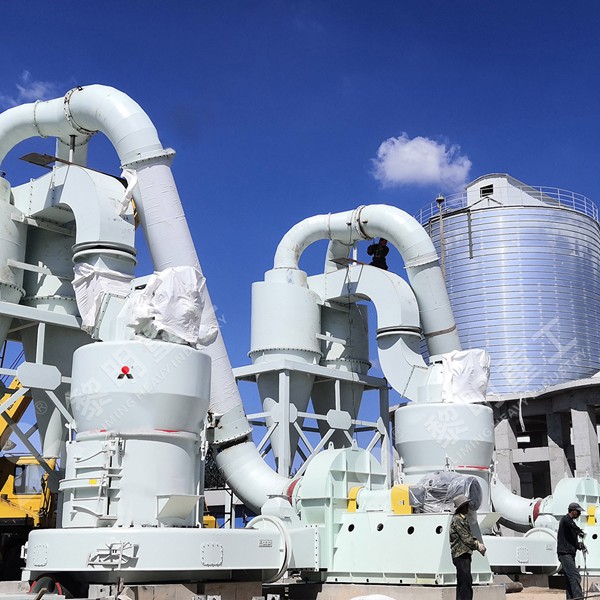
Main Grinding Mills for Dolomite Putty Production
Liming Heavy Industry manufactures a wide range of grinding mills. The final selection depends on your capacity, required fineness, and investment plan. Below are the principal mills we supply for dolomite putty powder production.
MTW European Type Trapezium Mill
The MTW European Type Trapezium Mill is the upgraded product of the traditional Raymond mill and pendulum mill. It has patented technology, stable performance, high productivity, environmental protection, and energy saving. It can accept input sizes of 30-50 mm and deliver capacities from 3 to 55 t/h. The complete system includes a grinding mill, separator, air blower, jaw crusher, vibrating feeder, hopper, dust collector, pipe, powder collector, electric cabinet, and motors. Large dolomite lumps are crushed by a jaw crusher, then a variable-frequency belt feeder supplies the material evenly to the mill. The dolomite is ground between the ring and rollers, and fine particles move upward with the air flow. Particles that do not pass through the separator fall back for further grinding. The air flow returns to the air blower in a closed system, and a pulse dust collector ensures the line meets environmental standards. For medium and large putty lines that need reliable output and energy efficiency, this is the first choice.
Raymond Mill
The Raymond mill is widely used for minerals, building materials, chemicals, and mining products. It suits non-flammable and non-explosive materials with a Mohs hardness below 7 and humidity under 6%. Dolomite, with a hardness of roughly 3.5 to 4, is perfectly suited. Our Raymond mill has a capacity of 1.2-4.5 t/h and accepts feed sizes of 15-25 mm. Output fineness ranges from 613 to 44 micrometers, about 25-325 mesh. This makes it a practical option for small and medium putty production lines. The Raymond mill is economical, reliable, and easy to operate. For processors starting a putty powder business or replacing an old mill, this is a proven choice.
MW Micro Powder Mill
When ultra-fine dolomite powder is needed, the MW Micro Powder Mill is recommended. It absorbs advanced Swedish grinding technology and specializes in superfine powder processing. The finished product can reach a d97 less than or equal to 5 micrometers, and fineness can be adjusted between 325 mesh and 3250 mesh. With a pulse precipitator, the process is greener and more environmentally friendly. Capacity is 0.5-25 t/h, and input size is 10-20 mm. The motor drives the main shaft and turnplates through a reducer, while rollers rotate against the raceway of the ring. Small dolomite crushed by a hammer crusher is transported to a hopper by an elevator, then a vibrating feeder introduces it evenly to the upper turnplate. If you plan to make high-end putty or target a smoother finish, this mill lets you differentiate your product.
LM Vertical Roller Mill
For large-scale building material producers, the LM Vertical Roller Mill is a high-efficiency solution. It adopts a new milling device and automatic electric control system, integrating drying, grinding, powder selection, and conveying. Its applications cover cement, electricity, metallurgy, chemical, and non-metallic mineral industries. Capacity is 10-400 t/h, and input size is 30-55 mm. The LM mill is valuable for high throughput or when raw dolomite has surface moisture, because the integrated drying function removes moisture during grinding. This mill can be the central unit of an entire large putty powder plant, reducing auxiliary machines, saving floor space, and lowering operating cost per ton.
Ball Mill
The ball mill is a common grinding plant and key equipment for fine grinding after crushing. It can grind all kinds of ores and other materials. Our ball mill has a capacity of 0.65-50 t/h and accepts an input size no more than 25 mm. It is a horizontal rotating device driven by the outer gear. Material enters the chamber through the quill shaft uniformly. The chamber has ladder or ripple liners and steel balls of different sizes. Barrel rotation creates centrifugal force that carries the balls to a height, and they impact and grind the material. Although the ball mill is not the first choice for dry putty powder because of higher energy consumption, it can be used in some wet grinding processes or combined lines. For dry dolomite putty powder, the MTW or Raymond mill is more energy efficient.
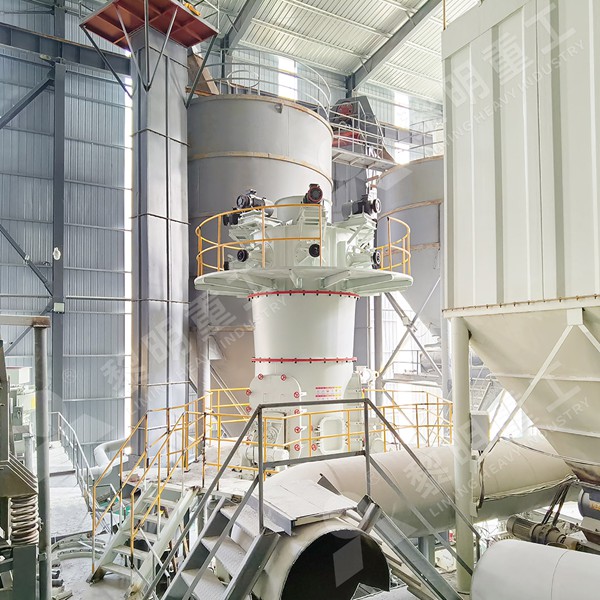
Complete Dolomite Putty Grinding System
A modern dolomite grinding mill for putty is never just a single machine. The full system includes a jaw crusher, vibrating feeder, bucket elevator, grinding mill, separator, air blower, dust collector, screw conveyor, and finished powder silo. Raw dolomite is crushed into smaller particles, then fed into the mill. Inside the mill, material is repeatedly ground and classified until the desired particle size is achieved. The closed air circulation system reduces energy loss and dust leakage. A pulse dust collector captures fine powder from exhaust air, increasing yield and protecting the environment. Liming Heavy Industry can supply the entire line, and our engineers can design a layout based on your site. Our headquarter in the Zhengzhou Hi-Tech Industry Development Zone covers 80,000 square meters, and another workshop in the Shangjie Industry Park covers 67,000 square meters. Today, Liming has become a leader in domestic and overseas machinery manufacturing.
Choosing the Right Dolomite Grinding Mill for Your Putty Line
There is no universal answer when selecting a grinding mill. First, calculate the required throughput. A small factory needing 2 tons per hour can choose a Raymond mill, while a large plant needing more than 20 tons per hour should consider the MTW or LM mill. Second, determine the target fineness. Standard 325 mesh putty powder can be produced by a Raymond or MTW mill, while high-end ultra-fine powder may require the MW mill. Third, evaluate moisture and hardness. All our mills handle dolomite under normal conditions, but if feed has high moisture, the LM mill with integrated drying is a strong advantage. Fourth, think about total operating cost, including energy, maintenance, and spares. Finally, consider after-sales service. Liming Heavy Industry is a modern joint-stock company combining research, manufacturing, and sales. We provide process advice, equipment commissioning, and operator training. This long-term support is as valuable as the grinding mill itself.
Frequently Asked Questions
1. What is a dolomite grinding mill for putty?
A dolomite grinding mill for putty is a grinding machine used to reduce dolomite ore into fine powder for use as a filler in wall putty. The powder must have controlled particle size so that it mixes well with cement, polymers, and other additives.
2. Which mill is best for a large putty production line?
The MTW European Type Trapezium Mill or the LM Vertical Roller Mill are excellent choices for large lines. Both provide high capacity, stable performance, and efficient classification. The exact choice depends on your tonnage and whether you need integrated drying.
3. What fineness of dolomite powder is used in putty?
Most wall putty formulations use 200 mesh to 600 mesh dolomite powder. Standard products often use 325 mesh, while premium putty may use 600 mesh or finer powder to achieve a smoother surface.
4. Can the same mill process other minerals besides dolomite?
Yes. Our grinding mills can process gypsum, calcium carbonate, limestone, barite, and many other non-metallic minerals with hardness below 7 on the Mohs scale and suitable moisture content. This flexibility makes them valuable investment assets.
5. What after-sales support does Liming Heavy Industry provide?
Liming Heavy Industry provides equipment selection, site planning, installation guidance, commissioning, and operator training. Our technical team helps optimize the grinding process and ensures that the production line runs reliably for years.


