Published: May 9, 2026
If you are producing dolomite powder for plastic compounds, you are not just grinding a mineral—you are engineering a functional filler that affects the performance of pipes, cables, automotive parts, films, and masterbatches. A dolomite grinding mill for plastic must provide consistent fineness, controlled top size, low moisture, and stable operation over long shifts. At Liming Heavy Industry Co., Ltd., we have manufactured grinding and crushing equipment since 1987, and our portfolio includes Raymond mills, MTW European Type Trapezium mills, LM vertical roller mills, MW micro powder mills, and ball mills. This article explains how these machines meet the needs of plastic-grade dolomite production, what process parameters matter, and how to select the right system for your goals.
Why Dolomite Is Used in Plastic
Dolomite is a calcium magnesium carbonate mineral. Its hardness is moderate, and it is available in large quantities all over the world. When ground to fine powder, dolomite offers several advantages as a plastic filler. It improves stiffness and dimensional stability, increases heat deflection temperature, and provides a smooth surface finish. It also lowers the overall compound cost, which is why it appears in many PVC profiles, cable compounds, polypropylene automotive parts, and polyethylene masterbatches.
But the plastic industry is demanding. Plastics are processed at high temperatures, and they often come into contact with sensitive equipment such as extruders and injection molders. Any oversized particle in the dolomite powder can cause surface streaks, blocked screens, or reduced impact resistance. High moisture can lead to bubbles and defects. Metal contamination from grinding media can cause black spots and degrade electrical insulating properties. This is why the grinding mill is so important: it must not only make fine powder, it must make powder that is stable, clean, and reproducible.
What a Dolomite Grinding Mill for Plastic Must Be Able to Do
From my experience, plastic-grade dolomite production requires attention to five things.
First, fineness adjustment. Depending on the application, a plastic manufacturer may need 325 mesh or 1250 mesh. A good mill should allow adjustment while running, or at least through simple changes in classifier speed.
Second, top-cut control. The separator in the grinding system must ensure that no oversized particles slip through. This is linked to the classifier design, not just the grinding pressure.
Third, moisture control. Dolomite can carry natural moisture. In plastic compounding, even a small amount of moisture can affect melt flow. Some mills can integrate hot air drying; the LM vertical roller mill is especially effective because it combines drying, grinding, and selecting in one system.
Fourth, wear resistance. Dolomite is harder than pure limestone. The grinding rollers, rings, and liners need to be made of durable materials. Our mills are designed for non-metallic mineral grinding and are commonly used for calcium carbonate, gypsum, and dolomite.
Fifth, environmental compliance. A modern grinding mill for plastic filler should have a pulse dust collector so that fine powder is captured and the working environment remains clean. All of our systems can be equipped with pulse precipitators, which keeps emission levels within national environmental standards.
Liming Grinding Mill Options for Dolomite
MTW European Type Trapezium Mill
This is the upgrade product of the traditional Raymond grinding mill and pendulum mill. It has patented technology, stable performance, high productivity, energy saving, and good environmental protection. The MTW mill is often my first recommendation when a customer wants a dedicated dolomite powder production line for plastic filler. Its capacity range is 3 to 55 T/H, depending on the model and fineness. The input size can be up to 30-50 mm, which means you can use a jaw crusher to break the run-of-mine dolomite before feeding the mill.
The working principle of the MTW grinding line is simple. Big lump materials are crushed to the required size by a jaw crusher. Then a variable-frequency belt feeder sends them evenly and continuously into the mill. The materials are ground between the ring and rollers, and the ground powder moves upward with the air flow. Particles that cannot pass the separator fall down and are ground again. Particles that pass the separator are collected as finished product. The air flow then returns to the blower in a closed system, and a pulse dust collector keeps the operation clean.
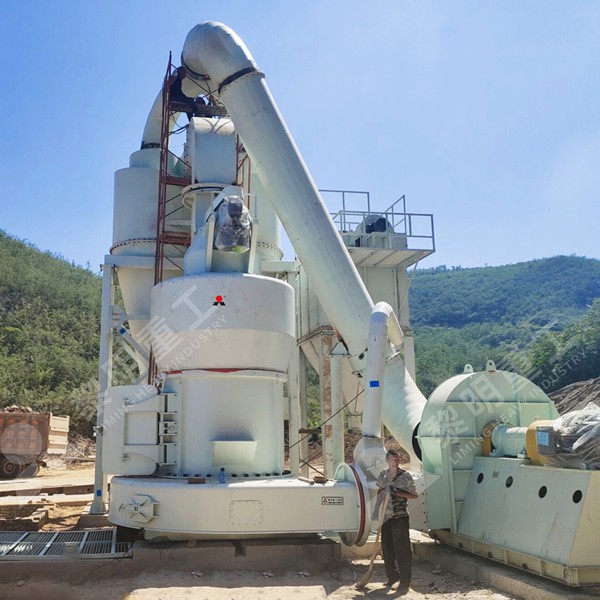
For a mid-sized plastic compounder, an MTW mill is a balanced choice. It gives you enough capacity to run continuously, but it is not so big that you are forced to build an enormous auxiliary plant.
Raymond Mill
The Raymond mill has been used for decades in mineral grinding. It is suitable for non-flammable and non-explosive materials with Mohs hardness lower than 7 and moisture under 6%. Dolomite fits this range. The output fineness is between 613 μm and 44 μm, which corresponds to approximately 25 to 325 mesh. For plastic applications that need relatively coarse filler, such as 200 mesh or 250 mesh, a Raymond mill can be sufficient. Its capacity is 1.2 to 4.5 T/H, and its input size is 15 to 25 mm.
If you are running a small PVC compounding workshop, or if you want to make dolomite filler for non-critical products, a Raymond mill keeps the system simple and economical. However, if you need a tighter particle distribution at higher fineness, you may want to combine it with an efficient classifier or choose one of our newer models.
LM Vertical Roller Mill
When the requirement is large-scale production, the LM vertical roller mill is the right tool. It adopts a new milling device and an automatic electric control system. It combines drying, grinding, powder selection, and conveying together. The capacity is 10 to 400 T/H, and the input size is 30 to 55 mm. This is the machine for a central processing plant that supplies dolomite powder to several plastic manufacturers.
Because the LM vertical mill can use hot air during grinding, it helps reduce moisture in the final powder. This is valuable because plastic-grade fillers often must have very low moisture to prevent defects in extruded or injection-molded parts. If your production starts with damp dolomite, the vertical mill can save you from installing a separate drying system.
MW Micro Powder Mill
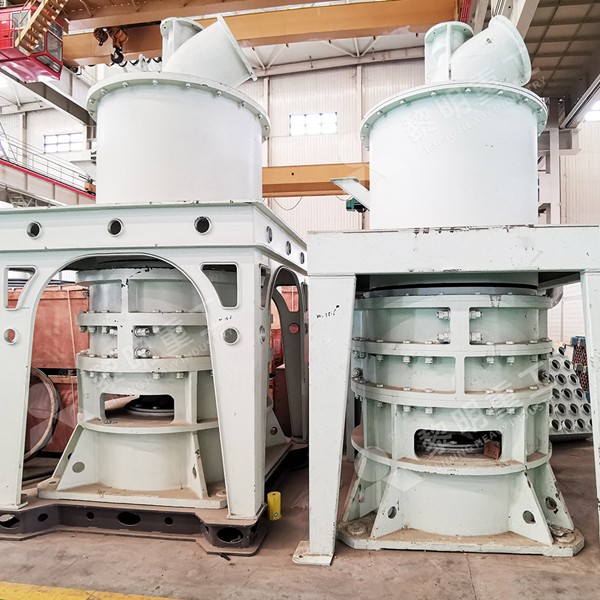
For high-end plastic applications that require very fine powder, the MW micro powder mill is designed for superfine grinding. It absorbs advanced Swedish grinding technology. The finished product can reach d97 ≤ 5 μm, and the fineness can be adjusted between 325 mesh and 3250 mesh. Capacity is 0.5 to 25 T/H, and input size is 10 to 20 mm. The mill is equipped with a pulse precipitator, making production greener and more environmentally friendly.
In plastic masterbatch production, 1250 mesh or 2500 mesh dolomite powder is often used to create a more uniform dispersion. The MW micro powder mill can deliver this level of fineness while maintaining a reasonable throughput. It is more than a simple grinding mill; it is a complete system that includes hammer crusher, elevator, hopper, vibrating feeder, and the main grinding unit.
Ball Mill
The ball mill is a widely used grinding plant. It is key equipment for material milling after materials are crushed. It can grind all kinds of ores and other materials, and is often used in beneficiation, construction, chemical industry, cement, and ceramics. For dolomite, a ball mill can be used when you want a conventional and reliable method. Its capacity is 0.65 to 50 T/H, and input size is ≤25 mm.
In a ball mill, the material is transferred to the grinding chamber through a quill shaft. The rotary barrel brings steel balls to a certain height, and then they impact and grind the material. The ground material is discharged through the discharge board. For plastic-grade dolomite, a ball mill can be used in conjunction with a classifier to achieve the desired fineness. However, for most modern plastic filler plants, the more energy-efficient vertical or trapezium mills are often preferred.
How to Choose the Right Dolomite Grinding Mill for Plastic
There is no universal machine, because every plastic application has its own quality requirements and capacity targets. Start by asking a few questions.
What is your target fineness? If you need 325 mesh, a Raymond mill or MTW mill can handle it. If you need 1500 mesh or finer, an MW micro powder mill or a vertical mill with a high-performance classifier will be better.
What is your throughput? A single plastic compounding line may only need 1-2 tons per hour. A commercial filler plant may need 20 tons or more. The capacity range in our product line starts at 0.5 T/H and goes up to 400 T/H, so there is always a match.
What is the condition of your raw material? If your dolomite is wet, a vertical mill with drying function will help. If it is clean and dry, a simpler grinding circuit may be enough.
Do you need to change fineness often? Some plastic customers order different mesh sizes throughout the year. A mill with a variable-speed separator gives you flexibility.
Another point I always mention is particle size distribution. For plastic filler, a narrow size distribution is usually better. An overly wide distribution can create inconsistent mechanical properties in the finished plastic. The separator is the most important part of the mill for controlling this. All of Liming's grinding mills include efficient separators, but you must set the classifier correctly for the specific grade.
Honestly, I have seen plant owners buy a huge mill and then struggle with classifier tuning. The best mill is not the biggest one; it is the one that matches your exact powder specification while giving you enough room to grow.
Final Thoughts
Dolomite grinding for plastic is not a side business in the mineral processing world. It is a precise operation that combines material science, mechanical engineering, and process control. At Liming Heavy Industry, we have been in this industry since 1987, and we build large and medium-sized crushing and grinding equipment with a strong focus on research and innovation. Our headquarters are in the HI-TECH Industry Development Zone of Zhengzhou, covering 80,000 square meters, and our workshop in Shangjie Industry Park adds another 67,000 square meters. We continue to improve our mills through scientific research, technical improvement, and practical feedback from customers.
If you are planning a dolomite grinding mill for plastic applications, do not choose a machine based on nameplate power alone. Think about your product spec, your raw material, and your operating philosophy. A stable, efficient mill will give you consistent filler, and consistent filler is the foundation of high-quality plastic products.


