Published: May 12, 2025
Dolomite grinding for asphalt filler is a reliable and increasingly popular way to improve the quality of road construction materials. When raw dolomite is processed into fine powder, it becomes a functional filler that stabilizes asphalt binders, increases the stiffness of the asphalt mastic, and reduces the risk of water damage, rutting and cracking. However, producing the right dolomite filler requires more than just crushing; it requires a grinding mill with stable fineness control, high efficiency, and durable wear parts. Liming Heavy Industry Co., Ltd. offers a complete range of grinding equipment, including the LM vertical roller mill, MTW European type trapezium mill, Raymond mill, MW micro powder mill and ball mill. This article explains how these mills are used for dolomite powder production and gives practical guidance for choosing the right system for asphalt filler applications.
Understanding Dolomite Filler in Asphalt Mix
Dolomite is a carbonate mineral composed mainly of calcium magnesium carbonate. It is often used as an aggregate in road construction, but its fine powder is equally important. In asphalt mixtures, mineral filler is the part of the aggregate that is finer than 0.075 mm. Dolomite filler fills the voids between larger aggregates and therefore makes the asphalt mixture denser. As a result, the pavement becomes stronger and less permeable to water.
More importantly, dolomite powder interacts with asphalt binder at the interface between the binder and aggregate particles. This interaction improves adhesion and helps prevent stripping, which occurs when water separates the asphalt film from the aggregate surface. A properly ground dolomite filler can also increase the softening point of the asphalt mastic and improve its resistance to permanent deformation. In short, the filler is not a waste by-product but an active ingredient in the asphalt mix.
Grinding Requirements for Asphalt-Grade Dolomite
The most common specification for asphalt filler is that at least 70 to 80 percent of the material must pass a 0.075 mm sieve, which is approximately 200 mesh. Many road authorities also require that 100 percent passes a 0.6 mm sieve and at least 95 percent passes a 0.3 mm sieve. For a dolomite grinding mill, this means the target fineness is usually between 200 mesh and 400 mesh. Some modified asphalt materials use finer powders between 500 mesh and 800 mesh, but such products are less common.
Particle shape and specific surface area are also important. The grinding process should produce angular particles with fresh surfaces, because these surfaces react more easily with the asphalt binder. A good roller mill or trapezium mill can achieve this because material is compressed and sheared between the roller and the ring, rather than simply hammered. In addition, the moisture content of the dolomite should be controlled before grinding. If the feed is too wet, especially in a vertical mill or micro powder mill, the drying function or a separate dryer may be needed.
Liming Heavy Industry Dolomite Grinding Mill Options
Liming Heavy Industry has been manufacturing grinding and crushing equipment since 1987. Today, we provide five main mill types that are suitable for dolomite processing. The right choice depends on capacity, fineness, feed size, moisture, and existing plant layout.
LM Vertical Roller Mill
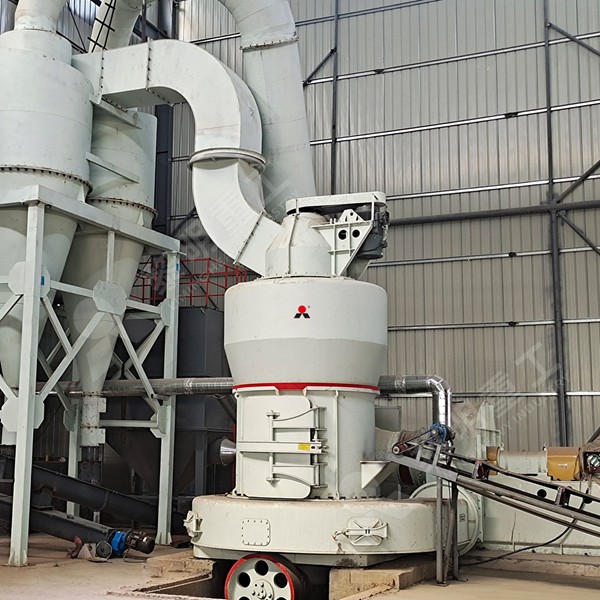
The LM vertical roller mill integrates drying, grinding, powder selection and conveying in one system. It is designed for large-scale production with a capacity of 10 to 400 tons per hour and an input size of 30 to 55 mm. This mill is especially suitable for non-metallic minerals, coal and slag. For a dolomite filler station with high output, the LM mill can dry and grind the material in one continuous operation. Its automatic electric control system keeps the fineness stable, which is an important advantage when the asphalt plant requires a consistent filler quality.
MTW European Type Trapezium Mill
The MTW European type trapezium mill is the upgraded version of the traditional Raymond mill and pendulum mill. It has a capacity of 3 to 55 tons per hour and accepts input sizes of 30 to 50 mm. This mill uses patented technology and is designed for large-scale non-metallic mineral powder making, including limestone desulfurization, heavy calcium carbonate processing, and solid fuel grinding. For asphalt filler projects, the MTW mill is an extremely balanced choice: it can produce 200 to 400 mesh dolomite powder with high productivity, stable particle size, and lower energy consumption than an ordinary ball mill. The grinding system is a closed loop with a pulse dust collector, so it meets environmental requirements.
Raymond Mill
The Raymond mill is a classic grinding solution and is still widely used for small or medium-sized mineral powder plants. It handles materials with Mohs hardness below 7 and moisture under 6 percent, which makes it suitable for dolomite. The output fineness is between 613 and 44 microns, or roughly 30 to 325 mesh. For asphalt filler, the Raymond mill is often the most economical option when the required output is small, for example 1.2 to 4.5 tons per hour. It works well for a project that produces filler locally and does not need a massive centralized grinding plant.
MW Micro Powder Mill
The MW micro powder mill is a medium-speed grinding machine that uses advanced Swedish grinding technology. It is designed for superfine powder processing, with a final fineness that can reach d97 less than or equal to 5 microns. The fineness can be adjusted between 325 mesh and 3250 mesh. Its capacity is 0.5 to 25 tons per hour, and the input size is 10 to 20 mm. For asphalt filler applications, this mill is useful when a customer wants a premium product with fine and uniform particle size. The mill is equipped with a pulse precipitator, making production greener and more environmentally friendly.
Ball Mill
The ball mill is a conventional grinding machine that continues to play an important role in many mineral processing plants. It rotates horizontally, and steel balls inside the chamber impact and grind the dolomite as the barrel turns. The capacity range is 0.65 to 50 tons per hour with an input size up to 25 mm. Ball mills are less efficient than vertical roller mills, but they are robust, simple to operate, and suitable for plants that already use this technology for other minerals. When fine dolomite powder is needed continuously, a ball mill can be combined with a classifier to produce asphalt filler.
How to Choose the Right Dolomite Grinding Mill
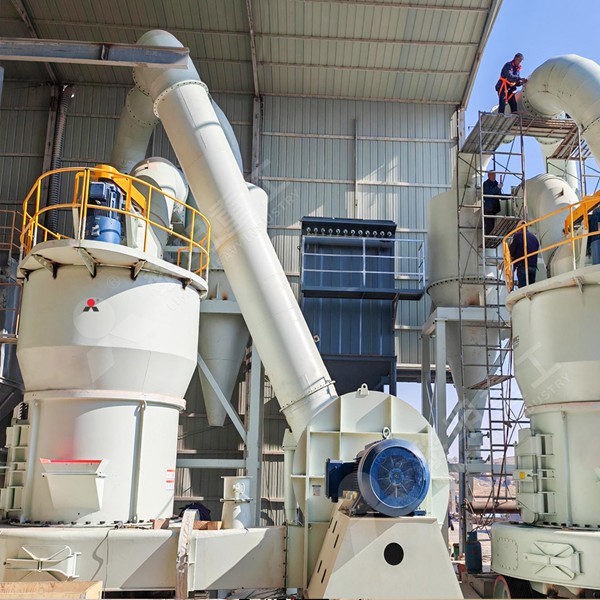
For a new asphalt filler production line, the first question is capacity. If your target output is above 20 tons per hour, an MTW European type trapezium mill or an LM vertical roller mill is the most practical option. The LM vertical roller mill can handle very high capacities, while the MTW mill is more suitable for a medium-sized line. If the project is small or mobile, the Raymond mill may be enough.
Fineness is the second question. For asphalt filler at 200 to 400 mesh, both the MTW mill and the Raymond mill work well. For superfine powder above 500 mesh, the MW micro powder mill is better, or a ball mill with a high-performance classifier. If the raw dolomite is wet, the integrated drying function of the LM vertical roller mill can eliminate the need for an external dryer. If the plant already has a drying system, a simpler pendulum or trapezium mill can save investment.
Feed size should also be considered. The raw dolomite from a quarry must be crushed to the mill's allowable input size. We normally supply a jaw crusher and vibrating feeder or belt feeder as part of the complete grinding line. The whole system can be configured so that oversized lumps do not enter the mill, which protects the grinding parts and keeps production stable.
Why Choose Liming Heavy Industry
Liming Heavy Industry Co., Ltd. was founded in 1987 and is a modern joint-stock enterprise that combines research, manufacturing and sales. The headquarter is located in the HI-TECH Industry Development Zone of Zhengzhou, covering 80,000 square meters. Another workshop in Shangjie Industrial Park covers 67,000 square meters. For more than thirty years, we have adhered to modern scientific management, precision manufacturing, pioneering and innovation. The result is a wide range of grinding mills that are trusted in both domestic and overseas projects.
We also invest heavily in scientific research and development. Our strategy focuses on improving the competitiveness of products through technology accumulation, technical improvement, and cooperation between production, learning and research. With a mature research team, we continue to develop and innovate and aim at the technological frontier of the grinding industry. If you are planning a dolomite grinding mill for asphalt filler, our team can help you choose the right equipment, design the grinding system, and ensure that the final powder meets your specifications.
Frequently Asked Questions
1. What is the best grinding mill for dolomite asphalt filler?
The best mill depends on your required capacity and final fineness. For a medium to large asphalt filler plant, the MTW European type trapezium mill is usually the most balanced. For a very high capacity plant, the LM vertical roller mill is preferred. For a small project, the Raymond mill is an economical choice.
2. What mesh size is recommended for dolomite filler in asphalt?
Most asphalt specifications require that at least 70 to 80 percent of the filler passes a 0.075 mm sieve, which is about 200 mesh. Many producers choose to grind dolomite to between 200 mesh and 400 mesh. Some special mixes use finer powder up to 800 mesh.
3. Do the mills require pre-crushing of dolomite?
Yes. The natural lump size of dolomite from a quarry is often too large for direct grinding. We usually design a grinding line with a jaw crusher or hammer crusher to reduce the feed size to the required range, such as 30 to 55 mm for the vertical mill, before it enters the grinding mill.
4. Which mill is more energy efficient for a medium-sized asphalt filler plant?
The MTW European type trapezium mill is an energy-efficient choice in this range. It is an upgraded version of the traditional Raymond mill, with higher productivity and lower power consumption. For very high capacities, the LM vertical roller mill also offers excellent efficiency.
5. Can the dolomite grinding system operate without causing dust pollution?
Yes. Liming grinding systems can be equipped with pulse dust collectors, and the air flow in mills such as the MTW and LM is recycled through a closed system. This design helps meet environmental protection standards and keeps the working environment clean.


