Published: February 10, 2025
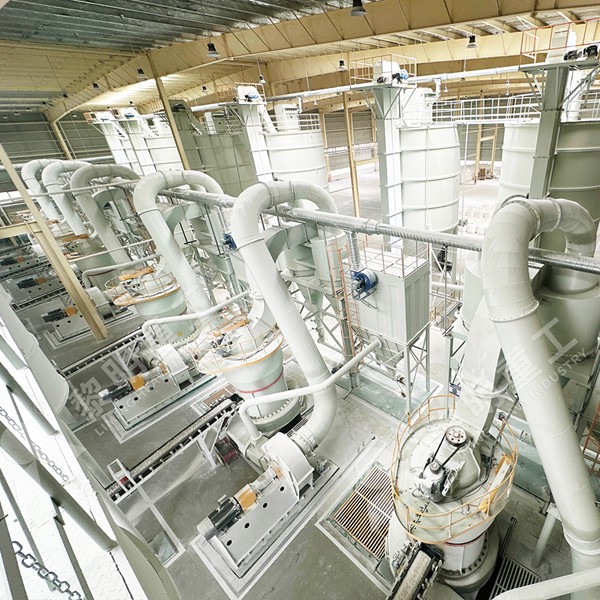
Dolomite is a carbonate mineral composed of calcium magnesium carbonate, and it has become indispensable in ceramic tile production. It acts as a flux, helping the tile body vitrify at lower temperatures, improving whiteness and mechanical strength, and stabilizing the glaze layer. The quality of the final tile depends heavily on the fineness and particle size distribution of the ground dolomite. Choosing an appropriate dolomite grinding mill is therefore not only a matter of equipment selection; it is a decision that affects the entire ceramic production line. Liming Heavy Industry Co., Ltd. manufactures a complete range of mills, including LM Vertical Roller Mill, Raymond Mill, MTW European Type Trapezium Mill, MW Micro Powder Mill, and Ball Mill. These machines can process dolomite from a feed size of 55 mm down to ultra-fine powder with d97 ≤ 5 μm, with capacities ranging from 0.5 T/H to 400 T/H. This article provides a practical guide for ceramic tile producers who want to choose, run, and optimize a dolomite grinding system.
Why Dolomite Is a Key Ingredient in Ceramic Tile
Ceramic tiles require a body that can be shaped, dried, and fired without cracking. Dolomite contributes to this in several ways. First, it supplies CaO and MgO. During firing, these oxides react with silica and clay minerals to form a liquid phase that fills pores and densifies the tile. This helps reduce the firing temperature, saving energy and shortening firing cycles. Second, dolomite can improve the whiteness of a tile and prevent efflorescence caused by free lime. In glazes, dolomite acts as a matting or fluxing agent, giving the surface a smooth, uniform appearance. For these reactions to occur consistently, dolomite powder must be uniform in fineness. Oversize particles can create defects such as pinholes, black spots, or surface roughness.
What to Consider When Choosing a Dolomite Grinding Mill
Before choosing a mill, a producer should define several parameters: feed size, required throughput, target fineness, moisture content, and whether the product will be used in the body or the glaze. For ceramic tile bodies, 200 mesh or 325 mesh is common. For glazes, the powder often needs to be 600 mesh or finer. Dolomite has a Mohs hardness of about 3.5 to 4 and is normally low in moisture, so most dry grinding mills can handle it. However, a jaw crusher may be needed to reduce large run-of-mine dolomite to the mill's maximum feed size. Once these parameters are clear, the next step is to match them with the correct equipment.
Liming Grinding Mills for Dolomite
Liming Heavy Industry has supplied crushing and grinding equipment since 1987. The company is a modern joint-stock enterprise that combines research, manufacturing, and sales. Its headquarters in the HI-TECH Industry Development Zone of Zhengzhou covers 80,000 square meters, and another workshop in the Shangjie Industry Park covers 67,000 square meters. For dolomite processing, the following mills are widely used.
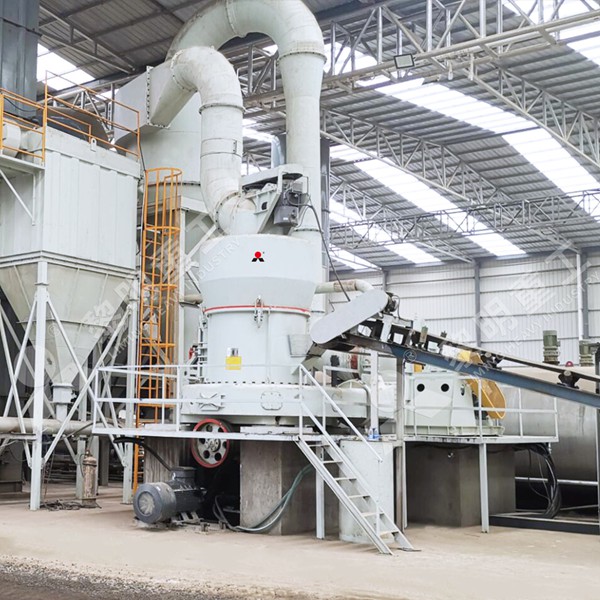
- LM Vertical Roller Mill: This mill adopts a new milling device and an automatic electric control system. It integrates drying, grinding, powder selection, and conveying in one unit. For a large-scale central dolomite grinding station, it offers a capacity of 10-400 T/H and accepts feed sizes of 30-55 mm. It is highly suitable for non-metallic minerals, coal, and slag.
- Raymond Mill: The Raymond mill is the traditional and simplest solution. It is designed for non-flammable and non-explosive materials with a Mohs hardness below 7 and moisture under 6%. It produces powder with fineness between 613 microns and 44 microns, with a capacity of 1.2-4.5 T/H. For small production lines, this is a straightforward choice.
- MTW European Type Trapezium Mill: This is the upgrade product of the traditional Raymond mill and pendulum mill. It has patented technology, stable performance, high productivity, environmental protection, and energy saving. It is made for large-scale non-metallic mineral powder making and can produce 3-55 T/H with feed sizes of 30-50 mm. For a ceramic tile body powder plant, this mill is the all-round workhorse.
- MW Micro Powder Mill: The MW mill absorbs advanced Swedish micro-grinding technology. It is excellent for superfine dolomite powder, with a fineness that can be adjusted between 325 mesh and 3250 mesh, or d97 ≤ 5 μm. Its capacity is 0.5-25 T/H. Equipped with a pulse precipitator, it is a green and reliable option for high-grade ceramic glaze production.
- Ball Mill: The ball mill is common key equipment for milling after materials are crushed. It has a capacity of 0.65-50 T/H and is widely used in beneficiation, construction, and ceramics. When dolomite needs to be ground together with clay or other tile raw materials, the ball mill can combine grinding and mixing in one process.
Typical Dolomite Grinding Process
The grinding system for dolomite is straightforward. Large dolomite is first crushed by a jaw crusher. The crushed material is then transported by an elevator and stored in a hopper. A variable-frequency belt feeder sends the material evenly and continuously into the grinding mill. Inside the mill, dolomite is ground between the ring and rollers. The material moves up with the air flow, and particles that cannot pass the separator fall back to be ground again. Fine particles are carried to a cyclone and collected as finished product. The air flow then returns to the air blower, forming a closed system. A pulse dust collector removes dust and keeps the whole line working according to national environmental protection standards.
How to Keep the Grinding Line Stable
To keep a dolomite grinding mill working smoothly, operators should pay attention to five things. First, check that the feed particle size matches the mill's inlet size. Oversize feed can cause vibration and wear. Second, keep the feed rate stable. A variable-frequency belt feeder helps avoid surges. Third, adjust the separator speed to control fineness. A higher speed produces finer powder. Fourth, monitor air volume and temperature. If the dolomite has a little surface moisture, use the drying function of the LM vertical mill or dry the material before feeding. Fifth, clean and maintain the dust collector and lubricate the rollers and bearings regularly. A short daily inspection can prevent long production stops.
At Liming Heavy Industry, we persist in a scientific research and development strategy. The company focuses on improving product competitiveness through technological progress and continuous innovation. With mature research teams and production experience, we help customers in the ceramic industry solve their grinding challenges.
Frequently Asked Questions
- What is the ideal fineness of dolomite for ceramic tile? Most ceramic tile body formulas use 200 mesh or 325 mesh dolomite powder. For high-quality glazes, 600 mesh or 1250 mesh is often required. The MW Micro Powder Mill can adjust the fineness up to 3250 mesh when an extremely smooth surface is needed.
- Which mill is better for a ceramic tile plant with medium capacity? The MTW European Type Trapezium Mill is usually the first choice. It has a capacity of 3-55 T/H and accepts feed sizes up to 50 mm. If the plant needs less than 4.5 T/H, a Raymond Mill is simpler and easier to operate.
- Can the same system grind dolomite and other ceramic raw materials? Yes. Many Liming mills can handle limestone, calcium carbonate, gypsum, and other non-metallic minerals. However, when switching materials, the operator should adjust separator speed and feed rate, and clean the system to avoid contamination.
- How do I control the particle size of dolomite powder? Particle size is controlled by the separator speed, air volume, and feed rate. A higher classifier speed gives a finer product. Regular sieve analysis lets the operator adjust these parameters before the final product reaches the tile press.
- Does Liming provide installation and after-sales support? Yes. Liming offers process design, equipment manufacturing, installation, commissioning, and operator training. The technical team supports customers in non-metallic ore, building materials, ceramics, and many other industries.


