Published: 2025-03-26
Dolomite, a mineral composed primarily of calcium magnesium carbonate (CaMg(CO₃)₂), has long been valued in the paint and coatings industry as a functional filler. Its natural whiteness, chemical inertness, and low oil absorption make it ideal for improving opacity, durability, and gloss retention in water-based and solvent-based paints. However, achieving the optimal particle size distribution — typically between 5 µm and 45 µm (325–2500 mesh) — requires advanced ultrafine grinding technology. Liming Heavy Industry Co., Ltd., with over three decades of experience in crushing and grinding equipment, offers a comprehensive range of mills specifically engineered to produce high-quality dolomite powders for paint applications. Among these, the MW Micro Powder Mill and LM Vertical Roller Mill stand out for their ability to deliver consistent ultrafine fineness, high throughput, and energy efficiency, while meeting the stringent environmental standards of modern production facilities. This article explores the critical role of dolomite in paint formulation, the technical challenges of ultrafine grinding, and how Liming’s solutions address these demands with proven reliability.
The Role of Dolomite in Paint Formulations
In paint manufacturing, fillers like dolomite serve multiple purposes. They reduce the cost of raw materials while enhancing the mechanical properties of the final coating. Specifically, dolomite contributes to higher brightness and whiteness, improved scrub resistance, and better weather resistance. Compared to calcium carbonate, dolomite has a higher hardness (Mohs 3.5–4) and lower reactivity with acidic environments, making it a preferred choice for exterior paints and primers. The particle shape and size distribution directly influence viscosity, film build, and hiding power. For premium paints, manufacturers demand a very narrow particle size distribution with a d97 value below 10 µm. This level of fineness not only improves color development but also reduces the amount of titanium dioxide needed — a significant cost saving. Therefore, the grinding process must be precise, scalable, and energy-efficient.
Technical Challenges in Ultrafine Grinding of Dolomite
Grinding dolomite to an ultrafine powder (below 10 µm) presents several difficulties. The material’s inherent brittleness, combined with its moisture content (typically 1–3%), can lead to agglomeration and coating on grinding surfaces if not handled correctly. Traditional ball mills, while effective for coarse grinding, suffer from high energy consumption, excessive noise, and limited ability to produce consistent superfine products. Raymond mills and pendulum mills often reach a ceiling around 325 mesh (44 µm). To go finer — into the range of 600 mesh (23 µm) to 2500 mesh (5 µm) — a specialized mill design is required. Key challenges include maintaining stable grinding pressure, preventing over-grinding (which generates heat and reduces efficiency), classifying particles accurately, and integrating dust collection to meet environmental regulations. Liming’s engineering team has tackled these obstacles through innovative mechanical design, automatic control systems, and closed-loop airflow technology.
Liming’s Solutions for Dolomite Ultrafine Grinding
MW Micro Powder Mill — The Workhorse for Superfine Powders
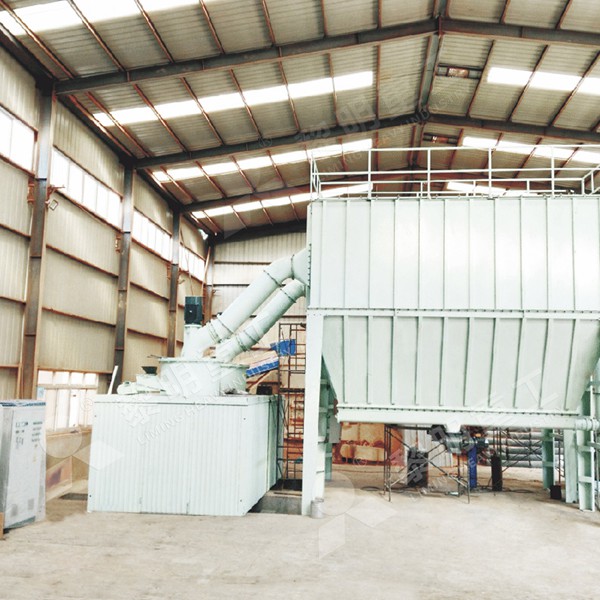
The MW Micro Powder Mill (also known as the medium-speed micro-grinding mill) is a culmination of Swedish grinding technology adapted for high-capacity, ultra-fine processing. Its core design features dozens of rollers rotating against a raceway ring, driven by a reducer that ensures smooth, vibration-free operation. The material, pre-crushed to 10–20 mm, is fed evenly onto the upper turnplate via a variable-frequency vibrating feeder. Under centrifugal force, particles move to the raceway and are crushed between the rollers and the ring. An integrated high-efficiency classifier ensures that only particles meeting the target fineness (d97 ≤ 5 µm achievable) pass through; oversized particles fall back for re-grinding. The closed system, equipped with a pulse dust collector, recycles air and captures fine dust, complying with the strictest environmental standards. For paint-grade dolomite, this mill can produce consistent batches with a fineness adjustable from 325 mesh to 3250 mesh (5–44 µm), with a capacity ranging from 0.5 to 25 t/h depending on model and feed characteristics.
LM Vertical Roller Mill — High-Capacity Integrated Solution
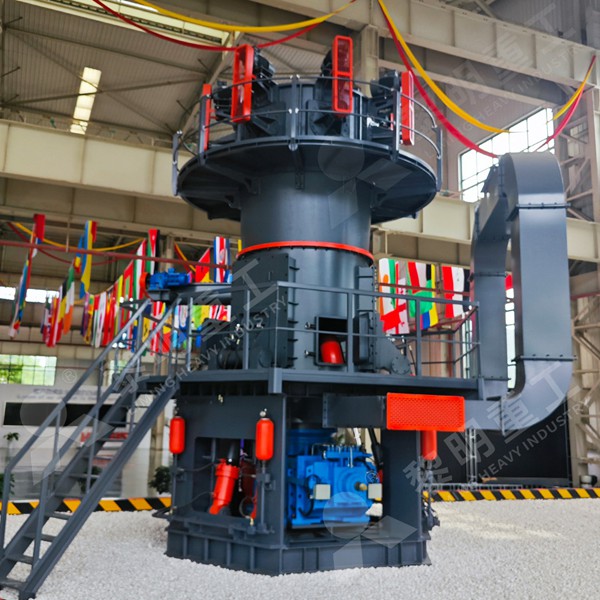
For large-scale paint manufacturers requiring high throughput — up to 400 t/h — the LM Vertical Roller Mill offers an integrated drying, grinding, and classifying system. Although traditionally used for cement and coal, its application in non-metallic minerals, including dolomite, has proven highly effective. The mill employs a unique milling device with automatic electric control, allowing real-time adjustment of grinding pressure and separator speed. The drying function is particularly beneficial for dolomite with elevated moisture, as hot air can be introduced to remove surface moisture during grinding, preventing clogging. The output fineness typically ranges from 80–400 mesh (38–180 µm), but with modifications and the right classifier configuration, ultrafine products (down to 800 mesh or 15 µm) are achievable. This makes the LM mill suitable for both bulk filler production and specialized ultrafine applications where high capacity is prioritized over extreme fineness. Its compact layout and low energy consumption per ton further enhance its appeal.
Other Relevant Mills and Supporting Equipment
Depending on specific requirements, Liming also offers the MTW European Type Trapezium Mill, which is an upgraded version of the traditional Raymond mill. It features patented technology for improved stability and productivity, handling feed sizes up to 50 mm and producing fineness between 80–425 mesh. While not typically used for superfine paint-grade powder (below 325 mesh), it serves well for pre-grinding or coarser filler production. The Ball Mill, though less efficient for ultrafine grinding, can be employed in combination with a classifier for applications where moderate fineness and high throughput are needed. In all cases, the complete system — including jaw crushers, vibrating feeders, hoppers, elevators, and dust collectors — is designed and supplied by Liming to ensure seamless integration and optimized performance.
Real-World Application and Performance
A recent installation at a paint ingredient facility in Southeast Asia demonstrates the effectiveness of the MW Micro Powder Mill. The customer required a dolomite powder with a d97 of 8 µm (approx. 1600 mesh) and a brightness >92% ISO. Using the MW series mill model MW120, with a main motor power of 132 kW, the plant achieved a consistent output of 4.5 t/h while maintaining a specific energy consumption of only 29 kWh/t. The pulse dust collector reduced emission levels to below 10 mg/Nm³, well within local regulations. The mill’s automatic lubrication system and wear-resistant roller linings extended the maintenance interval to over 3,000 operating hours. This case highlights Liming’s ability to tailor the grinding solution to exact product specifications, delivering both economic and environmental benefits.
Environmental and Economic Advantages
Modern paint manufacturers face increasing pressure to reduce their carbon footprint and operating costs. Liming’s ultrafine grinding mills address both fronts. The closed-loop air system minimizes heat loss and dust escape, while the pulse dust collector captures fine particles for reuse or safe disposal. The mills are designed to operate at lower noise levels compared to traditional ball mills, improving workplace safety. Additionally, the ability to grind dolomite to a finer particle size allows paint formulators to replace a portion of expensive titanium dioxide, directly reducing raw material costs. The long service life of wear parts, combined with simple maintenance procedures, further lowers total cost of ownership. When integrated with a variable-frequency drive for the feeder and classifier, the entire system can be optimized for peak efficiency at different load conditions.
Conclusion
For the paint and coatings industry, dolomite ultrafine grinding mills are not just equipment — they are strategic assets that determine product quality, production efficiency, and environmental compliance. Liming Heavy Industry Co., Ltd., with its rich history of innovation and a comprehensive product portfolio, stands as a reliable partner for mills ranging from the superfine MW Micro Powder Mill to the high-capacity LM Vertical Roller Mill. By leveraging advanced technology, precise classification, and robust construction, Liming enables paint manufacturers to produce consistent, high-brightness dolomite powders that enhance their formulations while controlling costs. Whether you are expanding an existing facility or establishing a new grinding plant, Liming’s team is equipped to provide a customized solution backed by decades of expertise.
Frequently Asked Questions (FAQ)
- What is the typical fineness range achievable for dolomite using Liming’s ultrafine mills?
The MW Micro Powder Mill can produce finished products from 325 mesh (44 µm) down to 3250 mesh (≈ 5 µm), with a d97 as fine as 5 µm. The LM Vertical Roller Mill generally covers 80–400 mesh, but can reach finer with specialized classifiers. - How does moisture content in dolomite affect the grinding process?
Excessive moisture (above 6%) can cause clogging and reduce grinding efficiency. Liming’s MW mill is designed to handle materials with up to 6% moisture, and the LM mill can incorporate hot air drying to remove surface moisture during operation. - What are the main maintenance points for the MW Micro Powder Mill?
Regular inspection of grinding rollers, ring, and classifier blades is recommended. The automatic lubrication system simplifies greasing, and wear parts typically last 2500–4000 hours depending on feed hardness and fineness. - Can the mill switch between different target fineness without stopping production?
Yes. The classifier speed and airflow can be adjusted online via the automatic control system, allowing operators to change the product fineness (within the mill’s design range) without interrupting the grinding process. - What is the recommended feed size for the MW Micro Powder Mill?
The ideal feed size is 10–20 mm, achieved by using a jaw crusher or hammer crusher upstream. Larger particles may reduce throughput and increase wear. Liming supplies the complete crushing and grinding line to ensure proper sizing.


