Published: June 20, 2025
Dolomite, a naturally occurring double carbonate of calcium and magnesium, is widely used in agriculture as a soil conditioner and fertilizer additive to neutralize acidity and supply essential nutrients. The production of high-quality dolomite powder for fertilizer requires a reliable and efficient grinding system that can achieve precise particle size distribution, typically between 100 and 400 mesh, while maintaining high throughput and low energy consumption. Liming Heavy Industry, with over three decades of experience in manufacturing crushing and grinding equipment, offers a comprehensive range of dolomite powder making machines tailored to meet the demanding needs of the fertilizer industry. From traditional Raymond mills to advanced MTW European Type Trapezium Mills and LM Vertical Roller Mills, each solution integrates robust construction, advanced automation, and environmental compliance, ensuring consistent product quality and operational stability. This article explores the key considerations for selecting a dolomite grinding mill, the technical advantages of Liming’s flagship equipment, and answers common questions about optimizing the grinding process for fertilizer applications.
Understanding Dolomite Grinding for Fertilizer
The effectiveness of dolomite as a fertilizer depends heavily on its fineness and uniformity. Coarse particles react slowly with soil, while overly fine dust may be lost to wind or leaching. Typical fertilizer specifications demand that 90–100% of the powder passes through a 100-mesh sieve, with a significant portion finer than 200 mesh. The grinding equipment must therefore offer adjustable fineness settings, stable performance under continuous operation, and the ability to handle the moderate hardness (Mohs 3.5–4) and low moisture content (usually below 6%) of dolomite. Additionally, the crushing stage prior to grinding is critical: larger lumps (up to 30–50 mm) must be reduced to a consistent feed size, often using a jaw crusher or hammer crusher, before entering the mill.
Liming’s Core Solutions for Dolomite Powder Production
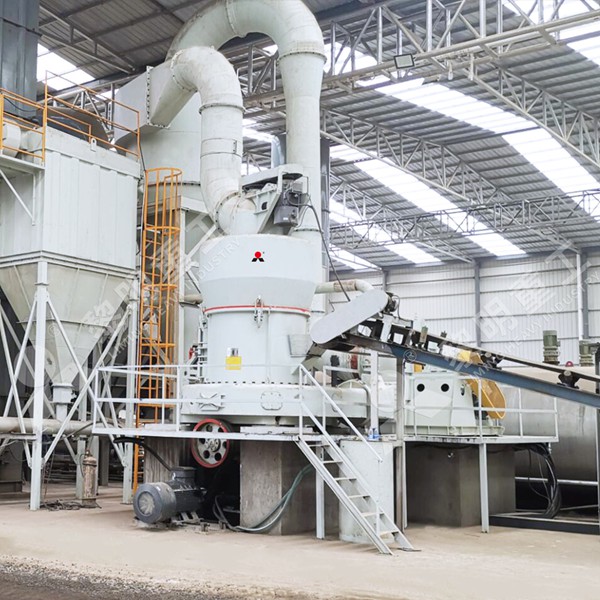
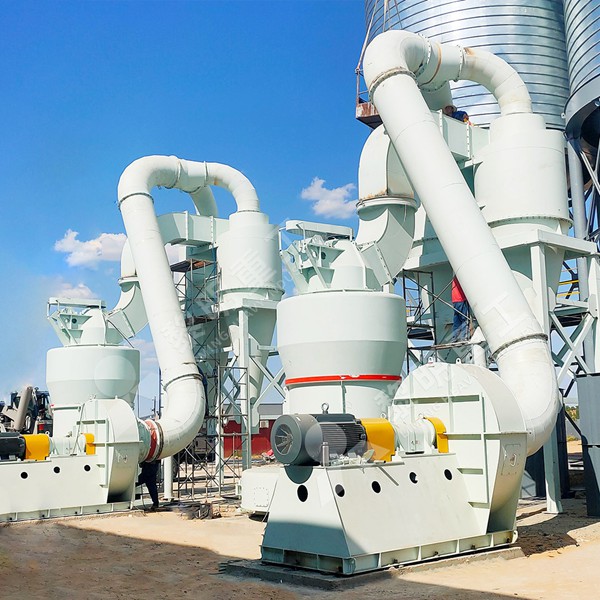
Liming Heavy Industry provides several mill types that are well-suited for dolomite grinding, each with distinct characteristics. The MTW European Type Trapezium Mill is the most recommended for medium to large-scale fertilizer production. It is an upgraded version of the traditional Raymond mill, featuring multiple patented technologies such as bevel gear overall drive, internal thin oil lubrication system, and curved air duct. These enhancements improve grinding efficiency by 20–30% compared to older designs while reducing energy consumption. The MTW mill can handle feed sizes up to 50 mm and produce fineness ranging from 1.6 mm to 0.045 mm (10–325 mesh) at capacities from 3 to 55 TPH. Its closed-loop airflow system, combined with a pulse dust collector, ensures dust-free operation that meets stringent environmental standards—a crucial factor for fertilizer plants located near residential areas.
For smaller operations or applications requiring finer powders, the Raymond Mill remains a cost-effective choice. With a capacity of 1.2–4.5 TPH and output fineness between 613 μm and 44 μm (30–325 mesh), it is ideal for pilot plants or farms producing their own dolomite conditioner. Its simple structure and low maintenance requirements make it a favorite in developing markets. However, for high-volume industrial fertilizer production, the LM Vertical Roller Mill offers the highest throughput (10–400 TPH) and can simultaneously dry, grind, and classify the material in a single unit, especially when the dolomite contains residual moisture from quarrying. The LM mill’s automatic control system maintains consistent product quality with minimal operator intervention.
Working Principle and Key Components
Taking the MTW mill as an example, the grinding process begins when raw dolomite is crushed by a jaw crusher to a size suitable for the mill (usually 30–50 mm). The crushed material is then evenly and continuously fed into the grinding chamber via a variable-frequency belt feeder. Inside the mill, the material is ground between the grinding roller and the grinding ring. The centrifugal force generated by the rotation of the main shaft forces the roller to press against the ring, pulverizing the dolomite. The ground powder is then carried upward by an air stream generated by a blower. A classifier (separator) at the top of the mill allows only particles meeting the fineness specification to pass; oversized particles fall back to the grinding zone for further reduction. The fine powder is collected by a cyclone collector and then discharged as the finished product. The air stream, after passing through a pulse dust collector, is recycled back to the blower, forming a closed, energy-efficient circuit.
Key to the MTW mill’s performance is its advanced lubrication system. Unlike traditional mills that require manual greasing, the MTW mill adopts an internal oil pump that continuously lubricates the grinding roller and main shaft bearings, significantly extending component life and reducing downtime. The curved air duct design minimizes resistance and ensures uniform airflow distribution, stabilizing the classification efficiency even when feed rate fluctuates.
Why Choose Liming Heavy Industry
With a history dating back to 1987, Liming Heavy Industry has established itself as a technology leader in the crushing and grinding sector. The company’s headquarters in Zhengzhou’s Hi-Tech Zone and its second workshop covering 67,000 m² in Shangjie Industry Park collectively host advanced manufacturing capabilities, including precision CNC machining centers and automated assembly lines. Over 30 years of continuous R&D have resulted in a portfolio of more than 20 patented technologies, many of which are integrated into the MTW and LM mills. The company’s “production, learning, and research” approach, combined with a mature scientific team, ensures that each machine is optimized for the specific characteristics of the target material—in this case, dolomite for fertilizer. Furthermore, Liming provides end-to-end service, from site planning and equipment selection to installation, commissioning, and after-sales support. This comprehensive approach minimizes project risk and helps customers achieve rapid return on investment.
Environmental and Operational Considerations
Modern fertilizer production must comply with increasingly strict environmental regulations, particularly regarding dust emissions and noise. All Liming mills are equipped with high-efficiency pulse dust collectors that capture over 99% of particulate matter, ensuring that the exhaust air meets local standards. The enclosed grinding circuit also reduces material loss and maintains a clean working environment. Energy efficiency is another critical factor: the MTW mill’s optimized transmission system reduces power consumption by up to 30% compared to traditional ball mills, which is especially important for large-scale operations where electricity costs are a major portion of production expenses.
Conclusion
Selecting the right dolomite powder making machine for fertilizer production is a decision that directly impacts product quality, operating costs, and regulatory compliance. Liming Heavy Industry offers a proven range of mills—MTW, Raymond, LM, and others—each designed to meet specific capacity and fineness requirements. Whether you need a compact unit for on-farm use or an industrial-scale system for commercial fertilizer manufacturing, our team can tailor a solution that delivers reliable, efficient, and environmentally responsible performance. With decades of experience and a commitment to innovation, Liming remains a trusted partner for the global agricultural industry.
Frequently Asked Questions
1. What is the typical fineness required for dolomite powder used as fertilizer?
Most agricultural applications require dolomite powder to pass through a 100-mesh sieve (150 microns) with a significant fraction under 200 mesh (75 microns). The exact specification may vary depending on soil type and crop, but Liming mills can easily adjust fineness from 30 mesh up to 325 mesh to meet different standards.
2. Can I use a single machine to both crush and grind dolomite?
For large feed sizes (over 30 mm), a separate crusher is recommended before the mill to ensure optimal grinding efficiency. Liming supplies jaw crushers, hammer crushers, and vibrating feeders as part of a complete dolomite processing line, designed to work seamlessly with the chosen mill.
3. How does the MTW mill compare to a traditional ball mill for dolomite grinding?
The MTW mill offers several advantages: lower energy consumption (30% less), smaller footprint, better dust control due to its closed system, and easier adjustment of fineness without stopping the machine. Ball mills are better suited for very hard or abrasive materials but are less efficient for soft-to-medium hardness minerals like dolomite.
4. What maintenance is required for the MTW European Type Trapezium Mill?
The internal lubrication system reduces the need for manual greasing. Routine maintenance includes checking the classifier blades, cleaning the dust collector filter bags, and inspecting the grinding roller and ring wear every 500–1000 hours of operation. Liming provides detailed maintenance manuals and remote support to minimize downtime.
5. Is it possible to achieve superfine dolomite powder (below 10 microns) for specialty fertilizer applications?
Yes, for applications requiring ultra-fine powder (e.g., d97 ≤ 5μm), Liming offers the MW Micro Powder Mill, which can grind dolomite down to 3250 mesh (about 4 microns). However, such fine powder is rarely used in conventional fertilizer; it is typically employed in high-value agricultural chemicals or coated fertilizers. For standard soil conditioning, the MTW or Raymond mill is more cost-effective.


