Published: October 18, 2023
In the demanding environment of steel refining, the quality and consistency of flux materials such as dolomite directly influence slag formation, desulfurization efficiency, and overall furnace productivity. Dolomite, a carbonate mineral composed of calcium magnesium carbonate (CaMg(CO₃)₂), is widely used in basic oxygen furnaces (BOF), electric arc furnaces (EAF), and ladle refining to adjust slag basicity, protect refractory linings, and improve metal cleanliness. The grinding of dolomite into fine, uniform powder is therefore a critical step in the metallurgical supply chain. This article explores the technical requirements, selection criteria, and operational advantages of dedicated dolomite grinding mills for steel refining, drawing on decades of engineering expertise from a leading manufacturer of crushing and grinding equipment. Key factors such as feed size, fineness range, moisture content, throughput capacity, and energy efficiency are examined, along with the working principles of several mill types that have proven effective in this application. The goal is to provide steel producers and mineral processors with actionable guidance for optimizing their dolomite grinding operations.
The Role of Dolomite in Steel Refining
Dolomite serves multiple functions in steelmaking. As a source of MgO, it helps to reduce the corrosion of basic refractories by forming high-melting-point phases. It also assists in controlling slag viscosity and fluidity, promoting better desulfurization and dephosphorization. For these benefits to be realized, the dolomite must be ground to a particle size typically between 0.5 mm and 3 mm for converter applications, or finer (100–200 mesh) for ladle furnace injection. The presence of moisture must also be minimized, usually below 2%, to prevent hydrogen pickup and reduce energy consumption during heating. Therefore, a grinding mill that can integrate drying, grinding, and classification in a single operation offers significant process simplification.
Key Considerations for Dolomite Grinding in Steel Refining
Feed Material Characteristics
Run-of-mine dolomite typically has a hardness of 3.5–4 on the Mohs scale and a specific gravity around 2.8–3.0. Its abrasiveness is moderate, but the presence of silica impurities can accelerate wear. Moisture content can vary from 3% to 12% depending on the quarry and season. A robust grinding system must therefore handle both dry and slightly sticky feeds without clogging.
Desired Product Fineness and Capacity
For steel refining, the required fineness for ladle injection is often 80% passing 200 mesh (74 µm), while some applications demand even finer (325 mesh) for rapid dissolution. Capacities can range from 5 tons per hour for small-scale EAF operations to over 100 tons per hour for integrated steel plants. The mill must deliver consistent particle size distribution with minimal oversize.
Energy Efficiency and Environmental Compliance
Grinding accounts for a major portion of total operational cost. Modern mills employ efficient roller grinding mechanisms that consume 30–50% less energy compared to traditional ball mills. Additionally, stringent emission standards require closed-circuit systems with pulse-jet dust collectors to ensure that no fine powder escapes into the atmosphere.
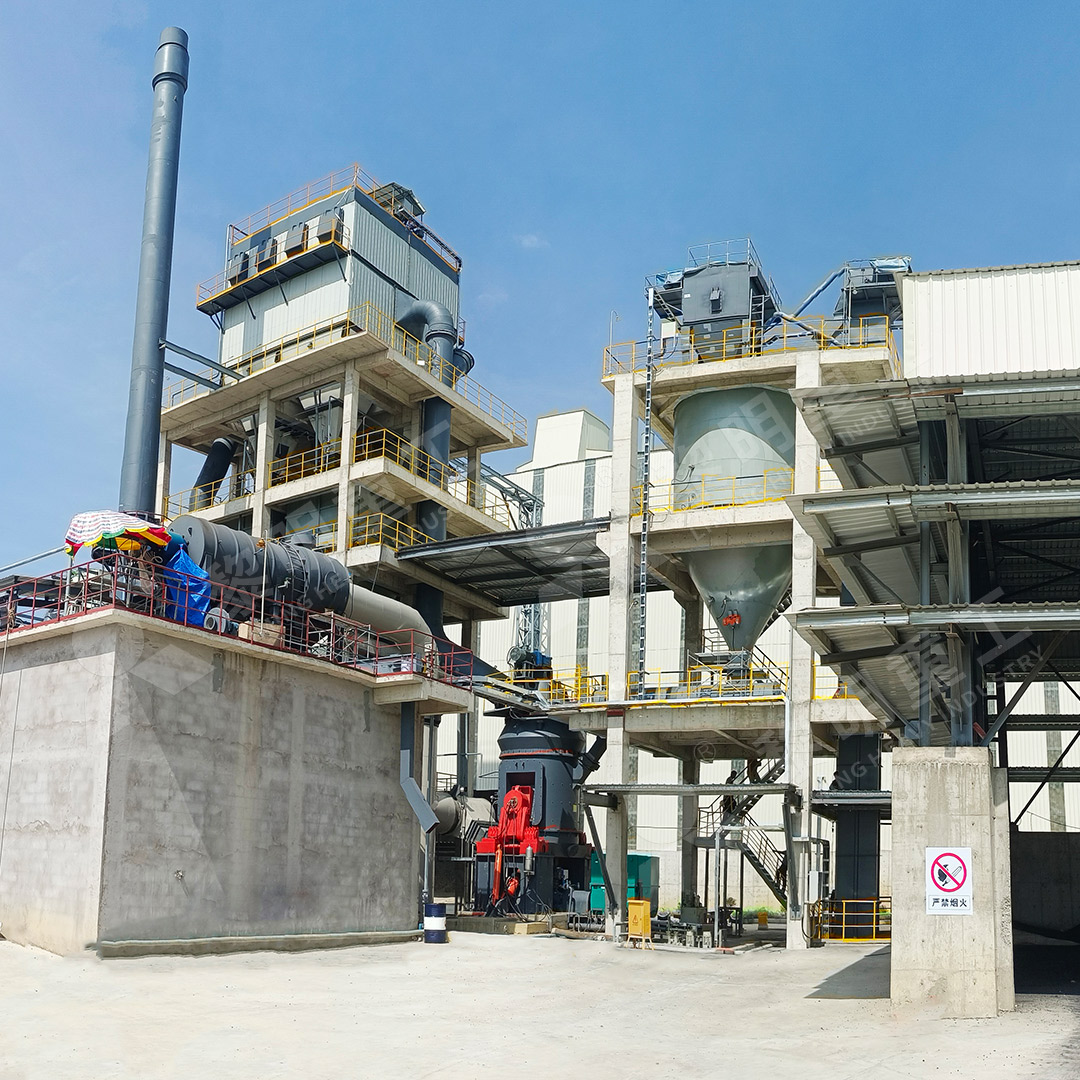
Suitable Mill Technologies for Dolomite Grinding
Based on extensive field experience, several mill types have been successfully deployed for dolomite grinding in steel refining. Below are the most relevant ones, each with distinct advantages depending on the scale and requirements.
LM Vertical Roller Mill
This mill integrates drying, grinding, powder selection, and conveying into one unit. It is ideal for large-capacity installations where high moisture removal is needed. The grinding rollers are hydraulically loaded and can be lifted off the table during start-up for safe operation. For dolomite, the LM mill achieves a fineness of 5–20% R 0.045 mm (depending on classifier speed) and handles feed sizes up to 55 mm. The specific power consumption is as low as 20–30 kWh/t, making it a top choice for integrated steel plants. The automatic control system maintains stable product quality even with varying feed moisture.
MTW European Type Trapezium Mill
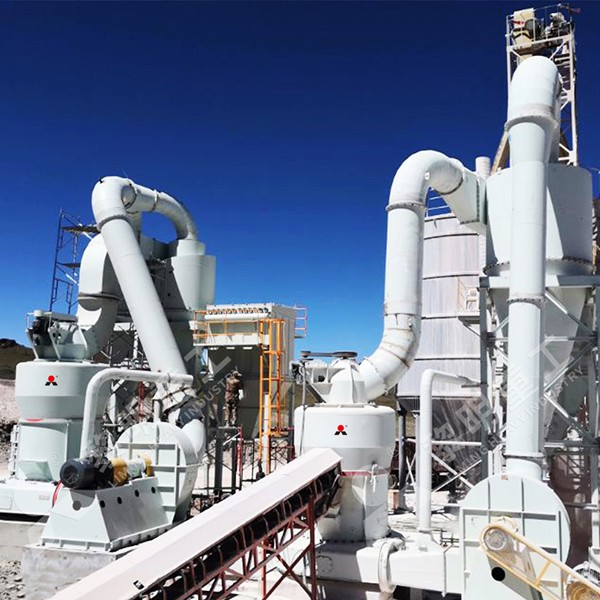
An evolution of the Raymond mill, the MTW series features a trapezoidal grinding ring and segmented roller tires that distribute pressure more evenly. It is particularly effective for medium-capacity operations (3–55 t/h) requiring fineness in the range of 613–44 µm. The built-in classifier provides sharp separation, and the system is sealed to prevent dust leakage. Many steel ladle refining facilities use this mill for producing 200-mesh dolomite powder due to its reliability and low maintenance.
MW Micro Powder Mill
When ultra-fine dolomite powder (d97 ≤ 5 µm) is needed for specialized injection applications, the MW micro powder mill is the right choice. It operates on a multi-roller rotating table principle and is equipped with a high-efficiency classifier. Although the capacity is lower (0.5–25 t/h), the product fineness can be adjusted between 325 and 3250 mesh. This mill is often used by mineral processing companies that supply tailored fluxes to steelmakers.
Raymond Mill and Ball Mill
The traditional Raymond mill remains a workhorse for smaller operations where the required fineness is between 80 and 325 mesh. It is simple to operate and has a proven track record. Meanwhile, the ball mill is still used in some older plants, but its high energy consumption and larger footprint make it less competitive. However, when processing wet dolomite or when a very coarse product (e.g., 1–3 mm) is acceptable, the ball mill can be a cost-effective solution.
Working Principle of the MTW European Type Trapezium Mill
To illustrate the typical grinding process, consider the MTW mill. Large dolomite lumps are first crushed by a jaw crusher to < 30–50 mm. A variable-frequency belt feeder then delivers the material evenly into the mill. Inside, the material is ground between the rollers and the grinding ring. The ground powder is carried upward by the air flow from the blower. Particles that are too coarse fall back for regrinding, while fine particles pass through the separator and are collected by the cyclone and pulse dust collector. The closed-loop air system ensures that hot gases can be introduced for drying if needed. This arrangement meets stringent environmental regulations while providing a consistent product.
Process Integration and Auxiliary Equipment
A complete grinding station for steel refining typically includes a jaw crusher, elevator, feeder, mill, air blower, dust collector, and control cabinet. For large installations, the LM vertical mill’s ability to dry material using hot air from the plant's waste heat reduces overall energy consumption. The dust collector is essential; pulse-jet bag filters are standard to keep emissions below 20 mg/Nm³. The entire system can be automated with PLC controls, enabling remote monitoring of key parameters such as mill differential pressure, roller pressure, and product fineness.
Operational Best Practices
To maximize the service life of a dolomite grinding mill, operators should follow these guidelines:
- Maintain a steady feed rate to avoid overloading the mill.
- Monitor the grinding ring and roller wear patterns; replace segments when the profile changes by more than 10 mm.
- Keep the air flow and classifier speed optimized for the target fineness.
- Inspect the dust collector bags regularly to prevent pressure drop increases.
- Use a metal detector before the mill to remove tramp iron that could damage the grinding elements.
Conclusion
Selecting the right dolomite grinding mill for steel refining is a decision that impacts product quality, energy consumption, and operational reliability. From high-capacity LM vertical roller mills to versatile MTW trapezium mills and ultra-fine MW micro powder mills, the technology is available to meet the exacting demands of modern steelmaking. By understanding the material properties, process requirements, and mill characteristics, steel producers can achieve a consistent, high-quality dolomite flux while minimizing costs and environmental impact. With decades of manufacturing experience and a commitment to innovation, the range of grinding solutions offered by industry leaders continues to evolve, supporting the global shift toward more efficient and sustainable steel production.
Frequently Asked Questions (FAQ)
- What is the typical feed size for dolomite grinding in steel refining?
Feed size usually ranges from 30–55 mm for larger mills like LM vertical mill, and 15–25 mm for Raymond-type mills. A primary jaw crusher is often used to reduce run-of-mine material to this size. - Can the same mill handle both dolomite and limestone for steelmaking?
Yes, many mills can process both minerals because their hardness and abrasiveness are similar. However, the product fineness and capacity settings may need adjustment due to differences in grindability. - How do I control the moisture content of the ground dolomite?
If the feed moisture exceeds 5%, a mill with integrated drying (such as LM vertical roller mill) can use hot air from a furnace or waste heat source to evaporate moisture during grinding. The outlet temperature is carefully controlled to avoid overheating. - What maintenance is required for the grinding rollers and rings?
Inspect rollers and rings every 200–500 operating hours for wear. Replace or re-profile them when the thickness decreases by 15–20%. Lubrication of bearings and seals should follow the manufacturer's schedule. - Is a dust collector mandatory for environmental compliance?
In most jurisdictions, yes. A pulse-jet bag filter with emission limits below 30 mg/Nm³ is typically required. The closed-loop system also recovers valuable product and reduces raw material loss.


