Published: March 23, 2025
In the modern glass manufacturing industry, dolomite plays an indispensable role as a key fluxing agent and source of magnesium and calcium. The quality and fineness of dolomite powder directly influence the melting temperature, clarity, and durability of glass products. Selecting the right grinding equipment is therefore critical. Liming Heavy Industry's LM Vertical Roller Mill has emerged as a preferred solution for processing dolomite in the glass sector, offering an integrated system that combines drying, grinding, classifying, and conveying. With capacities ranging from 10 to 400 T/H and feed sizes up to 55 mm, this mill delivers consistent, high-purity fines while reducing energy consumption and maintenance costs. This article explores the technical features, working principles, and specific advantages of using a dolomite roller mill for glass industry applications.
Why Dolomite Powder Matters in Glass Production
Glass formulas typically include silica sand, soda ash, limestone, and dolomite. Dolomite (CaMg(CO₃)₂) provides magnesium oxide (MgO) and calcium oxide (CaO), which act as stabilizers and fluxes. Properly ground dolomite ensures homogeneous mixing, lowers the melting point of the batch, and improves the workability of molten glass. For float glass, container glass, and fiberglass, the required particle size distribution often falls between 100 and 400 mesh (about 150 to 38 microns), with strict control over oversize particles to avoid defects. Traditional ball mills and Raymond mills can achieve these fineness levels, but they suffer from high energy consumption, frequent wear, and limited throughput. The vertical roller mill, with its advanced grinding mechanism and integrated classification, addresses these challenges head-on.
Liming LM Vertical Roller Mill: A Comprehensive Solution
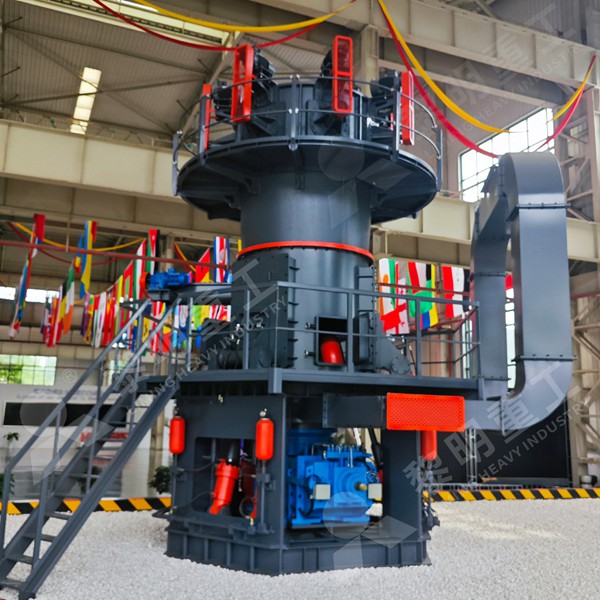
Liming Heavy Industry's LM series vertical roller mill is engineered for large-scale mineral processing. The mill features a unique grinding roller and table design, where materials are crushed, sheared, and ground between the rollers and the rotating grinding table. Hot air can be introduced into the mill chamber to dry the dolomite simultaneously with grinding, which is especially beneficial when the feed contains surface moisture. The integrated classifier ensures that only particles meeting the desired fineness exit the mill, while coarse material falls back for further grinding. This closed-circuit operation minimizes waste and maximizes efficiency.
Key Technical Specifications
- Capacity: 10 – 400 T/H
- Feed size: ≤ 55 mm
- Product fineness: 80 – 600 mesh (adjustable)
- Main motor power: varies by model
- Drying capacity: up to 15% moisture in feed
- Integrated classifier: high-efficiency dynamic separator
For the glass industry, operators typically set the classifier to produce a product with 95% passing 200 mesh (74 microns). The LM mill can easily achieve this while maintaining a narrow particle size distribution, which is essential for consistent melting behavior.
Working Principle of the Dolomite Roller Mill
The LM vertical roller mill operates on a proven principle. Raw dolomite is fed through the central chute onto the rotating grinding table. Centrifugal force throws the material outward toward the grinding track, where it is crushed between the rollers and the table. The rollers are hydraulically loaded, providing the necessary pressure to grind the material. Meanwhile, hot air enters from below the table, lifting the ground particles upward through the classifier. The rotating classifier blades allow only fine particles to pass; oversize particles are returned to the grinding zone. The finished powder is collected by a downstream bag filter or cyclone. The entire system is under negative pressure, ensuring dust-free operation.
This design eliminates the need for separate drying and classifying equipment, simplifying the process flow and reducing capital expenditure. The mill also incorporates automatic lubrication and remote monitoring, allowing for unattended operation and predictive maintenance.
Advantages Over Traditional Mills
Compared to ball mills, Raymond mills, or pendulum mills, the LM vertical roller mill offers several distinct benefits for glass-grade dolomite:
| Parameter | LM Vertical Roller Mill | Traditional Ball Mill |
|---|---|---|
| Energy consumption | 30–50% lower | Baseline |
| Product fineness control | Precise via dynamic classifier | Limited, requires external classifier |
| Moisture handling | Integrates drying | Requires separate dryer |
| Wear part life | Longer due to optimized metallurgy | Shorter, frequent liner changes |
| Noise level | Lower (below 85 dB) | Higher |
These advantages translate directly into lower operating costs and higher productivity for glass manufacturers. In a typical 500 TPD glass plant, using an LM vertical mill for dolomite can reduce annual electricity costs by hundreds of thousands of dollars while improving product consistency.
Case Study: Dolomite Grinding for Float Glass
A float glass producer in Asia upgraded its raw material preparation line from a ball mill to an LM2400 vertical roller mill. The target fineness was 200 mesh with less than 5% residue on 325 mesh. The LM mill handled feed with 8% moisture without any pre-drying, achieving a throughput of 65 T/H. The client reported a 40% reduction in specific power consumption and a 60% decrease in maintenance downtime compared to the previous ball mill system. The uniform particle shape also improved the batch homogeneity, leading to fewer bubbles and a higher yield of first-quality glass.
Liming Heavy Industry: Trusted Partner for Over Three Decades
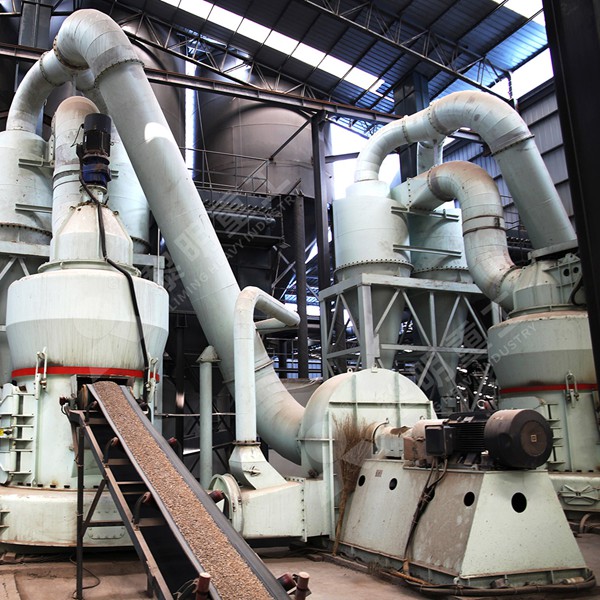
Founded in 1987, Liming Heavy Industry Co., Ltd. has grown into a modern joint-stock corporation encompassing research, manufacturing, and sales. Our headquarters in Zhengzhou's High-Tech Zone spans 80,000 m², with an additional 67,000 m² workshop in the Shangjie Industrial Park. Over 30 years, we have provided grinding solutions to thousands of clients across cement, power, metallurgy, chemicals, and non-metallic minerals. Our scientific research team focuses on continuous innovation, holding numerous patents for mill design and automation. The LM vertical roller mill is a result of this commitment, incorporating the latest advancements in wear-resistant materials, hydraulic systems, and intelligent control.
Other Grinding Options for Glass Industry
While the LM vertical mill is ideal for large-capacity dolomite grinding, Liming also offers complementary equipment for different throughput and fineness requirements:
- MTW European Type Trapezium Mill – For capacities from 3 to 55 TPH, it provides finer product (down to 325 mesh) and is suitable for smaller glass plants or specialized silica grinding.
- Raymond Mill – A classic choice for materials under Mohs 7, with fineness between 613 μm and 44 μm, widely used in smaller-scale operations.
- MW Micro Powder Mill – Achieves ultra-fine powders (325–3250 mesh) for high-end glass applications such as optical glass.
- Ball Mill – A versatile option for both coarse and fine grinding, often used in combination with classifiers.
Each machine shares the Liming commitment to reliability, energy efficiency, and environmental compliance, featuring pulse dust collectors that meet global emission standards.
Environmental and Safety Considerations
Glass producers today face stringent regulations on dust emissions and noise. The LM vertical roller mill operates under negative pressure, eliminating dust leakage. The integrated pulse dust collector captures fine particulates, achieving outlet dust concentrations below 20 mg/Nm³. Noise levels are kept low through soundproofing enclosures and vibration-dampening mounts. Additionally, the mill's hydraulic system uses biodegradable fluids, and the closed-loop air circuit reduces thermal losses. These features help glass manufacturers achieve green certifications and reduce their carbon footprint.
Conclusion
Choosing the right dolomite roller mill is a strategic decision for any glass industry player. The LM Vertical Roller Mill from Liming Heavy Industry delivers the high throughput, precise fineness, low energy consumption, and operational simplicity that modern glass production demands. With decades of engineering expertise and a global service network, Liming provides tailored solutions that maximize return on investment. Whether for new plants or retrofits, the LM mill stands as a benchmark for dolomite grinding excellence.
Frequently Asked Questions (FAQ)
- Can the LM vertical roller mill handle dolomite with high moisture content?
Yes. The LM mill incorporates hot air drying within the grinding chamber, capable of handling feed moisture up to 15% without pre-drying equipment. - What is the typical fineness range for glass-grade dolomite powder?
Most glass applications require a fineness of 80 to 400 mesh. The LM mill's dynamic classifier can be adjusted to achieve the exact target, commonly 200 mesh (74 microns) with high consistency. - How does the LM mill compare to a ball mill in terms of maintenance?
The LM mill has fewer wear parts and longer intervals between maintenance. Rollers and table liners are made of high-chrome alloy and can be replaced without removing the entire assembly. Typical maintenance downtime is reduced by 50–70% compared to ball mills. - What after-sales support does Liming provide for overseas customers?
Liming offers comprehensive support including installation supervision, operator training, spare parts supply, and remote diagnostics. Our service network covers Asia, Africa, Europe, South America, and the Middle East. - Is the LM mill suitable for grinding other raw materials besides dolomite in a glass plant?
Absolutely. It can also grind limestone, feldspar, silica sand, and other non-metallic minerals used in glass batch preparation. Adjustments to the classifier speed and roller pressure allow quick changeover between materials.


