Dolomite Grinding Mill for Soil pH Adjuster: A Complete Guide to Efficient Production
Dolomite is a naturally occurring double carbonate of calcium and magnesium. When properly ground, it becomes one of the most effective and economical soil pH adjusters available to farmers and agronomists. It neutralizes soil acidity, supplies essential calcium and magnesium, improves soil structure, and increases the efficiency of fertilizer application. However, raw dolomite is not useful until it is crushed and milled to a controlled particle size. Liming Heavy Industry Co., Ltd. has been designing and manufacturing grinding equipment since 1987, with more than 30 years of experience in non-metallic mineral processing. Our product range including the Raymond mill, MTW European type trapezium mill, LM vertical roller mill, MW micro powder mill and ball mill can be configured into a complete dolomite grinding system. This guide explains why dolomite is important, how to select the right mill, and what to consider when building a production line for agricultural soil pH adjuster.
Why Dolomite Matters as a Soil pH Adjuster
Soil pH determines how easily plants can absorb nutrients. In strongly acidic soils, hydrogen ions and soluble aluminum are present in high concentrations, which can damage roots and reduce the availability of phosphorus, calcium and magnesium. Agricultural dolomite raises pH by introducing carbonates that react with hydrogen ions. Because dolomite contains both calcium and magnesium, it is particularly beneficial in magnesium-deficient fields. Magnesium is the central atom of the chlorophyll molecule, so a balanced supply also supports photosynthesis.
Particle size plays a major role in the speed and duration of pH adjustment. Fine particles expose more surface area and react quickly, while medium and coarse particles continue to dissolve over a longer period. In conventional soil amendment programs, dolomite powder is often ground so that most particles pass a 100-mesh screen, with a controlled amount of slightly coarser material for slow release. A reliable grinding mill must therefore produce a consistent particle size distribution, not simply a mass of fine dust.
Dolomite Grinding Process Overview
The typical dolomite grinding line includes primary crushing, feeding, grinding, classification and dust collection. Raw dolomite from the quarry is first reduced by a jaw crusher to a size between 10 mm and 55 mm, depending on the grinding mill selected. A vibrating feeder and variable-frequency belt feeder then deliver the material into the mill at a controlled rate. Inside the mill, the dolomite is ground between rollers and a grinding ring, or between steel balls and liners, depending on the machine. An air stream carries the ground powder to a separator. Oversized particles fall back to the grinding chamber, while fine particles pass through the separator and are collected as finished product. The air is cleaned by a pulse dust collector and returned to the system.
For conventional agricultural dolomite, the target fineness is generally in the range of 80 to 200 mesh. Some premium soil conditioners require even finer powder, while low-cost field application may accept a coarser specification. The grinding system must be flexible enough to adjust fineness without sacrificing output.
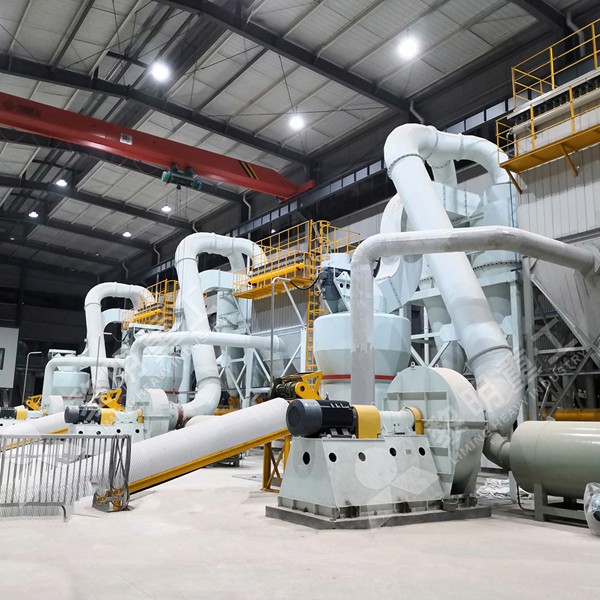
Liming Grinding Equipment for Dolomite Powder
Liming Heavy Industry has focused on the development of mills for minerals such as limestone, dolomite, calcium carbonate and gypsum. Below is a technical overview of the main products suitable for dolomite soil pH adjuster production.
| Mill Type | Capacity | Feed Size | Fineness Range |
|---|---|---|---|
| Raymond Mill | 1.2-4.5 t/h | 15-25 mm | 613-44 μm |
| MTW European Type Trapezium Mill | 3-55 t/h | 30-50 mm | Adjustable by classifier |
| LM Vertical Roller Mill | 10-400 t/h | 30-55 mm | Adjustable by classifier speed |
| MW Micro Powder Mill | 0.5-25 t/h | 10-20 mm | 325-3250 mesh |
| Ball Mill | 0.65-50 t/h | ≤25 mm | Adjustable with external classifier |
Raymond Mill
Raymond mill is ideal for small and medium dolomite plants. It processes non-explosive, non-flammable minerals with Mohs hardness below 7 and moisture below 6%. For soil pH adjuster, a Raymond mill can produce powder from about 30 mesh to 325 mesh, with a capacity of 1.2-4.5 t/h. It is popular as an entry-level mill for farm cooperatives and agricultural processors. The main grinding unit is easy to operate, and the circulation air system minimizes dust.
MTW European Type Trapezium Mill
MTW European type trapezium mill is the upgraded product of traditional Raymond mill and pendulum mill. It has patented technology, stable performance, high productivity, environmental protection and energy saving. With a capacity of 3-55 t/h and a feed size of 30-50 mm, this mill is well suited to medium and large non-metallic mineral powder making. The complete MTW grinding line includes a jaw crusher, vibrating feeder, hopper, grinding mill, separator, air blower, dust collector, pipe and powder collector. Material is ground between rollers and a ring, and particles that cannot pass the separator are returned for another cycle. The system is closed and equipped with a pulse dust collector, so it complies with national environmental protection standards.
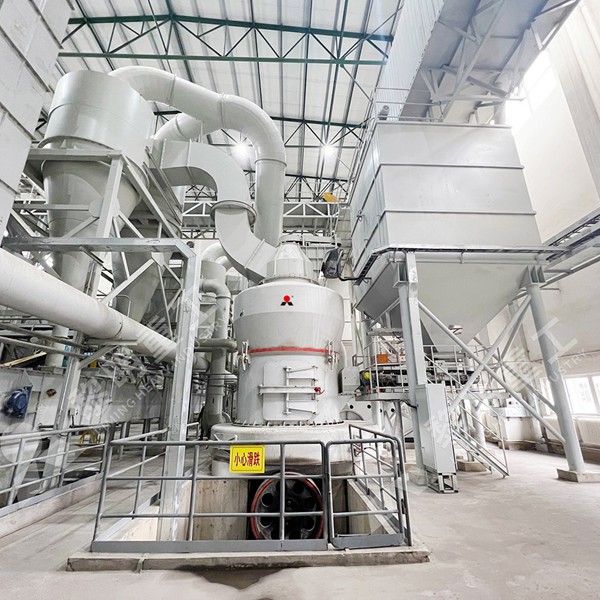
LM Vertical Roller Mill
LM vertical roller mill adopts a new milling device and automatic electric control system. It integrates drying, grinding, powder selection and conveying in one unit. This is particularly valuable for dolomite with more than 6% moisture or for large projects where a separate dryer would be too expensive. The LM mill can handle 10-400 t/h and accepts feed sizes of 30-55 mm. It is widely used in cement, electricity, metallurgy, chemical and non-metallic mineral industries. For agricultural dolomite production, the LM mill provides a stable grinding bed, adjustable separator speed, and precise control of the final particle size distribution.
MW Micro Powder Mill
MW micro powder mill absorbs advanced Swedish grinding technology and is excellent for superfine powder processing. The finished product can reach d97 ≤ 5 μm, and fineness can be adjusted between 325 mesh and 3250 mesh. It is equipped with a pulse precipitator, making production greener and more environmentally friendly. The working principle is based on a turnplate and dozens of rollers that rotate against a grinding ring. Material is first crushed by a hammer crusher, then transported by an elevator to a hopper. A vibrating feeder sends the material to the upper turnplate, and centrifugal force moves it into the raceway for grinding. For specialty soil products that require ultra-fine dolomite, the MW mill is the right solution.
Ball Mill
Ball mill is a common grinding plant used in industry and is key equipment for milling after materials are crushed. It can grind all kinds of ores and other materials, and it is widely used in beneficiation, construction and chemical industries. For dolomite soil pH adjuster, a ball mill is often paired with an external air classifier to produce a consistent agricultural grade powder. The ball mill capacity is 0.65-50 t/h, and the feed size should be no larger than 25 mm. In the grinding chamber, steel balls are lifted by the rotating barrel and then fall to impact and grind the material. This simple, durable technology remains a good choice for plants with existing crushing infrastructure and a preference for mechanical simplicity.
How to Choose the Right Dolomite Grinding Mill
Choosing a dolomite grinding mill is not a one-size-fits-all decision. If the project is small, such as a farm cooperative producing 1-4 t/h, a Raymond mill is easy to install and operate. For medium and large agricultural mineral companies, an MTW European type trapezium mill gives better capacity and energy efficiency. For a centralized hub supplying many farms, an LM vertical roller mill can handle 10 t/h to 400 t/h and can dry feed material that was stored outside. If the goal is to manufacture ultra-fine dolomite for specialty soil products, the MW micro powder mill is the best technology.
Feed moisture is another key factor. Raymond, MTW, MW and ball mill normally require material with less than 6% moisture. If quarries deliver wet dolomite, an LM vertical mill with hot gas can combine drying and grinding in one step. This reduces the cost of a separate drying drum. Environmental regulations are also important. Every Liming mill line can be equipped with a pulse dust collector, and the MTW system is designed as a closed air circuit. In many regions, this is enough to meet national emission standards for non-metallic mineral grinding.
Environmental Protection and Operational Efficiency
Dolomite grinding generates fine dust. A professionally designed plant uses negative pressure in the mill system to capture dust at every transfer point. Liming Heavy Industry supplies pulse dust collectors as part of the system. The collected powder can be recycled as product, and the cleaned air is returned to the blower, reducing heat loss. This closed loop also keeps the working environment safer for operators.
Quality control should include regular sieve tests. The separator speed, air volume and roller pressure can be adjusted to maintain the required particle size. For soil pH adjuster, a mill that can switch between two or three fineness settings is valuable because agricultural recommendations vary by soil type. A flexible grinding line allows the same plant to produce granular field-grade dolomite and finer value-added soil amendment powder.
Conclusion
Liming Heavy Industry Co., Ltd. was founded in 1987 and now has its headquarters in the Zhengzhou HI-TECH Industry Development Zone, with an 80,000 m² main area and a 67,000 m² workshop in Shangjie Industry Park. Over the past 30 years, our company has adhered to modern scientific management, precision manufacturing and continuous innovation. We have become a leader in domestic and overseas machinery manufacturing. For a dolomite grinding mill for soil pH adjuster, there is no universal solution, but Liming can provide the right equipment, process design and after-sales support. Whether you are starting a small agricultural grinding line or building a large industrial powder plant, our mills are designed to produce reliable, high-quality dolomite powder that helps farmers balance soil pH and increase crop yields.
Frequently Asked Questions
1. What mesh size is recommended for dolomite as a soil pH adjuster? Most agricultural dolomite is ground to 80-120 mesh for a good balance between fast and slow release. Some programs include a small fraction of 20-40 mesh particles for longer residual effect. Always follow local soil test recommendations and application standards.
2. Can the same mill grind both dolomite and limestone? Yes. Dolomite and limestone are similar in hardness and moisture characteristics. Raymond, MTW, LM, MW and ball mill can all handle both materials. Changing feed material may require adjustment of separator speed, air flow and grinding pressure.
3. Does Raymond mill require pre-crushing? Yes. The Raymond mill feed size is 15-25 mm, so raw quarry stone must be crushed by a jaw crusher before entering the mill. For softer or smaller feed, the crushing step can be lighter, but the feed size limit must be respected.
4. How does Liming control dust during dolomite grinding? Liming mills can be equipped with pulse dust collectors and closed-loop air circulation systems. The MTW European type trapezium mill, for example, is designed as a closed system. Dust from the air is collected and returned to the product stream, which keeps the plant clean and meets environmental requirements.
5. What is the advantage of the LM vertical roller mill for dolomite? The LM vertical roller mill integrates drying, grinding, powder selection and conveying. It handles high feed moisture, offers a very large capacity range of 10-400 t/h, and uses automatic electric control for stable operation. It is especially suitable for large-scale dolomite soil pH adjuster production with high annual demand.


