Published on October 26, 2023
Barite, or barium sulfate (BaSO₄), is the primary weighting agent in oil and gas drilling muds, essential for counterbalancing formation pressure and preventing blowouts. A dedicated barite grinding mill must produce ultra-fine, high-density powders (typically 4.2 SG or higher) with a controlled particle size distribution—usually 3–80 microns—to maintain rheological stability in the drilling fluid system. LIMING HEAVY INDUSTRY, with over three decades of expertise in crushing and grinding machinery, offers a suite of mills engineered specifically for barite processing: the MTW European Type Trapezium Mill for medium-to-large capacity operations, the MW Micro Powder Mill for ultra-fine barite grades, and the LM Vertical Roller Mill for high-throughput integrated grinding and drying. These systems incorporate closed-circuit air classification, pulse-jet dust collection, and wear-resistant materials to ensure consistent product quality, energy efficiency, and compliance with environmental standards. This article explores the technical requirements for barite grinding in oil drilling applications, the working principles of LIMING's flagship mills, and best practices for selecting and operating grinding equipment to optimize mud weight and drilling performance.
Why Barite Quality Matters in Drilling Mud
Drilling mud—often called “the blood of the well”—must maintain a specific density to counteract high-pressure gas and fluid zones. Barite is the most common weighting material because of its high specific gravity (4.2–4.5), chemical inertness, and relatively low cost. However, the effectiveness of barite in mud hinges on its fineness and particle shape. Coarse barite particles settle out of suspension quickly, leading to barite sag, while overly fine dust increases viscosity and reduces pumpability. The API 13A standard specifies that at least 97% of barite must pass through a 75-micron sieve and no more than 30% through a 6-micron sieve. Achieving this tight distribution requires a grinding mill that combines precise classification, robust construction, and consistent operation over long hours in remote drilling locations.
LIMING Barite Grinding Mill Solutions
1. MTW European Type Trapezium Mill
For barite grinding in oilfield supply chains where volumes range from 3 to 55 tonnes per hour, the MTW mill is the workhorse. Its trapezium-shaped roller and ring create a tight grinding zone that shears barite ore into uniform particles. The built-in classifier—equipped with a variable-speed rotor—returns oversized material for regrinding while allowing only the target fineness to pass. This closed-loop air circuit eliminates moisture ingress and prevents clumping, critical for barite with residual humidity. The MTW mill also features a pulse dust collector that captures fines down to 1 micron, ensuring a clean working environment. For a typical barite operation, the mill’s drying capability (using hot air from the blower) can reduce moisture from 6% to below 0.5%, meeting API moisture limits.
2. MW Micro Powder Mill
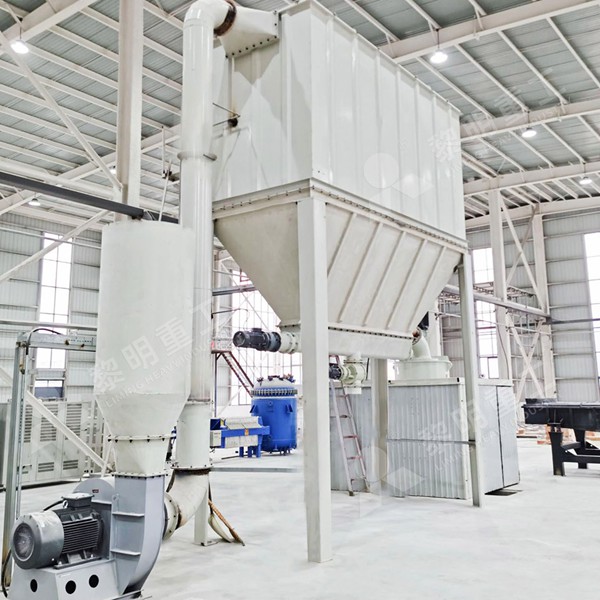
When the mud program demands barite grades finer than 325 mesh (44 microns), such as for deepwater or high-temperature wells, the MW Micro Powder Mill excels. With its multi-head grinding ring and high-pressure spring rollers (up to 1.2 MPa), the MW mill can achieve D97 ≤ 5 microns while maintaining a capacity of 0.5–25 T/H. This mill is particularly suited for “micronized barite,” which improves suspension stability in invert-emulsion muds and reduces formation damage. The MW mill’s internal classifier—a dynamic cage rotor—adjusts fineness by altering rotor speed, allowing operators to switch between 800 and 2500 mesh without mechanical changeovers. A nitrogen injection option is available for ultra-fine grinding of reactive materials, though barite’s inert nature typically allows standard air flows.
3. LM Vertical Roller Mill
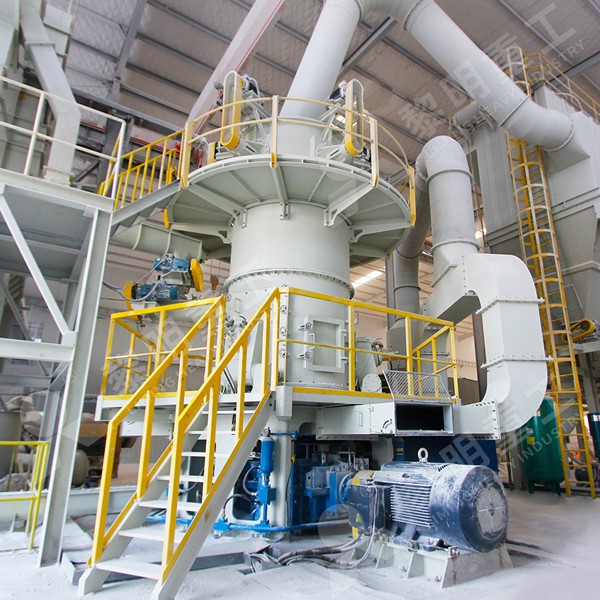
For high-tonnage barite processing plants integrated with mining operations, the LM Vertical Roller Mill offers capacity from 10 to 400 T/H. Its vertical design allows it to combine crushing, grinding, drying, and classification in a single pass—ideal for barite ore that requires pre-drying before grinding. The mill uses a conical grinding roller and flat grinding table; the material bed is stabilized by hydraulic tensioning, which ensures consistent grinding pressure regardless of feed size fluctuations (up to 55 mm). The dynamic separator in the LM mill produces a narrow particle size distribution, with the ability to collect fines at 80 microns or adjust to 200 mesh for premium mud applications. The LM mill’s low specific energy consumption (typically 25–35 kWh per ton) makes it cost-effective for on-site barite plants near drilling deserts or offshore bases.
Key Considerations for Barite Grinding Equipment Selection
- Wear Protection: Barite has a Mohs hardness of 3–3.5, which is moderate, but its abrasive nature due to quartz impurities requires mills with high-chrome steel liners, tungsten carbide overlays, or ceramic rollers. LIMING mills use replaceable wear parts with HRC 58–62 hardness.
- Moisture Content: Barite ore often arrives with 2–8% moisture. A mill with integrated hot air drying—like the LM or MTW when equipped with an auxiliary heat source—prevents clogging in the classifier cone.
- Sieve Retention: To meet API spec, the mill’s classifier must be dialed to reject +75 micron particles. LIMING offers real-time particle size analyzers that connect to the classifier drive for automated feedback.
- Environmental Compliance: Both the MTW and MW mills come with baghouse dust collectors that filter exhaust air to <10 mg/Nm³ particulate, surpassing most regulatory requirements for barite plants.
- Automation: LIMING mills can be integrated with a centralized PLC system that controls feeder speed, classifier RPM, air flow, and grinding pressure, enabling unmanned operation in remote locations.
Working Principle Applied to Barite
In the MTW mill, barite ore fed via a variable-frequency belt passes through a crushing chamber where a jaw crusher reduces lump size to under 50 mm. The material is then ground between the trapezium-shaped roller and the grinding ring. A centrifugal force flings the powder into the airstream; the classifier wheel throws coarse particles back to the grinding zone while fine particles exit to the cyclone collector. The system is under negative pressure, preventing dust leaks. For the MW mill, the process is similar but uses a multi-turnplate system where material falling from the upper turnplate is crushed between dozens of rollers and the ring before being lifted by airflow. The residence time is shorter, favoring ultra-fine output.
Conclusion
Selecting the right barite grinding mill for oil drilling mud is a strategic decision that affects mud density control, drilling safety, and operational cost. LIMING HEAVY INDUSTRY’s portfolio—spanning the MTW European Mill for standard barite, the MW Micro Powder Mill for ultra-fine grades, and the LM Vertical Mill for mass production—provides tailored solutions for every scale of drilling operation. With a commitment to scientific research and continuous innovation, LIMING ensures that each mill delivers the precise particle size, specific gravity, and throughput required by modern drilling fluids. Whether commissioning a new on-site barite grinding plant or upgrading an existing facility, engineers can rely on LIMING’s 30+ years of machinery expertise and global support network to achieve mud quality excellence.
Frequently Asked Questions (FAQ)
- What capacity of barite grinding mill is typical for an oilfield mud plant?
From small mobile units processing 1–3 TPH to fixed plants grinding 40–50 TPH. The MTW mill handles 3–55 TPH, while the LM vertical mill can exceed 400 TPH for centralised barite processing hubs. - Can the same mill grind both barite and bentonite?
Barite (3.5 Mohs) is harder than bentonite (1–2 Mohs). While possible, switching materials requires thorough cleaning of the grinding chamber and classifier to avoid cross-contamination. LIMING recommends dedicated mills per material for consistent pellet quality. - How do I control the fineness of barite powder for API 13A compliance?
Adjust the classifier rotor speed—higher RPM produces finer particles. The MTW and MW mills allow dynamic tuning without stopping production. An online particle size analyzer can provide closed-loop control. - What is the typical energy consumption per ton of barite ground to 200 mesh?
Energy consumption varies by mill type and feed moisture, but expect 20–30 kWh/t for the LM vertical mill and 35–45 kWh/t for the MTW trapezium mill. The MW micro mill may use 50–70 kWh/t for ultra-fine (325 mesh) products. - Do LIMING mills require specialised foundation or cooling systems?
All LIMING mills require a reinforced concrete foundation with vibration dampening. No additional cooling is needed for barite grinding, but the mill’s gearbox and main bearing may require oil cooling if operating continuously above 40°C ambient. Our team provides foundation drawings and thermal management guidelines.


