Published: February 18, 2026
Dolomite is a key raw material in refractory brick production, and the grinding mill used to pulverize it can make or break your product quality and operating cost. Put simply, a dolomite grinding mill for refractory brick needs to deliver consistent fineness, high throughput, reliable wear protection, and clean operation. Liming Heavy Industry has been building exactly that kind of equipment since 1987, and in this guide we will look at the process requirements, available mill types, and how to choose the most suitable machine for your plant.
Why Dolomite Milling Matters in Refractory Brick
Refractory brick must withstand extreme heat, thermal shock, and chemical attack. Dolomite-based refractories are valued because they contain calcium oxide and magnesium oxide, which give the brick a high melting point and good slag resistance. But you cannot simply crush dolomite and expect a dense, strong brick. The raw material must be ground to a carefully controlled particle size, often between 100 and 325 mesh for the matrix, with coarse grains used for aggregate. A stable distribution helps reduce porosity, improve densification, and extend the service life of the brick. This is why the grinding mill is not just a piece of auxiliary equipment; it is central to the whole production process.
What Makes Dolomite a Challenging Material
Dolomite is not one of the hardest minerals, but it is abrasive. Its Mohs hardness is around 3.5 to 4, and it contains calcium carbonate and magnesium carbonate that can wear out grinding parts if the mill design is not robust. Moisture is another consideration. If the feed has more than about 6 percent moisture, conventional grinding can become sticky and inefficient. Large feed lumps also need to be pre-crushed to a range the mill can accept. Therefore, the ideal dolomite grinding mill should have replaceable wear parts, a stable grinding force, and the ability to remove moisture through hot air or an integrated drying system.
Mill Options for Dolomite Grinding
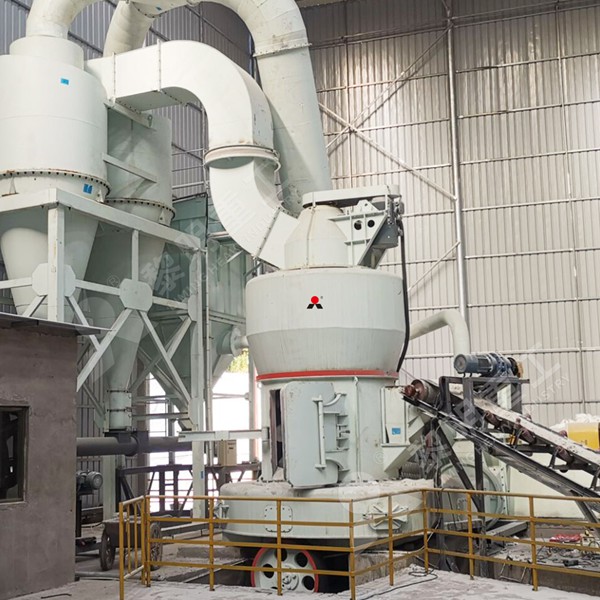
Here is the part where you see why Liming's product range is useful. No single mill is perfect for every plant. We offer several different technologies, and each one answers a different set of requirements.
Raymond Mill
The Raymond mill is a classic choice. It suits small and medium-sized operations, with a capacity of 1.2 to 4.5 tons per hour and an input size of 15 to 25 millimeters. Output fineness is between 613 microns and 44 microns, which roughly covers 25 to 325 mesh. If you need a simple, proven way to produce dolomite powder for refractory brick in modest quantities, this is a straightforward option. It also handles non-explosive materials under 7 Mohs hardness and less than 6 percent moisture.
MTW European Type Trapezium Mill
When you need higher output and better efficiency, the MTW series is our upgraded solution. It is the evolution of the traditional Raymond mill and pendulum mill. It incorporates patented technology, a stable mechanical structure, and a much larger capacity range of 3 to 55 tons per hour. The input size is 30 to 50 millimeters, so it can accept coarser rock after primary crushing. The grinding system is closed loop, with an air blower and a pulse dust collector, which means less dust and lower noise. For refractory brick producers looking for a large-scale powder making line, the MTW mill is often the first recommendation from our engineering team.
LM Vertical Roller Mill
The LM vertical roller mill is a different concept. Instead of a grinding ring and roller, it uses a rotating table and rollers to crush and grind the material. It integrates drying, grinding, powder selection, and conveying into one unit. Capacity is 10 to 400 tons per hour, and the input size is 30 to 55 millimeters. This is the machine for very large mineral processing operations, especially when the incoming material has moisture that needs to be removed in the same step. It is used in cement, electric power, metallurgy, chemical, and non-metallic mineral industries, and it handles coal, slag, and other materials well.
MW Micro Powder Mill
If your refractory brick formula requires a fine or ultra-fine dolomite fraction, the MW micro powder mill is a specialist. It can adjust the final fineness from 325 mesh all the way up to 3250 mesh, with a maximum capacity of 25 tons per hour and a feed size of 10 to 20 millimeters. The ultra-fine powder is useful for improving the packing density of refractory matrices and modifying the rheology of castables. Equipped with a pulse precipitator, it also runs cleanly. This is the mill to think about when you need more than conventional fineness.
Ball Mill
Finally, the ball mill is a durable, conventional option. It is a horizontal rotating device driven by an outer gear. It can grind all kinds of ores and other materials, and it is widely used in beneficiation, construction, and chemical processing. Capacity is 0.65 to 50 tons per hour, and the feed size is up to 25 millimeters. For some refractory plants that already have a ball mill in the circuit, this remains a dependable way to achieve the required particle size. It may not be as energy efficient as a vertical mill, but it is simple to operate.
Complete Dolomite Grinding Process
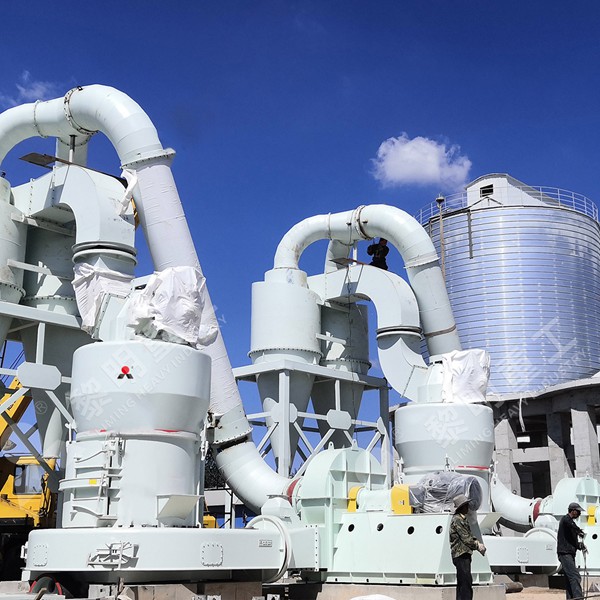
Regardless of the mill you select, a typical dolomite grinding line includes a jaw crusher, vibrating feeder, hopper, grinding mill, separator, air blower, dust collector, pipes, and powder collector. Large dolomite blocks are crushed to the required size by the jaw crusher. Then a variable-frequency belt feeder sends the material evenly and continuously into the mill. Inside the mill, the dolomite is compressed and sheared between rollers and the grinding ring. Fine particles are carried upward by the air flow. Coarse particles that do not pass the classifier fall back to the grinding zone for another pass. The finished powder is collected in a pulse dust collector, while the cleaned air flows back to the blower and recirculates in a closed system. This design keeps dust under control and meets national environmental standards.
How to Choose the Right Dolomite Grinding Mill
There is no universal answer, but there is a useful starting point. For a small refractory workshop producing under five tons per hour, the Raymond mill is economical and easy to maintain. For a modern brick plant with output between 10 and 50 tons per hour, the MTW European type trapezium mill is usually the most balanced choice. For a mining-scale project or one with high moisture, the LM vertical roller mill gives you the biggest capacity and integrated drying. If you are making a high-performance product that demands ultra-fine powder, include the MW micro powder mill in your options. Ultimately, the right equipment depends on feed size, required fineness, moisture, capacity, and your specific brick formulation. That is why we always recommend doing a small test with your own dolomite sample before finalizing a mill.
Why Liming Heavy Industry Stands Behind Its Mills
Liming Heavy Industry Co., Ltd. was founded in 1987. We are a modern joint-stock company integrating research, manufacturing, and sales. Our headquarter is in the Hi-Tech Industry Development Zone of Zhengzhou, covering 80,000 square meters. We also have another workshop in Shangjie Industry Park covering 67,000 square meters. Over the past thirty years, we have grown into a leader in the domestic and overseas machinery manufacturing industry. Our strategy is focused on scientific research and improving product competitiveness. We use a mature research team to develop new technologies and refine existing designs. That is why our mills are known for being reliable, precise, and efficient.
Final Thoughts
Dolomite grinding for refractory brick is not a side process; it is the beginning of a high-quality product. With the right mill, you can achieve the exact particle size distribution your brick recipe needs, reduce waste, and keep energy costs under control. If you are planning a new grinding line or want to improve an existing one, Liming Heavy Industry has both the experience and the equipment range to help. Tell us about your raw material, desired fineness, and capacity; we can help you find the right mill.
Frequently Asked Questions
1. What fineness of dolomite powder is typically required for refractory brick?
For most refractory brick applications, the fine matrix fraction is ground to 100 to 325 mesh. Some high-end products use even finer powders, and the MW micro powder mill can produce down to 3250 mesh if needed. The exact target depends on your brick recipe and process.
2. Which dolomite grinding mill has the largest capacity?
Among the options covered here, the LM vertical roller mill has the largest capacity, ranging from 10 to 400 tons per hour. The MTW European type trapezium mill offers up to 55 tons per hour, while the Raymond mill is better suited for lower capacities around 1.2 to 4.5 tons per hour.
3. Can these mills handle moisture in dolomite?
Raymond and MTW mills can handle materials with less than 6 percent moisture. For higher moisture, the LM vertical roller mill is a better fit because it integrates drying with grinding. It uses hot air to evaporate moisture during the milling process.
4. Are Liming grinding mills environmentally friendly?
Yes. The systems are designed as closed circuits with pulse dust collectors. This reduces dust emission and complies with national environmental protection standards. The MW micro powder mill also includes a pulse precipitator for cleaner production.
5. Can one mill grind materials other than dolomite?
Absolutely. A dolomite grinding mill from Liming can also grind limestone, gypsum, calcium carbonate, marble, barite, coal, slag, and many other non-metallic minerals. This flexibility makes the equipment a valuable addition to a refractory plant that processes multiple raw materials.


