Published: May 7, 2026
This article provides a comprehensive technical overview of dolomite micro grinding mills as applied to sealant production. It examines why dolomite powder is an important functional filler in sealant formulas, how the MW Series Micro Powder Mill from Liming Heavy Industry meets the strict fineness and stability requirements, and how the complete grinding circuit should be configured. The discussion includes the mill's working principle, equipment selection criteria, classification system, dust collection, and common engineering considerations. The goal is to help process engineers, plant operators, and sealant manufacturers understand the key parameters that determine successful dolomite micro powder preparation.
Why Dolomite Powder Matters in Sealant
Sealant formulations rely on fillers to modify rheology, improve mechanical strength, reduce shrinkage, and control color. Dolomite, a calcium magnesium carbonate mineral, offers a combination of whiteness, low oil absorption, good weather resistance, and cost efficiency. In many one-component and two-component sealants, dolomite powder is preferred over other carbonate fillers because the magnesium content contributes to better thermal stability and less interaction with organic binders.
However, not all dolomite powders are suitable. Sealant-grade filler must be ultra-fine, with a controlled particle size distribution and low residual moisture. If the particles are too coarse or the distribution too wide, the sealant film may appear rough, the extrudability may suffer, and the sealant's long-term adhesion can be compromised. This is where a dedicated micro grinding mill becomes necessary.
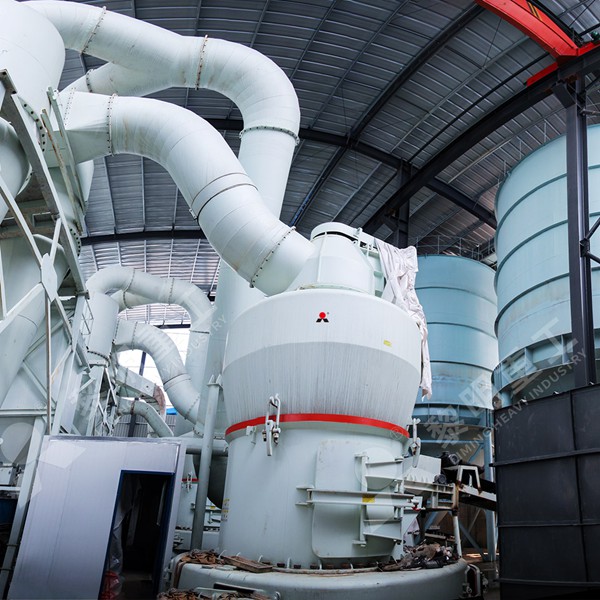
The MW Micro Powder Mill: Built for Superfine Dolomite
Liming Heavy Industry Co., Ltd., established in 1987, has designed the MW Series Micro Powder Mill specifically for superfine powder processing. The mill is based on advanced grinding technology adapted from Swedish engineering practice and has proven successful for non-metallic minerals such as calcium carbonate, gypsum, and dolomite. For sealant applications, the MW mill can produce finished powder with a fineness between 325 mesh and 3250 mesh, with the finest fraction reaching d97 ≤ 5 μm. This level of fineness allows sealant manufacturers to formulate products with very smooth texture and stable performance.
The MW mill's capacity range is 0.5 to 25 t/h depending on the raw material and target fineness. The input size should be controlled to 10-20 mm or smaller. In a typical dolomite project, larger stones are first reduced by a jaw crusher, then conveyed to a hopper and fed into the mill by a vibrating feeder. The grinding system is closed-loop, with the air stream carrying ground particles upward to an analyzer. Coarse particles are returned to the grinding zone, while fine particles proceed to the collector.
Working Principle and Mechanical Design
Understanding the working principle helps operators optimize output and product quality. The mill's motor drives the main shaft and each turnplate through a reducer. The reducer drives dozens of rollers to rotate against the raceway of a ring through a pin mechanism. Dolomite material, after being crushed by a hammer crusher, is transported into the hopper by an elevator. The vibrating feeder then sends the material to the central part of the upper turnplate evenly. Under centrifugal force, the material falls toward the circle and then down to the raceway of the ring, where it is crushed between rollers and the ring surface.
This roller-ring design is well suited for dolomite because the material has a Mohs hardness of about 3.5-4, which is within the capacity of the mill. In addition, the grinding pressure can be adjusted to balance output, fineness, and temperature. For sealant applications, lower grinding temperatures are often preferred to avoid changing the surface chemistry of the dolomite particles. The MW mill's design allows stable operation over long periods, and the grinding path ensures that all particles receive repeated grinding until they pass the separator.
System Configuration and Auxiliary Equipment
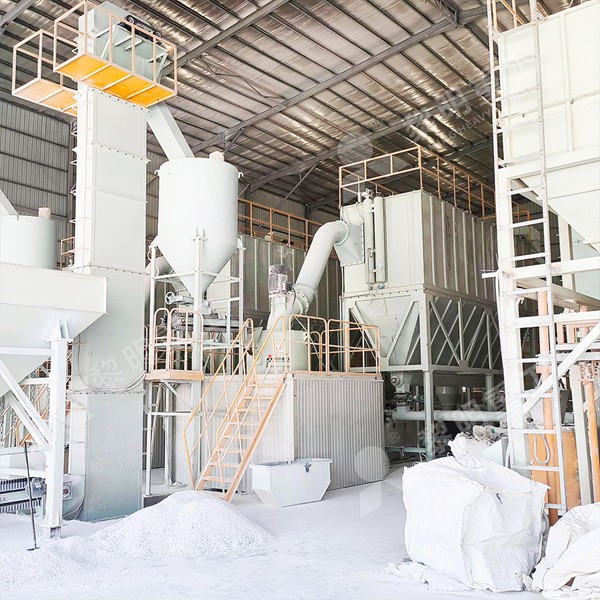
A complete dolomite micro grinding line for sealant includes more than the mill itself. In a typical Liming system, the following components work together:
- Jaw crusher: reduces run-of-mine dolomite to 10-20 mm.
- Bucket elevator and hopper: ensure a stable material supply to the mill.
- Vibrating feeder: controls the feed rate with a variable-frequency drive.
- Micro powder mill: performs the superfine grinding as described above.
- Pulse dust collector: captures fine powder and prevents emission, complying with environmental standards.
- Pipe system and air blower: maintain the closed-loop airflow that carries powder to the separator.
- Finished product collector: stores the final dolomite powder before packaging.
The pulse dust collector is especially important for sealant-grade material. Because the finished powder is very fine, ordinary collection methods may lose a significant amount of product. The pulse-jet system cleans the filter bags automatically and returns captured powder to the product stream. This not only increases yield but also protects the working environment.
Selecting the Right Mill for the Sealant Formula
Sealant manufacturers often ask whether a Raymond mill or an MTW European-type trapezium mill can be used instead of a micro powder mill. The answer depends on the required particle size. Raymond mill and MTW mill are excellent for producing powders in the 80-400 mesh range, and they are widely used for coarse fillers, desulfurization, and building material applications. However, for premium sealant products that demand superfine filler with a maximum particle size below 10 μm, the MW Micro Powder Mill is the better choice.
In some cases, a combination of equipment can be used: an MTW mill or Raymond mill for the pre-grinding department, and the MW mill for final superfine grinding. But in most medium-capacity sealant filler plants, the MW mill alone, with a jaw crusher and classifier, is sufficient. Liming's engineers can design a system based on the raw ore characteristics, target fineness, and capacity requirement.
Operational Advantages for Sealant-Grade Dolomite
There are several operational advantages that make the MW mill a good fit for dolomite grinding for sealants:
- Fineness adjustment: The classifier speed can be changed easily, allowing the plant to produce different mesh sizes for different sealant formulations.
- Energy efficiency: The medium-speed grinding mechanism consumes less energy than many impact mills while maintaining high fineness.
- Stable product quality: The closed-loop system and automatic electric control help maintain consistent particle size distribution throughout the shift.
- Environmentally friendly: With pulse dust collection and a negative-pressure system, the plant can meet strict emission regulations.
- Low maintenance: The roller-ring design and robust reducer reduce downtime and spare parts consumption.
Important Process Parameters
To produce dolomite micro powder that works well in sealants, the plant should monitor several parameters. Feed moisture should be below 6%, as higher moisture causes clogging and reduces grinding efficiency. The feed size should not exceed the mill's maximum input size; for the MW mill, this is typically 10-20 mm. The separator speed determines the final fineness, and operators should calibrate it against a particle size analyzer. Airflow volume affects both capacity and product fineness; too high airflow can force coarse particles into the finished product, while too low airflow can reduce throughput.
Quality Control and Downstream Use
After grinding, the dolomite powder should be tested for particle size distribution, whiteness, bulk density, and moisture. For sealant applications, the powder is often treated with a surface modifier to improve compatibility with polymers, but this step is not performed inside the grinding mill. The MW mill can, however, be integrated with a dry surface coating line if required. The consistent fineness achieved by the mill ensures that the coating agent is distributed evenly on each particle, which is critical for preventing agglomeration and maintaining the sealant's transparency and stability.
Conclusion
Dolomite micro grinding is a core step in producing high-performance sealant fillers. The MW Series Micro Powder Mill from Liming Heavy Industry combines proven grinding technology, flexible fineness control, and an environmentally sound system to meet the strict needs of the sealant sector. By paying attention to feed size, moisture, classifier speed, and dust collection, manufacturers can achieve stable output and product quality. For any project considering a new dolomite grinding line or an upgrade, the MW mill deserves careful evaluation.
Frequently Asked Questions
1. What is the best fineness for dolomite used in sealant?
Most sealant formulations require dolomite powder between 325 mesh and 1250 mesh. For high-end sealants, powder with d97 below 5 μm is often used to improve smoothness and mechanical properties. The MW Micro Powder Mill can cover this range.
2. Can the MW Micro Powder Mill process raw dolomite directly?
No. Raw dolomite should first be crushed to 10-20 mm or smaller using a jaw crusher or hammer crusher. A complete system with a crusher, elevator, feeder, and mill is recommended.
3. How does the pulse dust collector affect dolomite grinding?
The pulse dust collector captures ultra-fine dolomite powder and returns it to the product stream. It also prevents dust emission, improves working conditions, and increases overall yield.
4. What is the capacity range of the MW Micro Powder Mill for dolomite?
The MW mill has a capacity range of 0.5 to 25 t/h for non-metallic minerals. The exact value depends on the hardness of the dolomite, feed moisture, target fineness, and equipment configuration.
5. Does Liming Heavy Industry provide complete dolomite grinding plant solutions?
Yes. Liming Heavy Industry Co., Ltd. has more than 30 years of experience in crushing and grinding equipment, and it can supply the complete system from crushing, feeding, and grinding to classification and dust collection.


