Published: June 4, 2025
When it comes to producing high-quality terrazzo flooring, the importance of a reliable dolomite grinding mill cannot be overstated. Dolomite aggregates and powders form the backbone of terrazzo surfaces, contributing to their strength, visual appeal, and long-term durability. Liming Heavy Industry Co., Ltd., with over three decades of experience in crushing and grinding equipment, offers a full lineup of mills suitable for dolomite processing—ranging from the high-capacity LM Vertical Roller Mill to the ultra-fine MW Micro Powder Mill. This article breaks down how these machines work, how to select the right one for terrazzo flooring production, and what makes Liming's systems stand out in terms of efficiency, environmental protection, and total cost of ownership.
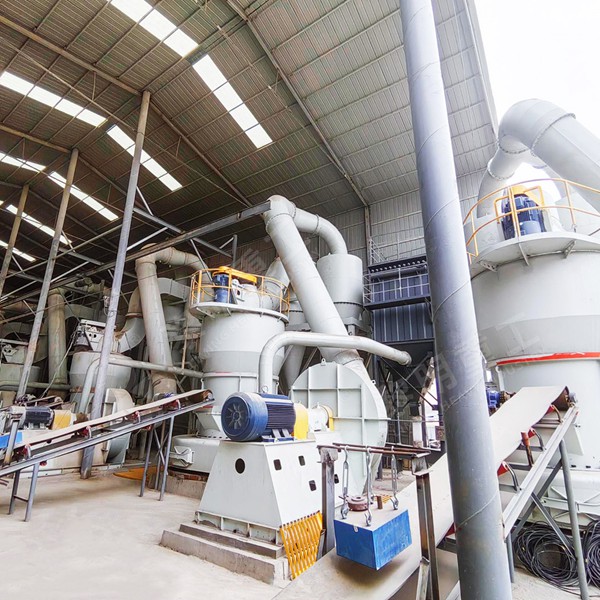
Why Dolomite Matters in Terrazzo Flooring
Terrazzo is made by mixing chips of marble, granite, quartz, or dolomite with a binder, then polishing the cured surface to reveal a decorative aggregate pattern. Dolomite is a popular choice because it is harder than typical marble, more affordable than some natural stones, and offers bright, light-reflecting colors. To integrate dolomite into terrazzo, the raw stone must first be crushed and then ground into carefully controlled particle sizes. Coarser granules provide the recognisable "chip" effect, while finer dolomite powder acts as a filler that improves the paste matrix, reduces porosity and enhances workability.
The quality of the grinding process directly influences the final floor's finish. If the particle size distribution is inconsistent, the terrazzo surface may appear mottled, weak, or overly porous. This is why choosing the right dolomite grinding mill is not just a production decision—it is a quality decision.
Liming Heavy Industry: A Quick Background
Founded in 1987, Liming Heavy Industry Co., Ltd. is a modern joint-stock enterprise integrating research, manufacturing and sales. Its headquarters in Zhengzhou's HI-TECH Industry Development Zone spans 80,000 m², with an additional 67,000 m² workshop in Shangjie Industry Park. Over more than 30 years, the company has focused on scientific management, precision manufacturing, and continuous innovation, becoming a recognized leader in both domestic and overseas machinery manufacturing.
For terrazzo flooring producers, this long track record means dependable equipment design, mature technical support, and access to a comprehensive range of grinding solutions.
Core Dolomite Grinding Equipment from Liming
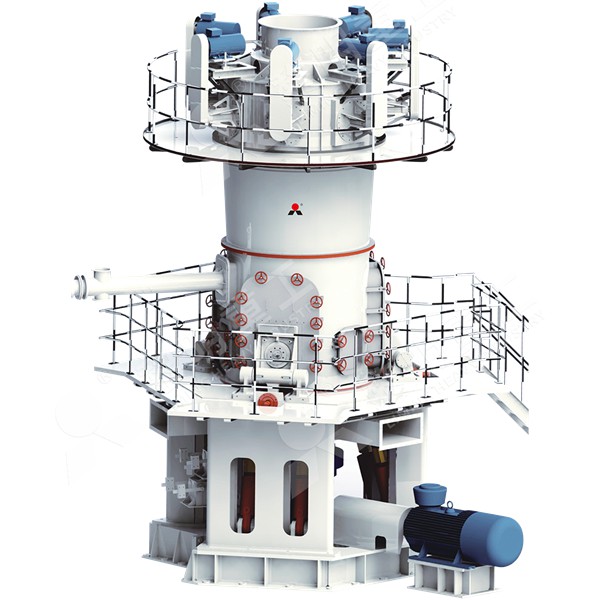
LM Vertical Roller Mill
The LM Vertical Roller Mill is Liming's answer to large-scale and high-efficiency grinding. It integrates drying, grinding, powder selection, and conveying in one unit, which simplifies the plant layout and reduces auxiliary equipment. With a capacity of 10–400 T/H and an input size of 30–55 mm, the LM mill can take sizable dolomite stones after primary crushing and deliver consistent fine powder. For terrazzo producers who need to process thousands of tons per year, the LM series offers the lowest per-ton operating cost among vertical mills.
Raymond Mill
For medium or smaller operations, the Raymond Mill remains a time-tested workhorse. It is suitable for non-flammable and non-explosive materials with Mohs hardness below 7 and moisture under 6%, making it perfectly adequate for dolomite. The output fineness ranges from 613 μm to 44 μm (about 30–325 mesh), which matches the common filler and aggregate requirements for many terrazzo mixes. With a capacity of 1.2–4.5 T/H and an input size of 15–25 mm, it is an economical entry-level option.
MTW European Type Trapezium Mill
The MTW European Type Trapezium Mill is the upgraded successor of traditional Raymond and pendulum mills. It features patented technology, stronger powder selection efficiency, and a more stable transmission system. The capacity is 3–55 TPH with a 30–50 mm input size. Its closed-circuit system includes a blower, separator, and pulse dust collector, which helps meet environmental standards while maintaining smooth production. For terrazzo manufacturers who are scaling up from small batches to continuous operations, the MTW mill offers an ideal bridge between cost and productivity.
MW Micro Powder Mill
When the terrazzo application demands superfine dolomite powder—for instance, high-fill polymer terrazzo or resin-based flooring—the MW Micro Powder Mill shines. Incorporating advanced Swedish grinding technology, this mill can reach d97 ≤ 5 μm, with fineness adjustable between 325 mesh and 3250 mesh. The capacity range of 0.5–25 T/H and input size of 10–20 mm make it suitable for producing fine, high-value dolomite fillers that enhance the density and polishability of terrazzo.
Ball Mill
The Ball Mill is another flexible option, especially in plants that already use it for cement, coal, or ore grinding. It can grind all kinds of ores and materials with a capacity of 0.65–50 T/H and an input size of ≤25 mm. In terrazzo flooring production, ball mills are often used in tandem with vertical or trapezium mills to adjust fineness or to handle moist feed under controlled conditions.
How to Choose the Right Dolomite Grinding Mill for Terrazzo
There is no single "best" mill for every terrazzo project. Selection depends on three main factors: required throughput, target fineness, and material preparation.
- Throughput: If your terrazzo plant needs 100 tons per hour or more, the LM Vertical Roller Mill is the obvious choice. For 3–55 TPH, the MTW trapezium mill provides a balanced solution. For small batches or niche products, Raymond or MW micro powder mills are more practical.
- Fineness: Standard terrazzo aggregate and filler usually require 30–325 mesh. Raymond and MTW mills cover this well. For premium resin terrazzo, you may need 800–1250 mesh dolomite powder, which is where the MW Micro Powder Mill can deliver.
- Moisture and plant integration: The LM vertical mill built-in drying can handle slightly moist feed. The MTW and Raymond mills require material moisture below 6%. If you have a wet grinding application or need to combine with an existing dry ball mill circuit, the Ball Mill remains a robust fallback.
Process Flow in a Dolomite Grinding Plant
A typical terrazzo-grade dolomite grinding line begins with a jaw crusher reducing blasted stone to the mill's input size. A vibrating feeder then meters the material into the grinding mill. Inside the main machine, dolomite is ground between rollers and rings or balls. The pulverized powder is transported by airflow to a separator; oversized particles fall back for another pass, while fine powder enters a collector. To maintain clean operation, the system is equipped with a pulse dust collector and operates under negative pressure.
Liming's mills integrate these components to varying degrees. The LM vertical mill, for instance, combines several steps in one machine. The MTW system, although more traditional in layout, still maintains a fully closed circulation loop, reducing material loss and dust emission.
Why Liming Stands Out for Terrazzo Producers
There are several reasons why terrazzo flooring manufacturers choose Liming equipment over less-established suppliers:
- Comprehensive product range: Instead of being forced into one type of mill, you can select the exact configuration for your capacity and fineness goals.
- Environmental compliance: Pulse dust collectors and closed-loop systems are standard, helping facilities satisfy modern emission regulations.
- Energy efficiency: Vertical and trapezium mills are designed to use less energy per ton than older generations of grinders.
- After-sales support: With decades of global installation experience, Liming can offer process suggestions, spare parts availability, and on-site commissioning.
Conclusion
Dolomite grinding is a critical step in producing beautiful, durable terrazzo flooring. Whether you need coarse chips for a classic terrazzo mix or ultra-fine powder for high-end resin systems, Liming Heavy Industry has a mill designed for the job. By matching throughput, fineness, and plant layout to one of five core machines—LM vertical mill, Raymond mill, MTW trapezium mill, MW micro powder mill, or ball mill—you can create an efficient, environmentally sound powder production line that supports consistently high-quality flooring.
If you are evaluating a new project or upgrading an existing line, discuss your raw material and product specifications with a technical representative who can map the process around your unique goals. The right mill is not just a machine; it is a long-term partner in your flooring business.
FAQ
1. What fineness of dolomite powder is needed for terrazzo flooring?
Most standard terrazzo mixes use a blend of coarser aggregates (0.5–5 mm) and filler powder in the range of 80–325 mesh. For resin-based or premium terrazzo, 800–1250 mesh dolomite powder can improve surface density and gloss.
2. Which Liming mill is best for small-scale dolomite grinding?
For small capacity, the Raymond Mill (1.2–4.5 T/H) is a reliable and economical choice. If you need finer powder at a similar scale, the MW Micro Powder Mill offers higher mesh ranges while keeping capacity manageable.
3. Can the MTW European Type Trapezium Mill handle moist dolomite?
It can handle material with moisture below 6%. If your dolomite has higher moisture, preliminary drying or the LM Vertical Roller Mill's integrated drying system is recommended.
4. What is the capacity range of the LM vertical roller mill for dolomite?
The LM Vertical Roller Mill has a capacity range of 10–400 T/H and an input size of 30–55 mm, making it suitable for medium to very large terrazzo powder production lines.
5. Is the MW Micro Powder Mill environmentally friendly?
Yes. The MW mill is equipped with a pulse dust collector and operates with a closed-circuit air system, significantly reducing dust emissions and complying with modern environmental protection standards.


