Published: October 26, 2023
When processing refractory materials such as marble, the choice of grinding equipment is critical to achieving fine particle size, consistent product quality, and operational efficiency. Refractory applications demand mills that can handle high-hardness, abrasive materials while maintaining durability and low wear rates. Liming Heavy Industry offers a comprehensive range of marble grinding mills specifically engineered for refractory processing, combining advanced European technology with decades of manufacturing expertise. Our mills—including the MTW European Type Trapezium Mill, Raymond Mill, LM Vertical Roller Mill, and MW Micro Powder Mill—provide tailored solutions for capacities from 0.5 to 400 T/H and fineness ranges from 325 mesh down to ultra-fine 3250 mesh. This article explores the key features, working principles, and selection criteria for marble grinding mills in the refractory industry, helping you optimize your grinding process for maximum productivity and profitability.
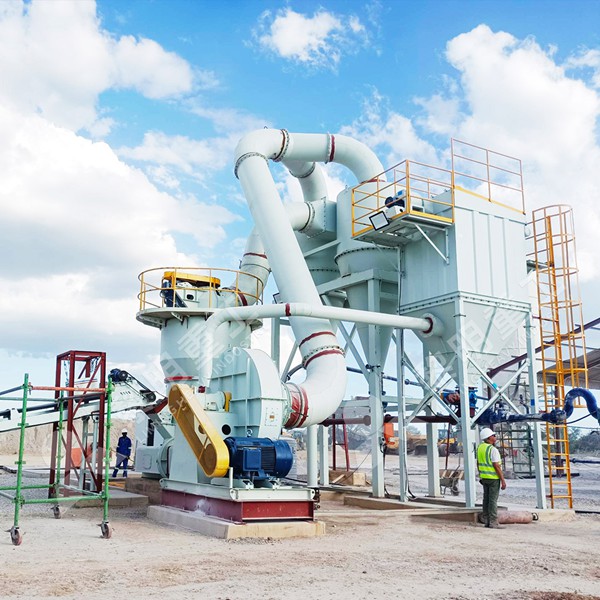
Why Marble Grinding Matters for Refractory Applications
Marble, a metamorphic rock composed primarily of calcite (calcium carbonate), is widely used in refractory formulations due to its high melting point and thermal stability. In refractory manufacturing, marble is ground into fine powders that serve as fillers, binders, or fluxing agents in ceramic bodies, kiln linings, and furnace bricks. The grinding process must achieve precise particle size distributions—typically between 100 and 600 microns for coarse applications, down to 10-40 microns for high-performance refractories. Inconsistent grinding can lead to poor sintering, reduced mechanical strength, and premature failure of refractory products. Liming's grinding mills are designed to meet these stringent requirements, offering robust construction, adjustable fineness, and automated control systems to ensure repeatable results batch after batch.
Key Marble Grinding Mill Solutions from Liming Heavy Industry
1. MTW European Type Trapezium Mill – The Workhorse for Medium-to-Large Capacity
The MTW European Type Trapezium Mill is the flagship product for marble grinding in refractory applications. It is the direct upgrade of traditional Raymond mills, featuring patented technologies such as bevel gear transmission, curved air duct, and oil-lubricated grinding rollers. With a capacity range of 3-55 T/H and input sizes up to 50mm, this mill is ideal for medium-to-large scale refractory production. The trapezium-shaped grinding ring and roller design increases the grinding area by 1.5 times compared to Raymond mills, improving efficiency by 20-30%. The built-in classifier produces a uniform product fineness between 80-325 mesh (adjustable), making it suitable for both coarse and fine grinding needs. Environmental compliance is ensured by the pulse dust collector and closed-loop air circulation system, which minimizes dust emissions—a critical factor in refractory plants subject to strict regulations.
Working Principle for Marble: Marble lumps are first crushed by a jaw crusher to ≤50mm, then fed via a variable-frequency belt feeder into the mill. Inside the grinding chamber, the material is ground between the rotating roller and stationary ring. The ground powder is carried upward by the air stream to the classifier; oversized particles fall back for regrinding, while fine powder passes through and is collected in the cyclone or bag filter. The closed system recirculates air, reducing energy consumption and environmental impact.
2. Raymond Mill – Classic Reliability for Small-to-Medium Outputs
For smaller refractory operations or applications where capital investment must be minimized, the Raymond Mill remains a popular choice. Liming's Raymond mill (1.2-4.5 T/H, input size 15-25mm) is suitable for grinding marble with Mohs hardness below 7 and moisture under 6%, which covers most marble types used in refractories. The output fineness ranges from 613μm to 44μm, offering flexibility for various product specifications. The mill's pendulum design uses centrifugal force to press the grinding roller against the ring, creating a stable grinding action that handles abrasive marble with minimal wear. While Raymond mills are less efficient than MTW or LM mills for high-capacity demands, they offer simplicity of operation, easy maintenance, and proven reliability—qualities valued in refractory plants that run continuous shifts.
3. LM Vertical Roller Mill – High-Capacity Industrial Grinding
When refractory production scales up to 10-400 T/H, the LM Vertical Roller Mill becomes the optimal choice. This mill integrates drying, grinding, powder selection, and conveying in one unit, reducing system complexity and floor space. The LM mill is particularly effective for non-metallic minerals like marble, with input sizes up to 55mm. The grinding rollers rotate on a rotating table, and material is crushed under hydraulic pressure. The classifier on top ensures precise cut points between 80-600 microns, which can be adjusted for different refractory recipes. The automatic electric control system monitors mill vibration, temperature, and pressure in real-time, preventing damage from overload or foreign objects. For refractory facilities processing multiple materials (marble, bauxite, magnesite), the LM mill's quick changeover and easy cleaning between batches are major advantages.
4. MW Micro Powder Mill – Ultra-Fine Grinding for High-Performance Refractories
Advanced refractory applications—such as ceramic fibers, investment casting shells, or high-density kiln furniture—require marble powders with fineness up to 3250 mesh (d97 ≤5μm). The MW Micro Powder Mill (0.5-25 T/H, input size 10-20mm) is designed exclusively for superfine grinding. Using Swedish-inspired technology, the mill achieves high grinding efficiency through a multi-stage classification system. The main shaft drives dozens of rollers that rotate against a raceway ring, creating intense shearing and compression that reduces marble to micron-level particles. The pulse precipitator captures 99.9% of fine dust, meeting the highest environmental standards. While this mill's capacity is lower than other models, it is indispensable for producing premium-grade refractory powders that command higher market prices.
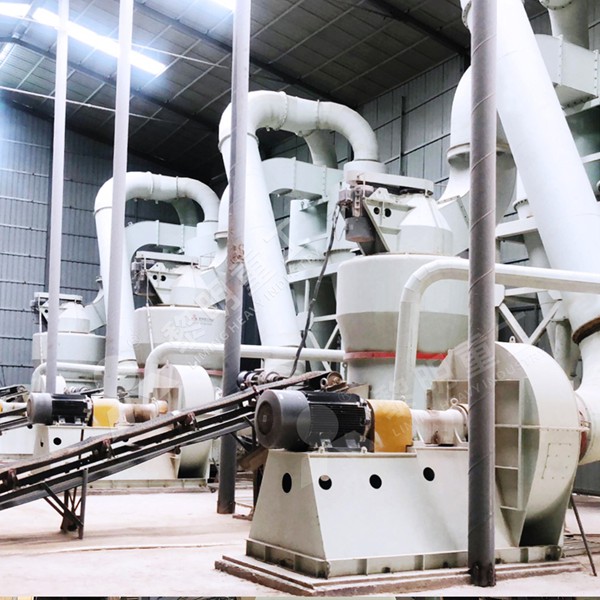
Selecting the Right Mill for Your Refractory Application
Choosing the best marble grinding mill depends on several factors:
- Required Capacity: For small-scale (1-5 T/H), Raymond Mill is cost-effective. For medium-to-large (3-55 T/H), MTW European Mill offers the best balance. For industrial-scale (10-400 T/H), LM Vertical Mill is ideal. For ultra-fine (<5μm) specialty powders, MW Micro Powder Mill is unmatched.
- Target Fineness: Coarse powders (80-200 mesh) are handled by Raymond and MTW mills. Fine powders (200-600 mesh) suit MTW and LM mills. Superfine powders (325-3250 mesh) require the MW mill exclusively.
- Material Hardness and Moisture: Marble typically has Mohs 3-4, well within the capability of all Liming mills. However, if your marble contains quartz veins (hardness 7), the MTW or LM mill's stronger grinding components will reduce wear. For marble with high moisture (>6%), the LM mill's integrated drying function is essential.
- Plant Footprint and Automation: The LM mill's compact vertical design saves floor space, while its PLC control enables remote monitoring. MTW and Raymond mills require more horizontal space but offer simpler mechanical maintenance.
- Environmental Regulations: All Liming mills can be equipped with pulse dust collectors ensuring emissions below 20mg/m³. The MW mill's sealed system is best for high-pollution areas.
Why Liming Heavy Industry for Your Refractory Grinding Needs
Liming Heavy Industry, established in 1987, brings over 36 years of expertise in manufacturing crushing and grinding equipment. With headquarters in Zhengzhou covering 80,000 m² and a workshop in Shangjie covering 67,000 m², we operate with modern scientific management and precise manufacturing processes. Our mills are trusted by refractory producers worldwide for their consistent performance, low maintenance, and long service life. We provide complete systems—including jaw crushers for primary crushing, vibrating feeders, elevators, classifiers, and dust collectors—so you get a turnkey solution from one supplier. Our R&D team continuously improves mill designs based on field feedback from refractory applications, ensuring that our equipment stays ahead of industry demands.
FAQ
1. Can your marble grinding mill also handle other refractory materials like bauxite or magnesite?
Yes, all our mills (MTW, LM, Raymond, MW) can process a wide range of refractory minerals including bauxite, magnesite, dolomite, and chromite. The MTW and LM mills are especially versatile due to their adjustable grinding pressure and classifier speed. We recommend consulting our engineers to select the optimal mill configuration for your specific material feedstock.
2. What is the typical maintenance schedule for a marble grinding mill in a refractory plant?
Routine maintenance includes daily inspection of lubricant levels and belt tension, weekly cleaning of the classifier and air duct, and monthly replacement of grinding roller and ring wear parts (typically every 800-1500 operating hours depending on marble abrasiveness). Our mills are designed with quick-access doors and modular components to minimize downtime.
3. How do I achieve a consistent particle size distribution for refractory-grade marble powder?
Consistency is achieved by properly setting the classifier speed (rpm) and air flow rate. For MTW mills, we recommend using the variable-frequency drive to adjust classifier speed within ±20% of the target cut point. The LM mill's automatic control system can maintain D50 variation within ±3%. For superfine powders, the MW mill's multi-stage classification provides the tightest distribution.
4. Does your mill require special foundation or vibration isolation for refractory installations?
All our mills require a reinforced concrete foundation—typically 1.2-2.0 meters thick depending on mill size—to absorb vibration. We provide detailed foundation drawings and bolt layouts with each order. For sensitive refractory factories located near residential areas, we can supply additional vibration isolators and soundproof enclosures as options.
5. Can I retrofit an existing marble grinding line with one of your mills to increase capacity?
Yes, many customers upgrade from Raymond mills to MTW or LM mills to boost production. Our engineering team will assess your existing auxiliary equipment (crushers, elevators, silos, dust collectors) to ensure compatibility. We can supply mill-only units or complete system upgrades with minimal civil works modifications.


