Published: October 26, 2023
In the glass manufacturing industry, the quality of the final product is intrinsically linked to the consistency and purity of the raw materials, particularly the glass batch. Marble, a metamorphic rock composed primarily of calcite (calcium carbonate), serves as a critical source of CaO in many glass formulations, especially for container glass, flat glass, and fiberglass. The grinding of marble into a fine, homogenous powder is a non-negotiable step that dictates melting efficiency, product clarity, and energy consumption in the furnace. A marble grinding mill for glass batch must deliver exceptional fineness, high throughput, and minimal contamination to meet the stringent demands of the industry. As a leading manufacturer of industrial grinding equipment, LIMING HEAVY INDUSTRY offers a comprehensive range of mill solutions—from large-scale vertical roller mills to high-precision micro powder mills—each engineered to transform raw marble into a premium-grade glass batch component. This article delves into the technical nuances of marble grinding for glass, exploring the optimal mill configurations, operational principles, and key considerations that define successful processing. By leveraging advanced scientific research and decades of manufacturing expertise, we provide solutions that enhance productivity while adhering to the highest environmental standards, ensuring that glass producers can achieve both economic and quality goals.
The Critical Role of Marble in Glass Batch Formulation
Glass batch is a carefully balanced mixture of silica sand, soda ash, limestone or dolomite, and often marble, among other minor ingredients. Marble is particularly valued for its high calcium carbonate content (typically above 95%) and its comparatively low levels of iron oxide (Fe₂O₃), which can otherwise impart an undesirable green tint to the glass. The grinding of marble to a specific particle size distribution is essential for several reasons:
- Homogenization: A finer, more uniform grind ensures that the calcium carbonate particles are evenly distributed throughout the batch, facilitating consistent melting and chemical reactions in the furnace.
- Melting Kinetics: Smaller particles have a higher surface-area-to-volume ratio, which accelerates the decomposition of CaCO₃ into CaO and CO₂, reducing the energy required for melting and the residence time in the furnace.
- Quality Control: Contaminants such as quartz, magnesia, or heavy minerals must be minimized or removed through proper pulverization and classification to prevent defects like stones, cords, or seeds in the final glass product.
Therefore, selecting the right marble grinding mill for glass batch is not merely an operational decision; it is a strategic investment in product quality and manufacturing efficiency.
LIMING’s Premier Solutions for Marble Grinding
Drawing on over three decades of innovation since 1987, LIMING HEAVY INDUSTRY has developed a portfolio of mills that cater to the diverse capacity and fineness requirements of glass batch production. Our manufacturing base, spanning 80,000 m² in Zhengzhou’s HI-TECH Zone and an additional 67,000 m² workshop in Shangjie, allows us to maintain rigorous quality control while delivering high-performance machinery. Below, we examine the most suitable mill types for marble grinding in this context.
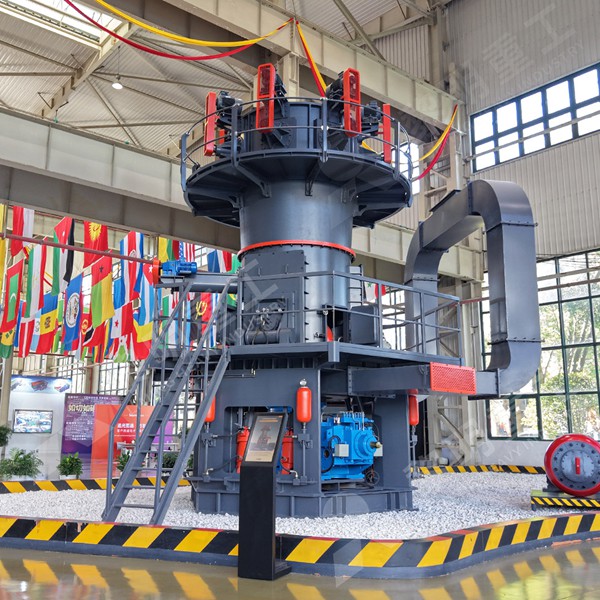
LM Vertical Roller Mill: High-Capacity Integrated Solution
For large-scale glass manufacturing operations that demand throughput from 10 to 400 T/H, the LM Vertical Roller Mill is an ideal choice. This mill integrates drying, grinding, powder selection, and material conveying into a single, energy-efficient unit. Its advanced milling device and automatic electric control system ensure stable operation and consistent product fineness. The LM mill is particularly effective for processing marble due to its robust roller and table design, which can handle the abrasiveness of calcite without excessive wear. With a maximum input size of 55mm, it can directly process crushed marble, eliminating the need for secondary crushing in many cases. The system’s integrated classifier allows for precise adjustment of particle size, ensuring that the glass batch meets strict specifications for mesh residue and particle distribution.
MTW European Type Trapezium Mill: The Upgrade of Traditional Raymond Mills
When the required capacity is between 3 and 55 TPH, the MTW European Type Trapezium Mill stands out as a direct upgrade to traditional Raymond and pendulum mills. It incorporates patented technology that enhances stability and productivity while reducing energy consumption. This mill excels in the marble grinding environment because of its unique trapezium-shaped grinding ring and roller, which increase the grinding area and improve material bed stability. The MTW mill's closed system, equipped with a pulse dust collector, ensures that the grinding process is both environmentally friendly and free from external contamination. For glass batch producers focusing on non-metallic mineral powder making, such as calcium carbonate for flat glass, the MTW mill offers a perfect balance of fineness (achieving 80-400 mesh) and operational economy. The working principle involves a jaw crusher reducing large marble lumps to 30-50mm, after which a vibrating feeder delivers the material to the mill where it is ground between the ring and rollers. The built-in classifier ensures that only particles meeting the fineness standard proceed to collection, while oversize material is recirculated for further grinding.
MW Micro Powder Mill: For Superfine Glass Batch Components
As glass technology advances, some specialty applications, such as high-clarity fiberglass or optical glass, require marble powder with a fineness of d97 ≤ 5 μm (equivalent to 325-3250 mesh). The MW Micro Powder Mill, incorporating advanced Swedish grinding technology, is specifically engineered for this superfine grinding task. With a capacity ranging from 0.5 to 25 T/H and an input size of 10-20mm, this mill uses a unique mechanism: the reducer drives the main shaft and turnplates, causing dozens of rollers to rotate and grind the material against a raceway ring. The centrifugal force ensures efficient crushing of the marble, and the integrated pulse precipitator makes the process greener by capturing all airborne fines. This level of fineness accelerates the melting process dramatically in the glass furnace, leading to lower energy costs and improved glass homogeneity. For manufacturers who prioritize premium product quality, the MW Micro Powder Mill is the definitive marble grinding mill for glass batch applications requiring ultra-fine outputs.
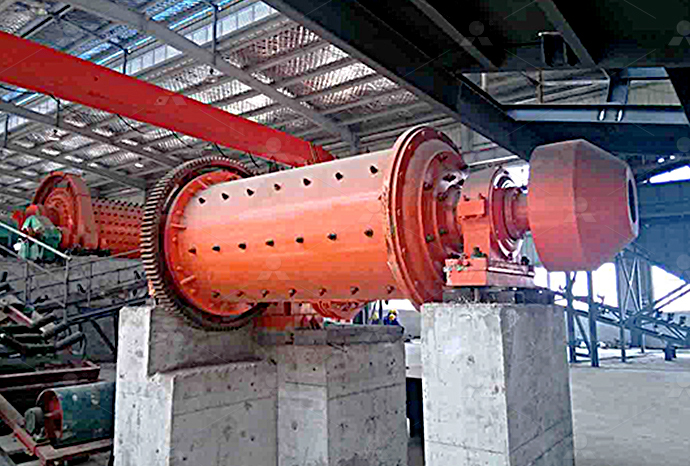
Ball Mill: A Time-Tested, Versatile Option
For smaller production lines or those requiring maximum flexibility, the Ball Mill remains a robust and reliable solution, capable of handling marble feed sizes up to 25mm. With a capacity of 0.65 to 50 T/H, the ball mill operates as a horizontal rotating device. The grinding media (steel balls of various specifications) are lifted by the rotation and then cascade, impacting and grinding the marble through impact and attrition. The ball mill is particularly well-suited for glass batch applications where the grinding media can be carefully selected to minimize iron contamination—for example, using high-alumina ceramic balls or silica pebbles. The ladder and ripple liners inside the chamber can be customized to optimize the grinding action for marble. While it requires more floor space than the vertical mills, its simplicity, ease of maintenance, and ability to produce a consistent particle size distribution make it a valuable tool for many glass manufacturers. The material is fed through a quill shaft and discharged via a discharge board, completing a straightforward yet effective grinding cycle.
Key Operational Considerations for Marble Grinding in Glass Batch
Regardless of the mill type selected, successful marble grinding for glass batch requires attention to several key parameters:
- Moisture Content: Marble should have a moisture content below 6% to prevent clogging and to ensure efficient grinding. Dry materials are essential for smooth classification and dust collection.
- Abrasiveness: While marble is relatively soft (Mohs hardness 3-4), the presence of silica contaminants can increase wear. Mills should be specified with wear-resistant liners and grinding elements constructed from high-chromium steel or ceramics.
- Fineness Control: The particle size distribution (PSD) of the ground marble must be stable. A typical glass batch requires 100% passing 100 mesh (150 μm) with 95% passing 200 mesh (75 μm). Our mills use dynamic classifiers that allow real-time adjustment of PSD.
- Contamination Prevention: Ferrous contamination must be minimized. Using magnetic separators in the feed line and selecting appropriate mill materials are critical steps.
Conclusion
Selecting the appropriate marble grinding mill for glass batch is a nuanced decision that balances capacity, fineness, energy efficiency, and product purity. LIMING HEAVY INDUSTRY provides a complete spectrum of grinding solutions—from the high-throughput LM Vertical Roller Mill to the ultra-fine MW Micro Powder Mill—each backed by our commitment to scientific research and manufacturing excellence. Our team works closely with glass producers to match the correct mill configuration to their specific raw material characteristics and production targets. By investing in properly engineered grinding equipment, manufacturers can achieve faster melting times, lower energy costs, and consistently higher quality glass output, ensuring competitiveness in a demanding global market.
Frequently Asked Questions (FAQ)
- What is the typical fineness required for marble powder used in glass batch?
For standard container and flat glass applications, the fineness typically requires 100% passing 100 mesh (150 μm) and at least 95% passing 200 mesh (75 μm). Specialty glass may demand finer particles down to 325 mesh (44 μm) or even superfine levels below 5 μm, which our MW Micro Powder Mill can achieve. - Can the MTW European Type Trapezium Mill handle moist marble?
The MTW mill can process materials with a moisture content of up to 6% effectively. However, for optimal performance and to avoid issues with material flow, pre-drying of marble with higher moisture is recommended. The mill's integrated drying system can also assist if equipped with a hot air generator. - How does the LM Vertical Roller Mill reduce operational costs compared to a ball mill for large-scale marble grinding?
The LM Vertical Roller Mill integrates drying, grinding, and classification in one unit, which significantly reduces energy consumption per ton of product—typically 30-50% less than a ball mill. It also requires less floor space and has fewer wear parts, leading to lower maintenance costs and higher overall reliability. - Is it possible to avoid iron contamination when grinding marble for clear glass?
Yes, iron contamination can be minimized. For the MW Micro Powder Mill and MTW mill, we offer options with ceramic or non-ferrous grinding elements. Additionally, installing magnetic separators before the mill and using a high-alumina lining or rubber liners in the ball mill can effectively reduce iron pickup. - What is the typical power consumption for grinding 1 ton of marble to 200 mesh?
Power consumption varies by equipment and marble hardness, but for an optimized MTW or LM mill, it typically ranges between 15-25 kWh per ton for a 200-mesh product. Our advanced drive systems and efficient classifiers help maintain this range even under variable load conditions.


