Published: February 18, 2025
Summary: Talc grinding mill for cosmetic powder must deliver ultra-fine, uniform particles with low contamination. Liming Heavy Industry Co., Ltd., founded in 1987, provides complete grinding systems including Raymond Mill, MTW European Type Trapezium Mill, MW Micro Powder Mill, LM Vertical Roller Mill and Ball Mill. With capacities from 0.5 T/H to 400 T/H and fineness down to d97 ≤ 5 μm, Liming offers a solution for every talc powder production scale.
Why Cosmetic Grade Talc Requires a Specialized Grinding Mill
Talc is a naturally occurring magnesium silicate mineral with a Mohs hardness of 1. It is soft, chemically stable and naturally platy, which makes it ideal for cosmetic powder applications such as face powder, body powder, blusher and eyeshadow. However, cosmetic-grade talc demands more than simple crushing. The powder must have a smooth feel, controlled particle size and narrow particle distribution. Particles that are too coarse feel gritty on the skin, while excessive grinding can destroy the platy structure that gives talc its slip and adhesion properties.
A professional talc grinding mill solves this problem by combining grinding with an effective air classification system. The classifier returns oversized particles to the grinding zone and only allows particles of the desired fineness to leave the system. For cosmetic products, typical target fineness ranges from 325 mesh to 1250 mesh, and for premium micronized talc, d97 ≤ 5 μm is often required.
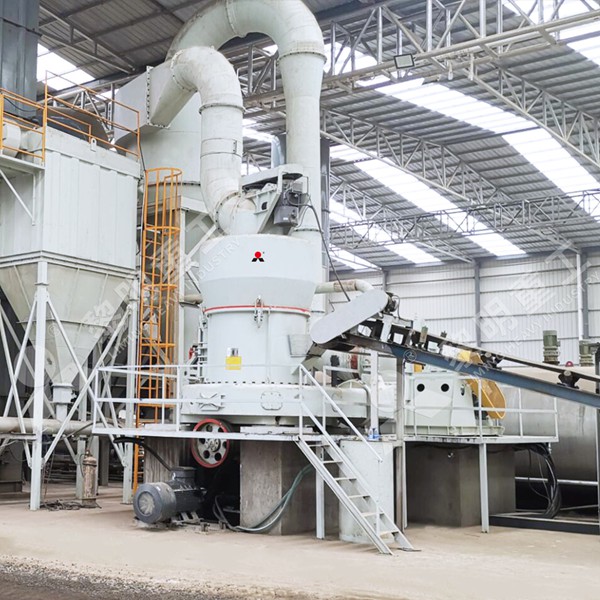
Liming Heavy Industry: Experience in Mineral Grinding
Liming Heavy Industry Co., Ltd. is a modern joint-stock enterprise integrating research, development, manufacturing and sales. The company was founded in 1987 and has grown into a leading supplier of crushing and grinding equipment. Its headquarters in the High-Tech Industry Development Zone of Zhengzhou covers 80,000 square meters, while a second workshop in Shangjie Industry Park covers 67,000 square meters. With more than 30 years of engineering experience, Liming has established a scientific management system and a mature research team. The company continues to develop innovative grinding technologies for the non-metallic mineral industry, including talc, calcium carbonate, gypsum and other soft ores.
Key Grinding Mills for Talc Powder Processing
Different talc applications require different grinding approaches. The table below summarizes the main Liming grinding mills that can be used for talc powder production:
| Mill Type | Output Fineness | Capacity | Feed Size |
|---|---|---|---|
| Raymond Mill | 44-613 μm | 1.2-4.5 T/H | 15-25 mm |
| MTW European Type Trapezium Mill | Adjustable fine powder | 3-55 T/H | 30-50 mm |
| MW Micro Powder Mill | 325 mesh to 3250 mesh, d97 ≤ 5 μm | 0.5-25 T/H | 10-20 mm |
| LM Vertical Roller Mill | Adjustable, integrated classifier | 10-400 T/H | 30-55 mm |
| Ball Mill | Adjustable | 0.65-50 T/H | ≤ 25 mm |
Raymond Mill for Medium-Fine Talc Powder
Raymond Mill is widely used in the grinding of non-metallic minerals. It is suitable for processing talc, carbonate, gypsum and other non-flammable materials with hardness below 7 on the Mohs scale and humidity under 6%. The output fineness is between 44 μm and 613 μm, which covers many industrial talc applications. For cosmetic powder that does not require ultra-fine particles, Raymond Mill offers a simple and reliable solution.
MTW European Type Trapezium Mill for High-Capacity Talc Production
MTW European Type Trapezium Mill is the upgraded product of the traditional Raymond Mill and Pendulum Mill. It uses patented technology, a stable transmission system and an efficient classifier. With capacity from 3 T/H to 55 T/H, it is a good choice for large-scale talc powder plants that need consistent output. The grinding system is composed of a grinding mill, separator, air blower, jaw crusher, vibrating feeder, hopper, dust collector, pipe, powder collector and electric cabinet. Large talc lumps are first crushed to a required size by a jaw crusher, then evenly fed into the mill by a variable-frequency belt feeder. Materials are ground between the grinding roll and ring, and fine powder moves upward with the air flow. Oversized particles fall back and are ground again, while qualified powder is collected as finished product. The closed air system and pulse dust collector make the production process cleaner and more environmentally friendly.
MW Micro Powder Mill for Cosmetic-Grade Micronized Talc
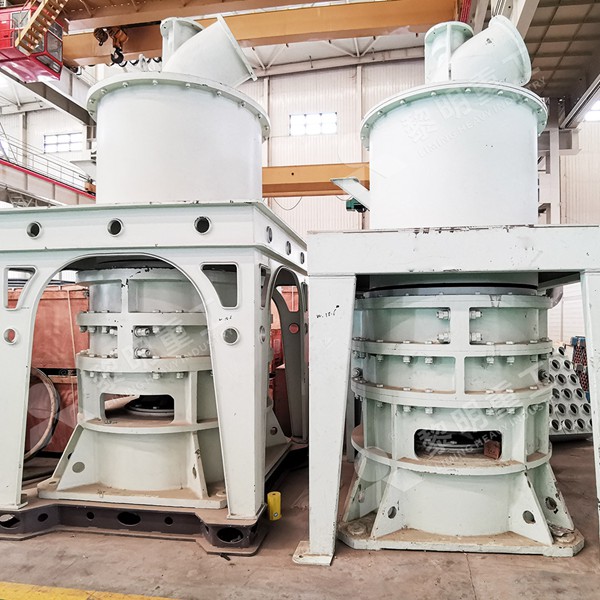
For manufacturers of high-quality cosmetic talc powder, MW Micro Powder Mill is one of the most suitable choices. This medium-speed micro-grinding mill is capable of producing extremely fine powder with d97 ≤ 5 μm. The fineness can be adjusted between 325 mesh and 3250 mesh, making it possible to produce both conventional cosmetic talc and premium micronized talc. The working principle is straightforward: the motor drives the main shaft and the turnplate through a reducer. The reducer drives dozens of rollers to rotate against the raceway of the grinding ring. Talc material is crushed by a hammer crusher, transported to the hopper by an elevator, and then fed to the central part of the upper turnplate by a vibrating feeder. Under centrifugal force, the material falls to the circle and comes down to the raceway, where it is crushed into powder. The classifier ensures that only powder meeting the fineness standard is collected, while coarser particles continue to be ground. The pulse dust collector keeps the operation clean and prevents fine talc from escaping into the atmosphere.
LM Vertical Roller Mill for Large-Scale Integrated Processing
LM Vertical Roller Mill adopts a new milling device and an automatic electric control system. It integrates drying, grinding, powder selection and conveying into one unit. With capacity from 10 T/H to 400 T/H, it is designed for large-scale non-metallic mineral powder projects. Although LM Vertical Roller Mill is commonly used for cement, electricity, metallurgy and chemical industries, it is also effective for talc and other non-metallic ores when the production scale is large and the final particle size requirement is consistent with an integrated classifier system.
Ball Mill for Conventional Talc Grinding
Ball Mill is a classic grinding machine that is widely used in beneficiation, construction and chemical industries. It is a horizontal rotating device driven by an outer gear. Materials are transferred to the grinding chamber through the quill shaft uniformly. The grinding chamber contains ladder liners, ripple liners and steel balls of different specifications. As the barrel rotates, centrifugal force brings the steel balls to a certain height, and then they fall to impact and grind the material. For talc processing, Ball Mill can be used in larger plants where the feed has already been crushed to below 25 mm. It is not usually the first choice for high-end cosmetic powder because of metal-to-metal wear, but it can be configured with ceramic liners or grinding media for applications that require reduced iron contamination.
Complete Talc Grinding Process Flow
The ideal talc grinding process for cosmetic powder typically includes several stages. First, raw talc ore is selected and pre-processed to remove impurities. Then the ore is crushed by a jaw crusher to the feed size required by the mill. For MW Micro Powder Mill, the recommended feed size is 10-20 mm. For MTW European Trapezium Mill, the feed size can be 30-50 mm. After crushing, the material is stored in a hopper and evenly fed into the grinding chamber. Inside the mill, rollers press the talc against the grinding ring, breaking the material into fine particles. The air flow carries the powder upward to the classifier. Coarse particles are separated and returned to the grinding zone, while fine powder passes through the classifier and is collected by a cyclone or dust collector. Finally, the finished talc powder can be packaged for cosmetic production. The closed air circulation system reduces dust emission and ensures that the powder remains pure.
How to Choose the Right Talc Grinding Mill
Selecting the correct talc grinding mill for cosmetic powder depends on several factors. First, the required fineness is the most important parameter. If the target is d97 ≤ 5 μm, MW Micro Powder Mill is the best match. If the application only requires a fineness of 100-325 mesh, Raymond Mill or MTW European Type Trapezium Mill can be used. Second, production capacity must be considered. Small cosmetics manufacturers may only need 0.5-5 T/H, while bulk talc suppliers may need 20-100 T/H or more. Third, the condition of the raw material affects the choice. If the talc is wet, LM Vertical Roller Mill can combine drying with grinding, which simplifies the process. Fourth, contamination control is critical for cosmetics. Talc grinding should use wear-resistant materials and, when necessary, ceramic or high-chrome components to minimize the introduction of iron. Magnetic separation can also be added before the grinding mill. Fifth, environmental requirements should not be ignored. All Liming grinding mills can be equipped with pulse dust collectors, and the MTW and MW systems operate in a closed loop to reduce dust emissions.
Quality and Environmental Protection in Talc Powder Production
Liming Heavy Industry follows strict quality management principles and precision manufacturing procedures. The company insists on scientific research and technological improvement to increase the competitiveness of its products. For talc grinding mill applications, this means reliable equipment, stable operation and consistent powder quality. The use of advanced dust collection systems helps talc producers meet environmental standards while protecting operators from fine dust exposure. Additionally, the closed-circuit air system in MTW and MW mills reduces energy consumption and improves collection efficiency.
Conclusion
Talc grinding mill for cosmetic powder must combine soft mineral grinding advantages with strict fineness control and purity protection. Liming Heavy Industry offers a full range of grinding equipment that can meet different capacity and fineness requirements. For micronized cosmetic powder, MW Micro Powder Mill is the strongest candidate. For higher capacity or less demanding grades, Raymond Mill and MTW European Type Trapezium Mill provide proven and efficient options. By working with Liming engineers, talc processors can choose the right mill, configure the system with proper dust collection and wear protection, and build a reliable powder production line for the cosmetics industry.
Frequently Asked Questions
1. What fineness is usually required for cosmetic-grade talc powder?
Cosmetic talc powder typically requires a fineness between 325 mesh and 1250 mesh. Higher-end formulations may require micronized talc with d97 ≤ 5 μm, which provides a very smooth and silky feel on the skin.
2. Which Liming mill is best for micronized cosmetic talc?
MW Micro Powder Mill is recommended for micronized cosmetic talc because it can produce powder with fineness adjustable from 325 mesh to 3250 mesh and d97 ≤ 5 μm. It also uses a closed air system and pulse dust collector for clean production.
3. Can a Raymond Mill be used for talc powder used in cosmetics?
Raymond Mill can be used for talc powder with a fineness from 44 μm to 613 μm, which is suitable for some cosmetic and skincare applications. However, for premium cosmetic powder that requires ultra-fine particles, MW Micro Powder Mill is the better choice.
4. How can iron contamination be avoided during talc grinding?
Iron contamination can be reduced by selecting wear-resistant grinding components, using ceramic liners or grinding media, and installing magnetic separators before the mill. Liming can also provide special configurations for talc applications that require high purity.
5. What is the capacity range of the MW Micro Powder Mill for talc?
MW Micro Powder Mill has a capacity range of 0.5 T/H to 25 T/H, depending on the model, feed size and final fineness. It is suitable for both small cosmetic powder producers and larger industrial talc processing plants.


