Dolomite plays a vital role in modern agriculture. When farmers talk about agriculture lime, they often mean a fine powder that neutralizes soil acidity and supplies calcium and magnesium. The most reliable way to turn raw dolomite into this nutrient-rich soil amendment is a dolomite ball mill for agriculture lime. Liming Heavy Industry Co., Ltd. has designed and supplied ball mills for more than three decades, and these tumbling mills remain one of the most reliable and mechanically simple solutions for producing agricultural-grade dolomite lime. This article explains why a ball mill fits the application, how it works, what to look for in a processing plant, and the operational points that make a real difference in output quality.
Why dolomite lime must be ground carefully
Agricultural lime is not just about adding calcium; it is about getting the right particle size. The faster the lime reacts with acidic soil, the sooner the crop can benefit. When dolomite is ground into fine particles, the surface area increases dramatically, and the reaction with soil hydrogen ions becomes faster. Coarse particles release their nutrients slowly, while fine particles provide quick correction. A well-designed ball mill can produce a balanced particle size distribution, which is exactly what soil specialists recommend.
Dolomite also carries magnesium, an essential nutrient that is often deficient in sandy or heavily weathered soils. Farmers who use dolomite instead of ordinary calcitic lime are making a long-term investment in soil fertility. To make that investment pay off, the grinding process must be efficient enough to maintain stable throughput and consistent enough to meet local ag-lime specifications.
What makes a ball mill suitable for dolomite
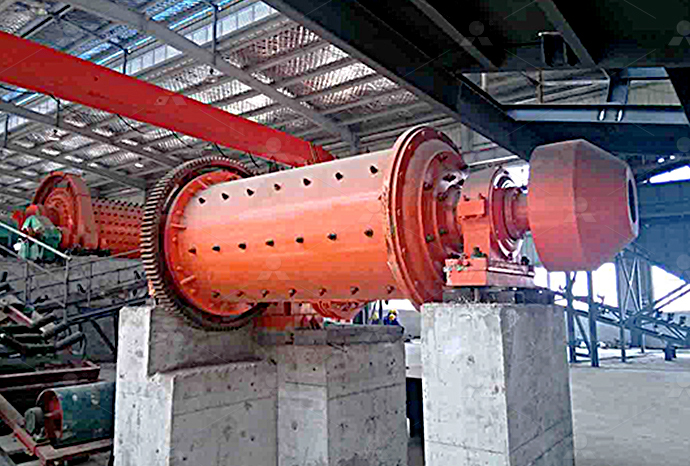
At Liming Heavy Industry, the ball mill is used for materials after primary crushing. It can accept a feed size of up to 25 millimeters and has a capacity range of 0.65 to 50 tons per hour. This range covers small neighborhood suppliers and large industrial fertilizer plants. The mill's design is straightforward: a horizontal cylinder rotates on its axis, steel balls are lifted by the shell and liner plates, then fall and grind the dolomite by impact and attrition.
Because dolomite has a hardness of about 3.5 to 4 on the Mohs scale and is not abrasive like quartz, grinding it is relatively gentle on the machinery. Still, the operation should not be taken lightly. The mill must be fed evenly, the ball charge must be maintained, and the discharge system must handle the fine powder without clogging. These are not difficult requirements, but they matter much more than chasing after magic designs.
In my years around grinding plants, I have seen operators choose complicated grinding systems when a ball mill would have done the job with less maintenance and fewer control headaches. A ball mill is forgiving. It runs continuously, does not require a separate drying section when the feed is surface-dry, and can be adjusted by changing the ball load, feed rate, and classifier settings. For agricultural lime, this simplicity is a major advantage.
How Liming Heavy Industry manufactures the ball mill
Liming Heavy Industry Co., Ltd. started in 1987 and has grown into a modern joint-stock company with research, manufacturing, and sales in-house. The headquarters occupies 80,000 square meters in Zhengzhou High-tech Industrial Development Zone, and the Shangjie Industrial Park workshop adds another 67,000 square meters. This scale allows the company to control quality from steel cutting to final assembly. It also means that spare parts and technical support are manufactured under the same roof.
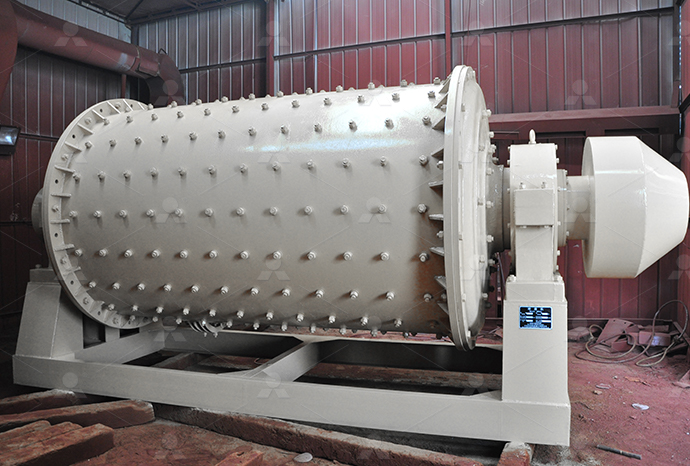
The ball mill itself is a horizontal rotating device transmitted by an outer gear. Materials enter through the quill shaft uniformly. Inside the grinding chamber, there are ladder liners or ripple liners, and different sizes of steel balls. When the barrel rotates, centrifugal force carries the balls to a certain height. The balls then fall, impacting and grinding the dolomite. Finally, ground material passes through the discharge board and the process is complete.
This design is not unique, but the execution matters. Liming uses modern scientific management and precision manufacturing. Over 30 years of evolution, the mill has been refined in areas like sealing, bearing support, liner shape, and discharge flow. These details reduce downtime and make the ball mill more reliable for seasonal agricultural lime production.
Technical highlights for agricultural lime processing
- Feed size: ≤25 mm, so a primary jaw crusher or hammer crusher is needed for raw dolomite.
- Capacity: 0.65-50 tons per hour, depending on model, feed size, and target fineness.
- Applications: ball mills handle cement, coal, power plant desulfurization, metallurgy, chemical products, non-metallic minerals, construction materials, and ceramics.
- Liners: both ladder and ripple liner plates are available; the selection depends on grinding medium and discharge requirements.
- Flexibility: with external or internal classifiers, the mill can produce ag-lime fineness from 80 mesh to 200 mesh as needed.
Working principle of the ball mill in dolomite grinding
The principle can be explained with a simple rolling drum. Picture a horizontal cylinder filled with steel balls. As the cylinder rotates, friction and centrifugal force carry the balls up the rising side. At a certain angle, the balls break away and tumble down. The falling balls crush coarse dolomite, and the sliding layers of balls provide attrition grinding on smaller particles. Dolomite particles are trapped between ball impacts and shell liners, and their edges are continuously chipped off.
The key is to keep the ball charge and shell speed in the right range. Too much speed pushes the balls against the shell and they never cascade; too little speed makes the mill inefficient. Liming sets the operating parameters in the design phase and provides a control system that stabilizes throughput. The electrical control system can monitor motor load and keep the feed rate in balance. A steady bed of balls and material produces a more homogeneous powder consistency.
Because agriculture lime quality is judged by sieve analysis, the mill should be operated with a target particle size distribution. Fine particles dissolve quickly and raise soil pH in the first season; medium particles continue to react over the following months. A ball mill naturally creates such a range. The exact distribution can be shifted by adjusting separator speed or feed rate, so the plant can meet different regional standards.
Practical advice for operating a dolomite ball mill
If you are running a dolomite lime plant, do not neglect the feed prep. The mill can accept 25 mm lumps, but a more stable feed is usually achieved at 10-20 mm. A crusher with a vibrating screen gives a consistent feed. Also, moisture is the enemy. If wet dolomite enters the mill, fine powder will coat the balls and liners, causing a drop in capacity and an increase in wear. It is always better to stockpile dolomite under cover or use a rotary dryer in rainy seasons.
Another point is to inspect the liner and ball charge regularly. Ladder liners are good for coarse grinding, ripple liners for finer grinding. Balls wear down over time, and the original charge should be topped up with the correct diameter. If the mill suddenly loses power or tons per hour, the first thing to check is often the ball level and liner condition.
From a management perspective, it is wise to work with a supplier that understands the whole process. Liming Heavy Industry does not only sell a single machine; it can propose a crushing-grinding-conveying-dust collection system. Our engineers can help you decide whether to use a ball mill alone or combine it with a vertical mill for finer products. This kind of companionship matters more than any single component.
Why choose Liming for your agricultural lime project
Liming Heavy Industry is a global supplier with experience in cement, mining, metallurgy, power plants, and non-metallic minerals. The company has persisted in scientific research and focuses on improving product competitiveness. The strategy includes production-learning-research cooperation and continuous technological innovation. This background gives customers confidence that the ball mill is not an off-the-shelf imitation but a machine developed with industry know-how.
The company also manufactures vibrating feeders, crushers, elevators, dust collectors, and other grinding mills. That means the complete dolomite ball mill for agriculture lime project can be delivered as one integrated solution. One drawing package, one installation team, one after-sales network. For a start-up farmer cooperative or a large fertilizer plant, this reduces engineering risk and saves time.
Conclusion
Dolomite ball mill for agriculture lime is a proven, dependable way to produce the soil amendment that farmers need. Its simple mechanical principle, low maintenance, and adjustable fineness make it a popular choice. Liming Heavy Industry Co., Ltd. offers a ball mill with capacities from 0.65 to 50 tons per hour, robust liners, and reliable gear drive. Whether you are grinding dolomite for a local cooperative or a large commercial farm, the ball mill can be tuned to meet your target yield and particle size. Combining the right feed preparation, consistent operation, and regular maintenance will keep the mill producing high-quality agricultural lime for decades.
Frequently Asked Questions
1. Is dolomite lime the same as agricultural lime?
Not always. Agricultural lime can be ground limestone or dolomite. Dolomite lime contains both calcium and magnesium, so it is preferred when soil tests show magnesium deficiency. Both types are used to raise soil pH.
2. What output fineness can a ball mill achieve for dolomite?
A ball mill can produce fine powder suitable for agriculture, often with 80-95 percent passing 100 mesh. With a classifier, fineness can be adjusted to finer sizes such as 200 mesh or more for specialty applications.
3. What should be done before feeding dolomite into the ball mill?
The raw dolomite should be crushed to no more than 25 mm, ideally 10-20 mm. Large pieces should be removed by a screen. The material should be dry enough to prevent sticking, and tramp metal should be separated to protect the liner and grinding media.
4. How do I decide between a ball mill and a roller mill for dolomite lime?
It depends on capacity and final fineness. For medium to high capacity agricultural lime with simple operation, a ball mill is often preferred. For ultra-fine powder or lower capacity, a roller mill or micro powder mill may be an option. Discuss your target sieve analysis with Liming engineers.
5. Can the ball mill handle raw dolomite with some moisture?
Small amounts of surface moisture are acceptable, but high moisture causes coating and clogging. A rotary dryer or covered storage is recommended for wet seasons. The mill can be equipped with auxiliary hot air in some configurations, but for agriculture lime, keeping the feed dry is the simplest and most efficient solution.


