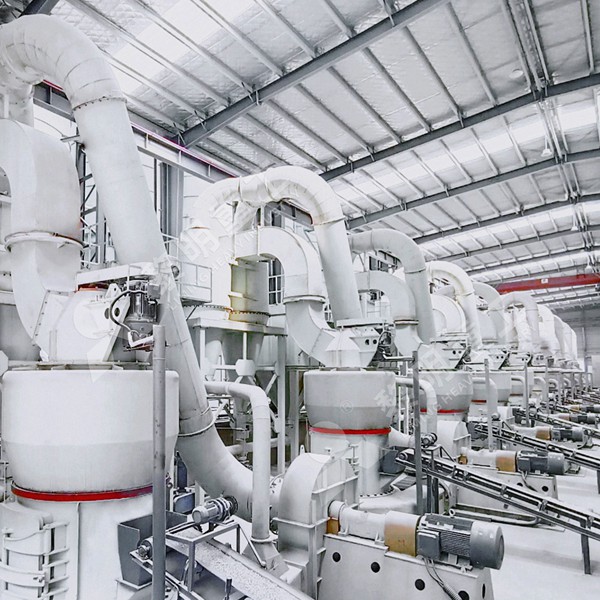
If you're involved in carpet manufacturing, you know that the backing is not just the invisible support layer. Let's be honest: the backing is not the glamorous part of a carpet, but it is where a lot of real-world performance is won or lost. You might not think about the white powder behind your living room rug, but it does a lot of heavy lifting. Dolomite powder has become a workhorse filler in carpet backing compounds, and a dedicated dolomite grinding mill for carpet backing is the key to turning raw dolomite rock into a consistent, high-performance powder. This article surveys the process, the equipment options from Liming Heavy Industry Co., Ltd., and how to match the right mill to your production targets.
Why Dolomite Powder Is Used in Carpet Backing
Dolomite is a calcium magnesium carbonate mineral. When ground into a fine powder, it acts as a functional filler in latex, PVC, or bitumen-based carpet backing formulations. It improves thermal stability, increases the weight and body of the carpet, and helps control shrinkage during drying and curing. Because dolomite is naturally white or light-colored, it also contributes to a clean finish.
In practice, carpet backing producers need a consistent particle size distribution. Coarse particles can weaken the coating and create surface defects; ultra-fine particles can increase viscosity and make mixing difficult. That's why selecting the right dolomite grinding mill for carpet backing matters so much. The mill must balance throughput, fineness, moisture handling, and energy consumption.
Key Grinding Considerations
Dolomite is moderately hard, around Mohs 3.5 to 4. It is slightly more abrasive than pure calcium carbonate, so grinding components need to be wear-resistant. Moisture in raw dolomite can also affect sieving and conveying. If the material is damp, a mill with integrated drying, such as the LM vertical roller mill, simplifies the process.
Another critical point is the target fineness. For standard carpet backing, the powder is typically between 100 and 325 mesh, which is about 44 to 149 microns. For a smoother face or specialty applications, producers may ask for 600 mesh or finer. The good news is that Liming offers several grinding solutions that cover this range.
Liming Heavy Industry Grinding Equipment for Dolomite
Liming Heavy Industry Co., Ltd. was founded in 1987 and today is a modern joint-stock company with research, manufacturing, and sales in one place. Headquartered in Zhengzhou's High-Tech Industry Development Zone, the company occupies 80,000 m2, plus another 67,000 m2 workshop in Shangjie Industrial Park. Over more than thirty years, Liming has moved from a conventional machinery manufacturer to a leader in both domestic and overseas grinding equipment. Below are the machines that can serve as a dolomite grinding mill for carpet backing.
Raymond Mill
The classic Raymond mill is still a practical choice for small and medium carpet backing plants. It processes non-flammable, non-explosive materials with Mohs hardness under 7 and humidity below 6%. For dolomite, it is easy to operate and gives an output fineness between 613 microns and 44 microns. The capacity is about 1.2 to 4.5 tons per hour, which suits a modest production line. If your dolomite feed is already 15 to 25 mm, this machine can handle it without a primary crusher in most cases.
MTW European Type Trapezium Mill
When capacity needs move up, the MTW European Type Trapezium Mill is the upgraded product of traditional Raymond and pendulum mills. With patented technology, stable performance, high productivity, and energy saving, this mill is ideal for large-scale non-metallic mineral powder making. Capacity ranges from 3 to 55 tons per hour, with input size between 30 and 50 mm. The system includes a grinding mill, separator, air blower, jaw crusher, vibrating feeder, hopper, dust collector, pipe, powder collector, electric cabinet, and motors. Big lump materials are crushed to size first, then fed by a variable-frequency belt feeder. Materials are ground between the ring and rollers. Fine particles are carried upward by airflow and discharged as finished powder, while oversized particles fall back for another pass. The closed-loop air system, combined with a pulse dust collector, meets modern environmental standards.
LM Vertical Roller Mill
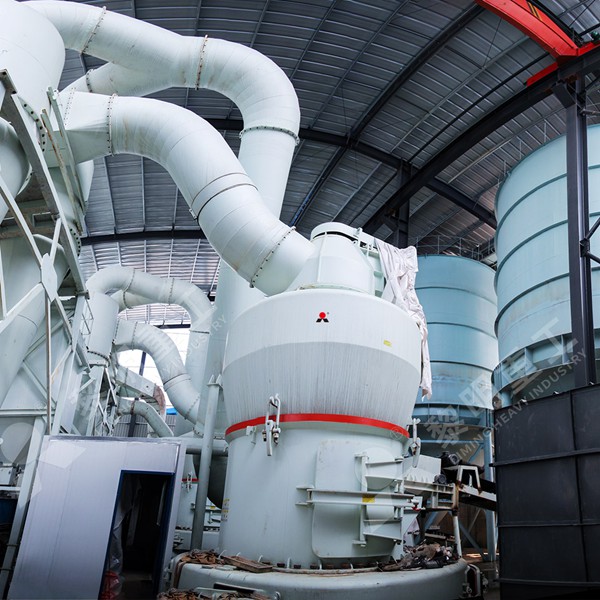
For very large carpet backing projects or centralized mineral processing centers, the LM Vertical Roller Mill is the flagship. It adopts a new milling device and automatic electric control system, integrating drying, grinding, powder selection, and conveying in one machine. Capacity can reach 10 to 400 tons per hour, which makes it a serious piece of equipment for industrial-scale filler production. Input size is 30 to 55 mm. The LM mill is particularly useful when raw dolomite contains above-average moisture, because the hot air inside the mill can dry and grind simultaneously. It is used in cement, power generation, metallurgy, chemical, and non-metallic mineral industries, with a special focus on non-metallic minerals, coal, and slag.
MW Micro Powder Mill
If you need ultra-fine dolomite for a premium carpet backing formulation, the MW Micro Powder Mill is worth attention. It uses advanced Swedish grinding technology and is good at superfine powder processing. The finished product can reach d97 ≤ 5 μm, and fineness is adjustable between 325 mesh and 3250 mesh. Capacity is 0.5 to 25 tons per hour. The motor drives the main shaft and turnplates, and dozens of rollers rotate against the raceway of the ring to crush the material into powder. It is equipped with a pulse precipitator, making production more environmentally friendly. For carpet backing producers who want to differentiate themselves with very smooth coatings, this mill is a smart option.
Ball Mill
In some operations, a ball mill is used as a secondary grinding step after primary crushing. Liming's ball mill is a horizontal rotating device, transmitted by an outer gear. Materials are transferred into the grinding chamber via a quill shaft. Ladder and ripple liners, along with steel balls of different sizes, create impact and attrition. The ground materials are discharged through the discharging board, so the process is complete. The ball mill can grind all kinds of ores and other materials, and it is widely used in beneficiation, construction, and chemical industries. Capacity ranges from 0.65 to 50 tons per hour. For carpet backing, a ball mill is often paired with a classifier to produce a consistent filler grade.
How to Choose the Right Dolomite Grinding Mill
No single mill is the best answer for every carpet backing plant. You need to match the equipment to your raw material, target mesh, and daily output. Here is a simplified decision path:
- If you have a small line and need 1 to 5 tons per hour, a Raymond mill is often enough.
- If you have a medium or large plant and need 3 to 55 tons per hour, the MTW trapezium mill offers a good combination of efficiency and environmental compliance.
- If your project is massive and you also need drying, the LM vertical roller mill is the most integrated solution.
- If you are selling specialty ultra-fine dolomite for premium carpet backing, the MW micro powder mill is the right tool.
- If you already have a coarse grinding step and want to add fine grinding capacity, a ball mill with a classifier can be flexible.
Also consider the full system. A dolomite grinding mill for carpet backing is not just the mill itself. It includes a crusher, feeder, conveyor, classifier, dust collector, and control system. Liming can supply a complete line, which simplifies maintenance and troubleshooting.
Why Liming Heavy Industry Is a Reliable Partner
Liming's experience goes back to 1987. The company has a mature scientific research team and follows a development strategy centered on improving product competitiveness. The main research lines include scientific research tackling key problems, technological progress, and technological improvement, as well as production, learning, and research. That means the machines are not static. They are continuously refined to meet the technological frontier of the industry.
Precision manufacturing is a core habit. Liming adheres to a modern scientific management system, and the scale of its workshops allows simultaneous production of many large mills. For an international buyer, this means shorter lead times and consistent quality control. The company has become a leader in domestic and overseas machinery manufacturing, particularly in grinding equipment.
Environmental and Operational Efficiency
Carpet backing factories are under increasing pressure to reduce dust and emissions. Liming's modern grinding systems are designed with airtight airflow loops and pulse dust collectors. The MTW and LM mills, in particular, make it easier to meet national environmental protection standards. Reduced noise and lower energy consumption are also important. For example, the LM vertical mill's integrated conveying eliminates unnecessary bucket elevators and reduces auxiliary power consumption.
In terms of operation, the automatic control systems on Liming mills help ensure a stable product. This is crucial when your carpet backing process expects consistent powder density and particle size. A momentary drift in fineness can cause defects in the coating, so repeatability matters as much as maximum capacity.
Conclusion
Choosing a dolomite grinding mill for carpet backing is a long-term investment. The right mill will give you a stable filler and fewer disruptions in your carpet coating line. Evaluate your capacity, moisture, and fineness requirements first, then match them to the machines Liming Heavy Industry offers. From the classic Raymond mill to the integrated LM vertical roller mill and the ultra-fine MW micro powder mill, there is a solution for every scale. With more than three decades of manufacturing experience and a strong R&D foundation, Liming is well positioned to be the grinding equipment partner behind your carpet backing success.


