Published: March 18, 2025
Summary: Dolomite grinding for filler masterbatch is not just about reducing particle size; it is about producing a consistent, high-purity, and correctly classified powder that improves the performance of plastic compounds. Manufacturers of filler masterbatch need grinding equipment that balances capacity, fineness, energy consumption, and environmental compliance. Liming Heavy Industry has supplied mills for more than three decades, and its product range—including the MTW European Type Trapezium Mill, LM Vertical Roller Mill, MW Micro Powder Mill, Raymond Mill, and Ball Mill—offers tailored solutions for dolomite processing from 30 mesh to 3250 mesh and capacities from 0.65 T/H up to 400 T/H. This article explains why dolomite is used in filler masterbatch, how to choose the right grinding mill, and what to expect from an efficient dolomite grinding system.
Why dolomite is used in filler masterbatch
Dolomite is a calcium magnesium carbonate mineral with the formula CaMg(CO3)2. In the polymer industry, dolomite powder is blended with resins to form a masterbatch that can be added to final products during molding or extrusion. The main reasons are cost reduction, thermal stability, and improved mechanical properties. Fine dolomite particles can fill the voids between polymer chains, increase stiffness, reduce shrinkage, and improve dimensional stability. Compared with virgin resin, a masterbatch containing 50% or more dolomite lowers raw material cost without sacrificing essential physical properties—if the filler is ground correctly.
However, dolomite is harder than calcium carbonate. It therefore requires grinding equipment with high wear resistance and stable classification. A poor grinding system can produce excessive coarse particles, wide particle size distribution, or contamination from metal wear. These problems create surface defects, filter clogging, or inconsistent color in plastic products. That is why the design of the grinding mill is at least as important as the chemistry of the ore.
Key grinding equipment options from Liming Heavy Industry
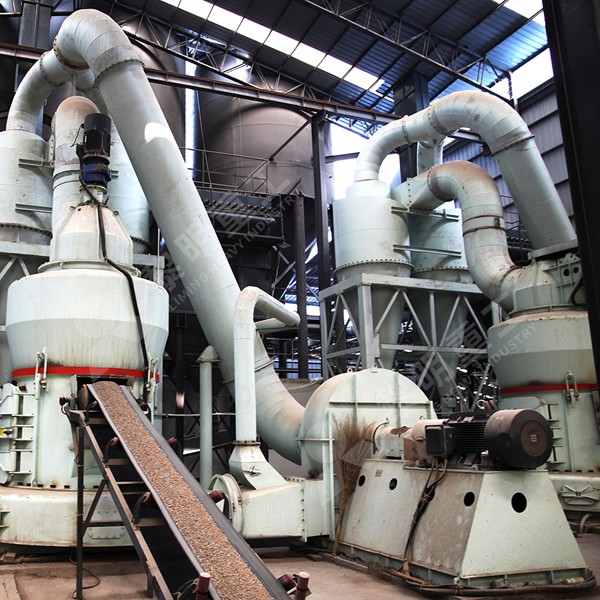
Liming Heavy Industry was founded in 1987 and has grown into a modern joint-stock enterprise that integrates research, manufacturing, and sales. Its main production base occupies 80,000 m² in Zhengzhou, plus a 67,000 m² workshop in Shangjie Industry Park. The company has developed a complete range of large and medium-sized crushing and grinding equipment, many of which are suitable for non-metallic minerals such as dolomite. The following mills are the most relevant to filler masterbatch producers.
- MTW European Type Trapezium Mill. This is the upgraded product of the traditional Raymond mill and pendulum mill. It is widely used for heavy calcium carbonate processing, non-metallic mineral powder making, and limestone desulfurization. For dolomite masterbatch, it is often selected when the required fineness is in the range of 80–400 mesh and the plant needs a capacity of 3–55 T/H. It accepts feed sizes of 30–50 mm and uses an internal separator to achieve a controlled particle size. The closed-circuit air system and pulse dust collector help the plant meet environmental standards.
- LM Vertical Roller Mill. This mill integrates drying, grinding, powder selection, and conveying. It has a capacity of 10–400 T/H and input size of 30–55 mm. The LM vertical mill is especially suitable for large non-metallic mineral projects. In dolomite processing, an LM mill can replace a two-stage grinding system because it can handle larger feed and produce a uniform product with lower energy consumption. The automatic electric control system simplifies operation and keeps the fineness stable during long production runs.
- MW Micro Powder Mill. When a filler masterbatch producer needs ultra-fine dolomite, the MW mill adopts advanced grinding technology for superfine powder. It can produce a final fineness of d97 ≤ 5 μm and can be adjusted between 325 mesh and 3250 mesh. Capacity is 0.5–25 T/H and feed size should be 10–20 mm. It is equipped with a pulse precipitator, which makes the production process greener and more environmentally friendly. This is the ideal choice for high-end masterbatch applications that require precise top-cut control and a larger specific surface area.
- Raymond Mill. For smaller plants or for applications that only need 30–325 mesh powder, the Raymond mill is a proven and economical choice. It is suitable for non-flammable and non-explosive materials below 7 Mohs hardness and less than 6% humidity. Output fineness is between 613 μm and 44 μm. Capacity is 1.2–4.5 T/H, with input size of 15–25 mm. It can be used as a pre-grinding stage in a larger system or as the main mill for low-tonnage filler lines.
- Ball Mill. Some existing dolomite plants still use a ball mill, especially when the plant also serves the construction and chemical industries. It is a horizontal rotating device that uses steel balls to impact and grind material. Capacity is 0.65–50 T/H and input size is ≤25 mm. Ball mills are less energy efficient for fine filler production, but they are robust and easy to operate. In a masterbatch context, a ball mill may be combined with an air classifier for coarser grades.
How the dolomite grinding system works
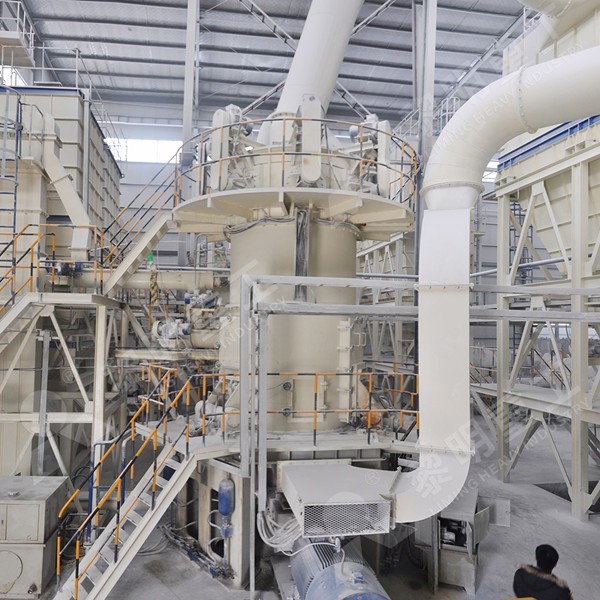
A complete dolomite grinding line includes a crusher, vibrating feeder, hopper, grinding mill, separator, air blower, dust collector, pipe, powder collector, and electric cabinet. Large dolomite blocks are first crushed by a jaw crusher to the required size, typically 10–50 mm depending on the mill. The crushed material is then transported by an elevator to a hopper and fed evenly into the grinding mill by a variable-frequency feeder.
Inside the mill, the material is ground between the grinding ring and rollers. The ground powder moves upward with the airflow. Particles that are too coarse fall back to the grinding zone for another pass. Particles that meet the fineness requirement pass through the separator and are collected as finished powder. The air flow continues through the separator to the blower and is recycled inside the closed loop. This design reduces dust emission and energy loss.
For pulverized dolomite used in filler masterbatch, the finished powder is usually stored in a silo, then mixed with polymer carriers and additives. Some producers also add a surface modification step before compounding. The grinding system must therefore provide a stable powder supply with consistent fineness and low moisture. The LM and MTW mills are particularly strong in this respect because their separators can be adjusted to change the fineness without stopping the mill.
How to select a dolomite grinding mill for your masterbatch line
Choosing a mill involves more than comparing motor power or total investment. The correct approach is to define the product specifications first, then select equipment based on the following parameters.
- Target fineness and particle size distribution. If your masterbatch requires 325 mesh powder, a Raymond mill or MTW mill can work. If you need 800 mesh or finer, an MW micro powder mill is more appropriate. For a plant that requires both coarse and fine powder, consider using MTW as the main mill and MW for fine grades.
- Capacity and production reliability. For a production line with 20 tons per day, a small Raymond mill may be enough. For a central grinding plant feeding multiple masterbatch lines, an LM vertical roller mill can handle 10–400 T/H and significantly reduce operating labor.
- Feed size and pre-crushing. Dolomite from a quarry can be as large as hundreds of millimeters. The mill's input size limit tells you how much pre-crushing is required. For the MW micro powder mill, feed size should be 10–20 mm; for MTW, 30–50 mm; for LM, 30–55 mm.
- Moisture content. If the dolomite is already dry, a Raymond mill or MTW mill works directly. If moisture is high, an LM vertical mill can perform drying inside the mill because of its hot air system.
- Environmental requirements. A pulse dust collector is essential in modern plants. All Liming mills can be configured with a bag filter or pulse precipitator to meet national environmental protection standards.
Quality considerations for filler masterbatch producers
Filler masterbatch quality depends on the purity, whiteness, particle size distribution, and surface treatment of dolomite powder. The grinding mill cannot improve the original ore quality, but it can prevent additional contamination. Therefore, pay attention to wear parts and design. In a trapezium mill or vertical mill, the grinding rollers and ring should be made of wear-resistant alloy; otherwise, iron contamination can affect the color of the masterbatch. The classification system must also be precise: a small amount of coarse particles above 50 μm can cause lumps in films or streaks in injection-molded parts.
From our experience, a well-operated MTW or LM mill produces a dolomite powder with a controlled particle size distribution and stable bulk density. The pulse dust collector not only protects the environment but also helps recover fine powder that would otherwise be lost. This increases yield and lowers operating cost per ton of finished filler.
Conclusion
Dolomite grinding for filler masterbatch requires the right combination of crushing, grinding, classification, and dust collection. The goal is to produce a consistent powder that can be compounded into masterbatch without process interruptions or product defects. Liming Heavy Industry offers a complete range of mills that answer different needs. For conventional 200–400 mesh filler, the MTW European Type Trapezium Mill is a reliable and efficient choice. For high-capacity mineral processing, the LM vertical roller mill provides integrated grinding and drying. For ultra-fine masterbatch, the MW micro powder mill delivers fineness up to 3250 mesh. By matching feed size, capacity, moisture, and environmental requirements to the right machine, producers can turn dolomite into a stable profit center.
Frequently Asked Questions
- What is the most suitable dolomite grinding mill for filler masterbatch? The answer depends on your target fineness and capacity. For typical 200–400 mesh products, the MTW European Type Trapezium Mill is the most commonly selected machine. For ultra-fine grades above 800 mesh, the MW Micro Powder Mill is recommended.
- Can the MTW mill produce dolomite powder for masterbatch at 1250 mesh? The MTW mill is designed mainly for 80–400 mesh fineness. For 1250 mesh, it is better to use the MW Micro Powder Mill, which can adjust fineness between 325 mesh and 3250 mesh.
- Does the LM vertical roller mill require a separate dryer? Not necessarily. The LM vertical mill can combine drying with grinding and powder selection. If the dolomite feed has higher moisture, the hot air entering the mill can remove moisture during the grinding process.
- Why is a pulse dust collector necessary for a dolomite grinding plant? A pulse dust collector prevents fine dolomite dust from escaping into the atmosphere, improves working conditions, and recovers fines as finished product. It also helps the plant comply with environmental protection standards.
- What size should the dolomite be before it enters the grinding mill? For the MW Micro Powder Mill, feed size should be 10–20 mm; for the MTW mill, 30–50 mm; for the LM vertical mill, 30–55 mm. The jaw crusher and feeder system should be designed to provide a stable supply within these ranges.


