Dolomite powder is a commonly used functional filler in adhesive manufacturing. It helps formulators reduce production costs, control rheology, improve bonding strength and enhance dimensional stability. However, these benefits depend heavily on the quality of the ground dolomite powder, especially its fineness, particle size distribution, whiteness and moisture content. Selecting a reliable and efficient dolomite grinding mill is therefore critical for adhesive producers who want consistent output and competitive product performance. This article explains why dolomite is important for adhesives, what technical requirements need to be considered, and how Liming Heavy Industry's range of grinding mills can meet different production needs.
Why Dolomite Powder Is Used in Adhesives
Dolomite is a carbonate mineral composed of calcium magnesium carbonate. When ground into fine powder, it acts as an extender and filler in many adhesive systems, including wall tile adhesives, ceramic tile adhesives, building sealants, mastics and certain industrial glues. The fine particles fill the gaps between polymer chains and aggregate particles, giving the adhesive a more compact structure. This leads to improved mechanical strength, better sag resistance and lower shrinkage during curing.
In addition, dolomite powder can improve the workability of adhesive formulations. It makes the paste easier to spread and helps control the open time. Because dolomite is chemically stable and has low reactivity, it does not interfere with the curing process of most adhesive binders. It also provides a white or light color, which is beneficial for light-colored products. Compared to some other mineral fillers, dolomite offers a good balance between performance and cost, which is why it remains a preferred choice in the adhesive industry.
Technical Requirements for Adhesive-Grade Dolomite Powder
The quality of dolomite powder used in adhesives is not measured only by its original mineral composition. Adhesive manufacturers usually pay attention to several key parameters:
- Fineness and particle size distribution: Most adhesive applications require dolomite powder in the range of 100 to 800 mesh. For high-end products, ultra-fine powder of 1250 mesh or even finer may be needed. A narrow particle size distribution helps maintain stable viscosity and uniform bonding performance.
- Whiteness and purity: Dolomite with high whiteness is preferred for white and light-colored adhesives. Purity is also important because impurities can affect the color and chemical stability of the final product.
- Moisture content: Excessive moisture in dolomite powder can cause agglomeration and affect the storage stability of adhesives. The grinding system should be capable of handling materials with reasonable moisture and producing powder with low residual moisture.
- Production capacity: The mill must match the required output of the adhesive plant. A small pilot-scale line has different needs from a large integrated production base.
- Operational stability and environmental compliance: Adhesive producers increasingly need grinding equipment with low energy consumption and effective dust collection to meet environmental standards.
These requirements directly influence the selection of grinding equipment. Fortunately, Liming Heavy Industry offers several types of mills that can be configured according to the specific characteristics of dolomite and the end-use requirements of adhesive production.
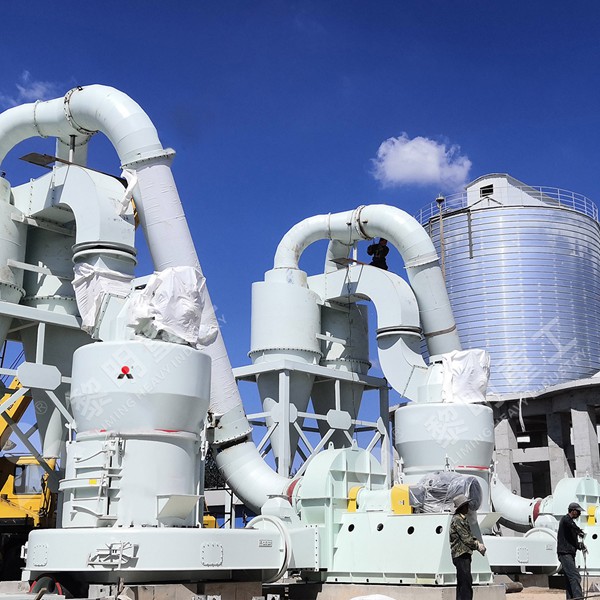
Liming Heavy Industry Dolomite Grinding Mill Solutions
Liming Heavy Industry Co., Ltd. was founded in 1987 and specializes in large and medium-sized crushing and grinding equipment. Over the past 30 years, the company has built a complete product line that covers vertical roller mills, Raymond mills, European type trapezium mills, micro powder mills and ball mills. Each machine has its own strengths in dolomite processing for adhesive applications.
1. LM Vertical Roller Mill
The LM Vertical Roller Mill is an integrated grinding, drying, classifying and conveying system. It is especially suitable for large-capacity dolomite powder production. The mill adopts a new milling device and an automatic electric control system. With a capacity of 10 to 400 T/H and an input size of 30 to 55 mm, it can handle substantial volumes of raw dolomite. For adhesive manufacturers who need thousands of tons of powder every month, the LM mill can significantly reduce the number of grinding units required, simplify the process flow and lower operating costs.
Because the LM vertical mill combines drying and grinding in one unit, it can process dolomite with a certain level of surface moisture. This is valuable in areas where the raw dolomite is stored outdoors or has been washed. The internal classifier enables the operator to adjust the fineness of the finished powder to match the adhesive formulation requirement.
2. MTW European Type Trapezium Mill
The MTW European Type Trapezium Mill is the upgrade product of the traditional Raymond mill and pendulum mill. It has patented technology, stable performance, high productivity and environmental protection. The capacity ranges from 3 to 55 TPH and the input size is 30 to 50 mm. This mill is well suited for medium-scale dolomite grinding lines where the adhesive producer needs a reliable, energy-efficient machine with low maintenance.
The complete MTW grinding line includes a jaw crusher, vibrating feeder, belt feeder, mill, separator, air blower, pulse dust collector and powder collector. Big lumps of dolomite are crushed by the jaw crusher to the required size, then continuously fed into the mill. Materials are ground between the ring and rollers, and the air flow carries them upward. Coarse particles fall back for regrinding while fine particles are collected as finished product. The closed air circuit and pulse dust collector make the system environmentally friendly and compliant with national standards.
3. Raymond Mill
Raymond Mill has been a classic choice for mineral grinding for many years. It is widely used in metallurgy, building materials, chemicals, mining and other fields. The mill can process non-flammable and non-explosive materials under 7 Mohs hardness and less than 6% humidity. Dolomite, with a hardness of about 3.5 to 4, is well within this range. The output fineness is between 613 μm and 44 μm, which corresponds to about 30 to 325 mesh. The capacity is 1.2 to 4.5 T/H and the input size is 15 to 25 mm.
For small adhesive factories or those producing standard-grade dolomite powder, the Raymond mill is a simple and economical solution. It requires a relatively small footprint and is easy to operate. However, for finer powder or larger output, other mills in the Liming product family may be more suitable.
4. MW Micro Powder Mill
When the adhesive formula demands ultra-fine dolomite powder, the MW Micro Powder Mill is the right machine. Also known as a medium-speed micro-grinding mill, this unit adopts advanced grinding technology and can produce finished powder with d97 ≤ 5 μm. The fineness can be adjusted between 325 mesh and 3250 mesh. The capacity is 0.5 to 25 T/H and the input size is 10 to 20 mm. Equipped with a pulse precipitator, the production process is greener and more environmentally friendly.
Ultra-fine dolomite powder is increasingly used in premium adhesives, sealants and coating systems where smooth surface finish and high filling performance are required. The MW mill can produce fine particles with uniform size, which helps improve the consistency and appearance of adhesives. It can also be used in calcium carbonate crushing, gypsum processing, power plant desulfurization and non-metallic ore pulverizing, but its role in adhesive-grade dolomite grinding is particularly significant.
5. Ball Mill
The ball mill is a common grinding plant and key equipment for milling after material is crushed. It is widely used in beneficiation, construction, chemical industry and other fields. In dolomite processing, the ball mill can be operated in a closed circuit with a classifier to produce fine powder. With a capacity of 0.65 to 50 T/H and an input size of ≤ 25 mm, it offers flexible production options. The mill is a horizontal rotating device driven by the outer gear. Materials are fed into the grinding chamber through a quill shaft. Ladder liners, ripple liners and steel balls of different sizes are used to impact and grind the dolomite. The finished particles are discharged through the discharging board.
Ball mills are often used in large-scale mineral processing plants where the production process already includes other grinding stages. For adhesive manufacturing, a ball mill can be an alternative when the requirement is for a uniform, well-circulated grinding process and when the plant has enough floor space and energy supply.
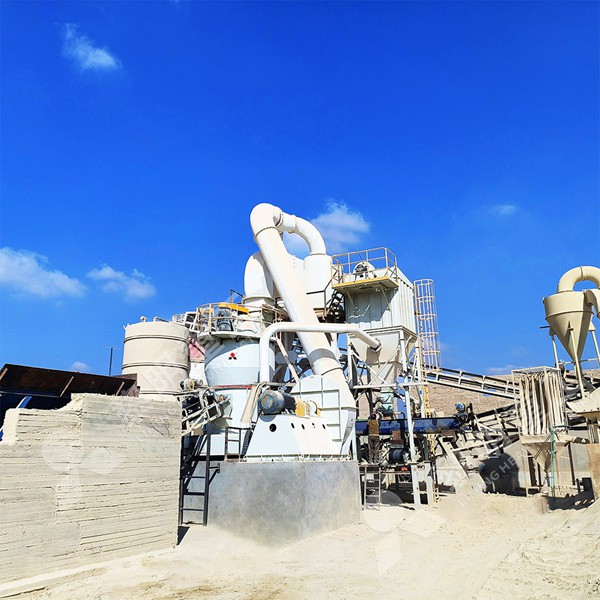
How to Choose the Right Dolomite Grinding Mill
The selection of a dolomite grinding mill for adhesive production should not be based on a single parameter. The correct choice depends on the target fineness, hourly capacity, raw material moisture, available space, energy cost and the final adhesive product quality. Here are some practical guidelines:
- For large-capacity projects with a demand above 10 tons per hour and the need to integrate drying and grinding, the LM Vertical Roller Mill is the preferred choice.
- For medium-capacity lines from 3 to 55 tons per hour, the MTW European Type Trapezium Mill provides excellent productivity and stable fineness.
- For small production around 1 to 5 tons per hour with standard fineness, the Raymond Mill offers a straightforward and economical option.
- For ultra-fine powder in the range of 325 to 3250 mesh, the MW Micro Powder Mill delivers the required particle size with good energy efficiency.
- For conventional grinding circuits that will be integrated with existing crushing and screening equipment, the Ball Mill remains a robust and proven solution.
It is also important to consider the entire process system. At a minimum, a dolomite grinding line consists of a crusher, bucket elevator, vibrating feeder, grinding mill, classifier, dust collector, blower and control cabinet. Liming Heavy Industry provides complete solutions rather than just a single machine. Our engineers normally first analyze the raw material, target fineness and capacity requirement, then design a process flow that minimizes energy consumption and maximizes product consistency.
About Liming Heavy Industry and Quality Assurance
Liming Heavy Industry Co., Ltd. was founded in 1987 and mainly manufactures large and medium-sized crushing and grinding equipment. The headquarters is located in the HI-TECH Industry Development Zone of Zhengzhou, covering an area of 80,000 square meters. Another workshop in Shangjie Industry Park covers 67,000 square meters. Over the past 30 years, the company has adhered to modern scientific management, precision manufacturing, pioneering innovation and research-led development. Today, Liming is recognized as a leader in the domestic and overseas machinery manufacturing industry.
The company's research and development strategy focuses on improving product competitiveness. It uses scientific research, technological progress and the integration of production, learning and research to develop new solutions. With a mature scientific research team, Liming continues to push toward the technological frontier of the industry. For adhesive producers, choosing Liming means not only gaining a reliable grinding mill, but also receiving access to a complete engineering team that can support installation, commissioning and after-sales service.
Frequently Asked Questions
- What fineness of dolomite powder is typically required for adhesives? Most adhesive applications use dolomite powder from 100 to 800 mesh. Some high-performance adhesives require ultra-fine powder of 1250 mesh or finer, which can be produced by the MW Micro Powder Mill.
- Can the LM Vertical Roller Mill handle raw dolomite with high moisture? Yes. The LM vertical mill integrates drying and grinding, so it can process materials with a certain level of moisture without an additional drying system.
- Is the MTW European Type Trapezium Mill suitable for environmental requirements? Yes. The MTW mill system is equipped with a pulse dust collector and a closed air circulation loop, which effectively reduces dust emissions and meets national environmental protection standards.
- Do you provide complete dolomite grinding systems or only the mill? Liming Heavy Industry can provide both individual mills and complete grinding systems, including jaw crusher, vibrating feeder, hopper, conveyor, dust collector, powder collector and electric control cabinet.
- How can I determine which mill is best for my adhesive factory? You should consider your required capacity, target fineness, raw material characteristics and available space. It is recommended to contact Liming's engineering team with your specific production data so they can design a suitable grinding solution.


