Published:
For asphalt roofing manufacturers, dolomite filler is much more than an inert extender. It strengthens the asphalt matrix, improves thermal resistance, and helps shingles resist cracking under extreme weather. The key to getting these benefits is consistent, correctly sized dolomite powder — and that begins with choosing the right dolomite grinding mill. This article summarizes the processing requirements, reviews the available mill options from Liming Heavy Industry, and explains how to match a grinding solution to your asphalt roofing production line.
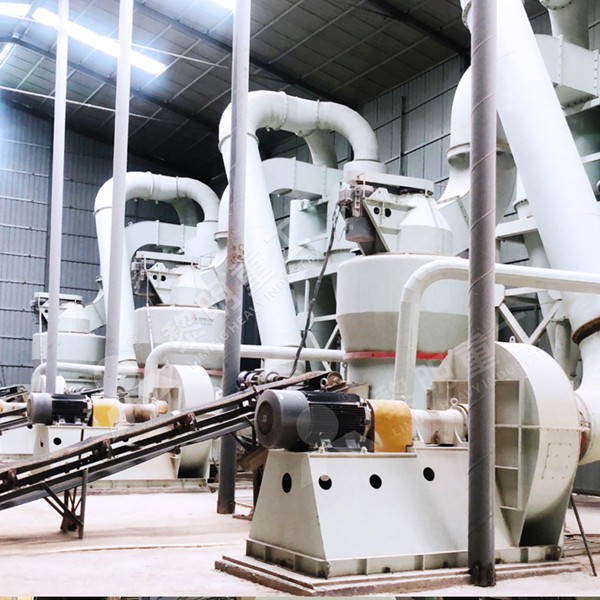
Why dolomite powder matters in asphalt roofing
Dolomite is a calcium magnesium carbonate mineral. When ground into fine powder, it acts as a mineral filler in asphalt roofing products such as shingles, roll roofing, and modified bitumen membranes. The fine particles fill voids in the asphalt, stiffen the binder at high temperatures, and reduce the tendency of the roofing membrane to flow or slump under summer heat. Dolomite also improves UV stability and can make the finished product more dimensionally stable.
In asphalt roofing, the particle size distribution of the filler is critical. Coarse particles cause uneven surface texture and weak spots; overly fine dust can absorb too much bitumen. Most asphalt roofing specifications call for a high percentage of dolomite passing through a 200-mesh (75 µm) or 325-mesh (44 µm) screen. Therefore, the grinding mill must produce a consistent, adjustable fineness while maintaining high throughput.
Processing requirements for asphalt-grade dolomite
Before selecting a mill, it helps to think in terms of three production parameters:
- Fineness: Asphalt roofing fillers usually target between 200 mesh and 325 mesh. If you produce polymer-modified asphalt membranes, you may need a fine powder below 400 mesh.
- Throughput: The amount of filler consumed by a roofing line depends on shingle width, line speed, and coating weight. Large shingle plants may need 10–20 tons per hour; smaller operations may be fine with 2–5 t/h.
- Feed size and moisture: Raw dolomite from a quarry is typically delivered as 10–50 mm lumps with some surface moisture. The mill system must handle this feed size and, if necessary, dry the material during grinding.
These three requirements lead to different choices. A compact Raymond mill can work for a small plant, while a large vertical roller mill is better for a quarry-based mineral filler operation.
Liming Heavy Industry mills for dolomite powder
When I talk with asphalt roofing manufacturers, one question always comes up: what kind of mill should I use for dolomite? The answer depends on output, fineness, and how much you plan to grow. Liming Heavy Industry has manufactured grinding equipment for over 30 years, and we see these four mill types used most often for dolomite in asphalt roofing applications.
Raymond Mill
Raymond mill is perhaps the most familiar choice for small and medium dolomite filler plants. It is designed for non-flammable, non-explosive minerals with a Mohs hardness under 7 and moisture under 6%, so dolomite is right inside its comfortable range. The output fineness can be adjusted from about 613 μm down to 44 μm, which covers the 200-mesh and 325-mesh targets used by many roofing plants. The standard Raymond mill system in our range has a capacity of 1.2 to 4.5 t/h with an input size of 15–25 mm. For a shingle plant needing a modest amount of filler, this is a compact, low-maintenance option.
MTW European Type Trapezium Mill
When production needs move beyond what a Raymond mill can economically deliver, the MTW European Type Trapezium Mill is the natural upgrade. It uses the same pendulum concept as traditional Raymond mills, but with patented technology that improves stability, increases output, and reduces energy consumption. The whole grinding line includes a jaw crusher, vibrating feeder, hopper, separator, dust collector, and the mill itself. Because the system is closed-loop with a pulse dust collector, it meets modern environmental standards — something more and more roofing material plants have to prove to local regulators.
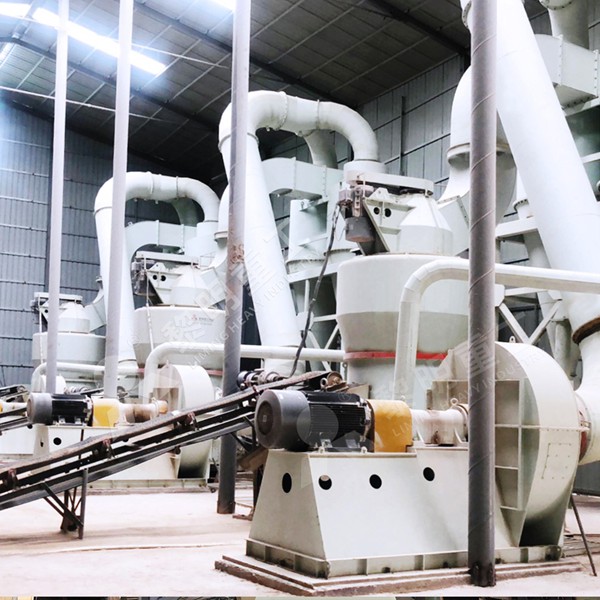
MTW mills in our product range are available with capacities from 3 to 55 t/h and accept feed sizes of 30–50 mm. That makes them suitable for a dedicated dolomite grinding station serving one or several asphalt roofing lines. The separator speed can be adjusted to control the powder fineness, so you can switch between 200 mesh and finer grades without stopping production.
LM Vertical Roller Mill
For large-scale mineral filler producers, the LM Vertical Roller Mill is the most efficient option. It integrates drying, grinding, powder selection, and conveying in one unit. Raw dolomite with a bit of surface moisture can be dried inside the mill using hot gas, which simplifies the process and saves floor space. The LM mill has a capacity range of 10–400 t/h for feed sizes of 30–55 mm, depending on the model. That level of throughput is more than most single asphalt roofing lines need, but it is ideal for a central filler plant supplying multiple shingle factories or for a company that also sells ground dolomite as a commodity. The vertical roller mill's automatic electric control system makes it easy to maintain stable fineness, which directly benefits the quality of asphalt roofing materials.
MW Micro Powder Mill
If your asphalt roofing products call for especially fine dolomite — for example, in smooth-surface membranes, sealants, or specialty coatings — the MW Micro Powder Mill can produce finished powders from 325 mesh up to 3250 mesh, with a particle size d97 at or below 5 µm on the ultra-fine end. Its capacity is 0.5–25 t/h, which suits specialty chemical and building material producers. The MW mill uses medium-speed grinding technology and is equipped with a pulse precipitator for cleaner production. For roofing applications, it is not always necessary, but it is a good option when you need to differentiate your filler quality.
Ball Mill
Ball mills are less common in new asphalt filler plants because their energy efficiency is lower than vertical roller or trapezium mills. However, many customers already own ball mills for cement, ore, or other mineral grinding. A ball mill can certainly grind dolomite down to filler fineness; our ball mill range accepts a feed size up to 25 mm and has a capacity of 0.65–50 t/h. If you have an existing ball mill line and need to supplement your asphalt roofing filler production, it can be integrated into the circuit with a classifier. I usually recommend this route only when the mill is already installed and in use, because the energy consumption per ton is generally higher than modern roller-type grinding mills.
Choosing the right dolomite grinding mill for your asphalt roofing line
How should you decide? Let me suggest a simple thought process:
- Start with the asphalt roofing formulation. What filler fineness do you need? Usually 200 mesh or 325 mesh. If you need ultra-fine for a specialty product, consider MW Micro Powder Mill.
- Determine the hourly filler consumption. For 1–5 t/h, a Raymond mill can be enough. For 5–30 t/h, the MTW trapezium mill is the workhorse. For more than 30 t/h, an LM vertical roller mill is usually the better long-term choice.
- Check the raw material. If the quarry delivers 30–50 mm dolomite, a primary crusher or the MTW/LM system's larger feed opening saves an extra crushing stage. If the stone is wet, LM's integrated drying capability is valuable.
- Think about expansion. Many roofing manufacturers start with a single shingle line and later add a second line. A mill that has some spare capacity now will avoid a second equipment purchase later.
What good dolomite filler means for roofing performance
In my experience, asphalt roofing plant operators care about two things: the shingle rolls coming off the line look smooth, and the finished product passes the heat and tear tests. Both depend on consistent filler. If the dolomite grinding mill drifts in fineness, the asphalt coating becomes inconsistent. Coarse particles catch light and create a rough surface; excessive fines make the coating stiff and brittle. A good grinding mill with a stable separator and reliable feeding system prevents those problems.
Dolomite purity also matters. High-magnesium dolomite with low impurities tends to be whiter, which can affect the appearance of light-colored roofing products. The grinding mill cannot change the chemistry of the stone, but it can preserve the natural whiteness by minimizing contamination from the grinding media. Liming's mills are designed with wear-resistant parts to keep the powder clean.
Environmental and operational considerations
Modern grinding plants need to control dust. All of our milling systems can be configured with pulse dust collectors, and the MTW and LM systems are especially well suited for tight environmental standards because they use closed-loop air flow. Noise levels and vibration are also lower with vertical roller and trapezium mills compared with older technology. For a roofing manufacturer, that means the grinding workstation can be placed close to the asphalt line without causing complaints.
From an operational point of view, one person can monitor the entire grinding line if the automation is set up correctly. The LM vertical mill's automatic electric control is a strong example: it adjusts the grinding pressure, gas flow, and separator speed automatically. Less manual adjustment means more consistent dolomite powder, hour after hour.
Final thoughts
Dolomite is one of the most forgiving minerals to grind, but that lulls some manufacturers into underestimating the importance of the milling system. The right dolomite grinding mill for asphalt roofing is one that delivers the exact particle size, enough tonnage, and stable operation. Since 1987, Liming Heavy Industry has focused on crushing and grinding equipment, and our scientific research team continues to improve milling technology for mineral processing. If you are planning a new filler plant or upgrading an existing line, I would start by defining your asphalt roofing specifications, then let those numbers guide the mill selection.
Frequently Asked Questions
What fineness of dolomite is needed for asphalt roofing?
Most asphalt roofing shingles and membranes use dolomite filler that passes through a 200-mesh (75 μm) or 325-mesh (44 μm) screen. For specialty surface treatments, finer powders such as 400 mesh or 500 mesh are used.
Can a Raymond mill grind dolomite for roofing filler?
Yes. A Raymond mill can grind dolomite to the 200–325 mesh range commonly used in asphalt roofing. It is best for small and medium plants with production rates around 1.2 to 4.5 tons per hour.
What is the difference between MTW and LM mills for dolomite?
MTW European Type Trapezium Mill is a pendulum-type mill with a wide capacity range and closed-loop operation, ideal for dedicated filler plants. LM Vertical Roller Mill integrates drying and grinding and is better suited to large-scale production above 10 tons per hour, especially when raw dolomite has surface moisture.
Is a ball mill a good choice for grinding dolomite?
A ball mill can grind dolomite to filler fineness, but its energy efficiency is generally lower than that of modern roller-type mills. It may be a reasonable option if you already own a ball mill or need to use it for multiple minerals.
How do I make sure the dolomite filler is consistent?
Use a mill with a stable separator, reliable feeder, and automatic control. Regularly check the feed size and moisture, and calibrate the separator speed according to the required mesh. A pulse dust collector also helps maintain stable air flow inside the mill.


