For metallurgical producers, dolomite flux quality starts with the grinding mill. Selecting the right dolomite grinding mill for metallurgical flux is not simply about reducing a carbonate rock to powder; it is about controlling particle size distribution, stabilizing throughput, reducing energy consumption, and ensuring consistent performance in the furnace. Liming Heavy Industry Co., Ltd. has been manufacturing medium- and large-scale crushing and grinding equipment since 1987, and our portfolio includes Raymond mills, MTW European-type trapezium mills, LM vertical roller mills, MW micro powder mills, and ball mills. This article summarizes the key engineering considerations for dolomite flux grinding and compares the available mill technologies so you can choose the right line with confidence.
Why Dolomite Flux Requires Dedicated Grinding
Dolomite, a double carbonate of calcium and magnesium, is used in steelmaking and non-ferrous metallurgy as a flux. It helps slag form, adjusts slag basicity, protects the refractory lining, and assists in removing sulfur and phosphorus. In sinter plants, dolomite is added to improve the permeability of the burden and to supply MgO to the slag. In basic oxygen furnaces and electric arc furnaces, correctly sized dolomite can improve foaming slag behavior and reduce refractory wear. But these benefits depend on particle size. Coarse particles often remain unreacted in the slag, while excessive fine powder creates dust losses and worsens working conditions. Therefore, a dolomite grinding mill for metallurgical flux must produce a stable, adjustable fineness: many plants prefer granular flux around 0-5 mm for sintering, while flux injection and slag-conditioning processes may need powder in the range of 80 to 325 mesh. A single grinding system that can cover these requirements is a real asset.
Complete System Design
A modern dolomite grinding line is more than a mill. It includes a jaw crusher for large lump material, a vibrating feeder, the grinding mill, a separator/classifier, an air blower, a pulse dust collector, a powder collector, pipes, and an electric control cabinet. Big lump dolomite is first crushed to the required input size, then fed evenly and continuously into the grinding chamber. The material is ground between the grinding rollers and ring or balls, then carried upward by airflow to a classifier. Particles that do not pass the classifier fall back to the grinding zone; accepted particles are collected as finished product. Clean air is recycled through the blower, so the system operates in a closed circuit. The pulse dust collector ensures that dust emissions meet national environmental standards. Liming engineers design the whole system, not just the mill, because total system reliability determines product cost and availability.
Mill Technology Options
Liming offers several grinding machines that can handle dolomite flux. The choice depends mainly on capacity, feed size, and target fineness.
Raymond Mill
If your dolomite flux production is small, the Raymond mill remains a proven workhorse. It is suitable for non-flammable and non-explosive minerals with a Mohs hardness below 7 and moisture below 6%; dolomite is well inside these limits. The feed size is 15-25 mm, capacity is 1.2-4.5 t/h, and the output fineness is 613-44 μm, which covers approximately 30-325 mesh. This mill is simple to operate, easy to maintain, and widely used in calcium carbonate, gypsum and dolomite applications. For a steel plant that needs only a few tons per hour for slag conditioning, the Raymond mill is enough, and because it is a mature technology, spare parts are straightforward.
MTW European-Type Trapezium Mill
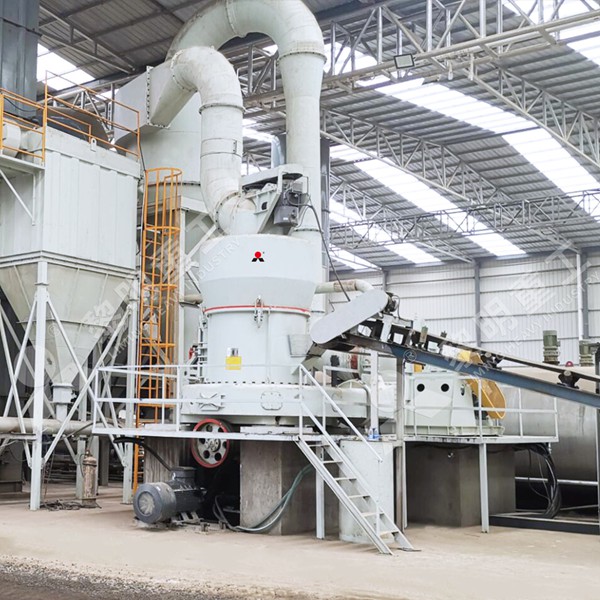
When demand grows, the MTW European-type trapezium mill is the natural upgrade. It is the upgraded product of traditional Raymond and pendulum mills and incorporates patented technology. With capacity of 3-55 t/h and feed size of 30-50 mm, it can handle larger lumps and produce powder for large-scale non-metallic mineral operations. The grinding ring and roller geometries improve grinding efficiency, and the integrated classifier allows operators to adjust fineness to typical flux specifications. The machine is engineered for stable performance, high productivity, environmental protection, and energy saving. It is a common choice for captive flux preparation plants in the metallurgical industry.
LM Vertical Roller Mill
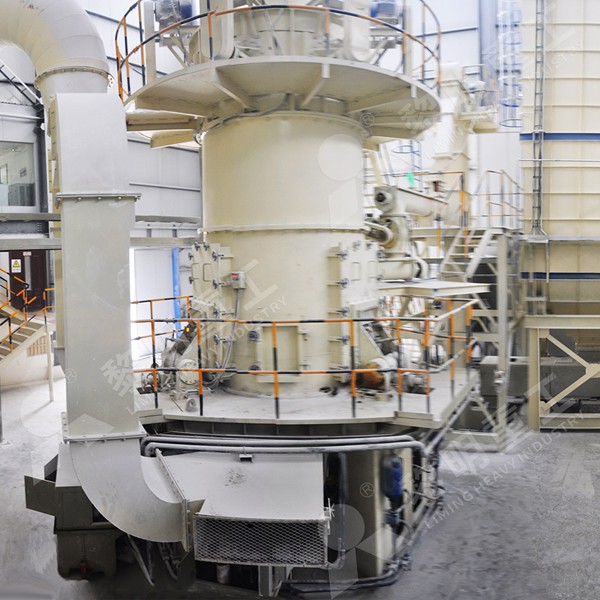
For very large steelmakers or centralized flux grinding centers, the LM vertical roller mill is the strongest technical option. It integrates drying, grinding, powder selection and conveying in one unit. It accepts feed sizes of 30-55 mm and offers capacity of 10-400 t/h. The automatic electric control system makes operation stable and less labor-intensive. In addition to high capacity, the LM vertical mill uses a new milling device that improves grinding efficiency and reduces power consumption per ton. If your raw dolomite has some surface moisture, the integrated drying capability is especially useful. Many steel enterprises choose LM when they must supply MgO-bearing flux powders continuously to more than one production line.
Ball Mill
A ball mill is often considered when the upstream crushing plant already delivers material below 25 mm and the operator wants a simple, durable grinder. It can process all kinds of ores and is widely used in beneficiation, construction material and chemical industries. The capacity range is 0.65-50 t/h. The horizontal rotating barrel lifts steel balls to a certain height, then they fall and impact the ground material. This creates strong impact grinding. Ball mills are reliable, but they generally consume more electricity per ton than vertical roller mills. They also have a larger footprint per ton of product. For smaller flux production lines where high flexibility matters more than energy savings, a ball mill can still be a good choice.
MW Micro Powder Mill
The MW micro powder mill is not the first machine that comes to mind for metallurgical flux, but it earns its place in special cases. It is a medium-speed micro-grinding mill that absorbs advanced Swedish grinding technology. It can produce d97 ≤ 5 μm, and the fineness is adjustable from 325 mesh to 3250 mesh. The capacity is 0.5-25 t/h with feed size of 10-20 mm. If your metallurgical process calls for a highly reactive dolomite powder, for example to make sinter or pellet with fast slag-forming behavior, the MW micro powder mill can deliver. It is equipped with a pulse precipitator, so it remains clean and environmentally friendly.
How to Choose the Right Mill
In more than 30 years of building grinding equipment, I have learned that the most reliable way to select a mill is to start with the target particle size and work backwards. Too many projects fail when buyers pick a large mill first and then discover that the classifier or dust collector is undersized. Here are the main selection points.
- Throughput: use Raymond for 1.2-4.5 t/h, MW for 0.5-25 t/h, MTW for 3-55 t/h, ball mill for 0.65-50 t/h, and LM for 10-400 t/h.
- Feed size: MTW and LM accept larger feed, up to 30-55 mm, which can reduce the amount of pre-crushing. Raymond needs 15-25 mm, ball mill needs 25 mm or less, and MW needs 10-20 mm.
- Fineness: for standard flux powder of 80-325 mesh, Raymond, MTW, LM, and ball mill are all possible. For ultra-fine high-surface-area flux, MW is the right tool.
- Moisture: LM's integrated drying capability handles moist feed. Other mills are best used with dry feed or after simple drying.
- Environment: all Liming systems can include pulse dust collectors, and the closed circulation reduces dust emission and product loss.
Why Choose Liming Heavy Industry
Liming Heavy Industry Co., Ltd. was founded in 1987. We mainly manufacture large and medium-sized crushing and grinding equipment, and the company is a modern joint-stock corporation covering research, manufacturing and sales. Our headquarter is located in the HI-TECH Industry Development Zone of Zhengzhou and covers 80,000 m²; another workshop in Shangjie Industry Park covers 67,000 m². Over the past 30 years, we have adhered to modern scientific management, precision manufacturing, and a pioneering spirit. Our R&D strategy combines production, learning and research, and our scientific research team works at the technological frontier of the industry. This is why Liming has become a recognized leader in domestic and overseas machinery manufacturing.
Conclusion
Selecting a dolomite grinding mill for metallurgical flux is a technical decision, not a purchasing event. You need to consider capacity, feed size, fineness, moisture, and environmental compliance. Liming Heavy Industry can provide a complete solution with jaw crusher, vibrating feeder, mill, classifier, dust collector, pipe and control system, supported by more than 30 years of experience. With a correctly selected Liming mill, you can make consistent flux powder, lower operating cost, and improve the metallurgical performance of your plant.
Frequently Asked Questions
Q1: Can one grinding mill process both dolomite and limestone?
Yes. Liming mills are suitable for non-metallic minerals with a Mohs hardness below 7, so you can switch between limestone and dolomite. You need to adjust the classifier speed and feed rate, and a purging run is recommended before changing product grades.
Q2: What is the best fineness for metallurgical flux?
There is no single answer. Sinter plants often prefer 0-5 mm granular material, oxygen steelmaking and electric arc furnace practice may use 80-150 mesh, and fine injection processes can require 200-325 mesh. Your process target determines the fineness, so choose a mill with an adjustable classifier.
Q3: Does the grinding system include dust control?
Yes. The standard system is a closed circuit with a pulse dust collector. This is essential for meeting environmental limits and for recovering valuable dolomite powder that would otherwise be lost.
Q4: Which mill is more energy efficient, vertical roller mill or ball mill?
In most cases, the LM vertical roller mill is more energy efficient because it combines drying, grinding and classification in one unit and uses less power per ton. However, the best choice depends on installed capacity, feed size, and site infrastructure.
Q5: Can Liming supply a complete dolomite grinding line?
Yes. Liming Heavy Industry can supply the complete line from hopper, jaw crusher, elevator, feeder, mill, classifier, blower, dust collector, pipes and electric control cabinet. We also help with process design, installation and commissioning guidance.


