Published: May 14, 2025
Water treatment is not just about pipes, pumps, and chemical dosing. It is about controlling the tiny details that make water safe to drink, safe to discharge, or safe to reuse. Dolomite grinding mills play a critical role in this process because they transform raw dolomite rocks into a fine, reactive powder that can adjust pH, restore alkalinity, and support the removal of impurities. In plain terms, the quality of the dolomite powder depends largely on the grinding mill. A reliable mill means consistent particle size, fewer process upsets, and lower operating costs for water treatment plants.
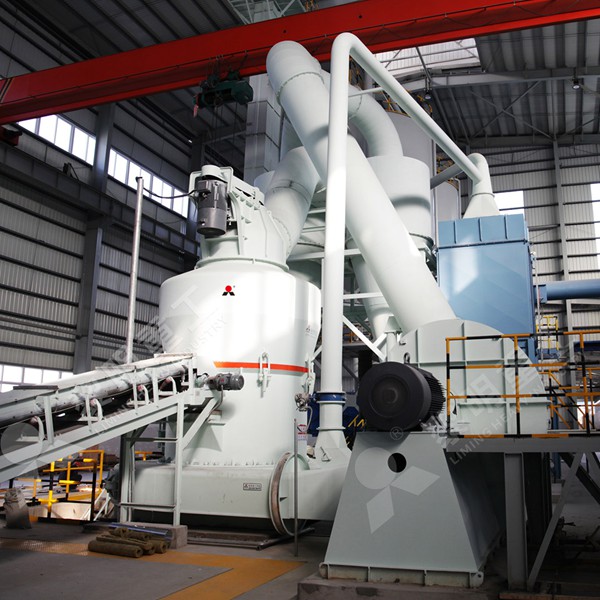
Why Dolomite Is Used in Water Treatment
Dolomite is a natural calcium-magnesium carbonate mineral. Unlike limestone, which is mostly calcium carbonate, dolomite contains magnesium as well. This gives it a unique place in water treatment. When water becomes acidic, dolomite powder reacts with hydrogen ions to raise pH and release calcium and magnesium. This not only corrects acidity but also adds beneficial hardness minerals back into the water.
Dolomite is also used in filtration systems. Granular dolomite can act as a filter medium to remove fine suspended solids. In some cases, it helps oxidize and precipitate iron and manganese, making it easier to remove them from groundwater. The powder form is especially useful for rapid neutralization and coagulation aid addition. For these applications, the particle size distribution and surface area of the powder must be controlled. That is where a dedicated dolomite grinding mill becomes essential.
Think of it this way: a big chunk of dolomite will not react quickly enough for a modern dosing system. A very fine dust might be hard to handle and can create dust hazards. The right mill produces powder with a consistent, practical particle size that meets the needs of the water treatment process.
Our Experience in Dolomite Grinding
At Liming Heavy Industry Co., Ltd., we have been building crushing and grinding equipment for more than 30 years. The company was founded in 1987, and our headquarters are located in the high-tech industry development zone of Zhengzhou, covering an area of 80,000 square meters. We also operate a large workshop in the Shangjie Industrial Park, covering another 67,000 square meters. Over the decades, we have worked on grinding solutions for non-metallic minerals, coal, slag, chemicals, and many other materials. Dolomite is a common material in our product line, and we know exactly what it takes to grind it well.
Our approach is to match the mill to the application. There is no single grinding mill that is ideal for every water treatment plant. The right choice depends on the required capacity, the desired fineness, the moisture in the feed, and the layout of the existing plant. To make this easier, we offer a family of grinding mills that covers almost every scenario.
Grinding Equipment Options for Dolomite
Here are the main mills we use for dolomite powder production, especially in water-treatment-related lines.
Raymond Mill
The Raymond mill is a classic choice for small and medium-size grinding lines. It is widely used in metallurgy, building materials, chemicals, mining, and other fields. It can process non-flammable and non-explosive materials with Mohs hardness under 7 and moisture below 6%. Dolomite fits neatly within these limits. The output fineness is adjustable between 613 micrometers and 44 micrometers. For a water treatment plant that needs only 1.2 to 4.5 tons per hour, this mill is simple, affordable, and easy to operate.
MTW European Type Trapezium Mill
The MTW European Type Trapezium Mill is an upgraded product of the traditional Raymond and pendulum mills. It has patented technology, stronger performance, and better productivity. The capacity range is 3 to 55 tons per hour, and the input size can be up to 30 to 50 millimeters. This makes it the workhorse for medium-to-large non-metallic mineral powder projects. The MTW system uses a closed-loop air flow: the grinding mill, separator, air blower, jaw crusher, vibrating feeder, hopper, dust collector, and powder collector are integrated into a reliable system. Because the system is closed, dust is controlled, and the operation complies with national environmental protection standards.
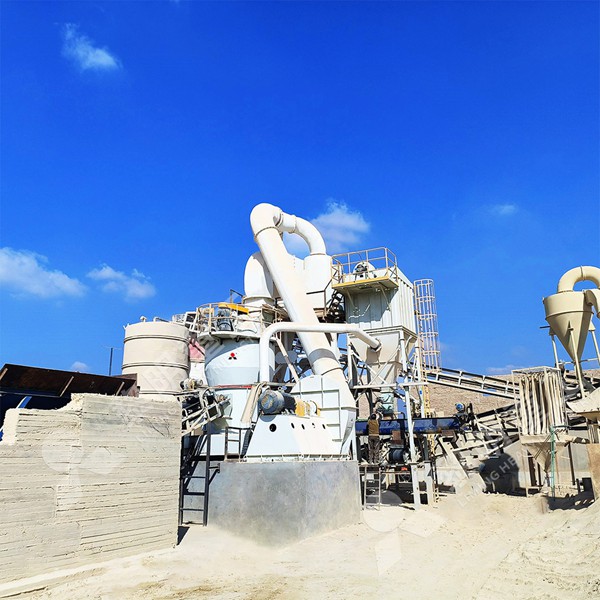
LM Vertical Roller Mill
The LM Vertical Roller Mill is our high-capacity solution for industrial users. It integrates drying, grinding, powder selection, and conveying in one unit. Its capacity is 10 to 400 tons per hour, and the input size is 30 to 55 millimeters. For dolomite projects with high throughput, especially those connected to large water treatment networks, power plant desulfurization, or non-metallic mineral processing, the LM vertical mill is an excellent choice. It also handles materials with higher surface moisture because the milling process can combine drying and grinding in a single step.
MW Micro Powder Mill
Some advanced water treatment formulations require a very fine dolomite powder. The MW Micro Powder Mill is designed for superfine grinding. It adopts an advanced grinding technology and can produce powders up to d97 ≤ 5 micrometers. The fineness can be adjusted between 325 mesh and 3250 mesh. With a pulse precipitator, the whole process is cleaner and more environmentally friendly. If you need dolomite powder for enhanced chemical reactivity, this is the mill to consider.
Ball Mill
The ball mill remains a common grinding plant in many industries. It is the key equipment for grinding after materials have been crushed. Its capacity ranges from 0.65 to 50 tons per hour, and the input size should be no more than 25 millimeters. It is widely used in beneficiation, construction, and chemical industries. For a water treatment plant that already operates a ball mill for other minerals, using it for dolomite can be a practical way to avoid additional equipment investment.
How the Grinding Process Works
Let us walk through a typical MTW dolomite grinding line, because it is one of the most common systems we supply for water-treatment-related plants.
First, large dolomite stones are crushed by a jaw crusher to the required size, usually around 30 to 50 millimeters. The crushed material is transported to a hopper and then fed into the mill by a variable-frequency belt feeder. Inside the mill, the material is ground between the grinding ring and rollers. As the rollers rotate, fine powder moves upward with the airflow and reaches the separator. Particles that are too coarse fall back down and are ground again. Particles that pass the separator are collected as finished powder. The airflow returns to the air blower, and the system keeps circulating. A pulse dust collector removes very fine dust from the air before it is discharged or reused.
This closed system has two big advantages. First, it reduces dust emissions, which is important in water treatment environments where clean air matters. Second, it improves energy efficiency because heated air is not wasted. The result is a stable powder output that can feed dosing equipment without blocking or segregating.
Choosing the Right Dolomite Grinding Mill
If you are planning a water treatment project, start with your process requirements. Ask yourself these questions:
- How much dolomite powder do I need per hour?
- What particle size is my existing dosing system designed to handle?
- What is the moisture content of my raw dolomite?
- Do I have space for a complete crushing and grinding line?
- Do I need to meet specific environmental limits on dust emissions?
For a small plant, a Raymond mill may be enough. For a larger plant, an MTW European Type Trapezium Mill or LM Vertical Roller Mill is more realistic. For ultra-fine powder, the MW Micro Powder Mill is the best match. In many cases, we recommend using the equipment that is already proven in your process. If you are switching from one type of media to another, our team can help you calculate the right specifications.
One more point: dolomite is not extremely hard. It is softer than quartz, and it is non-flammable and non-explosive. This makes it a forgiving material for grinding equipment. But it can still be abrasive, especially if the raw feed contains sand or clay. In our machines, we use wear-resistant parts and a stable design to minimize maintenance. That is one reason why our mills have become popular in non-metallic mineral powder production.
Final Thoughts
Dolomite grinding is not a side issue in water treatment. It is a core part of the chemistry that makes water safe and stable. The right grinding mill gives you consistent powder, reliable operation, and lower life-cycle costs. At Liming Heavy Industry, we have the experience and the product range to make that happen. Whether you need a small Raymond mill or a massive LM vertical roller mill, we can design a system around your water treatment goals.
Frequently Asked Questions
1. What fineness of dolomite powder is best for water treatment?
For most pH adjustment and filtration applications, a fineness range of 100 to 300 mesh works well. If you need extra reactivity or a smoother slurry, an ultra-fine powder from an MW Micro Powder Mill can be adjusted from 325 mesh up to 3250 mesh.
2. Can the same mill process both limestone and dolomite?
Yes. Limestone and dolomite have similar hardness and grinding characteristics. Our Raymond mill, MTW trapezium mill, LM vertical mill, MW micro powder mill, and ball mill are all used for non-metallic minerals, including limestone and dolomite.
3. Does the dolomite need to be dried before grinding?
If the moisture content is below 6 percent, Raymond and MTW mills can handle it directly. If the material is wetter, the LM vertical roller mill is often a better option because it can integrate drying and grinding in one unit.
4. Are these grinding systems safe for dust-sensitive environments?
Yes. The MTW and MW systems can be equipped with pulse dust collectors, and the air flow is recycled in a closed loop. This minimizes dust escape and helps you meet environmental standards.
5. How do I decide between a Raymond mill and an MTW mill for dolomite?
The main factors are capacity and efficiency. A Raymond mill is suitable for 1.2 to 4.5 tons per hour. An MTW European Type Trapezium Mill is better when you need 3 to 55 tons per hour with more stable and cleaner operation. For even higher output, consider the LM vertical roller mill.
Water treatment demands consistency, and a well-matched dolomite grinding mill is the first step toward that consistency.


