Published on: October 26, 2023
Marble grinding mills for wall putty are essential equipment in the construction and building materials industry, enabling the efficient transformation of raw marble scraps and limestone into ultra-fine powders that form the base of high-quality wall putty. As a leading manufacturer with over three decades of expertise, Liming Heavy Industry Co., Ltd. offers a comprehensive range of grinding solutions—from vertical roller mills and Raymond mills to European-type trapezium mills and micro powder mills—each engineered to deliver consistent particle size distribution, high throughput, and energy efficiency. This article provides an in-depth analysis of how marble grinding mills work, their key applications in wall putty production, selection criteria based on capacity and fineness, and the technological innovations that set modern mills apart. Whether you are a putty manufacturer seeking to upgrade your production line or a contractor requiring reliable powder supply, understanding the nuances of marble grinding technology is critical to achieving optimal product quality and operational cost savings.
Understanding Marble Grinding Mills for Wall Putty
Wall putty, a cement-based or polymer-based plaster used for smoothening interior and exterior walls, relies heavily on finely ground marble powder (calcium carbonate) as its primary filler. The quality of putty—its adhesion, crack resistance, and workability—is directly influenced by the fineness and purity of the marble powder. This is where specialized marble grinding mills come into play. These mills crush, grind, and classify marble stones or chips into powders ranging from 200 mesh (74 microns) for standard putty to 1250 mesh (10 microns) for premium-grade products.
Types of Marble Grinding Mills Offered by Liming Heavy Industry
1. LM Vertical Roller Mill
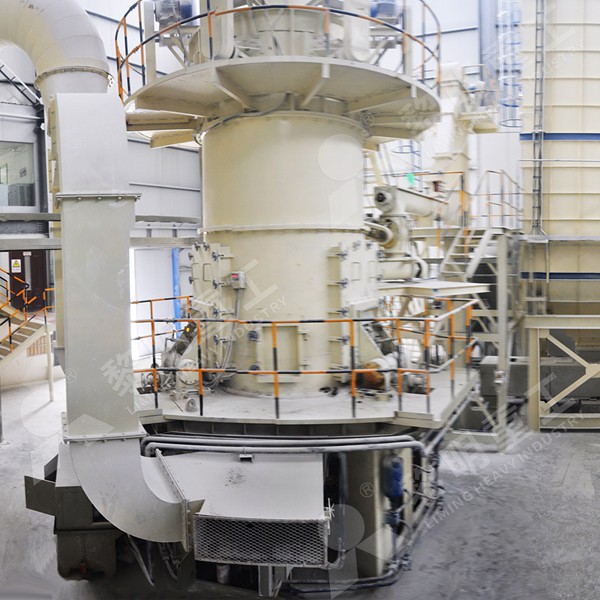
The LM Vertical Roller Mill is a flagship product designed for large-scale operations. It integrates drying, grinding, powder selection, and conveying in a single unit, making it ideal for processing marble with moisture content up to 15%. With a capacity range of 10–400 T/H and an input size of 30–55 mm, this mill can handle bulk marble feed without pre-crushing. Its automatic electric control system ensures stable operation and precise fineness adjustment (typically 80-400 mesh). For wall putty manufacturers requiring high throughput and low energy consumption per ton, the LM vertical mill is a cost-effective choice. The grinding rollers and table are made of wear-resistant alloys, extending service life even when processing abrasive marble.
2. Raymond Mill
For medium-scale putty plants, the Raymond Mill remains a workhorse. It is suitable for grinding non-flammable and non-explosive materials with Mohs hardness under 7 and humidity below 6%—marble easily meets these criteria. The Raymond mill produces fineness between 613 μm (30 mesh) and 44 μm (325 mesh), covering the typical requirements for general wall putty. Its capacity of 1.2–4.5 T/H makes it suitable for small to medium batch production. The mill operates on a simple principle: material is fed into the grinding chamber, where rollers swing outward and press against a stationary ring, crushing the marble. A blower then carries the fine particles upward to a classifier, where oversized particles are returned for regrinding.
3. MTW European Type Trapezium Mill
The MTW European Type Trapezium Mill is an advanced upgrade of the traditional Raymond mill, featuring patented technologies such as bevel gear integral transmission, curved air duct, and thin-oil lubricating system. This mill is widely used in non-metallic mineral powder making, including marble processing for wall putty. Its capacity ranges from 3 to 55 T/H, with an input size of 30–50 mm. The working principle involves a closed-loop system: after primary crushing by a jaw crusher, marble is fed into the mill via a variable-frequency belt feeder, ground between ring and rollers, and then classified by a high-efficiency separator. The system is equipped with a pulse dust collector, ensuring compliance with environmental standards. For putty manufacturers aiming for high purity and consistent particle size (e.g., 325 mesh D97), the MTW mill delivers superior performance.
4. MW Micro Powder Mill
When the target fineness exceeds 325 mesh—for example, producing superfine marble powder of 800 mesh, 1250 mesh, or even 3250 mesh—the MW Micro Powder Mill is the solution. It adopts advanced Swedish grinding technology and can achieve a final product of d97 ≤ 5 μm. With a capacity of 0.5–25 T/H and input size of 10–20 mm, this mill is ideal for premium wall putty that requires exceptional smoothness and coverage. The working principle involves a main shaft driving multiple rollers to rotate against a raceway ring; material is crushed by hammer crusher, then fed into the mill, where centrifugal force pushes it to the ring for repeated grinding. The MW mill also includes a pulse precipitator, making it environmentally friendly.
5. Ball Mill
Although less specialized for marble than other mills, the Ball Mill is still a reliable option for putty production, especially when combined with a classifier. It can grind ores and materials up to 25 mm feed size, producing fineness down to 30–400 mesh. Capacity ranges from 0.65 to 50 T/H. The ball mill works by rotating a horizontal cylinder containing steel balls; as the cylinder rotates, the balls are lifted and fall, impacting and grinding the marble. However, due to its higher energy consumption and larger footprint compared to vertical or trapezium mills, the ball mill is often used in older plants or for specific applications where particle shape matters.
Key Factors in Selecting a Marble Grinding Mill for Wall Putty
Choosing the right mill involves evaluating several parameters:
- Capacity Requirement: Daily or hourly production volume dictates whether a vertical mill (high capacity), Raymond mill (medium), or micro powder mill (low to medium) is appropriate.
- Fineness Specification: Standard wall putty requires 200–400 mesh (37–74 μm). Superfine putty may require 600–1250 mesh (10–20 μm). The MTW and MW mills excel in finer ranges.
- Moisture Content: Freshly quarried marble may contain moisture. The LM vertical mill can handle wet feed, while Raymond and MTW mills need dry material.
- Energy Efficiency: Vertical roller mills generally consume 20–30% less energy than ball mills for the same throughput.
- Maintenance and Wear: Mills with replaceable wear parts (e.g., rollers and rings in Raymond and MTW mills) reduce downtime.
Benefits of Liming Heavy Industry’s Marble Grinding Solutions
With a history dating back to 1987, Liming Heavy Industry Co., Ltd. has established itself as a leader in crushing and grinding equipment. The company’s commitment to scientific research and technological improvement ensures that each mill is designed for longevity and precision. For wall putty manufacturers, this translates to:
- Consistent product quality with narrow particle size distribution.
- Lower operating costs due to advanced lubrication and control systems.
- Environmental compliance through integrated dust collection.
- Global after-sales support and spare parts availability.
Conclusion
Marble grinding mills are the backbone of wall putty production, transforming raw marble into valuable filler material. Whether you opt for the high-capacity LM vertical mill, the versatile Raymond mill, the efficient MTW trapezium mill, or the superfine MW micro powder mill, each offers distinct advantages. By aligning your mill choice with your fineness, capacity, and moisture requirements, you can achieve optimal putty quality and operational profitability. Liming Heavy Industry provides the expertise and equipment to meet these demands, backed by decades of innovation and a global footprint.
Frequently Asked Questions (FAQ)
Q1: What is the recommended fineness of marble powder for wall putty?
A: For standard wall putty, a fineness of 200–400 mesh (37–74 μm) is typical. For premium putty requiring smoother finish, 600–1250 mesh (10–20 μm) is recommended.
Q2: Can a Raymond mill process marble with high moisture content?
A: No, Raymond mills are designed for materials with humidity less than 6%. For wet marble, consider an LM vertical roller mill that incorporates drying.
Q3: How do I choose between MTW trapezium mill and MW micro powder mill?
A: Choose MTW for fineness up to 325 mesh and higher capacity (up to 55 T/H). Choose MW micro powder mill for ultra-fine grinding above 325 mesh (up to 3250 mesh) with lower capacity.
Q4: What is the typical power consumption of a marble grinding mill per ton of product?
A: Power consumption varies by mill type and fineness. Generally, vertical roller mills consume 20–40 kWh per ton for 200-mesh product, while ball mills may consume 30–50 kWh per ton.
Q5: Does Liming Heavy Industry provide complete turnkey solutions for wall putty production lines?
A: Yes, Liming offers integrated solutions including crushers, feeders, mills, classifiers, dust collectors, and control systems, tailored to your specific plant requirements.


