Silica sand is the backbone of glass manufacturing. It supplies the silica that forms the glass structure, and its particle size and consistency have a direct impact on melting behavior and final product quality. To turn raw sand or quartz rock into a stable glass-making feed, a reliable silica sand grinding mill is essential. Liming Heavy Industry has designed and manufactured grinding equipment since 1987, offering LM vertical roller mills, MTW European type trapezium mills, Raymond mills, MW micro powder mills, and ball mills. This article reviews these technologies in the context of silica sand grinding for glass making and explains how to select the right system according to throughput, fineness, and contamination requirements.
Why Grinding Matters in Glass Production
Raw silica sand cannot normally be fed directly into a glass furnace. It often contains lumps, oversized grains, clay particles, and moisture variations. A grinding mill breaks down these inconsistencies and delivers a feed with a predictable size distribution. In glass making, the usual target for common flat and container glass is a sand powder or fine granule in the range of roughly 100 to 500 microns. For specialty glass, silica flour may be required at 325 mesh or even finer. A dedicated mill with an accurate classifier can meet both types of requirements.
If you have ever been involved in glass production, you know that consistent particle size can make or break a shift. Oversize grains can create unmelted inclusions, while too much ultra-fine powder can cause dust loss and rapid melting in the furnace. This is why the grinding system must be selected carefully, not simply chosen based on capacity alone.
Important Quality Requirements for Glass-Grade Silica Sand
Glass makers care about chemical purity as much as particle size. High-quality silica sand usually contains more than 99 percent SiO2 and low levels of iron oxide. Grinding equipment should not add iron to the sand. This is why mills with ceramic or rubber liners are often recommended when the iron limit is strict. The size distribution should also be narrow: too many ultra-fine particles can cause dusting; too many coarse grains can leave defects in the glass. The mill's separator therefore plays a key role in producing a consistent product.
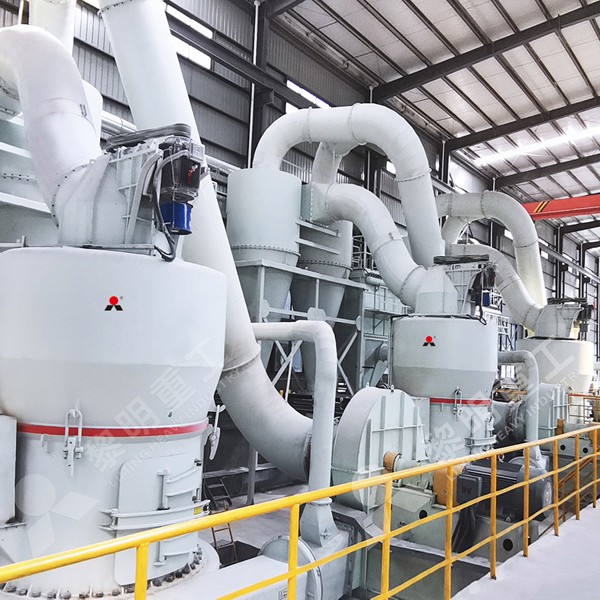
Main Grinding Mill Options for Silica Sand Processing
Liming Heavy Industry offers several mill types. Each one has its own strengths, and the best choice depends on the scale of the project, the feed size, and the target product.
1. LM Vertical Roller Mill
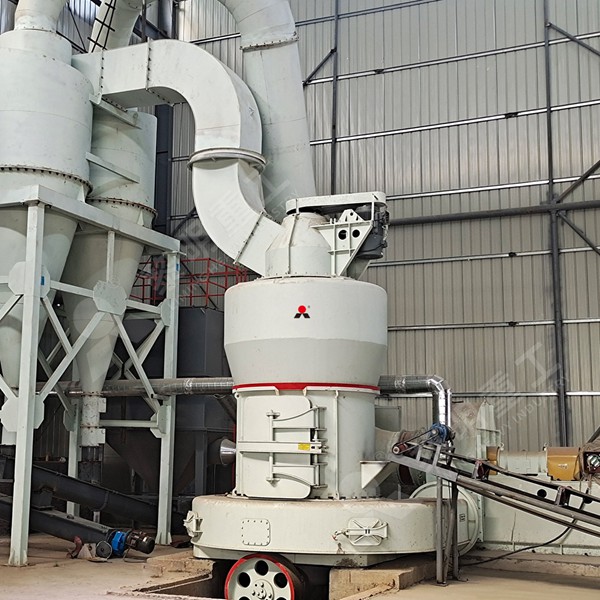
For large-scale glass sand projects, the LM Vertical Roller Mill is a compact and efficient solution. It integrates drying, grinding, powder selection, and conveying in one unit. The mill can handle feed sizes from 30 to 55 mm, and capacities range from 10 to 400 t/h. This makes it suitable for mining sites and mineral processing plants where raw quartz rock is processed in high volume. Because the vertical mill combines grinding and classification, operators can produce a stable product with lower energy consumption than many older grinding systems.
2. MTW European Type Trapezium Mill
For medium-capacity plants, the MTW European Type Trapezium Mill is the upgraded product of the traditional Raymond mill and pendulum mill. It is available in the 3 to 55 t/h range and accepts feed sizes of 30 to 50 mm. The grinding line includes a jaw crusher, vibrating feeder, variable-frequency belt feeder, mill, separator, air blower, pulse dust collector, and powder collector. Big lumps are first crushed to size, then fed evenly into the mill. Material is ground between rings and rollers, carried upward by air flow, and classified. Oversize particles fall back for regrinding, while finished powder is collected. The closed air system and pulse dust collector make the MTW mill a strong choice for glass sand producers who need environmental compliance.
3. Raymond Mill
For smaller projects or pilot operations, the Raymond Mill remains a reliable option. It is suitable for non-flammable and non-explosive materials below 7 Mohs hardness and less than 6 percent humidity, so silica sand is well within its range. Output fineness can be adjusted from 613 micrometers down to 44 micrometers, and the capacity is 1.2 to 4.5 t/h. With a 15 to 25 mm feed size, it is easy to integrate into a small crushing circuit. This mill is a good starting point and is often used for calcium carbonate, gypsum, power plant desulfurization, and non-metallic ore powder, but it also handles silica sand effectively.
4. MW Micro Powder Mill
If the glass production line uses silica flour or demands superfine powder, the MW Micro Powder Mill is the specialist. This mill absorbs advanced Swedish grinding technology and can produce finished powders up to d97 ≤ 5 μm. The fineness can be adjusted between 325 mesh and 3250 mesh. Capacity is 0.5 to 25 t/h with a feed size of 10 to 20 mm. The grinding mechanism uses rollers that rotate against a raceway, while a pulse precipitator keeps the operation clean. For specialty glass, fiberglass, and high-end applications, this mill offers the fineness range that standard sand mills cannot achieve.
5. Ball Mill
Classic tumbling grinding remains useful for silica sand. The Ball Mill is a horizontal rotating device with steel balls or other grinding media. It is key equipment after crushing and can grind all kinds of ores. Capacity ranges from 0.65 to 50 t/h, and the feed size is up to 25 mm. In the chamber, ladder or ripple liners hold the media, and as the barrel rotates, centrifugal force carries the balls to a certain height, causing them to impact and grind the material. A ball mill is often used in a closed circuit with a classifier, especially when the plant needs a continuous solution. For glass sand with strict iron limits, grinding media and liners can be selected to reduce contamination.
Building a Complete Silica Sand Grinding System
In most glass-grade silica sand projects, the grinding mill is not installed alone. A typical Liming process line includes a jaw crusher for reducing large quartzite lumps to the mill feed size, a vibrating feeder, an elevator or belt conveyor, the grinding mill itself, an air classifier, a powder collector, and a pulse dust collector. Material enters the grinding chamber continuously, is ground between the ring and rollers or balls, and then moves with air flow to the separator. Oversize particles fall back for another pass; fine particles are collected as finished product. The air is returned to the blower in a closed loop, which reduces dust and material loss.
For the LM vertical mill, the system can also dry moisture-containing feed during grinding. This is particularly useful when raw sand is stored in the open or when weather conditions cause seasonal moisture changes.
How to Choose the Right Silica Sand Grinding Mill
There is no single mill that is best for every plant. The decision should be made based on raw material, product specification, and operating philosophy. Over the years, I have seen projects struggle not because the mill could not grind, but because the classifier could not hold the required particle size window. Pay attention to the classification system as much as the grinding force.
- If your project needs more than 10 t/h and you have large quartzite feed, the LM vertical roller mill is a strong first choice.
- If the plant size is medium and you need robust, low-maintenance equipment, the MTW European type trapezium mill offers proven performance.
- If the output requirement is below 5 t/h, the Raymond mill can be a practical option.
- If the required final powder is ultra-fine, the MW micro powder mill is designed for that task.
- If you already have a ball mill-based plant and want to keep a conventional route, the ball mill remains reliable in a closed circuit.
Conclusion
Silica sand grinding for glass making is a precise operation. It is not just about making fine powder; it is about controlling particle size, protecting chemical purity, and ensuring stable furnace performance. Liming Heavy Industry has been in this field since 1987, with modern manufacturing bases in Zhengzhou and Shangjie. The company's scientific research team and full range of grinding mills allow customers to choose equipment that matches their project. Whether the application is standard container glass, flat glass, or specialty silica flour, a properly selected Liming grinding mill helps turn raw silica into a high-quality glass-making material.
FAQ
1. What is the target fineness for silica sand in glass making?
For most flat and container glass, the target is often between 100 and 500 microns. Some specialty products need silica flour at 325 mesh or finer, and this is where a micro powder mill is normally required.
2. Which mill is suitable for a 10 to 20 t/h silica sand plant?
An MTW trapezium mill or a smaller LM vertical roller mill can handle this range. The final choice depends on feed size, moisture, and the required classification precision.
3. How can I avoid adding iron during silica sand grinding?
Use ceramic liners, ceramic grinding media, and rubber-lined piping where possible. You should also tell the mill manufacturer your maximum iron oxide limit before the design is finalized.
4. Is a pulse dust collector necessary?
Yes, in modern grinding plants, a pulse dust collector is almost always necessary to meet environmental standards and to recover valuable silica powder.
5. Can the same mill grind other glass raw materials?
Yes. Liming mills can also process limestone, dolomite, feldspar, and similar minerals. This flexibility is useful for glass batch preparation.


