Published: June 18, 2025
If you make ceramic glaze, you already know that feldspar is not just another bag of powder. It is the workhorse of the glaze recipe. It carries the fluxing oxides that lower the melting temperature, supplies alumina for durability, and contributes to the glassy surface that buyers expect on a tile, sink, or sanitaryware piece. But the performance of feldspar in a glaze depends on how well it is ground. In this guide, I will give you a practical look at the machines we use at Liming Heavy Industry to turn run-of-mine feldspar into a consistent, glaze-ready powder, and how those machines can fit into a modern ceramic production line.
Why Feldspar Grinding Is Different from Other Minerals
Feldspar is a crystalline aluminum silicate with a Mohs hardness of about 6 to 6.5. It is not the hardest mineral you will ever mill, but it is abrasive enough to punish careless equipment choices. At the same time, ceramic glaze formulas demand a relatively tightly controlled particle size distribution. A glaze made with coarse feldspar particles can behave differently during firing than one made with fine mineral; coarse particles may fail to dissolve into the glass phase, causing defects such as pinholes, crazing, and rough glaze texture. Over-ground feldspar, on the other hand, can increase slurry viscosity and make it harder to control the application thickness.
Defining the Target Fineness for Ceramic Glaze
Most glaze companies classify feldspar to a residue specification such as 0.5% to 2% on a 45 µm sieve. In many cases the D50 lies somewhere between 10 and 30 µm, depending on whether the body is assembled as a slurry or a dry press powder. The fineness range of a Raymond mill—613 to 44 µm—seems coarse for some glaze work, but it is often enough when the glaze is milled again in a wet ball mill with the other raw materials. When you want to eliminate that secondary size reduction step, an MTW European Type Trapezium Mill or an MW Micro Powder Mill can deliver a much finer product and give you more freedom in the glaze formulation.
A Quick Look at Our Feldspar Grinding Mills
At Liming Heavy Industry, we have been making grinding equipment since 1987. Over the last 30 years, we have installed thousands of mills in the non-metallic mineral, cement, and ceramic sectors. The following machines have each been used successfully for feldspar, and each has its own sweet spot in a glaze production line.
- Raymond Mill – Classic choice for small- and medium-sized feldspar powder producers. It handles materials of less than 7 Mohs hardness and 6% moisture. Capacity is 1.2 to 4.5 T/H, input size 15 to 25 mm, and output fineness is between 613 and 44 µm. It is simple to operate and has low maintenance requirements.
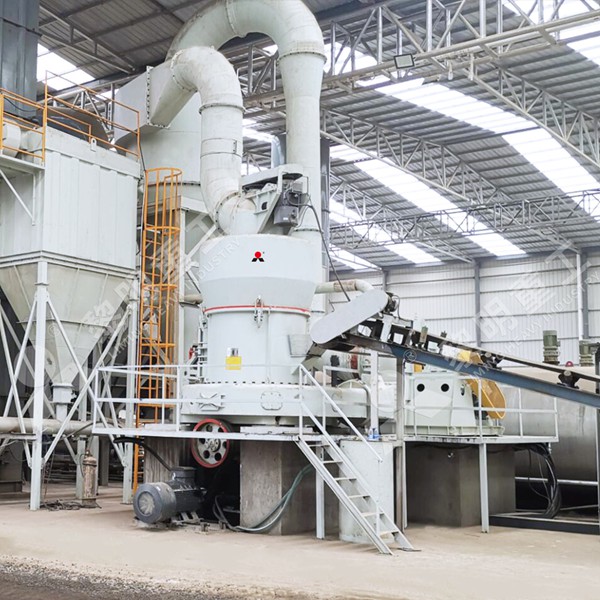
- MTW European Type Trapezium Mill – This is the successor to the traditional Raymond and pendulum mill, and it is my default recommendation for most ceramic glaze powder lines. Capacity is 3 to 55 T/H, input size 30 to 50 mm, and the machine has patented technology that improves grinding efficiency and product shape. The closed air circulation and pulse dust collector help keep the workshop clean.
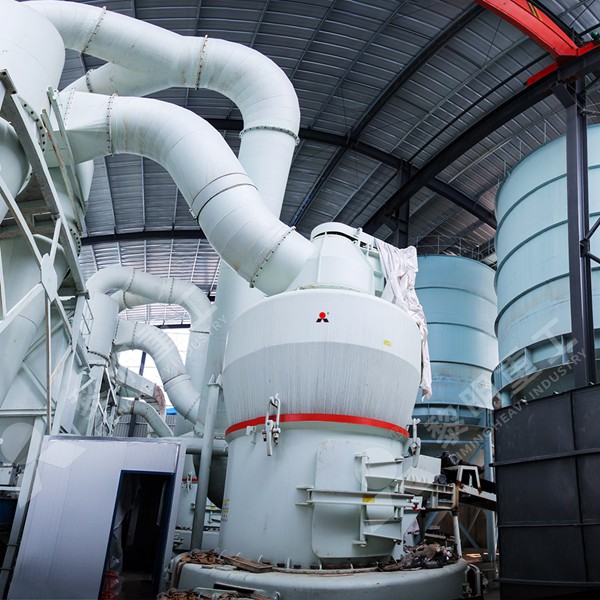
- LM Vertical Roller Mill – If you need to combine drying with grinding in one step, the LM vertical mill is hard to beat. It integrates drying, grinding, powder selection and conveying, with capacities from 10 to 400 T/H and input sizes of 30 to 55 mm. This is ideal for plants that process feldspar with a variable moisture level or that want to simplify the material flow from crusher to silo.
- MW Micro Powder Mill – Superfine feldspar can be used to improve the gloss and compaction behavior of glaze. The MW Micro Powder Mill absorbs Swedish grinding technology and can reach a product fineness of d97 ≤ 5 µm. With fineness adjustable between 325 mesh and 3250 mesh, it suits small-to-medium capacities of 0.5 to 25 T/H.
- Ball Mill – In many ceramic factories, the wet ball mill is still the standard equipment for the final homogenization of glaze ingredients. Our ball mill can process feldspar with a capacity of 0.65 to 50 T/H, with a feed size of ≤ 25 mm. It is also the key equipment after a crusher when you want a simple dry or wet grinding route.
How the Grinding System Works in Practice
Let's take the MTW mill as an example because it is so common in feldspar processing. Big pieces of feldspar are first reduced by a jaw crusher to the required size, usually 30 to 50 mm. A vibrating feeder then supplies the mill at a constant rate, and inside the grinding chamber the material is crushed and ground between the ring and rollers. The ground material is swept upward by air flow and moves to a separator. Coarse particles fall back to the grinding zone; fine particles pass the separator and are collected as finished powder. The air is recycled through the system, which reduces energy waste and keeps dust out of the plant. When we add a pulse dust collector, the whole line meets national environmental standards.
For the LM vertical roller mill, the same story takes on a larger scale. The material is fed onto the center of a rotating grinding table and is pressed by rollers. Hot gas can be introduced to dry high-moisture feldspar while it is being ground. This one-step process can drastically reduce the number of belt conveyors and bucket elevators in your plant.
Choosing the Right Mill for Your Glaze Line
I have been asked many times which mill is best for feldspar. The honest answer is that it depends on four things: your required throughput, your target fineness, your moisture level, and whether you grind dry or wet. If you have a small workshop and you are already planning to wet-grind the final glaze in a ball mill, a Raymond mill or even a ball mill alone can be sufficient. If you are building a centralized powder plant for potash and soda feldspar, an MTW or LM mill will give you lower energy consumption per ton and a more consistent product. If you need a special glaze additive with high surface area, the MW Micro Powder Mill is the answer.
What Feldspar Grinding Delivers in a Ceramic Glaze
When the feldspar is ground correctly, the ceramic glaze behaves predictably. The slurry has a stable viscosity, no hard settling after a night in the tank, good adhesion on the green body, and a flat, glossy surface after firing. The mill choice also affects the shape of the particles. Good grinding technology produces particles with sharp but not excessively fractured edges, and that can make the difference between a dense glaze layer and one that is hard to dry. This is one reason our customers take the trouble to test our MTW mill before they replace an old pendulum mill.
Why Liming Heavy Industry?
Liming Heavy Industry Co., Ltd. was founded in 1987 and is a modern joint-stock enterprise that combines research, manufacturing, and sales. Our headquarter is located in the HI-TECH Industry Development Zone of Zhengzhou, covering 80,000 square meters, and we also have a 67,000-square-meter workshop in the Shangjie Industry Park. Over the past three decades, we have continued to improve precision manufacturing and to invest in scientific research. Our R&D strategy focuses on improving product competitiveness, and we work with a mature research team to stay close to the technological frontier. This matters for a mineral as unforgiving as feldspar, because a grinding mill has to be reliable not only in a brochure, but at 3 a.m. on a Tuesday in the middle of a production run.
Final Thoughts
There is no single magic mill that fits every ceramic glaze factory. But there is a correct process for your raw material, your energy cost, your labor situation, and your final glaze quality. Liming Heavy Industry has spent more than thirty years building the equipment that makes this process happen. If you are planning a feldspar grinding plant for ceramic glaze, start with the numbers: feed size, capacity, target fineness, and moisture. Then match those numbers to one of our machines. The result will be a powder that your glaze team can trust, and a supplier that is happy to explain the why behind every recommendation.
Frequently Asked Questions
Q: What is the ideal fineness of feldspar for ceramic glaze?
A: Most glaze recipes work well with a residue of 0.5% to 2% on a 45 µm sieve. For high-gloss glaze, you may need a D50 below 20 µm, which can be produced with an MTW or MW mill.
Q: Can a Raymond mill be used for feldspar glaze powder?
A: Yes, for small and medium lines. A Raymond mill produces fineness between 613 and 44 µm and delivers 1.2 to 4.5 T/H, making it a practical option when the final glaze will be wet-milled again in a ball mill.
Q: Is the MTW European Type Trapezium Mill suitable for high-capacity feldspar processing?
A: Yes. The MTW mill has a capacity of 3 to 55 T/H and handles feed sizes up to 50 mm. Its patented grinding principle gives a stable product size distribution and lower energy consumption than traditional pendulum mills.
Q: Does Liming Heavy Industry provide a wet grinding solution for glaze?
A: Yes. Our ball mill is widely used in ceramic and beneficiation plants, with capacity up to 50 T/H. It can grind feldspar and other glaze materials either dry or wet, depending on your process.
Q: How do I choose between a vertical roller mill and a micro powder mill for feldspar?
A: Choose a vertical roller mill when you need high capacity, integrated drying, and simplified material flow. Choose a micro powder mill when you need superfine feldspar, especially for high-gloss or specialty glazes.


