Published: March 18, 2025
If you work with quartz ahead of silicon metal production, you already know that grinding is not just a 'crush it and move on' job. The grinding step determines how uniformly the quartz reacts in the furnace, how much dust is lost, and ultimately how much silicon metal you recover at the tapping floor. In this article, I would like to explain how Liming Heavy Industry approaches quartz grinding, which mills we recommend, and why the right mill configuration can make the difference between a smooth smelting campaign and an expensive shutdown.
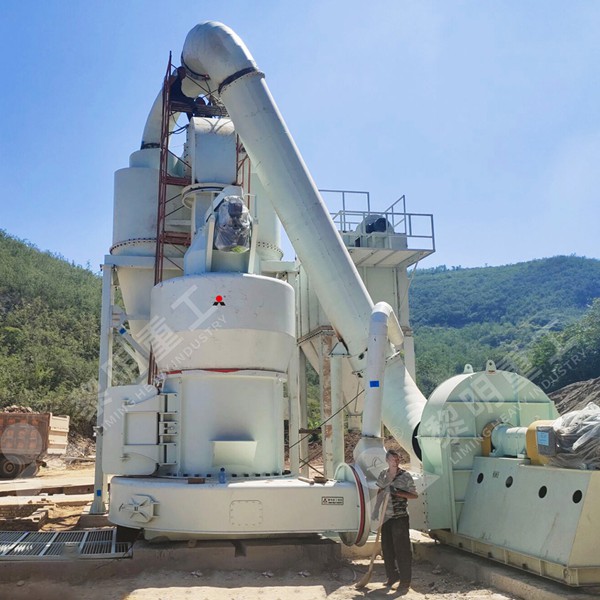
Let's start with the raw material. Quartz is hard, abrasive and dense. With a Mohs hardness of 7, it can punish equipment that is not designed for abrasive ores. It also has to stay clean, because trace contamination from iron or other elements can appear in the final silicon metal. So when we talk about a quartz grinding mill for silicon metal, we are really talking about three things: particle size control, purity protection, and production reliability.
Why quartz grinding matters for silicon metal
Silicon metal is produced by carbothermic reduction in an electric arc furnace. The furnace is fed with high-purity quartz and a carbon reductant. In my experience, furnace operation is happiest when the quartz particle size distribution is consistent. If the pieces are too large, the reduction reaction has difficulty completing. If too much fine powder is present, the bed becomes tight, gas movement is poor, and you lose material as dust.
Grinding also increases the surface area of the quartz when a fine powder is needed. Some plants briquette fine quartz with carbon and a binder to recycle fines and improve charge control. In that case, a mill that can produce a stable powder in the 80-325 mesh range is useful.
Over the last thirty years, our company has built a large number of grinding lines for non-metallic minerals. The biggest lesson we have learned is this: no single mill fits every quartz application. That is why Liming offers five complementary grinding systems.
Liming grinding mills for quartz processing
MTW European Type Trapezium Mill
The MTW European Type Trapezium Mill is, in my opinion, one of the best starting points for a medium-scale quartz grinding line. It is the upgraded product of the traditional Raymond mill, with patented technology and improved stability. It can take an input size of 30-50mm and has a capacity of 3-55t/h. It is especially good for producing a fine powder that remains consistent over long shifts.
The working principle is straightforward. Big quartz lumps are first crushed to the required size by a jaw crusher. A variable-frequency belt feeder sends the material into the mill evenly. Material is ground between rollers and the ring, then air flow carries it upward. The separator rejects coarse particles so they fall back for another pass, while the fine powder passes through and is collected. The air returns to the blower, so the system is closed and equipped with a pulse dust collector.
Raymond Mill
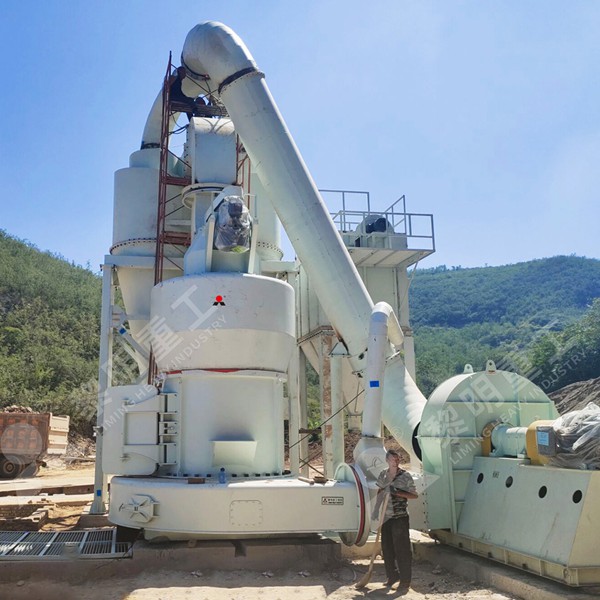
Raymond Mill is the classic workhorse. It is suitable for processing quartz with a Mohs hardness below 7 and moisture below 6%. The output fineness can be adjusted from about 613 to 44 microns, which covers most medium-fine quartz powder needs. Capacity is 1.2-4.5t/h and feed size is 15-25mm. I like the Raymond Mill for smaller lines or as a backup unit because it is easy to operate and simple to maintain.
LM Vertical Roller Mill
If your silicon metal project requires a very large quantity of quartz powder, the LM Vertical Roller Mill is the answer. Its capacity range is 10-400t/h and the feed size can be up to 30-55mm. It integrates drying, grinding, powder selection and conveying in one unit. This is a major advantage when the quartz has been washed or has some surface moisture. The LM mill is used in cement, electricity, metallurgy and chemical industries, and it performs well for non-metallic minerals.
Ball Mill
Some silicon metal producers do not need a fine powder at all. They need a coarse, uniform fraction that can be used directly as furnace feed or mixed with carbon. For that kind of job, the Ball Mill is still an excellent choice. It is a horizontal rotating device that uses steel balls to impact and grind the material. Capacity is 0.65-50t/h and input size is less than or equal to 25mm. The material is fed through the quill shaft into the grinding chamber, ground by the balls, and discharged through a discharging board. For quartz, a high-alumina lining and high-purity media can be selected to reduce iron contamination.
MW Micro Powder Mill
For producers working on more advanced silicon chemical routes or special applications, the MW Micro Powder Mill can produce ultra-fine quartz powder down to d97 less than or equal to 5 microns. The fineness can be adjusted from 325 mesh to 3250 mesh. It has a capacity of 0.5-25t/h and feed size of 10-20mm. The mill uses pinned rollers that rotate against a grinding ring. The powder is then carried to the separator. With a pulse precipitator, the whole production line remains clean and environmentally friendly.
How to choose a quartz grinding mill
My personal recommendation? Start with the end product. Ask yourself a few simple questions before you look at any machine.
- What final fineness does the silicon metal process require?
- What capacity do I really need, including planned downtime?
- How much moisture is in the quartz?
- What crushing equipment is already installed?
- How sensitive is the application to iron contamination?
In many of our quartz grinding projects, we choose MTW for medium lines and LM Vertical Roller Mill for large lines. For a small pilot plant, Raymond Mill is enough. For a coarse product, Ball Mill is simpler. For ultra-fine powders, MW is the right machine.
Typical line and environmental safeguards
A representative line includes a vibrating feeder, a jaw crusher, a bucket elevator, a storage hopper, the mill, a separator, a pulse dust collector and a powder collector. The air in the system is recycled through the blower. This closed arrangement reduces heat loss and controls dust. The pulse dust collector ensures that the exhaust is clean and meets national environmental protection standards.
Maintenance and operational advice
I always tell customers to watch the wear parts. Quartz is abrasive and will eventually wear grinding rollers, rings, and classifier blades. Check the separator regularly. Listen for unusual vibration. Monitor the motor current to catch build-up before it becomes a bigger problem. With proper maintenance, our mills can run for years.
Conclusion
Choosing a quartz grinding mill for silicon metal should be based on process requirements and equipment capabilities. Liming Heavy Industry has been manufacturing grinding equipment since 1987 and supports customers with research, installation and technical optimization. Whether you need a 1.2t/h Raymond Mill or a 400t/h Vertical Roller Mill, we can work with you to design the line. The goal is simple: give the silicon metal furnace a uniform, clean and properly sized quartz feed.
Frequently Asked Questions
1. Which Liming mill is best for quartz powder for silicon metal?
For most mid-sized lines, the MTW European Type Trapezium Mill is a safe choice. For very large capacity, use the LM Vertical Roller Mill. For ultra-fine powder, use the MW Micro Powder Mill.
2. Do I need a jaw crusher before the grinding mill?
Yes, in most cases. The mill feed sizes range from 10 to 55mm, so raw quartz lumps must first be reduced by a jaw crusher to match the mill inlet.
3. What fineness can be achieved?
Raymond Mill can produce 613 to 44 microns. MW Micro Powder Mill can produce 325 to 3250 mesh, or d97 less than or equal to 5 microns. MTW and LM can be adjusted for medium and fine powder ranges.
4. Can the grinding line handle moist quartz?
Most Liming mills require material with less than 6% moisture. The LM Vertical Roller Mill can integrate drying, so it is more tolerant of surface moisture.
5. Does the system meet environmental standards?
Yes. The grinding system is designed with a closed air loop and a pulse dust collector, so dust emissions are effectively controlled.


