Published on: October 26, 2023
In the specialized field of cable compound production, the marble grinding mill serves as a critical piece of equipment for achieving the ultra-fine particle sizes and consistent quality required in modern wire and cable insulation and sheathing materials. Liming Heavy Industry Co., Ltd., a pioneering force in the crushing and grinding equipment sector since 1987, offers a comprehensive range of milling solutions tailored for processing marble and other non-metallic minerals into cable-grade fillers. Our advanced grinding mills—including the LM Vertical Roller Mill, MTW European Type Trapezium Mill, MW Micro Powder Mill, and Raymond Mill—are engineered to deliver high efficiency, precise fineness control, and environmental compliance, making them ideal for the production of cable compounds where purity, thermal stability, and electrical insulation properties are paramount. With over three decades of manufacturing expertise, a modern 80,000 m² headquarters in Zhengzhou’s HI-TECH Zone, and a 67,000 m² workshop in Shangjie, we have established ourselves as a global leader in industrial grinding technology, providing reliable solutions that enhance productivity while meeting stringent international standards.
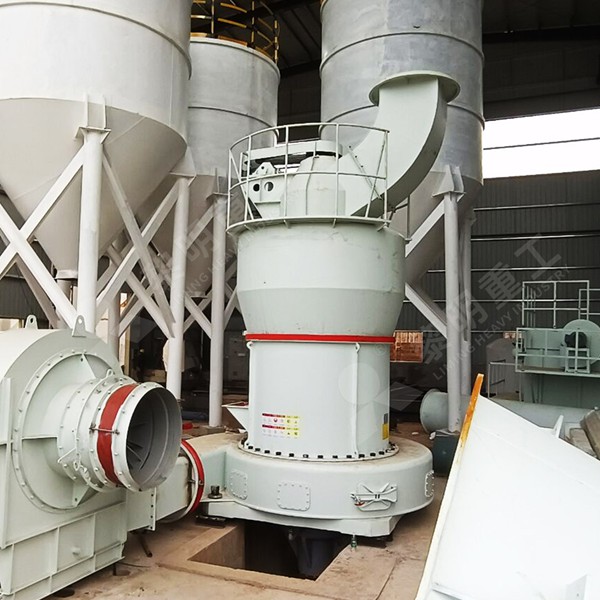
Marble, primarily composed of calcium carbonate, is a widely used filler in cable compounds due to its low cost, high brightness, and ability to improve mechanical strength and insulation properties. However, the grinding process for cable-grade marble requires meticulous control over particle size distribution, typically ranging from 325 mesh to 1250 mesh, with low moisture content and minimal contamination. Liming’s grinding mills are designed to meet these exacting demands. For instance, the LM Vertical Roller Mill integrates drying, grinding, powder selection, and conveying in a single unit, achieving capacities from 10 to 400 T/H with an input size of 30-55 mm. This mill is particularly suitable for large-scale cable compound operations, where energy efficiency and throughput are critical. Meanwhile, the MTW European Type Trapezium Mill, an upgrade of traditional Raymond mills, offers capacities of 3-55 TPH and input sizes of 30-50 mm, delivering stable performance with patented technology that reduces energy consumption by up to 30% compared to conventional models. For ultra-fine applications, the MW Micro Powder Mill can achieve D97 ≤ 5 μm (fineness adjustable from 325 to 3250 mesh), making it ideal for high-end cable compounds requiring superior dispersion and surface area.
Liming Heavy Industry’s commitment to innovation is evident in the design philosophy behind each grinding mill. The MTW European Type Trapezium Mill, for example, operates on a closed-loop system: big lump materials are first crushed by a jaw crusher to the required size, then fed via a variable-frequency belt feeder into the mill, where grinding occurs between rings and rollers. An air classifier ensures that only particles meeting the specified fineness pass through, while oversize particles fall back for regrinding. The system is equipped with a pulse dust collector, ensuring compliance with national environmental standards—a critical factor for cable compound manufacturers aiming to reduce their ecological footprint. Similarly, the MW Micro Powder Mill draws on advanced Swedish grinding technology, incorporating a reducer-driven multi-roller design that rotates against a raceway ring. Material enters from a hopper via a vibrating feeder at the central turnplate, and centrifugal force distributes it evenly across the grinding path. This mechanism ensures uniform particle size and high productivity, with capacities ranging from 0.5 to 25 T/H and feed sizes of 10-20 mm.
For cable compound producers dealing with varying production scales, Liming offers flexible solutions. The Raymond Mill, a workhorse for mineral grinding, handles non-flammable, non-explosive materials below 7 Mohs hardness and 6% humidity, delivering output fineness between 613 μm and 44 μm (equivalent to 30-325 mesh) at capacities of 1.2-4.5 T/H. Its applications in calcium carbonate processing, gypsum crushing, and non-metallic ore pulverizing directly align with cable compound manufacturing where consistent filler quality is required. Additionally, the Ball Mill, with capacities from 0.65 to 50 T/H and input sizes up to 25 mm, serves as a versatile option for wet or dry grinding in cement, building materials, and chemical industries, though for marble grinding in cable compounds, vertical and trapezium mills are generally preferred due to their higher efficiency and better classification. Liming’s 30-year legacy of scientific research and development—centered on “scientific tackling, technological progress, and improvement” through a mature R&D team—ensures that every mill is optimized for the specific demands of the cable industry, including low iron contamination and precise particle control.
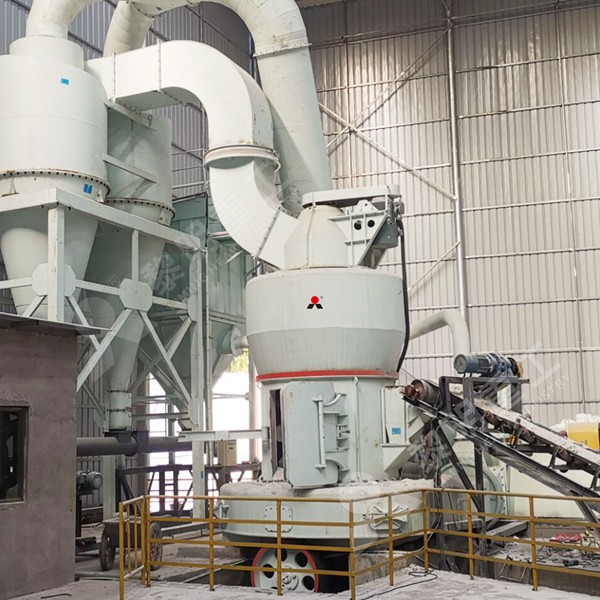
Environmental stewardship is a cornerstone of Liming’s manufacturing philosophy. All our grinding mills, particularly the MTW and MW series, come equipped with pulse dust collectors that capture fine particles, preventing airborne pollution and reducing material loss. This is especially important in cable compound production, where even minor dust contamination can affect the dielectric properties of the final product. Moreover, the compact design of our mills minimizes floor space requirements, while advanced electric control systems automate the entire process—from feeding to product discharge—reducing labor costs and human error. For example, the LM Vertical Mill features an automatic control system that adjusts grinding pressure and classifier speed in real time, ensuring consistent product quality even when raw material characteristics vary.
Liming Heavy Industry’s global presence, with clients across cement, power, metallurgy, chemical, and mining sectors, underscores our ability to deliver tailored solutions. Our technical team provides end-to-end support, including site assessment, mill selection, installation supervision, and after-sales service. Whether you require a single mill for a small-scale facility or a complete grinding line with crushers, feeders, and elevators, our modular system can be customized to your cable compound specifications. The operational principle of our MTW system—featuring a closed-loop air circuit, variable-frequency feeding, and multi-stage classification—ensures minimal energy waste and maximum uptime. As the leader in domestic and overseas machinery manufacturing, we continue to push technological boundaries, such as incorporating AI-driven diagnostics and remote monitoring in newer models, though such features are verified through rigorous field testing before release.
In conclusion, the marble grinding mill for cable compound is not just a piece of equipment; it is a precision tool that directly impacts product quality, production efficiency, and environmental compliance. Liming Heavy Industry Co., Ltd. stands ready to partner with cable manufacturers, offering mills that combine durability with cutting-edge technology. From the high-capacity LM Vertical Roller Mill to the ultra-fine MW Micro Powder Mill, our product portfolio covers every facet of marble grinding. With a 30-year track record, a dedicated scientific research team, and a commitment to “scientific tackling and technological progress,” we ensure that your cable compound production achieves the highest standards of consistency and reliability. Contact us today to discover how our grinding solutions can enhance your manufacturing process and contribute to a sustainable future.
Frequently Asked Questions (FAQ)
- What particle size range is recommended for marble used in cable compounds, and which Liming mill can achieve it? Typically, cable compounds require marble filler with a fineness between 325 mesh (44 μm) and 1250 mesh (10 μm). Our MTW European Type Trapezium Mill can achieve 325-800 mesh, while the MW Micro Powder Mill reaches up to 3250 mesh (D97 ≤ 5 μm), making both suitable for different cable grades.
- How does the closed-loop system in Liming mills improve efficiency for cable compound production? The closed-loop system recycles air and unground particles, reducing energy consumption by up to 30% compared to open-circuit systems. It also minimizes material loss and ensures consistent classification, which is vital for maintaining the dielectric properties of cable insulation.
- Can the grinding mills handle marble with high moisture content? Yes, our mills, especially the LM Vertical Roller Mill, integrate drying within the grinding chamber, allowing processing of materials with up to 15% moisture. For cable compounds requiring low moisture (<0.5%), the mill’s hot air system can reduce humidity effectively without needing a separate dryer.
- What maintenance is required for the marble grinding mill to ensure longevity? Regular lubrication of bearings and rollers, inspection of grinding rings, and calibration of the classifier are recommended every 500-1000 hours. Liming provides detailed manuals and remote diagnostic support in newer models to simplify maintenance and reduce downtime.
- Does Liming offer complete turnkey solutions for a cable compound grinding plant? Absolutely. We supply full systems including jaw crushers, vibrating feeders, elevators, mills, dust collectors, and electrical cabinets. Our engineering team customizes each line based on capacity requirements and site constraints, with capacities ranging from 1 T/H to over 100 T/H.


