Published on: October 26, 2023
When manufacturing detergent powder, the filler material—often marble powder—plays a critical role in determining product quality, flowability, and cost-efficiency. Marble, being a soft to medium-hard mineral (Mohs hardness around 3-4), requires specialized grinding equipment to achieve the fine, uniform particle size demanded by the detergent industry. This article provides a detailed professional overview of using marble grinding mills for detergent filler production, drawing upon decades of engineering expertise from Liming Heavy Industry Co., Ltd., a global leader in crushing and grinding solutions since 1987. We will explore which mill types are best suited for this application, their working principles, and key selection criteria, followed by a practical FAQ section to address common operational questions.
Marble, chemically primarily calcium carbonate (CaCO₃), is an ideal extender and filler in detergent formulations. It adds bulk, improves texture, and helps regulate the pH of the washing solution. However, to integrate seamlessly into detergent powder, marble must be ground to a specific fineness, typically between 100 mesh (150 microns) and 325 mesh (44 microns), or even finer for premium liquid detergents. The grinding process must be consistent, energy-efficient, and capable of handling variable throughput without compromising the final product's homogeneity. Liming Heavy Industry's extensive portfolio includes several machines that excel in this domain, each offering unique advantages for marble grinding.
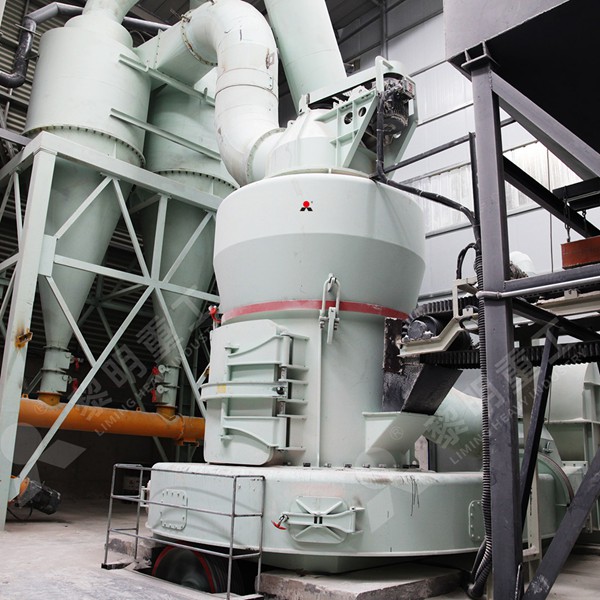
Optimal Mill Solutions for Marble Detergent Filler
Based on our company's product range and three decades of field application, the following mill types are most effective for transforming raw marble into high-quality detergent filler:
1. MTW European Type Trapezium Mill
This is the most recommended machine for medium to large-scale detergent filler production. As an upgrade to traditional Raymond mills, the MTW mill features patented technology that ensures stable performance and high productivity. For marble filler (typically requiring fineness between 80-400 mesh), the MTW mill offers a capacity range of 3-55 tons per hour with input sizes up to 30-50mm. Its integrated system includes a jaw crusher for primary size reduction, a variable-frequency belt feeder for even material distribution, and a separator for precise particle size control. The system is closed-loop with a pulse dust collector, ensuring compliance with stringent environmental standards—a crucial factor for modern detergent manufacturing plants.
Key advantages for marble:
- The trapezium-shaped grinding roller and ring improve grinding efficiency and reduce wear when processing calcium carbonate-rich minerals.
- The ability to adjust separator speed allows quick switching between different mesh sizes for various detergent formulations (e.g., coarse filler for powder detergents vs. fine filler for liquid gels).
2. Raymond Mill (Traditional Pendulum Type)
For smaller operations or specialized production lines requiring fineness between 613μm and 44μm, the classic Raymond mill remains a workhorse. Liming Heavy Industry's Raymond mill is designed for non-flammable, non-explosive materials under Mohs 7 hardness and less than 6% humidity—marble fits perfectly within these parameters. Its capacity of 1.2-4.5 tons per hour makes it suitable for pilot plants or small-batch detergent filler production. The mill's simple structure ensures easy maintenance, and its ability to produce consistent particle size distribution (PSD) is well-documented in calcium carbonate processing.
3. LM Vertical Roller Mill
For large-scale industrial detergent production requiring high throughput (10-400 T/H) and integration with drying processes, the LM Vertical Roller Mill is unmatched. Marble feedstock often contains surface moisture, and the LM mill's combined drying, grinding, and classifying capability eliminates the need for separate dryers. This mill is particularly effective when the marble is co-ground with other detergent ingredients or when extremely high capacities are needed. The vertical roller design also offers lower energy consumption per ton of finished product compared to ball mills, making it a cost-effective long-term solution.
4. MW Micro Powder Mill
When the detergent formulation demands a superfine marble filler—such as d97 ≤ 5μm (approximately 2500 mesh)—the MW Micro Powder Mill is the specialized choice. This mill, which incorporates advanced Swedish grinding technology, is designed to produce ultra-fine powders while maintaining high environmental standards with its pulse precipitator. Although its capacity is smaller (0.5-25 T/H), the MW mill excels in applications where the filler must not cause sedimentation in liquid detergents or where a creamier texture is required. The fineness is adjustable between 325-3250 mesh, offering maximum flexibility for R&D departments.
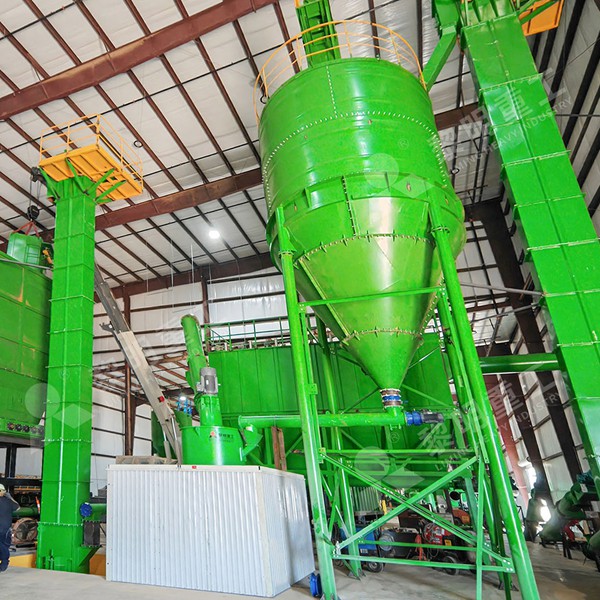
Working Principle for Marble Grinding
All of Liming Heavy Industry's mills operate on a similar fundamental principle, though with mechanical variations. For marble processing, the typical workflow involves:
Step 1: Crushing. Raw marble boulders (up to 50mm for MTW mill) are first crushed by a jaw crusher to reduce them to a manageable size. This pre-crushing stage is critical to prevent overloading the main mill and to ensure consistent feeding.
Step 2: Feeding. The crushed marble is transported to a hopper via an elevator. A vibrating feeder or variable-frequency belt feeder then introduces the material at a controlled rate into the grinding chamber. For detergent filler, maintaining a uniform feed rate is essential for consistent fineness.
Step 3: Grinding. Inside the chamber, the grinding mechanism (rollers against a ring in Raymond/MTW mills, rollers against a raceway in LM and MW mills) applies both compression and shearing forces. Marble's crystalline structure fractures easily along cleavage planes, so the grinding process produces angular particles with excellent interlocking properties—beneficial for tablet detergent binders.
Step 4: Classification. An integrated dynamic or static separator uses centrifugal force to reject oversize particles, which fall back for regrinding. Only particles meeting the target mesh size (e.g., 200 mesh for standard powder detergent) pass into the collection system. This closed-circuit grinding ensures high efficiency and narrow PSD.
Step 5: Collection & Dust Control. Finished marble powder is collected via a cyclone separator and a pulse dust collector. The clean air is recirculated into the blower, minimizing heat loss and fugitive dust—a critical feature for detergent plants where cross-contamination must be avoided.
Selecting the Right Mill for Your Detergent Filler Needs
Choosing between these mills depends on three factors: desired capacity, required fineness, and budget for energy consumption. For a standard detergent powder plant producing 10 tons per hour of filler, the MTW European Type Trapezium Mill offers the best balance of efficiency and investment. If the goal is to produce a ultra-fine grade for premium liquid detergents, the MW Micro Powder Mill is irreplaceable. For integrated operations where drying and grinding must occur in one step, the LM Vertical Roller Mill is the industrial benchmark.
Liming Heavy Industry Co., Ltd., with over 30 years of manufacturing excellence and a modern 80,000 m² headquarters in Zhengzhou's HI-TECH Zone, provides complete turnkey solutions for these applications. Our scientific research team continuously improves product competitiveness, ensuring that each mill delivers the precision required for detergent filler—a market where consistency directly impacts consumer satisfaction.
Frequently Asked Questions (FAQ)
- Q: Can the MTW mill handle marble with high moisture content?
A: Yes. While the MTW mill does not have integrated drying like the LM vertical mill, it can process marble with up to 6% moisture without issue. For higher moisture levels, we recommend integrating a separate flash dryer or using the LM series to combine drying and grinding in one step. - Q: What is the typical wear life of grinding rollers when processing marble for detergent filler?
A: Marble is relatively non-abrasive (Mohs 3-4). In the MTW or Raymond mill, roller and ring liners typically last 12-18 months when running 16 hours per day at standard production rates. Actual wear life depends on feed size and contamination levels (e.g., silica content in marble). - Q: How do I achieve a particle size of exactly 200 mesh (75 microns) for standard detergent filler?
A: Both the MTW mill and Raymond mill have adjustable separator speeds. To target 200 mesh, we recommend starting with a separator speed of approximately 120-150 RPM (dependent on model). A sample should be taken from the finished product and analyzed with a sieve shaker. Fine-tuning can then be done in 5-10 RPM increments. - Q: Is the MW Micro Powder Mill suitable for continuous 24/7 production?
A: Yes, the MW mill is designed for industrial continuous operation. However, we recommend preventive maintenance checks every 400 hours of operation. The mill's pulse dust collector should be serviced weekly to ensure the bags remain free from clogging, especially when producing ultra-fine marble powder below 10 microns. - Q: Can these mills also grind other materials used in detergent production, such as sodium sulfate or zeolites?
A: Absolutely. The same mills can be used for grinding a variety of detergent base materials, including soda ash, sodium tripolyphosphate, and zeolites. The grinding parameters (e.g., pressure, feed rate, separator speed) must be adjusted according to the material's hardness and desired fineness. Liming Heavy Industry provides custom test grinding services to help clients determine optimal configurations.


