Published on: October 5, 2023
The D90 marble grinding mill designed for toothpaste production represents a critical advancement in the fine grinding of calcium carbonate, the primary abrasive and filler in modern oral care formulations. At Liming Heavy Industry, we understand that toothpaste manufacturers require a grinding solution that delivers consistent particle size distribution, exceptional whiteness, and contamination-free processing. Our D90 marble grinding mill, built upon decades of expertise in crushing and grinding equipment, achieves a target D90 of 10–15 microns for marble-derived calcium carbonate, ensuring optimal abrasivity without damaging enamel. This system integrates advanced classification, dust-free operation, and energy-efficient design, making it the preferred choice for high-volume toothpaste production lines. With a capacity range of 1.2 to 4.5 tons per hour and fineness adjustable between 613 μm and 44 μm (down to 325 mesh), this mill ensures that every batch meets the stringent purity standards required by the pharmaceutical and cosmetic industries.
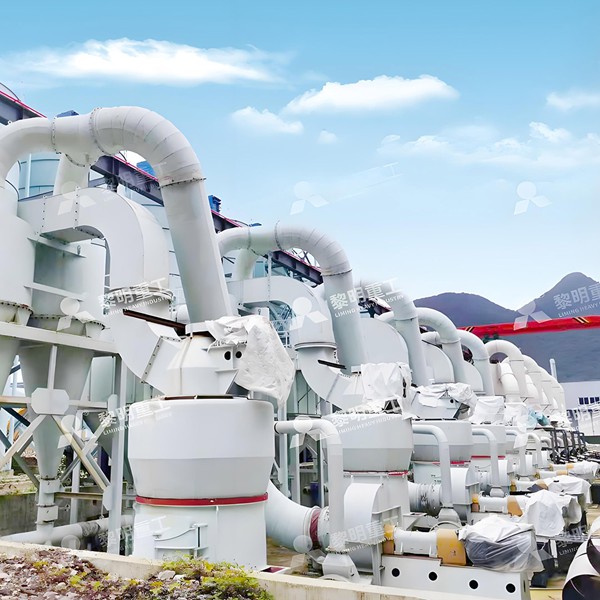
Why Marble for Toothpaste?
Marble, a metamorphic rock primarily composed of calcite (calcium carbonate), is the preferred raw material for toothpaste due to its high whiteness, low iron content, and consistent hardness. When ground to a D90 of 10–15 microns, marble particles provide the gentle cleaning action needed for daily oral hygiene without scratching tooth surfaces. The D90 specification means that 90% of particles are below the stated size, ensuring uniform abrasivity and smooth mouthfeel. Unlike silica or other abrasives, marble-based calcium carbonate is chemically stable and compatible with fluoride and other active ingredients. The grinding process must avoid contamination from metallic wear or lubricants, which is why the D90 marble grinding mill from Liming Heavy Industry employs a closed-system design with wear-resistant components and pulse dust collection.
Our Grinding Technology Portfolio
Based in Zhengzhou, China, Liming Heavy Industry has been manufacturing large and medium-sized crushing and grinding equipment since 1987. Our 80,000 m² headquarters in the HI-TECH Industry Development Zone, complemented by a 67,000 m² workshop in Shangjie, host a range of mills suitable for different throughput and fineness requirements. For toothpaste-grade marble grinding, our Raymond Mill and MTW European Type Trapezium Mill are most commonly deployed due to their proven reliability in non-metallic mineral processing.
Raymond Mill for Toothpaste
The traditional Raymond Mill, with a capacity of 1.2–4.5 T/H and input size of 15–25 mm, is ideal for small to medium toothpaste production lines. It processes marble with a Mohs hardness under 7 and humidity below 6%, delivering a fineness between 613 μm and 44 μm. The mill's internal classifier ensures that particles above the target size are returned for regrinding, while the pulse dust collector maintains a clean working environment. Output fineness is easily adjusted by changing the separator speed, allowing operators to switch between D90 values as needed.
MTW European Type Trapezium Mill
For larger operations requiring 3–55 TPH capacity, the MTW European Type Trapezium Mill is the upgrade from traditional pendulum mills. It features patented technology for stable performance and higher productivity. The grinding line includes a jaw crusher, vibrating feeder, variable-frequency belt feeder, mill, separator, air blower, and pulse dust collector working in a closed loop. Marble is crushed, fed evenly into the mill, ground between rings and rollers, and classified by the separator. Oversize particles fall back for regrinding, while fines are collected as finished product. The air recirculation system minimizes energy consumption and meets international environmental standards.
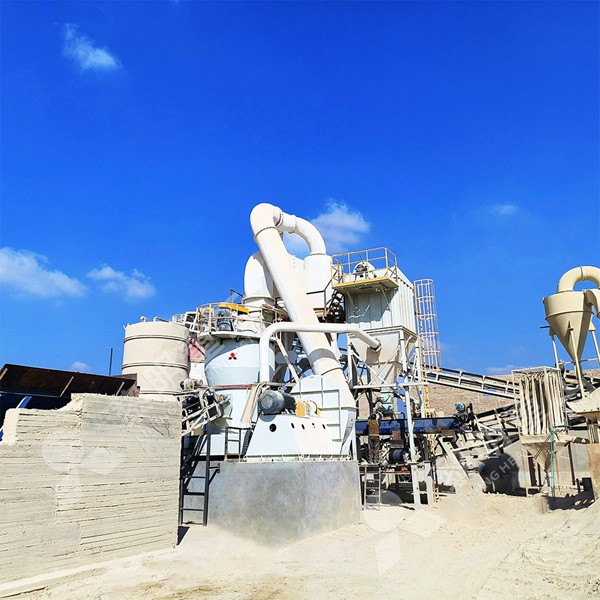
Micro Powder Mill for Ultra-Fine Needs
When toothpaste formulations demand even finer particles, our MW Micro Powder Mill achieves a D90 of 5 μm (d97 ≤ 5 μm) and adjustability from 325 to 3250 mesh. This mill, with a capacity of 0.5–25 T/H and input size of 10–20 mm, uses a medium-speed micro-grinding principle derived from Swedish technology. Dozens of rollers rotate against a raceway ring, pulverizing marble into superfine powder. The pulse precipitator ensures zero dust emission, making it suitable for GMP-compliant facilities. While typically not required for standard toothpaste, this mill is invaluable for premium products targeting sensitive teeth or specialized whitening effects.
Quality Assurance and Purity Control
Contamination is the primary concern in toothpaste production. Our D90 marble grinding mills are constructed with wear-resistant liners in the grinding chamber and use ceramic or high-chromium steel grinding elements where contact occurs. The enclosed system prevents ingress of foreign materials, and the pulse dust collector captures particles as fine as 1 micron, ensuring the final product is free from dust and metal fragments. All equipment is designed for easy cleaning and quick changeover between batches, reducing downtime in continuous production environments.
Integration with Toothpaste Manufacturing Lines
The D90 marble grinding mill can be directly integrated into a toothpaste production line through conveyor systems or pneumatic transport. Ground calcium carbonate is stored in silos and metered into the mixing tank along with humectants, binders, detergents, and flavors. Our engineers provide complete layout designs, including hopper sizing, feeder calibration, and dust extraction ductwork. For facilities seeking ISO 22716 or FDA compliance, we offer documentation packages covering material certificates of analysis, cleanability validation, and OEE data.
Case Study: Scalable Production from 1 to 50 TPD
A typical toothpaste factory producing 50,000 tubes per day (assuming 100g tubes) requires approximately 1.2 tons of marble powder daily, assuming 20% calcium carbonate content. Our Raymond Mill with a 2 T/H capacity running for 8 hours can comfortably meet this demand. For a doubling of production, the MTW mill can be configured for 4–5 T/H with the same footprint. The modular design allows capacity expansion without replacing the entire system—simply upgrading the separator and feeder. This scalability is a hallmark of Liming Heavy Industry's engineering philosophy, honed over 30 years of serving global markets.
Environmental Compliance
All our grinding mills are equipped with pulse jet baghouse dust collectors that achieve emission levels below 20 mg/Nm³, meeting EU and Chinese standards for air quality. The closed-loop air system recirculates preheated air, reducing the need for additional heating in cold climates. Energy consumption per ton of finished product ranges from 25 to 45 kWh depending on mill type and target fineness, which is optimized through variable frequency drives on fans and feeders. Water consumption is zero except for cooling in high-load operations.
Global Service and Support
As a leader in domestic and overseas machinery manufacturing, Liming Heavy Industry provides comprehensive after-sales support, including installation supervision, operator training, and spare parts warehouses in over 30 countries. Our research team continuously improves grinding efficiency through finite element analysis and wear pattern studies. For toothpaste manufacturers, we offer free sample grinding tests: send us 50 kg of your marble, and we will return 5 kg of ground powder with a complete particle size analysis report. This ensures the mill is optimized for your specific raw material before purchase.
Technical Specifications Summary
| Parameter | Raymond Mill | MTW Mill | MW Micro Powder Mill |
|---|---|---|---|
| Capacity (TPH) | 1.2–4.5 | 3–55 | 0.5–25 |
| Input Size (mm) | 15–25 | 30–50 | 10–20 |
| Fineness (mesh) | 44–613 | 44–613 | 325–3250 |
| D90 Typical (μm) | 10–20 | 10–20 | 5–10 |
| Power (kW) | 37–75 | 75–315 | 55–185 |
| Dust Emission | <20 mg/Nm³ | <20 mg/Nm³ | <10 mg/Nm³ |
Frequently Asked Questions
Q1: What is the D90 specification for toothpaste-grade marble powder?
A1: The D90 for toothpaste is typically 10–15 microns, meaning 90% of particles are below that size. This ensures gentle abrasion without damaging enamel. Our D90 marble grinding mill can be calibrated to achieve this exact range.
Q2: Is the mill safe for use in pharmaceutical-grade production?
A2: Yes. Liming Heavy Industry mills are constructed with food-grade materials, including stainless steel contact surfaces and ceramic grinding elements. The closed system prevents contamination, and all components are easy to sanitize. We can provide material certificates and clean-in-place (CIP) system designs.
Q3: Can the mill handle different types of marble or limestone?
A3: Absolutely. Our grinding mills can process various calcium carbonate sources, including white marble, calcite, and limestone, as long as the moisture content is below 6% and Mohs hardness is under 7. We recommend a sample test to optimize settings for your specific material.
Q4: What is the typical delivery time and installation process?
A4: Standard delivery is 30–45 days from order confirmation. Installation typically takes 7–10 days on-site, including foundation preparation, mechanical assembly, electrical wiring, and commissioning. We provide an engineer for supervision and training for your team.
Q5: How often should the grinding rollers and rings be replaced?
A5: Depending on the hardness of the marble and daily operating hours, the wear parts (rollers and rings) typically last 6–12 months under normal use. Liming Heavy Industry stocks these parts for immediate shipment and offers a preventive maintenance schedule to minimize downtime.


