The demand for finely ground marble powder as a sealant filler has grown significantly due to its excellent chemical stability, high brightness, and reinforcing properties. A 325mesh marble grinding mill specifically engineered for sealant filler production must deliver consistent particle size distribution, high throughput, and low operational costs. Liming Heavy Industry, with over three decades of experience in manufacturing crushing and grinding equipment, offers a range of mills—including Raymond mill, MTW European Type Trapezium Mill, and MW Micro Powder Mill—that are ideally suited for producing 325mesh marble powder for sealant applications. These mills integrate advanced automation, energy-saving technologies, and precise classification systems to ensure the filler meets stringent industry standards for viscosity, oil absorption, and particle shape. Below, we explore the technical considerations, machine selection, and process optimization for achieving optimal 325mesh marble filler quality.
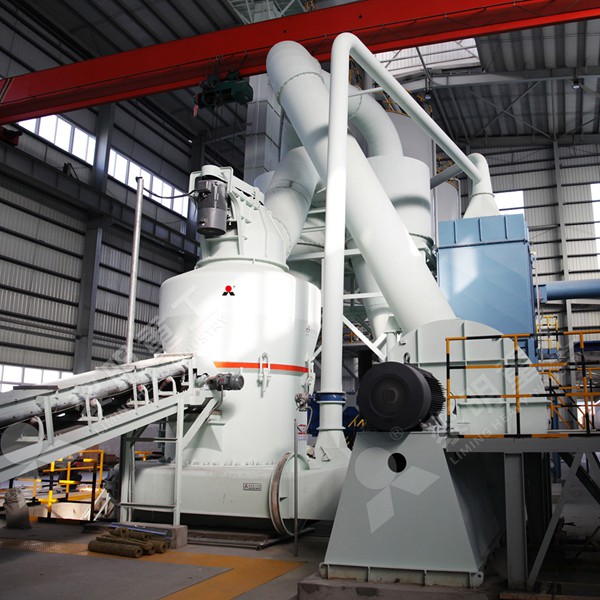
Why 325mesh Marble Powder for Sealant Fillers?
Sealants, whether used in construction, automotive, or industrial assembly, require fillers that enhance mechanical strength, reduce shrinkage, and improve adhesion. Marble powder at 325mesh (approximately 44 microns) provides an ideal balance: fine enough to integrate seamlessly into polymer matrices yet coarse enough to avoid excessive resin demand. Key benefits include:
- Stable Particle Size Distribution: A narrow distribution ensures consistent rheology and prevents nozzle clogging during application.
- High Whiteness and Purity: Marble with >98% CaCO3 content contributes to color consistency in translucent or white sealants.
- Low Oil Absorption: Properly ground marble reduces the amount of plasticizer needed, lowering formulation costs.
- Enhanced Durability: The filler acts as a reinforcing agent, improving tensile and tear strength.
Selecting the Right 325mesh Marble Grinding Mill
Liming Heavy Industry offers three primary mill types capable of achieving 325mesh output, each with unique advantages for marble filler production. The choice depends on capacity requirements, energy efficiency targets, and downstream processing needs.
1. MTW European Type Trapezium Mill
This mill is the recommended workhorse for medium-to-large scale sealant filler operations (3-55 TPH). With input sizes up to 50mm, it can directly process crushed marble without secondary feed preparation. The trapezium-shaped rollers and ring create a grinding zone that exerts both shearing and compression forces, producing a uniform 325mesh product. Importantly, the integral separator with adjustable speed control ensures that only particles below 44 microns pass through, while oversize material is recycled for regrinding.
- Key advantage for sealant fillers: The classifier can be tuned to produce a targeted residual on 325mesh (e.g., ≤1% retained), which is critical for premium sealant formulations.
- Energy consumption: 20-30% lower than traditional Raymond mills at the same fineness due to the aerodynamic vanes and optimized grinding path.
- Dust control: Equipped with a pulse dust collector meeting international environmental standards, suitable for indoor or urban installations.
2. Raymond Mill (Traditional Pendulum Mill)
For smaller-scale operations (1.2-4.5 TPH) or where budget constraints exist, the Raymond mill remains a reliable choice. It handles marble with hardness up to 7 Mohs and moisture below 6%. The 325mesh fineness is achievable by adjusting the analysis machine speed and fan airflow. However, operators should note that Raymond mills typically produce a wider particle size distribution compared to the MTW series, which may require post-classification for high-end sealant fillers.
3. MW Micro Powder Mill
When ultra-fine grinding beyond 325mesh is required (e.g., for specialty sealants with higher pigmentation), the MW Micro Powder Mill (325-3250mesh) offers exceptional precision. The mill uses a unique multi-roller design and high-speed rotation to achieve d97 ≤ 5μm. For 325mesh sealant filler, this mill is often over-specified, but it provides a future-proof solution if the product line expands to finer grades.
Process Design for 325mesh Marble Filler Production
At Liming Heavy Industry, the standard grinding line for sealant filler includes: jaw crusher → vibrating feeder → hopper → main grinding mill → separator → cyclone collector → pulse dust collector → finished product silo. Key process parameters that influence 325mesh output quality include:
- Feed moisture: Marble entering the mill should have ≤1% moisture. Wet feed causes clogging and reduces grinding efficiency. A hot air system can be integrated into the MTW mill to dry material in situ.
- Separator speed: For 325mesh, the separator rotational speed should be calibrated to achieve a Blaine value of 3500-4000 cm²/g, depending on the target viscosity in sealant.
- Roller pressure and ring clearance: Proper adjustment ensures uniform wear and prevents over-grinding that generates excessive heat and fines.
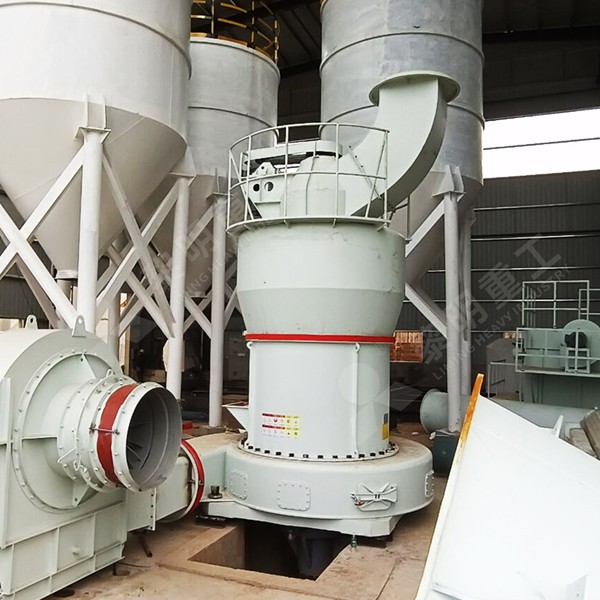
Case studies from our installations show that using the MTW138 model with a 200kW motor can produce 12-15 TPH of 325mesh marble powder at a specific energy consumption of 18-22 kWh/ton, with 98% passing 325mesh. The powder exhibits an angle of repose of 42-45°, suitable for bulk handling and mixing.
Quality Control and Testing for Sealant Fillers
To ensure the marble powder meets sealant-grade standards, we recommend the following checks during production:
| Parameter | Target Value for 325mesh Marble Filler | Test Method |
|---|---|---|
| Residue on 325 mesh (45 μm sieve) | ≤2% (premium grade ≤0.5%) | Wet sieve analysis |
| Bulk density (tapped) | 1.1-1.3 g/cm³ | ASTM D7481 |
| Oil absorption (linseed oil) | 18-25 g/100g | ASTM D281 |
| Whiteness (Ry) | ≥90% | Whiteness meter |
| Moisture content | ≤0.3% | Loss on drying |
Maintenance and Operational Tips
To maintain consistent 325mesh output and extend equipment life, operators should:
- Replace grinding roller and ring wear parts every 800-1200 operating hours, depending on marble hardness. Liming supplies segmented rings that reduce downtime during replacement.
- Check separator blades regularly for build-up; a disrupted airflow pattern can cause coarse particles to pass through.
- Monitor gearbox oil temperature and vibration levels—sudden spikes often indicate impending bearing failure.
Liming Heavy Industry's service team provides on-site training and remote monitoring through our IoT platform, allowing predictive maintenance scheduling.
Conclusion
Achieving consistent 325mesh marble powder for sealant filler demands not only the right grinding mill but also integrated process control and quality assurance. Liming Heavy Industry's MTW European Type Trapezium Mill stands out as the optimal solution for producers seeking high capacity, low energy consumption, and superior particle uniformity. With over 30 years of engineering expertise, we help clients optimize their grinding lines from crusher to classification, ensuring the marble filler meets the exacting standards of modern sealant formulations.
Frequently Asked Questions (FAQ)
- What is the main difference between Raymond mill and MTW mill for 325mesh marble grinding? The MTW mill offers higher capacity (up to 55 TPH) and better energy efficiency (20-30% reduction) due to its trapezium-shaped grinding rollers and aerodynamic classifier. The Raymond mill is more cost-effective for smaller outputs but produces a wider particle size distribution.
- Can the MW Micro Powder Mill produce 325mesh marble for sealant filler? Yes, but it is typically used for finer applications (down to 5μm). For 325mesh, it is over-specified unless future expansion to ultra-fine grades (e.g., 800mesh) is planned.
- How do I ensure the marble powder meets low oil absorption for sealants? Select mills with controlled particle morphology—MTW mills produce angular particles that reduce oil demand. Also, maintain feed purity (>98% CaCO3) and minimize fines below 10μm.
- What maintenance schedule is required for continuous 325mesh production? Inspect grinding rollers every 500 hours and replace every 1000 hours. Classifier bearings require greasing every 200 hours. A full overhaul is recommended annually for heavy-duty operations.
- Does Liming provide complete turnkey solutions for sealant filler plants? Yes, from crushing (jaw crusher, hammer crusher) to storage and bagging. We design the layout, supply all equipment, and offer commissioning support.


