Published: October 26, 2023
In the adhesive manufacturing industry, the demand for finely ground marble powder at 200 mesh has surged due to its essential role as a functional filler. Marble powder enhances adhesive properties such as viscosity control, thixotropy, and mechanical strength while reducing production costs. Achieving consistent 200 mesh fineness requires advanced grinding technology that balances capacity, energy efficiency, and particle size distribution. As a leading manufacturer with over 30 years of expertise, Liming Heavy Industry offers a comprehensive range of grinding mills specifically engineered for marble processing to meet adhesive industry specifications. Our solutions, including the MTW European Type Trapezium Mill and the Raymond Mill, provide reliable performance with capacities ranging from 1.2 to 55 TPH, precise fineness control (613μm to 44μm), and integrated dust collection systems for environmentally compliant operations. This article explores the technical considerations, machine selection, and operational advantages of using Liming grinding mills for 200 mesh marble powder production in adhesive formulations.
Why 200 Mesh Marble Powder Matters for Adhesives
Marble powder, primarily composed of calcium carbonate (CaCO₃), is a widely used filler in adhesives due to its low abrasiveness, chemical stability, and ability to improve workability. At 200 mesh (approximately 74 microns), the powder offers an optimal balance between surface area and handling properties. Particles at this fineness disperse uniformly in adhesive matrices, enhancing cohesive strength and preventing sedimentation. Moreover, the controlled particle size distribution reduces binder consumption by up to 15% while maintaining the desired rheological profile. For manufacturers of tile adhesives, wall putty, and construction glues, sourcing consistent 200 mesh marble powder is critical to product quality and batch-to-batch uniformity.
Selecting the Right Grinding Mill for 200 Mesh Marble
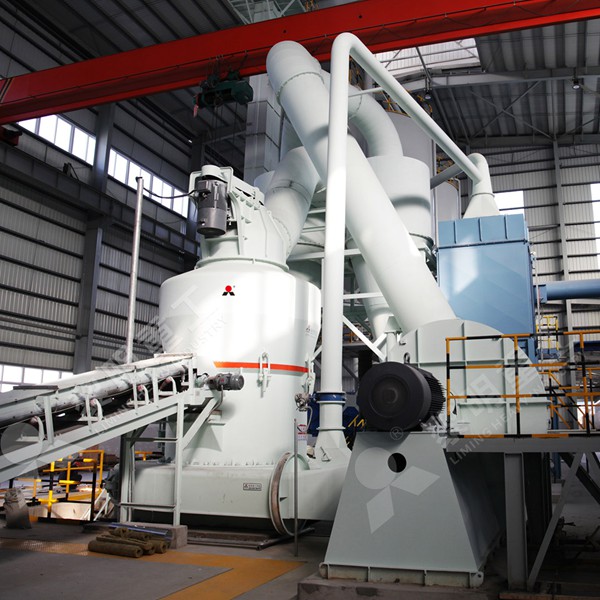
Choosing a mill for marble powder production depends on feed size, desired throughput, and energy efficiency. Liming Heavy Industry’s portfolio includes several models that excel in marble grinding for adhesive applications:
1. MTW European Type Trapezium Mill
The MTW mill is our flagship product for medium to large-scale operations. With an input size of 30-50mm and capacity of 3-55 TPH, it is ideal for processing marble into 200 mesh powder. Its patented trapezium grinding ring and roller design maximizes grinding area, reducing energy consumption by 30% compared to traditional Raymond mills. The integrated separator ensures a tight particle size distribution, with over 90% of output passing through 200 mesh screens. For adhesive manufacturers requiring high hourly output without sacrificing fineness, the MTW mill is the optimal choice. Its closed-circuit air system, combined with a pulse dust collector, meets stringent environmental standards, making it suitable for continuous industrial operation.
2. Raymond Mill
For smaller capacities or pilot-scale production, the Raymond Mill remains a workhorse. Processing marble with input sizes up to 25mm, it delivers 1.2-4.5 TPH with fineness ranging from 613μm to 44μm. While its capacity is lower than the MTW, its simplicity and reliability make it a cost-effective entry point for adhesive companies. The Raymond Mill is particularly well-suited for batch production of 200 mesh marble powder where floor space is limited. Liming’s Raymond Mill includes a blower, classifier, and cyclonic collection system, ensuring dust-free operation.
Operational Benefits of Liming Grinding Mills in Adhesive Production
Liming mills are designed with the end-user in mind, offering several advantages that directly impact adhesive manufacturing efficiency:
- Consistent Fineness: Both the MTW and Raymond mills feature adjustable classifiers that allow precise control over particle size, ensuring that 200 mesh specifications are met consistently.
- Energy Savings: The MTW mill’s trapezium roller and ring reduce frictional heat and power draw, lowering operational costs. On average, users report 20-30% lower electricity consumption per ton of marble ground.
- Low Maintenance: Key components like grinding rollers and rings are made from high-chrome alloy steel, extending service life to over 6,000 hours. The modular design allows quick swap-outs, minimizing downtime.
- Environmental Compliance: Each mill is equipped with a pulse jet dust collector and negative pressure system, capturing fine particles and preventing fugitive emissions—essential for plants subject to strict air quality regulations.
Technical Specifications for 200 Mesh Marble Grinding
Below are the relevant specifications for our key models suited for adhesive-grade marble powder:
| Model | Input Size (mm) | Capacity (TPH) | Fineness (μm) | Main Motor Power (kW) |
|---|---|---|---|---|
| MTW138 | 30-50 | 3-8 | 613-44 | 55 |
| MTW178 | 30-50 | 5-15 | 613-44 | 90 |
| MTW215 | 30-50 | 10-25 | 613-44 | 160 |
| Raymond Mill (5R) | 15-25 | 1.2-4.5 | 613-44 | 37 |
These parameters ensure that the final marble powder meets the typical 200 mesh requirement (74 microns) for adhesives. The MTW series, in particular, offers higher capacity options for large-scale adhesive manufacturing plants.
Case Application: Integrating Liming Mill into an Adhesive Production Line
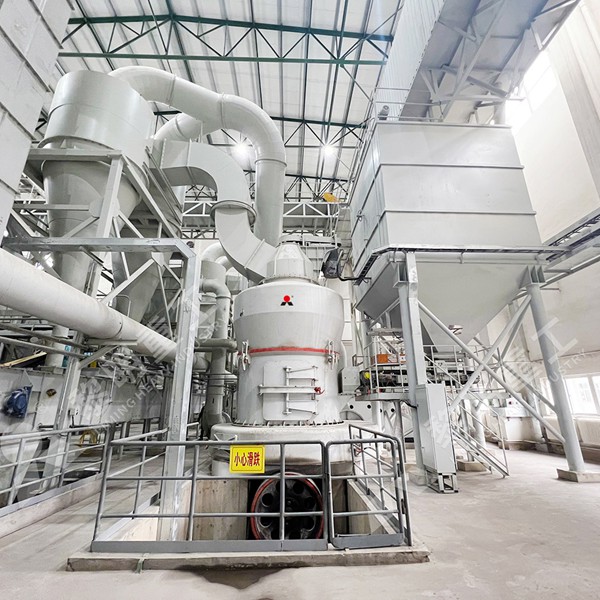
A typical adhesive factory processing marble powder might receive marble lumps of 50mm from a quarry. The material is first crushed using a jaw crusher to reduce size to 30-50mm. A vibrating feeder then delivers the crushed marble into the MTW mill via a variable-frequency belt feeder. Inside the mill, the material is ground between the trapezium ring and rollers, and the rising air flow carries fines to a dynamic classifier. Oversized particles return for regrinding, while those passing the classifier proceed to a product cyclone and pulse dust collector. The resulting 200 mesh powder is stored in silos and dispensed into adhesive mixers. This closed-loop system minimizes material loss and ensures a clean working environment.
Why Choose Liming Heavy Industry?
Founded in 1987, Liming Heavy Industry (LIMING HEAVY INDUSTRY CO., LTD.) is a modern joint-stock corporation integrating research, manufacturing, and sales. We operate two major production bases covering 147,000 m², staffed with over 500 experienced engineers. Our manufacturing process adheres to ISO 9001 standards, and our mills are field-tested across 30 countries. For adhesive manufacturers, this translates to reliable equipment backed by comprehensive service: from on-site installation to spare parts availability. Our scientific research team continuously improves grinding efficiency, with patented technologies in roller suspension and classifier dynamics that directly benefit marble powder quality.
Conclusion
Producing 200 mesh marble powder for adhesive applications demands mills that deliver precision, durability, and energy efficiency. Liming Heavy Industry’s MTW European Type Trapezium Mill and Raymond Mill stand as proven solutions, offering capacities from 1.2 to 55 TPH, adjustable fineness, and integrated dust control. Whether you run a small adhesive workshop or a large-scale plant, our equipment can be tailored to your output and quality needs. By choosing Liming, you invest in decades of milling expertise and a commitment to advancing powder processing technology.
FAQ
1. Can the MTW mill consistently produce 200 mesh marble powder for adhesives?
Yes, the MTW European Trapezium Mill is designed with a high-efficiency dynamic classifier that allows fine-tuning of particle size. For 200 mesh (74 microns), the mill can maintain over 90% passing rate through a 200 mesh sieve with proper setting. The capacity range of 3-55 TPH makes it suitable for both medium and large-scale adhesive filler production.
2. What is the typical power consumption for grinding marble to 200 mesh in a Raymond Mill?
For a Raymond Mill processing marble with 6% moisture, power consumption typically ranges from 25 to 35 kWh per ton when grinding to 200 mesh. Liming’s Raymond Mill incorporates an energy-efficient design that reduces power draw compared to older models, though actual consumption depends on feed size and hardness.
3. How often do the grinding rollers and rings need replacement when grinding marble?
Under normal operating conditions (grinding marble of Mohs hardness 3-4), the high-chrome alloy rollers and rings in Liming mills typically last 4,000 to 6,000 hours before replacement is needed. Wear rates can be influenced by feed cleanliness and moisture content. Our mills feature easy-access doors for quick visual inspection and replacement.
4. Does the grinding system produce dust that could contaminate the adhesive factory environment?
No, Liming grinding mills are equipped with a closed-circuit air system and a pulse jet dust collector. The entire system operates under negative pressure, meaning dust is captured at the source. This meets strict environmental protection standards and maintains a clean workshop, essential for adhesive manufacturing facilities.
5. Can I use the same mill for both marble and other materials like calcium carbonate or gypsum?
Yes, Liming mills are versatile and can process various non-metallic minerals under 7 Mohs hardness (such as calcium carbonate, gypsum, or limestone). To switch between materials, you may need to adjust the classifier speed and feeder rate. Our machines are designed to minimize cross-contamination with a thorough air purge system.


