Published on: October 26, 2023
Marble grinding mill for paper coating is a critical equipment in the production of high-quality coated paper, where finely ground calcium carbonate derived from marble serves as a key filler and pigment. The grinding process must achieve ultra-fine particle sizes, typically ranging from 2 to 20 microns, with narrow particle size distribution to ensure superior brightness, opacity, and printability. As a leading manufacturer in the crushing and grinding industry, Liming Heavy Industry offers advanced solutions, including Raymond mill, MTW European type trapezium mill, and MW micro powder mill, each designed to meet the stringent requirements of paper coating applications. This article explores the technical specifications, working principles, and advantages of using marble grinding mills for paper coating, highlighting how Liming's equipment optimizes production efficiency and product quality.
Importance of Marble Grinding in Paper Coating
Marble, a metamorphic rock primarily composed of calcite (calcium carbonate), is a preferred raw material for producing ground calcium carbonate (GCC) used in paper coating. The coated paper industry demands GCC with high whiteness (>90%), fine particle size (d97 ≤ 5μm for premium grades), and consistent particle shape to enhance surface smoothness and ink receptivity. Marble grinding mills from Liming Heavy Industry are engineered to deliver these properties through precision grinding and classification systems, reducing energy consumption while maximizing throughput.
Liming Heavy Industry: A Trusted Partner
Founded in 1987, Liming Heavy Industry Co., Ltd. has over 30 years of experience in manufacturing large and medium-sized crushing and grinding equipment. Based in Zhengzhou's HI-TECH Industry Development Zone, with an additional 67,000 m² workshop in Shangjie, the company integrates research, manufacturing, and sales. Its commitment to scientific management and innovation has made it a domestic and international leader. For paper coating applications, Liming offers customized solutions, ensuring that each mill meets specific capacity, fineness, and environmental standards.
Key Grinding Mill Models for Marble Processing
MTW European Type Trapezium Mill
The MTW European type trapezium mill is the upgrade product of traditional Raymond mill and pendulum mill, featuring patented technology for stable performance and high productivity. With a capacity range of 3-55 TPH and input size of 30-50 mm, it is ideal for large-scale non-metallic mineral powder making, including marble grinding for paper coating. Its working principle involves a closed system: big lump materials are crushed by a jaw crusher, then fed into the mill via a variable-frequency belt feeder. Materials are ground between rings and rollers, and particles that pass the separator are collected as finished product, while oversized particles are reground. The system includes a pulse dust collector, ensuring compliance with national environmental standards.
Key parameters for paper coating: MTW mill can produce fineness between 80-325 mesh (180-44 μm), suitable for standard coated paper grades. For ultra-fine applications, the mill can be combined with a classifier to achieve d97 ≤ 10 μm.
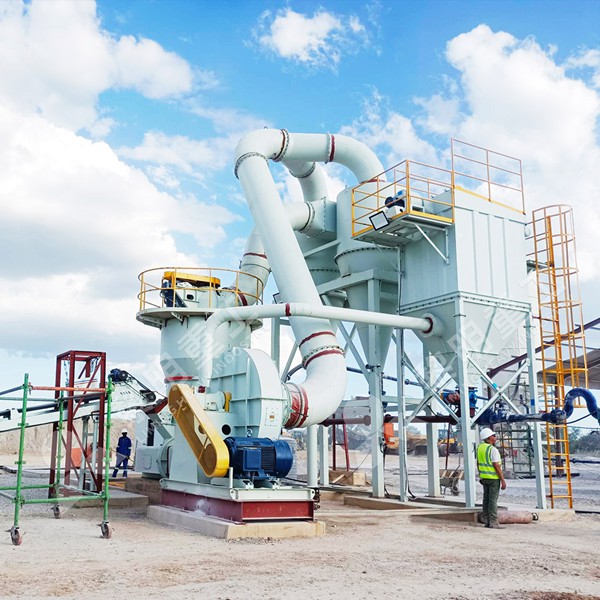
Raymond Mill
The Raymond mill, a classic choice for marble grinding, processes non-flammable and non-explosive materials with Mohs hardness under 7 and humidity less than 6%. It delivers output fineness between 613 μm and 44 μm (30-325 mesh), with a capacity of 1.2-4.5 TPH. For paper coating, Raymond mill is suitable for small to medium-scale production where fineness requirements are moderate. Its simple structure and low maintenance make it cost-effective.
MW Micro Powder Mill
For superfine marble grinding, the MW micro powder mill (medium speed micro-grinding) integrates advanced Swedish technology. It produces fineness up to d97 ≤ 5 μm, with adjustable range from 325 mesh to 3250 mesh (44 μm to 4 μm). Capacity ranges from 0.5-25 TPH, and input size is 10-20 mm. The mill operates by driving dozens of rollers to rotate against a raceway, crushing small material fed from a hopper via a vibrating feeder. Equipped with a pulse precipitator, the MW mill ensures environmentally friendly production, making it ideal for premium paper coating grades requiring ultra-fine GCC.
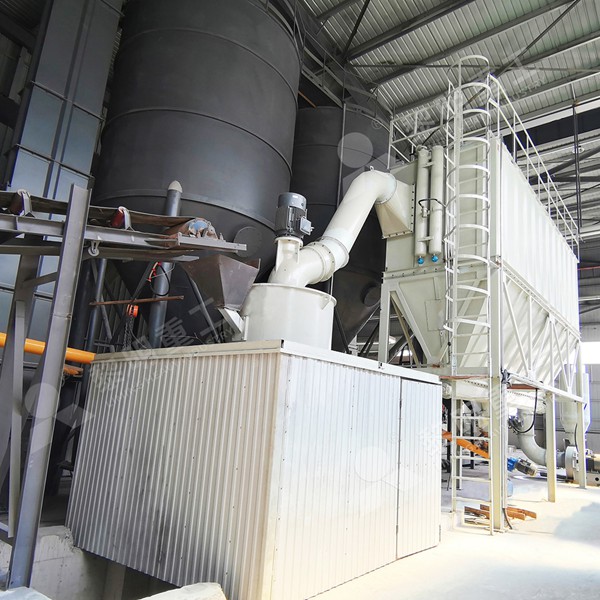
LM Vertical Roller Mill
The LM vertical roller mill integrates drying, grinding, powder selection, and conveying, with a capacity of 10-400 TPH and input size of 30-55 mm. It is designed for large-scale operations, focusing on non-metallic minerals like marble. Its high efficiency and automatic electric control system reduce operating costs, while the vertical design minimizes footprint. For paper coating, LM mill can achieve fineness suitable for base coat layers.
Ball Mill
The ball mill, with a capacity of 0.65-50 TPH, is commonly used for marble grinding in beneficiation and construction. Its horizontal rotating device transmits power via an outer gear, using steel balls to impact and grind materials. While effective, ball mills consume more energy and produce broader particle size distributions compared to roller mills, limiting their use in ultra-fine paper coating applications.
Advantages of Liming Marble Grinding Mills for Paper Coating
- High Fineness Control: MW micro powder mill and MTW mill allow precise adjustment of fineness, meeting paper coating requirements from 325 mesh to 3250 mesh.
- Environmental Compliance: Pulse dust collectors in MTW and MW mills ensure minimal dust emission, aligning with global environmental regulations.
- Energy Efficiency: Vertical roller mills and trapezium mills reduce energy consumption by 20-30% compared to traditional ball mills.
- Consistent Quality: Advanced classification systems in Liming mills produce narrow particle size distribution, enhancing paper brightness and coating uniformity.
- Scalability: With capacities from 0.5 TPH to 400 TPH, Liming offers solutions for both small workshops and large paper mills.
Working Principle of Marble Grinding in Paper Coating
The process begins with marble extraction and crushing to 10-50 mm size using a jaw crusher. The crushed marble is then fed into the selected grinding mill. In the MTW mill, materials are ground between rollers and a ring, with air flow carrying fine particles to the separator. Oversized particles fall back for regrinding, while fine particles are collected as GCC powder. The closed-loop air system recirculates air, and the pulse dust collector captures any residual dust. For MW micro powder mill, the motor drives rollers against a ring raceway, achieving ultra-fine grinding through centrifugal force. The final GCC powder is stored in silos or directly transported to the paper coating production line.
Specific Applications in Paper Coating
GCC from marble grinding is used in both coating and filling of paper. For coating, GCC with d50 of 1-2 μm and d97 of 5-10 μm improves paper gloss, brightness, and opacity. Liming's MW mill can achieve d97 ≤ 5 μm, ideal for high-grade art paper and cardboard. For filling, coarser GCC (80-325 mesh) from Raymond mill is used to reduce fiber cost and improve paper dimensional stability. The versatility of Liming mills allows paper manufacturers to tailor GCC specifications to their product grades.
Conclusion
Marble grinding mills from Liming Heavy Industry provide reliable, efficient, and environmentally friendly solutions for paper coating production. With decades of experience and a range of mills from Raymond to MW micro powder, Liming enables paper manufacturers to achieve the fine GCC required for premium coated paper. By integrating advanced technology and scientific management, Liming ensures high productivity and consistent quality, solidifying its position as a leader in grinding equipment.
Frequently Asked Questions
Q1: What fineness of marble powder is required for paper coating?
A1: For paper coating, marble powder typically requires a fineness of d97 ≤ 10 μm for standard grades and d97 ≤ 5 μm for premium grades. Liming's MW micro powder mill can achieve fineness as fine as 3250 mesh (4 μm).
Q2: Which Liming mill is best for ultra-fine marble grinding in paper coating?
A2: The MW micro powder mill is best for ultra-fine grinding, with a fineness range of 325-3250 mesh and capacity of 0.5-25 TPH. Its advanced roller-raceway design ensures consistent superfine particle distribution.
Q3: How does the MTW mill ensure environmental compliance during marble grinding?
A3: The MTW mill is equipped with a pulse dust collector that captures fine dust particles, and its closed-loop air system recycles air, minimizing emissions to meet national environmental standards.
Q4: Can Liming mills process marble with high moisture content?
A4: Yes, the LM vertical roller mill integrates drying, grinding, and conveying, making it suitable for marble with moisture content up to 6%, while other mills like Raymond require humidity under 6% for optimal operation.
Q5: What is the capacity range for marble grinding mills from Liming?
A5: Liming offers a wide capacity range: Raymond mill (1.2-4.5 TPH), MTW mill (3-55 TPH), MW micro powder mill (0.5-25 TPH), LM vertical mill (10-400 TPH), and ball mill (0.65-50 TPH), allowing selection based on production scale.


