Published: October 26, 2023
In the competitive landscape of plastic masterbatch production, the quality of mineral fillers directly influences product consistency, color strength, and processing efficiency. Marble, as a primary source of calcium carbonate (CaCO₃), is a cornerstone filler in masterbatch formulations, demanding ultra-fine grinding to achieve optimal particle size distribution and dispersion. LIMING Heavy Industry Co., Ltd., with over three decades of expertise in crushing and grinding equipment, offers a comprehensive range of marble grinding mills tailored specifically for masterbatch applications. Our portfolio—including the LM Vertical Roller Mill, MTW European Type Trapezium Mill, MW Micro Powder Mill, and Raymond Mill—delivers capacities from 0.5 to 400 T/H and fineness from 325 mesh to 3250 mesh (d97 ≤ 5 μm). These mills are engineered to enhance throughput, reduce energy consumption, and meet stringent environmental standards, making them indispensable for masterbatch manufacturers seeking reliability and precision. This article explores the technical advantages, working principles, and application-specific benefits of LIMING's marble grinding solutions for plastic masterbatch, providing actionable insights for production optimization.
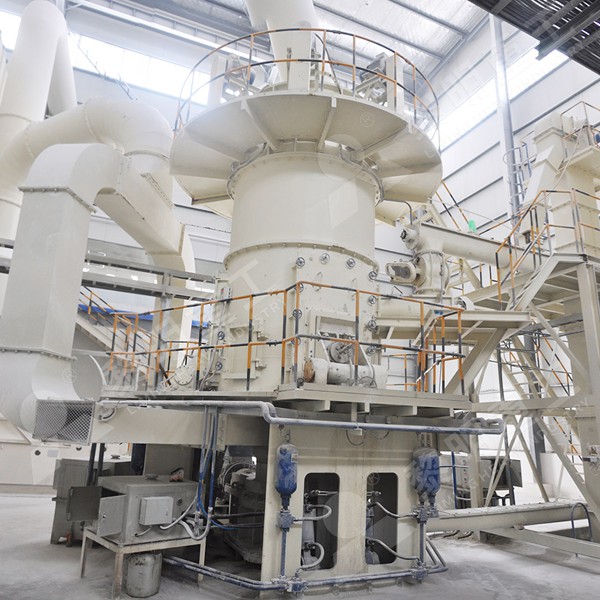
Why Marble Grinding Matters for Plastic Masterbatch
Plastic masterbatch relies on finely ground minerals to enhance mechanical properties, reduce costs, and improve color uniformity. Marble, primarily composed of calcite (CaCO₃), is valued for its whiteness, low abrasiveness, and compatibility with polymers. However, achieving the ideal particle size—typically between 1–10 μm for concentrated masterbatch—requires specialized grinding technology. Coarse particles (above 44 μm) cause surface defects, poor dispersion, and increased wear on extrusion equipment. Conversely, over-grinding can lead to agglomeration and higher energy costs. LIMING’s marble grinding mills address these challenges through precision control, robust design, and integrated classification systems, ensuring that the final powder meets the exact specifications of masterbatch producers.
LIMING’s Marble Grinding Mill Portfolio for Masterbatch
1. LM Vertical Roller Mill: High-Capacity Efficiency
The LM Vertical Roller Mill is a flagship solution for large-scale masterbatch production. It integrates drying, grinding, powder selection, and conveying into a single unit, reducing footprint and energy consumption. With a capacity of 10–400 T/H and input size up to 55 mm, it excels in processing marble with moisture content up to 15%. The hydro-pneumatic system ensures consistent grinding pressure, while the automatic electric control system adjusts parameters in real-time for optimal fineness (typically 80–400 mesh). This mill is ideal for masterbatch plants requiring high throughput and low operational costs, as it reduces power consumption by 30–50% compared to traditional ball mills.
2. MTW European Type Trapezium Mill: Patented Precision for Fine Grades
For masterbatch applications demanding finer particle sizes (80–325 mesh or beyond), the MTW European Type Trapezium Mill offers patented technology with stable performance. It processes marble with input sizes of 30–50 mm and capacities ranging from 3–55 T/H. The bevel gear transmission and thin oil lubrication system minimize vibration and wear, while the curved shovel and tapered roller design enhance grinding efficiency. The built-in classifier ensures that oversize particles are returned for re-grinding, achieving a narrow particle size distribution critical for masterbatch dispersion. This mill is particularly suitable for limestone desulfurization and heavy calcium carbonate processing in the plastics industry.
3. MW Micro Powder Mill: Ultra-Fine Grinding for Premium Masterbatch
When masterbatch requires superfine fillers with fineness up to d97 ≤ 5 μm (325–3250 mesh), the MW Micro Powder Mill is the optimal choice. Based on advanced Swedish grinding technology, it features a medium-speed micro-grinding mechanism with multiple rollers rotating against a raceway ring. The capacity ranges from 0.5–25 T/H with input sizes of 10–20 mm. Equipped with a pulse dust collector and closed-loop airflow system, it ensures environmental compliance while producing ultra-fine powders that enhance the gloss, opacity, and mechanical strength of masterbatch films and injection-molded parts. This mill is widely used for calcium carbonate processing in premium non-metallic ore pulverizing.
4. Raymond Mill: Versatile and Cost-Effective
For smaller masterbatch operations or applications where moderate fineness (613–44 μm) is acceptable, the Raymond Mill remains a reliable workhorse. It handles marble with Mohs hardness below 7 and humidity under 6%, offering capacities of 1.2–4.5 T/H with input sizes of 15–25 mm. The grinding roller and ring are made of high-manganese steel for extended service life. While not as energy-efficient as vertical or European mills, it provides a low initial investment and ease of maintenance, making it suitable for pilot plants or secondary grinding stages.
Working Principle: From Marble to Masterbatch-Grade Powder
LIMING’s grinding mills share a common operational philosophy: crushing, grinding, classification, and collection in a closed or semi-closed circuit. Taking the MTW mill as an example, marble lumps first pass through a jaw crusher for primary reduction. The crushed material is then fed via a variable-frequency belt feeder into the grinding chamber, where rollers and rings pulverize it into fine particles. An air stream carries the powder upward to a separator; particles meeting fineness specifications pass through, while larger particles fall back for re-grinding. The finished product is collected in a cyclone or bag filter, and the clean air recirculates into the system. This design minimizes dust emissions and thermal loss, aligning with national environmental standards.
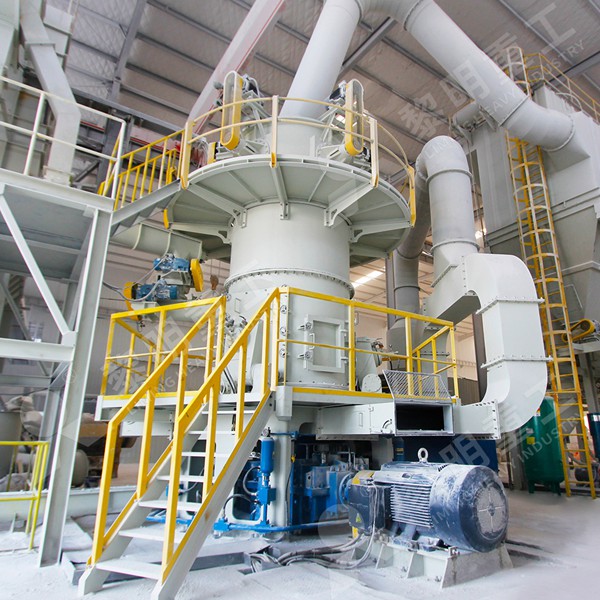
Key Technical Advantages for Masterbatch Applications
- Energy Efficiency: LM Vertical Roller Mill reduces power consumption by up to 50% compared to ball mills, lowering operational costs for high-volume masterbatch production.
- Precision Classification: Integrated separators in MTW and MW mills achieve narrow particle size distributions (e.g., d97 ≤ 5 μm), improving filler dispersion in polymer matrices and reducing agglomerates.
- Low Metal Contamination: LIMING mills use wear-resistant materials (e.g., high-chrome steel, ceramic lining options) to minimize iron contamination, which can discolor masterbatch or degrade polymer properties.
- Automated Control: PLC-based systems monitor feed rate, grinding pressure, and airflow, ensuring consistent product quality even with fluctuating marble feed characteristics.
- Environmental Compliance: Pulse dust collectors and closed-loop systems capture 99.9% of particulates, meeting strict emission regulations for plastic processing facilities.
- Flexibility: A single mill can produce multiple fineness grades (e.g., 400 mesh for general masterbatch, 1250 mesh for high-gloss films) through adjustable classifier speed.
Case Study: Optimizing Marble Grinding for Masterbatch Plant
A masterbatch manufacturer processing 50 tons of marble daily upgraded from a ball mill to LIMING’s LM Vertical Roller Mill. The transition reduced energy consumption from 35 kWh/T to 18 kWh/T, while increasing throughput by 40%. The finer grind (d50 = 8 μm compared to previous 15 μm) eliminated black specks in white masterbatch and improved tensile strength of final polyethylene films by 12%. The plant also reported 70% fewer dust emissions, simplifying permit compliance. This example illustrates how LIMING’s equipment directly addresses the pain points of cost, quality, and sustainability in masterbatch production.
Selection Guide for Marble Grinding in Masterbatch
Choosing the right mill depends on production scale, target fineness, and budget. For large plants (over 100 T/H), the LM Vertical Roller Mill is unmatched in efficiency. For mid-sized operations (3–55 T/H) needing fine grades, the MTW European Mill offers the best balance of cost and performance. For ultra-fine (325–3250 mesh) premium masterbatch, the MW Micro Powder Mill is essential. Small workshops (under 5 T/H) can rely on the Raymond Mill for simplicity. LIMING’s technical team provides site-specific recommendations, including pre-crushing crushers (e.g., jaw or hammer crushers) and post-grinding storage systems, to build a complete grinding circuit.
Conclusion
LIMING Heavy Industry Co., Ltd. has established itself as a global leader in marble grinding technology for plastic masterbatch, backed by 30+ years of innovation, ISO-certified facilities in Zhengzhou (80,000 m²) and Shangjie (67,000 m²), and a commitment to scientific research. Our mills—from the high-capacity LM Vertical to the ultra-fine MW Micro—are designed to deliver the particle size, purity, and consistency that masterbatch producers demand. By integrating energy-saving features, robust construction, and advanced control systems, LIMING helps customers reduce costs, improve product quality, and meet environmental goals. For a tailored solution that fits your marble grinding needs, contact our engineering team to schedule a consultation or pilot test.
FAQ
Q1: What is the recommended fineness of marble powder for plastic masterbatch production?
A: For general-purpose masterbatch, a fineness of 400 mesh (d50 ≈ 10 μm) is common, while premium masterbatch for films or fibers may require 1250 mesh (d50 ≈ 5 μm) or finer. LIMING’s MW Micro Powder Mill can achieve d97 ≤ 5 μm, ideal for high-gloss or high-strength applications.
Q2: How does LIMING ensure low metal contamination in marble grinding for masterbatch?
A: LIMING mills use wear-resistant liners (e.g., high-chrome steel or ceramic), and the grinding chamber design minimizes metal-to-metal contact. For critical applications, optional magnetic separators can be installed in the discharge chute to remove any stray metal particles.
Q3: Can the same LIMING mill process both marble and other minerals like talc or barite for masterbatch?
A: Yes, LIMING mills are versatile. The LM Vertical and MTW mills can handle materials with Mohs hardness up to 7 and humidity below 15%. However, switching between materials requires recalibration of classifier speed and feed rate. LIMING’s PLC systems store recipes for quick changeovers.
Q4: What is the typical energy savings when upgrading from a ball mill to a LIMING vertical roller mill for marble grinding?
A: Customers typically see 30–50% reduction in energy consumption per ton of marble processed. For example, a ball mill consuming 35–40 kWh/T can be replaced by an LM Vertical Mill operating at 18–25 kWh/T, depending on target fineness.
Q5: Does LIMING provide complete systems including crushers, feeders, and dust collectors for marble grinding masterbatch plants?
A: Absolutely. LIMING offers turnkey solutions, including primary jaw crushers, vibrating feeders, bucket elevators, pulse dust collectors, and powder storage silos. Our engineering team customizes the circuit layout to maximize efficiency for your specific masterbatch production line.


