Published on: October 26, 2023
When the rubber industry demands high-purity marble filler with consistent fineness and stable throughput, the 20 TPH marble vertical mill emerges as a critical solution. Designed specifically to process calcium carbonate (CaCO₃) derived from marble, this vertical roller mill (VRM) delivers a capacity of 20 tons per hour while integrating drying, grinding, classification, and conveying in a single compact system. For rubber manufacturers, this means a direct path to producing ultra-fine, surface-treated marble powder — a key filler that enhances tensile strength, tear resistance, and processing behavior in rubber compounds. With a robust input size tolerance of up to 55 mm and a fineness range adjustable from 80 to 600 mesh, the 20 TPH vertical mill from LIMING Heavy Industry bridges the gap between high-volume processing and the stringent quality standards of the rubber sector. This article explores the machine's technical architecture, application advantages, and operational benefits, drawing on our three decades of experience in grinding equipment manufacturing.
Vertical Mill Technology Adapted for Marble in Rubber Applications
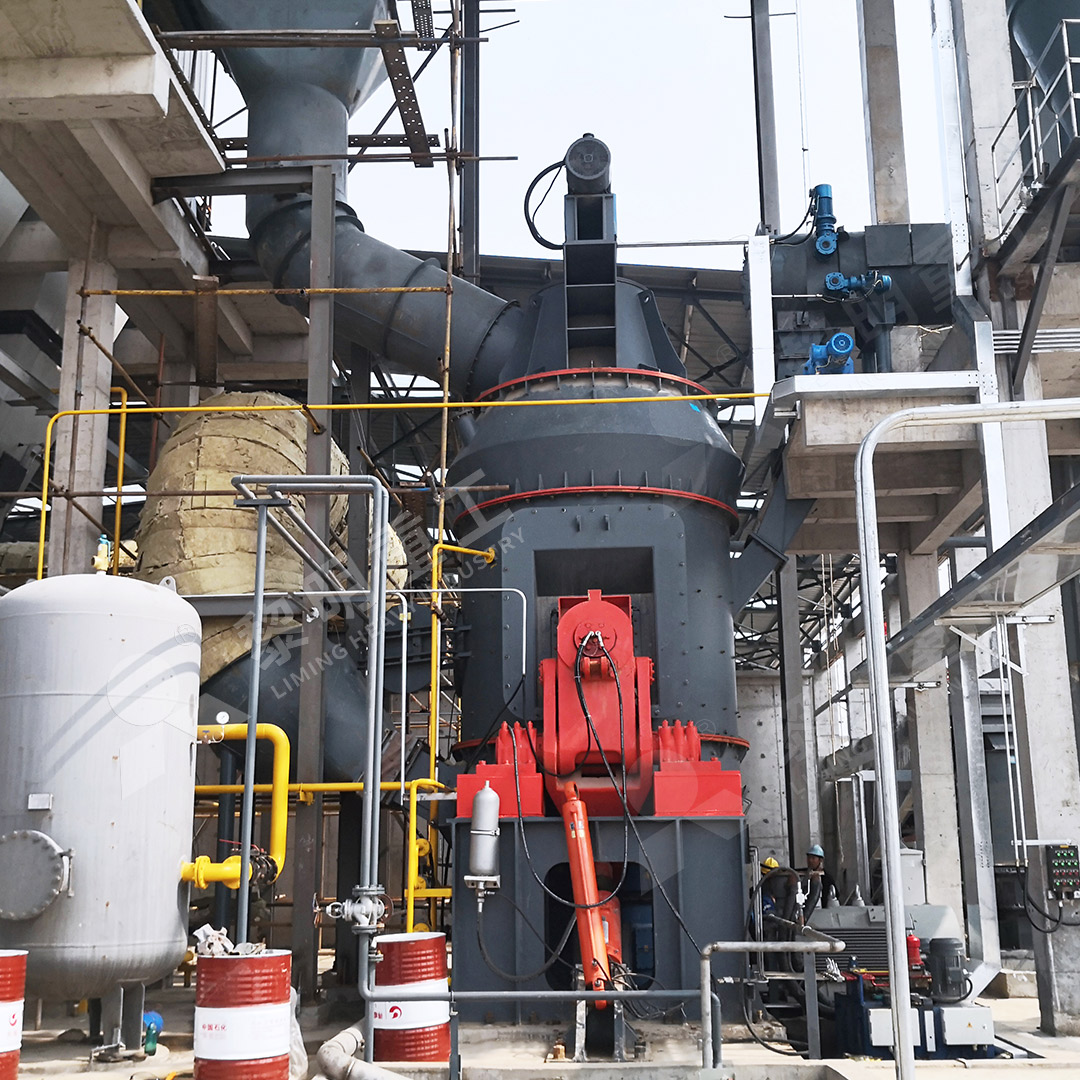
The LM vertical roller mill, our flagship product, serves as the backbone of the 20 TPH marble grinding solution. Unlike traditional ball mills or Raymond mills, the LM series employs a grinding table and rollers with hydraulic pressure system, achieving energy efficiency 30–50% higher than ball mills in similar applications. The mill’s working principle is straightforward: marble feed material falls onto the rotating grinding table via a central chute, where centrifugal force spreads it under stationary grinding rollers. The rollers, each equipped with replaceable wear parts, apply controlled pressure to crush and shear the material, while hot air (if required for drying) enters from the nozzle ring to lift the ground powder to the integrated classifier. The classifier — a dynamic, high-efficiency rotor type — ensures that only particles meeting the target fineness exit the mill, while coarse material is returned to the grinding zone for further reduction. This closed-loop system not only guarantees consistent product quality but also minimizes energy waste, making it ideal for continuous 24/7 rubber filler production.
Why Marble Powder is Essential for the Rubber Industry
Marble-derived calcium carbonate is one of the most widely used mineral fillers in rubber manufacturing. It improves dimensional stability, reduces raw material cost, and enhances processability during mixing, calendering, and extrusion. For rubber products such as hoses, belts, gaskets, and shoe soles, a consistent particle size distribution (PSD) and low moisture content are non-negotiable. The 20 TPH vertical mill excels in delivering precisely that: with its integrated drying capability (using hot air from the system), moisture in the marble feed can be reduced to below 0.5%, which is critical for preventing porosity and curing defects in vulcanized rubber. Moreover, the mill’s classifier can produce powders with top-cut control — ensuring no oversized particles that could act as stress concentrators. Our LM vertical mill also supports surface coating systems, where stearic acid or other coupling agents can be added during grinding to improve compatibility between the hydrophilic calcium carbonate and the hydrophobic rubber matrix. This in-situ surface treatment capability is a game-changer for rubber compounders seeking to maximize filler loading without sacrificing physical properties.
20 TPH Capacity: Right‑Sized for Mid‑Scale Industrial Rubber Plants
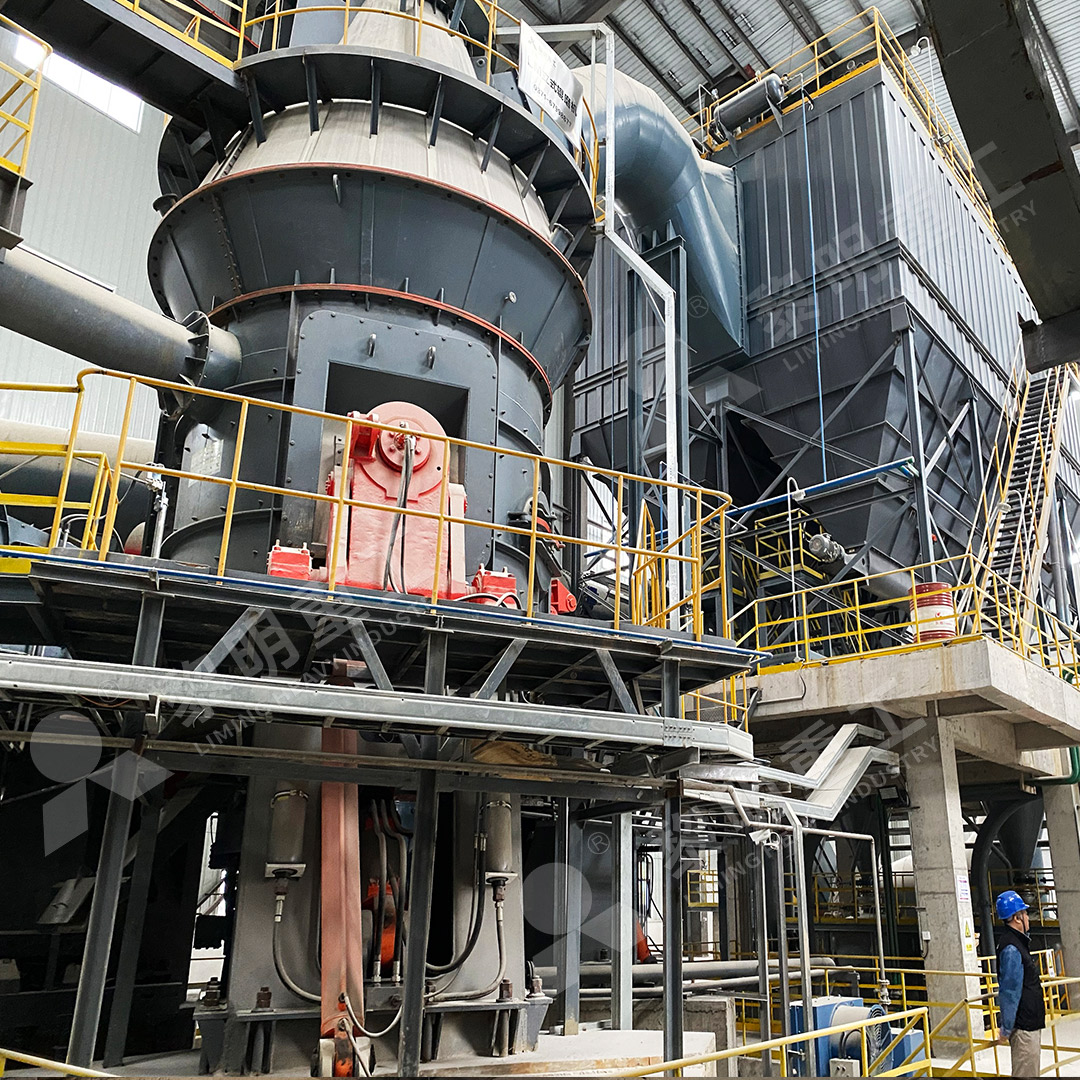
At 20 tons per hour, this vertical mill matches the throughput demands of medium-to-large rubber compounding facilities that typically consume 150–200 tons of filler per day. The mill’s footprint is surprisingly compact for its capacity — the main vertical mill unit occupies approximately 100 m², significantly less than a ball mill system with equivalent output. This space efficiency is achieved through the VRM’s vertical design, where grinding, classification, and drying occur in a single column. The upstream system includes a jaw crusher for primary size reduction (to ≤ 55 mm), a vibrating feeder with variable frequency drive for controlled feeding, and a belt elevator feeding the mill hopper. Downstream, the system integrates a pulse dust collector compliant with stringent environmental standards, ensuring that the fine marble powder is captured without fugitive emissions. For rubber plants in urban or ecologically sensitive areas, this is a decisive advantage. Additionally, the mill’s automatic electric control system — managed via PLC with a touchscreen interface — allows operators to adjust grinding pressure, classifier speed, and air flow in real time, stabilizing the 20 TPH throughput even when feed marble hardness or moisture fluctuates.
Comparison with Other Grinding Technologies for Marble
To fully appreciate the 20 TPH vertical mill, it is useful to compare it with alternative grinding equipment commonly used in the marble processing industry. The traditional Raymond mill, typically limited to 1.2–4.5 TPH capacity, is simply not scalable for rubber filler production at 20 TPH. The MTW European Type Trapezium Mill, with a capacity range of 3–55 TPH, offers higher throughput but consumes more floor space due to its horizontal design and requires separate drying systems. Ball mills, while capable of 0.65–50 TPH, have the drawbacks of high energy consumption (especially for fine grinding below 200 mesh), high noise levels, and limited ability to produce narrow particle size distributions without secondary classification. The MW Micro Powder Mill, targeting superfine powders (325–3250 mesh), is unnecessarily over-specced for rubber fillers that typically require 200–400 mesh, and its capacity tops out at 25 TPH. In contrast, the LM vertical mill at 20 TPH offers the best balance of energy efficiency (25–35 kWh per ton for marble to 200 mesh), product consistency, and operational simplicity. Its grinding rollers and table are designed for easy maintenance — the roller tires can be replaced in less than 8 hours by two technicians, minimizing downtime for rubber plants running just-in-time filler supply.
Case Study: LIMING Heavy Industry’s Marble Vertical Mill in the Field
LIMING Heavy Industry has supplied multiple LM2000 (20–25 TPH) vertical mills to marble powder producers in the Middle East and Southeast Asia, where rubber and plastic industries are expanding rapidly. One notable installation in Vietnam processes local white marble (CaCO₃ content > 99%, Mohs hardness 3) to produce 20 TPH of powder with d97 = 150 microns (100 mesh) for rubber conveyor belt manufacturing. The mill runs 12 hours per day, producing 240 tons daily, with the final product packed in 1-ton big bags. The customer reports that the vertical mill’s classifier achieves a cut size precision of ±5 microns, and the mill’s vibration levels remain below 2 mm/s even at full load, thanks to the advanced damping system. After 18 months of operation, the wear parts (rollers and table segments) showed only 12% wear, indicating a service life exceeding 5 years under normal operating conditions. This reliability aligns with our company’s commitment to precision manufacturing and scientific research — a legacy that began in 1987 when LIMING was founded as a modern joint-stock corporation. With our headquarters in Zhengzhou’s HI-TECH Zone and a second workshop spanning 67,000 m² in Shangjie, we maintain rigorous quality control and provide on-site commissioning, training, and spare parts support to ensure that every 20 TPH marble vertical mill delivers its rated performance from day one.
Integration with Rubber Processing Lines
The marble powder produced by the vertical mill can be pneumatically conveyed directly to silos feeding the rubber mixing room, eliminating manual handling and contamination risks. For rubber compounders using internal mixers (Banbury type), the fine marble powder flows freely, reducing dusting issues and ensuring uniform dispersion. The mill’s control system can be linked to a plant DCS (distributed control system), allowing the rubber plant operator to monitor filler production in real time and adjust target fineness on the fly — for example, switching from 200 mesh for tire sidewalls to 325 mesh for inner liners within minutes. This flexibility is invaluable for rubber manufacturers that produce multiple product grades daily. Furthermore, the vertical mill can accept waste marble chips from stone processing factories, enabling a circular economy approach where rubber plants source low-cost raw material while reducing landfill waste.
Environmental and Safety Considerations
Operating a 20 TPH marble grinding plant requires careful attention to dust control and noise reduction. The LM vertical mill addresses both: it operates at noise levels below 85 dB(A) at 1 meter, and the integrated pulse dust collector achieves emission concentrations below 20 mg/Nm³, meeting EPA and EU industrial emission standards. The mill’s hydraulic system is oil-sealed to prevent leaks, and all high-temperature surfaces (>60°C) are insulated or guarded. For rubber industry applications where fire safety is paramount (marble powder is a non-combustible mineral), the mill’s electrical components are IP54 rated, and the system includes explosion-venting panels in the cyclone and baghouse. These features, combined with LIMING’s global service network — we have representatives in over 30 countries — make the 20 TPH marble vertical mill a turnkey solution that rubber industry investors can deploy with confidence.
Conclusion
The 20 TPH marble vertical mill represents a convergence of energy-efficient grinding technology and the specific needs of the rubber industry for consistent, high-quality mineral filler. With its compact design, low operating cost, and ability to produce surface-treated powders at scale, it outperforms traditional grinding mills in both productivity and product quality. As rubber manufacturers continue to seek ways to reduce compound cost without compromising performance, this vertical mill offers a proven path forward. LIMING Heavy Industry, with over 35 years of expertise in crushing and grinding equipment, provides comprehensive engineering, manufacturing, and aftermarket support to ensure each installation achieves its full potential.
Frequently Asked Questions (FAQ)
- What fineness of marble powder can the 20 TPH vertical mill achieve for rubber applications? The mill can produce fineness ranging from 80 mesh (177 microns) to 600 mesh (22 microns), with typical rubber filler grades at 200 mesh (74 microns) or 325 mesh (44 microns). The dynamic classifier allows precise adjustment without changing mechanical parts.
- Can the mill handle marble feed with moisture above 5%? Yes, the LM vertical mill is equipped with an integrated drying system using hot air from an external source or from the mill’s own exhaust. It can reduce feed moisture from up to 15% to less than 1% in the final product, which is critical for rubber processing.
- How much power does the 20 TPH vertical mill consume per ton of marble ground to 200 mesh? Typically, the specific power consumption is between 25 and 35 kWh per ton, depending on marble hardness and target fineness. This is 40% lower than a ball mill processing the same material.
- What is the maintenance schedule for the grinding rollers and table? We recommend inspecting the roller tires and table segments every 1,000 operating hours. Under normal conditions processing marble (Mohs 3–4), the wear parts should last 8,000–10,000 hours before replacement. Daily lubrication of the bearing system is required per the manual.
- Does LIMING provide on-site installation and operator training for this vertical mill system? Absolutely. Our service team includes engineers who supervise equipment installation, perform commissioning, and provide a 5-day on-site training program for operators and maintenance staff. Remote monitoring support is also available via our digital platform.


