Marble ultrafine grinding mill for paint represents a critical advancement in mineral processing technology, enabling the production of ultra-fine calcium carbonate powder essential for high-performance paint formulations. As a core product from Liming Heavy Industry Co., Ltd., the marble ultrafine grinding mill combines advanced grinding mechanics with precise classification to achieve particle sizes down to d97 ≤ 5μm, with adjustable fineness ranging from 325 mesh to 3250 mesh. This capability directly addresses the paint industry's demand for consistent, high-brightness fillers that enhance opacity, durability, and color retention. By integrating drying, grinding, powder selection, and conveying into a single system, the mill ensures energy efficiency, environmental compliance, and operational reliability. Moreover, the inclusion of pulse dust collectors guarantees a green production process, meeting stringent environmental standards while delivering superior product quality. For paint manufacturers seeking to optimize raw material processing, this mill offers a robust solution that balances throughput, precision, and long-term cost-effectiveness.
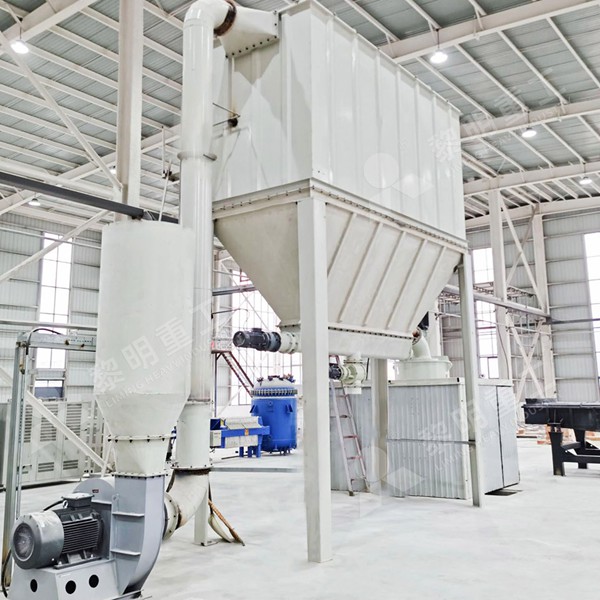
Technical specifications and working principle
The marble ultrafine grinding mill for paint operates on a medium-speed micro-grinding principle, inspired by advanced Swedish grinding technology. The motor drives the main shaft and turnplate through a reducer, which in turn drives dozens of rollers to rotate against the raceway of the ring. Material, pre-crushed by a hammer crusher to input sizes of 10-20 mm, is transported via elevator to a hopper, then fed evenly by vibrating feeder to the central part of the upper turnplate. Centrifugal force pushes the material to the raceway where it is crushed into fine powder. The grinding mill handles capacities from 0.5 to 25 tons per hour, making it suitable for both small-scale and large-scale paint production facilities. Its integrated separator ensures that only particles meeting the desired fineness pass through, while oversized particles are returned for regrinding. This closed-loop system, combined with a pulse dust collector, minimizes waste and dust emissions, aligning with global environmental regulations.
Application advantages in paint industry
Marble ultrafine grinding mill for paint is specifically engineered to produce calcium carbonate powder that meets the rigorous requirements of paint formulations. Calcium carbonate, derived from marble, serves as a critical extender and filler in paints, improving rheology, gloss, and hiding power. The mill's ability to produce ultrafine particles between 325 and 3250 mesh ensures smooth dispersion in liquid binders, preventing sedimentation and enhancing finish quality. Additionally, the mill's high brightness output (typically above 94%) contributes to superior whiteness and color consistency in paint products. The grinding system's low operational noise and vibration, coupled with its compact footprint, allow for easy integration into existing production lines. For paint manufacturers, this translates to reduced processing time, lower energy consumption, and minimized maintenance—key factors in maintaining competitive pricing and product reliability. Furthermore, the mill's adaptability to various marble hardness levels and moisture content ensures consistent performance across different batches.
Comparison with other grinding technologies
While traditional Raymond mills and ball mills have been used in paint applications, the marble ultrafine grinding mill for paint offers distinct advantages. Raymond mills, which produce fineness between 613 μm to 44 μm, cannot achieve the sub-micron particle sizes required for premium paints. Ball mills, while versatile, consume more energy and yield broader particle size distributions, leading to inconsistent gloss and color. The ultrafine grinding mill's patented technology enables precise particle size control, which is essential for paint pigments and fillers. When compared to other Liming Heavy Industry products like the LM Vertical Roller Mill or MTW European Type Trapezium Mill, the MW Micro Powder Mill stands out for its ultra-fine output, though the vertical mill is better suited for larger capacities (10-400 T/H). For paint specialists focusing on specialty finishes, the marble ultrafine grinding mill provides the necessary flexibility to switch between mesh sizes without significant downtime, making it ideal for both batch and continuous processing.
Integration with paint production processes
Incorporating a marble ultrafine grinding mill for paint into a manufacturing workflow involves careful consideration of upstream and downstream equipment. The mill typically works in conjunction with a jaw crusher, vibrating feeder, hopper, and dust collector to form a complete grinding system. For paint production, the output powder is often fed into mixing tanks where it is combined with resins, solvents, and additives. The mill's ability to handle continuous operation with minimal supervision reduces labor costs and improves throughput. Liming Heavy Industry provides comprehensive support for system design, including electrical cabinets and motors that are pre-wired for quick setup. The mill's main components, such as the reducer and rollers, are designed for easy access and replacement, reducing downtime during maintenance. For paint factories looking to scale up, the mill's modular design allows for future expansion by adding parallel units or upgrading to higher-capacity models.
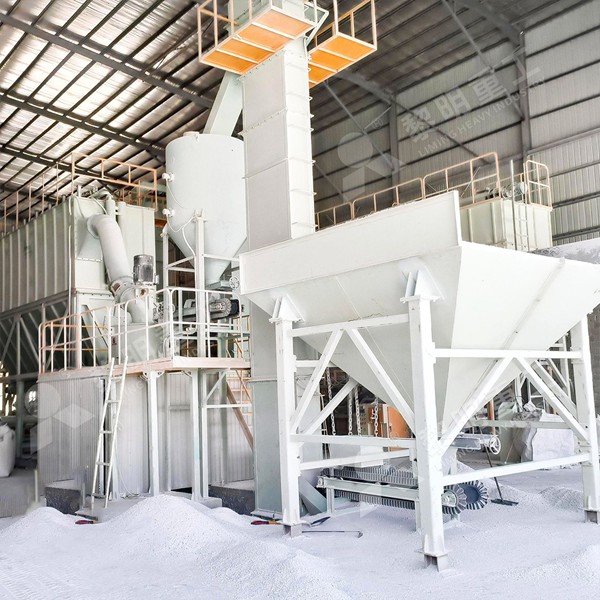
Environmental and economic benefits
The marble ultrafine grinding mill for paint aligns with modern industrial priorities: reducing environmental impact while improving profitability. Its pulse dust collector captures fine particles, preventing air pollution and allowing for material recovery. The closed air circulation system minimizes energy waste, with the air blower recycling airflow after separation. Economically, the mill's low power consumption—compared to traditional ball mills—cuts electricity bills by up to 30%. The durable grinding rollers and rings, made from high-alloy steel, extend service intervals and reduce replacement costs. For paint manufacturers, these savings contribute directly to lower production costs per ton. Additionally, the mill's compact design reduces floor space requirements, lowering facility overhead. Liming Heavy Industry's commitment to scientific research ensures continuous improvements in wear resistance and grinding efficiency, keeping the mill competitive in a market where profit margins are tight.
Quality control and customer support
Liming Heavy Industry Co., Ltd., founded in 1987, brings over three decades of experience to the marble ultrafine grinding mill for paint. The company's headquarters in Zhengzhou's HI-TECH Industry Development Zone, covering 80,000 m², plus a 67,000 m² workshop in Shangjie Industry Park, house state-of-the-art manufacturing facilities. Each mill undergoes rigorous testing for grinding pressure, bearing temperature, and vibration levels before shipment. The company provides extensive documentation, including installation manuals, wiring diagrams, and troubleshooting guides. After-sales support includes on-site commissioning, operator training, and spare parts availability through a global network. For paint industry clients, Liming offers customized solutions such as adjusting the classifier speed for specific mesh requirements or adding anti-explosion features for volatile environments. This level of support, combined with the mill's robust construction, ensures long-term reliability—a critical factor for continuous production environments.
Future trends and innovations
As the paint industry moves toward water-based and low-VOC formulations, the role of marble ultrafine grinding mill for paint will expand. Future trends include automation through IoT integration, allowing remote monitoring of grinding parameters and predictive maintenance. Liming Heavy Industry is actively researching new roller materials to reduce contamination and improve powder purity for food-grade and medical-grade paint applications. The development of multi-stage classification systems could enable simultaneous production of multiple particle sizes, increasing flexibility. Additionally, advances in AI-based control systems may optimize energy consumption in real-time, further reducing operational costs. For paint manufacturers investing in long-term capacity, the marble ultrafine grinding mill represents a future-proof technology that can adapt to evolving regulatory and market demands.
Conclusion
Marble ultrafine grinding mill for paint is an indispensable tool for modern paint production, combining high efficiency, environmental compliance, and product quality. With capacities ranging from 0.5 to 25 TPH and fineness adjustable from 325 to 3250 mesh, it meets the diverse needs of the industry. Backed by Liming Heavy Industry's three-decade legacy of precision manufacturing and scientific innovation, this mill offers a reliable, cost-effective solution for producing calcium carbonate filler that enhances paint performance. Whether for architectural coatings, automotive finishes, or industrial paints, the mill's output ensures consistent particle size distribution, brightness, and dispersibility. By choosing this technology, paint manufacturers can achieve competitive advantages in quality, sustainability, and operational efficiency.
FAQ
1. What is the maximum particle size that the marble ultrafine grinding mill for paint can achieve?
The marble ultrafine grinding mill for paint can achieve a fineness of d97 ≤ 5μm, with an adjustable range from 325 mesh to 3250 mesh, meaning particles can be as fine as approximately 5 microns.
2. Can the mill handle different types of marble with varying hardness?
Yes, the mill is designed to process marble with Mohs hardness up to 6, and by adjusting the grinding pressure and roller configuration, it can effectively handle variations in hardness and moisture content up to 6%.
3. What is the power consumption of the marble ultrafine grinding mill compared to a ball mill?
The marble ultrafine grinding mill consumes up to 30% less energy than a traditional ball mill due to its efficient grinding mechanism and closed air circulation system, though actual savings depend on specific operating conditions and input material.
4. Does Liming Heavy Industry provide installation services for the mill?
Yes, Liming Heavy Industry offers comprehensive installation support, including on-site commissioning, operator training, and technical documentation, with experienced engineers available to assist with setup and troubleshooting.
5. How often should the grinding rollers and rings be replaced in the mill?
The replacement interval for grinding rollers and rings depends on the processed material's abrasiveness and usage hours, but under normal conditions for marble, they typically last 6 to 12 months with regular preventive maintenance.


