In the artificial stone industry, the production of high-quality marble powder is a critical process that directly influences the final product's appearance, strength, and consistency. Marble powder grinding mills, specifically designed to transform raw marble scraps and lumps into fine, uniform powders, have become indispensable equipment for manufacturers seeking to enhance efficiency and product quality. This article provides an in-depth exploration of the technologies, applications, and benefits of using advanced grinding mills — including vertical roller mills, Raymond mills, European-type trapezium mills, micro powder mills, and ball mills — for artificial stone production. We will examine key parameters such as capacity, input size, fineness range, and working principles, drawing on industry-leading practices to offer a comprehensive guide for plant managers, engineers, and procurement specialists.
Understanding the Role of Marble Powder in Artificial Stone Manufacturing
Artificial stone, also known as engineered stone, is composed of crushed natural stone aggregates bound together by a polymer resin or cementitious binder. Marble powder, often derived from waste materials during quarrying or processing, serves as both a filler and a reinforcement agent. The particle size distribution, purity, and shape of the powder significantly affect the stone's hardness, polishability, and resistance to staining. Therefore, selecting the appropriate grinding mill is paramount to achieving the desired specifications — typically between 200 mesh (74 μm) and 1250 mesh (10 μm) for most artificial stone applications.
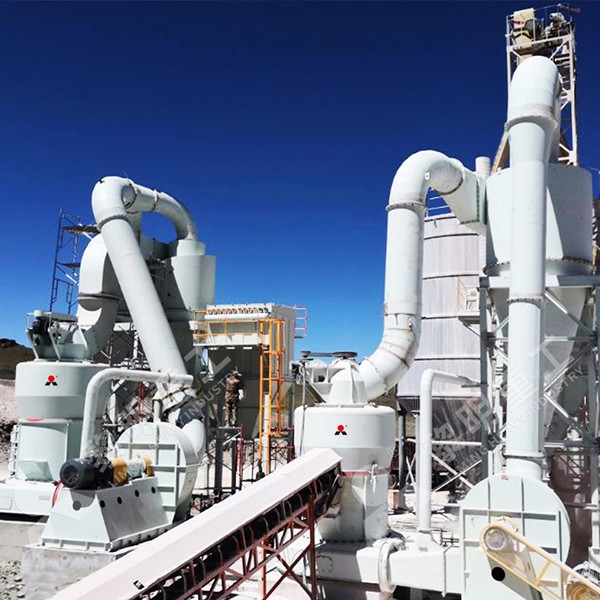
Key Marble Powder Grinding Mill Technologies
1. LM Vertical Roller Mill
The LM Vertical Roller Mill is engineered for high-capacity operations, integrating drying, grinding, powder selection, and conveying into a single system. With a capacity ranging from 10 to 400 T/H and an input size of 30–55 mm, it is ideal for large-scale artificial stone plants. The mill's automatic electric control system ensures consistent fineness, typically adjustable between 200 and 400 mesh. Its application extends beyond marble to non-metallic minerals, coal, and slag, making it a versatile choice for facilities that process multiple raw materials.
2. Raymond Mill
Raymond Mill remains a staple in the grinding industry due to its reliability and simplicity. Suitable for materials under 7 Mohs hardness and less than 6% humidity, this mill produces a fineness range of 613 μm to 44 μm (approximately 30–325 mesh). With a capacity of 1.2–4.5 T/H and an input size of 15–25 mm, it is well-suited for medium-scale operations. In artificial stone production, Raymond Mill is frequently used for grinding calcium carbonate and gypsum, both common components in engineered stone formulations.
3. MTW European Type Trapezium Mill
As an upgrade to traditional Raymond and pendulum mills, the MTW European Type Trapezium Mill offers patented technology that enhances stability, productivity, and energy efficiency. Its capacity spans 3–55 T/H, with an input size of 30–50 mm. The mill's closed-loop system, equipped with a pulse dust collector, complies with stringent environmental standards. This model is particularly effective for limestone desulfurization in power plants and heavy calcium carbonate processing, but its precision makes it a favorite for high-end artificial stone powder.
4. MW Micro Powder Mill
For superfine powder requirements, the MW Micro Powder Mill incorporates advanced Swedish grinding technology to achieve finished products as fine as d97 ≤ 5 μm (equivalent to 325–3250 mesh). With a capacity of 0.5–25 T/H and an input size of 10–20 mm, it excels in producing ultra-fine marble powder that enhances the transparency and luster of artificial stone. The mill's working principle involves rollers rotating against a ring raceway, driven by a reducer and main shaft, ensuring uniform particle distribution.
5. Ball Mill
Ball Mill is a classic grinding solution used for milling after primary crushing. It handles capacities from 0.65 to 50 T/H with an input size of ≤ 25 mm. The horizontal rotating drum, filled with steel balls of varying specifications, impacts and grinds materials through centrifugal force. In the artificial stone industry, Ball Mills are often employed for the final stage of grinding, especially when a broad particle size range is acceptable. Ladder and ripple liners optimize the grinding efficiency for different material characteristics.
Working Principle and System Integration
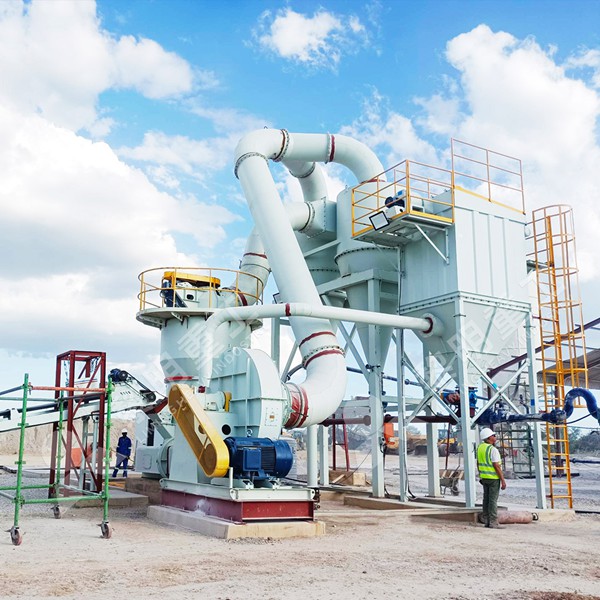
A typical marble powder grinding line includes a grinding mill, separator, air blower, jaw crusher, vibrating feeder, hopper, dust collector, pipes, powder collector, electric cabinet, and motors. The process begins with large marble lumps being crushed by a jaw crusher to the required input size. A variable-frequency belt feeder ensures even and continuous material flow into the mill. Inside the grinding chamber, materials are ground between rings and rollers (or between balls and liners in a ball mill). The ground particles are carried upward by air flow; those that pass the separator are collected as finished product, while oversized particles fall back for re-grinding. The air flow is recycled through the blower, creating a closed system that minimizes energy loss. Modern pulse dust collectors ensure that emissions comply with environmental regulations, making the entire process both efficient and eco-friendly.
Selection Criteria for Artificial Stone Manufacturers
When choosing a marble powder grinding mill, manufacturers should evaluate several factors: capacity (to match production volume), fineness range (to meet product specifications), input size tolerance (to reduce pre-crushing requirements), and energy consumption (to control operating costs). For example, a plant producing 50 tons of artificial stone daily might pair an LM Vertical Roller Mill for bulk grinding with an MW Micro Powder Mill for premium surface finish powders. Additionally, the availability of spare parts and after-sales service is crucial; a supplier with a strong track record in research, manufacturing, and sales — such as one established in 1987 with a modern facility covering 80,000 m² — offers long-term reliability.
Conclusion
Marble powder grinding mills are the backbone of artificial stone manufacturing, enabling the transformation of raw marble into a consistent, high-quality powder that determines the stone's aesthetic and mechanical properties. From high-capacity vertical roller mills to ultra-fine micro powder mills, each technology offers distinct advantages tailored to specific production needs. By understanding the working principles, capacities, and fineness options, artificial stone producers can optimize their grinding processes, reduce waste, and achieve superior product quality. Investing in advanced grinding equipment not only boosts operational efficiency but also positions manufacturers to meet the growing demand for durable and visually appealing engineered stone surfaces.
FAQ
- What mesh size is typically required for marble powder used in artificial stone? Most artificial stone applications require marble powder between 200 mesh (74 μm) and 1250 mesh (10 μm), depending on whether the stone is designed for a matte or high-gloss finish.
- Can a single grinding mill process both coarse and fine marble powder? Yes, many modern mills like the MTW European Type Trapezium Mill or LM Vertical Roller Mill offer adjustable fineness settings, allowing operators to switch between coarse and fine grinding by changing separator speed or air flow.
- What is the typical energy consumption of a marble powder grinding mill? Energy consumption varies by mill type and capacity: for example, a Raymond mill may consume 15–30 kWh per ton, while a high-efficiency vertical roller mill can reduce this to 10–20 kWh per ton, depending on fineness requirements.
- How often should grinding rollers and rings be replaced? Replacement intervals depend on material hardness and operating hours. For marble (Mohs hardness ~3–4), rollers and rings in a Raymond or MTW mill typically last 6–12 months under continuous operation with proper maintenance.
- Is it possible to integrate a dust collection system with a marble grinding mill? Absolutely. Most modern grinding mills are designed to work with pulse dust collectors that capture fine particles, ensuring compliance with environmental regulations and improving workplace safety.


