Published: October 26, 2023
Gypsum grinding mills play a critical role in the brewing industry, where gypsum (calcium sulfate dihydrate) is used to adjust water hardness, improve enzyme activity during mashing, and enhance beer clarity and flavor stability. The selection of the right grinding mill ensures consistent particle size, purity, and efficiency, directly impacting the quality of the final brew. Liming Heavy Industry Co., Ltd., a leader in crushing and grinding equipment since 1987, offers a range of mills—from Raymond mills to vertical roller mills and micro powder mills—engineered to meet the specific demands of gypsum processing for breweries. This article delves into the technical considerations, equipment options, and best practices for gypsum grinding in brewing applications, providing a professional yet conversational guide for industry professionals.
When it comes to brewing, water chemistry is everything. Brewers add gypsum to increase calcium and sulfate ions, which lower pH, promote yeast health, and accentuate hop bitterness. But here’s the kicker: the gypsum must be finely ground—typically to a mesh size between 100 and 200 mesh (149–74 microns)—to dissolve quickly and uniformly. Too coarse, and it clogs filters or settles out; too fine, and it may create dust hazards. That’s where Liming Heavy Industry steps in with over three decades of grinding expertise.
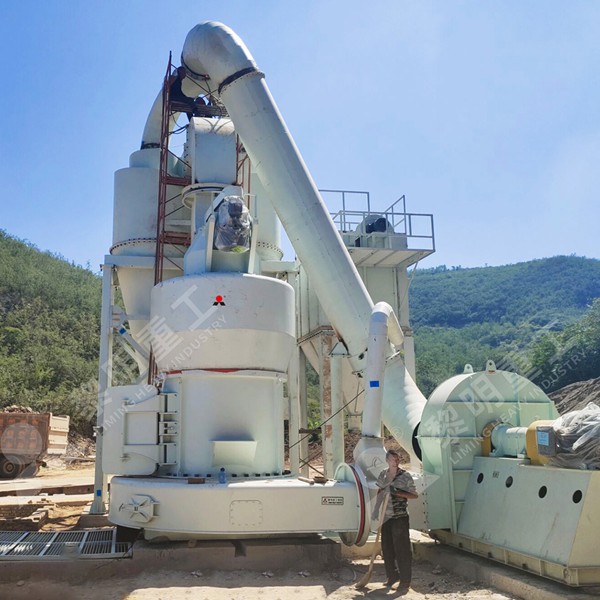
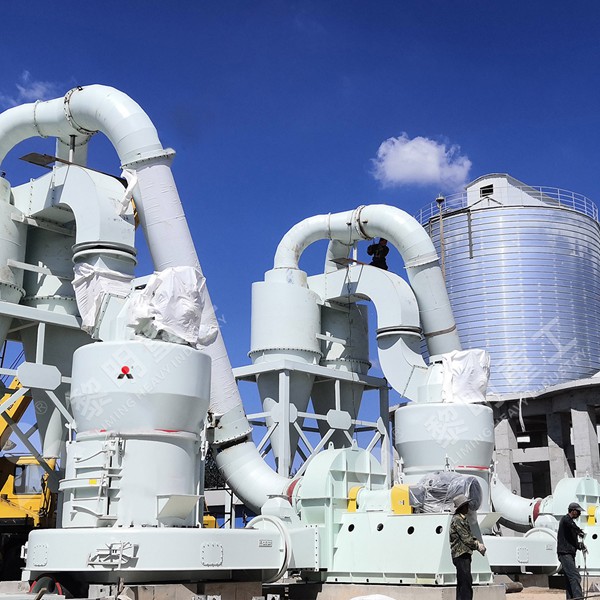
Our portfolio includes the Raymond Mill, a workhorse for gypsum grinding with a capacity of 1.2–4.5 T/H and an output fineness range of 613–44 μm. For larger operations, the LM Vertical Roller Mill integrates drying, grinding, and classifying in one unit, handling up to 400 T/H with input sizes up to 55 mm. If you need superfine powder for precision brewing, the MW Micro Powder Mill delivers fineness down to 5 μm (325–3250 mesh). Each mill is designed with durability and efficiency in mind, backed by our modern manufacturing facilities spanning over 147,000 m² in Zhengzhou, China.
Let’s break it down. The key to successful gypsum grinding lies in three factors: feed size, moisture content, and target fineness. Most brewing-grade gypsum arrives as lump material (10–50 mm). A jaw crusher reduces it to manageable sizes before feeding into the mill. Our MTW European Type Trapezium Mill, for instance, accepts 30–50 mm input and outputs 3–55 T/H, making it ideal for mid-scale breweries. Its closed-loop system with a pulse dust collector ensures minimal environmental impact—a big plus for breweries aiming to go green.
Now, let’s talk about real-world use. Imagine a craft brewery grinding gypsum for water treatment. They need consistency batch after batch. Our Raymond Mill’s grinding ring and roller design wear slowly, maintaining stable output even after years of operation. For high-volume industrial breweries, the LM Vertical Mill’s automatic electric control system adjusts grinding pressure in real time, adapting to gypsum hardness variations. And if you’re experimenting with specialty recipes requiring ultra-fine gypsum, the MW Micro Powder Mill, based on Swedish grinding technology, offers adjustable speed and classifier settings.
Maintenance is another consideration. Brewing equipment often faces humid environments, so our mills feature sealed bearings and corrosion-resistant materials. The Ball Mill, with its horizontal rotating barrel and steel ball media, is a robust choice for breweries that also grind other minerals. Its ladder and ripple liners protect the shell and enhance grinding efficiency. All our mills come with comprehensive documentation and global support.
In summary, the right gypsum grinding mill for brewing depends on your production scale, desired fineness, and budget. Liming Heavy Industry provides tailored solutions, from small-scale Raymond units to massive vertical mills, all engineered for precision and reliability. As we continue to pioneer in R&D—focusing on scientific breakthroughs and technological improvements—we aim to be your partner in brewing excellence.
Frequently Asked Questions
- What mesh size gypsum powder is best for brewing?
Most brewers prefer 100–200 mesh (149–74 microns) for quick dissolution. Our Raymond Mill can achieve 613–44 μm, covering this range easily. - Can Liming Heavy Industry mills handle high-moisture gypsum?
Yes. The LM Vertical Roller Mill integrates a drying function, handling feed with up to 10% moisture. For higher moisture, we recommend pre-drying the gypsum. - What is the typical power consumption of a gypsum grinding mill?
Power consumption varies by model and fineness. For example, our MTW Mill consumes approximately 25–35 kWh per ton for medium-fine gypsum, but exact figures depend on operational conditions. - How long does a set of grinding rollers last in gypsum service?
With proper maintenance, rollers in our Raymond Mill can last 6–12 months, depending on gypsum hardness and usage. We offer replacement parts globally. - Do your mills come with dust collection systems?
Absolutely. Models like the MTW European Mill and MW Micro Powder Mill include pulse dust collectors to capture fine particles, meeting environmental standards and keeping your workspace clean.


