Gypsum (calcium sulfate dihydrate) is a critical mineral in the food industry, serving as a firming agent, dough conditioner, and calcium supplement in products like tofu, baked goods, and canned vegetables. For food-grade applications, the grinding process demands exceptional purity, controlled particle size distribution, and strict adherence to hygiene standards. A specialized gypsum grinding mill for food additive production must deliver consistent fineness, avoid contamination, and comply with international food safety regulations. Liming Heavy Industry offers a comprehensive range of grinding solutions—from Raymond mills and European trapezium mills to vertical roller mills and micro powder mills—each engineered to meet the unique requirements of food-grade gypsum processing. This article explores the key considerations, available technologies, and best practices for selecting and operating a gypsum grinding mill tailored to food additive manufacturing.
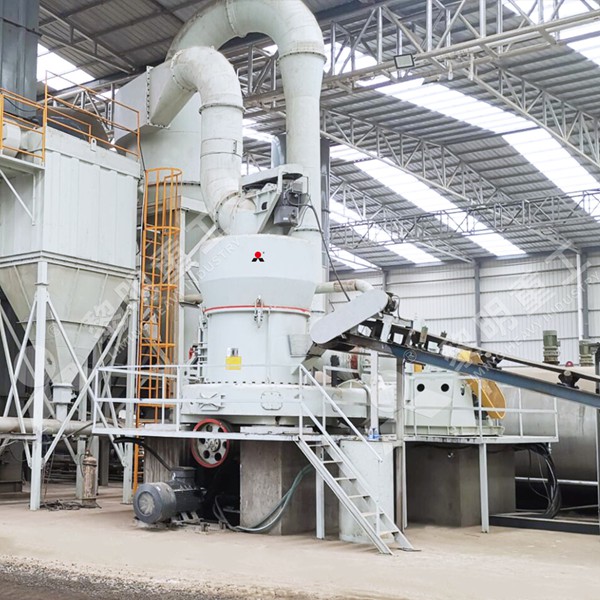
Understanding Gypsum as a Food Additive
Food-grade gypsum (E516 in the EU, or simply calcium sulfate in the US) must be free from heavy metals, silica, and other impurities. The grinding mill used must not introduce contaminants from wear parts or lubricants. Particle size requirements vary by application: for tofu coagulation, a fineness of 100–200 mesh (149–74 µm) is typical; for baking powders and dry mixes, finer grades around 200–325 mesh (74–44 µm) are preferred. The mill must also handle the material's inherent moisture content (typically 5–15% in raw gypsum) without clogging or performance loss. Liming Heavy Industry's equipment integrates drying and grinding in closed-loop systems, ensuring the final product meets both purity and moisture specifications.
Key Mill Technologies for Food-Grade Gypsum
1. Raymond Mill (Traditional Workhorse)
Liming's Raymond mill is a proven solution for small to medium-scale production of food-grade gypsum. With a capacity range of 1.2–4.5 T/H and input size up to 25 mm, it produces fineness from 613 µm to 44 µm (30–325 mesh). The mill's grinding roller and ring are made from high-chromium alloy steel, minimizing wear particle contamination. Equipped with a pulse dust collector, the system captures fine powder efficiently and maintains a clean working environment. For food additive applications, the Raymond mill can be fitted with stainless steel contact parts and food-grade seals.
2. MTW European Type Trapezium Mill (Upgraded Precision)
For larger capacities (3–55 T/H) and tighter particle size control, the MTW European trapezium mill is ideal. Its patented technology includes a three-dimensional structure that reduces vibration and noise, while the variable-frequency feeder ensures uniform material flow. The mill's internal classifier achieves cut points as fine as 44 µm (325 mesh) with high efficiency. The closed-loop pneumatic system, combined with a pulse dust collector, prevents cross-contamination and meets stringent environmental standards. The MTW mill is particularly suited for continuous production of high-purity gypsum powder for baking and pH regulation in food processing.
3. LM Vertical Roller Mill (Large-Scale Integrated Solution)
When production demands exceed 10 T/H (up to 400 T/H for non-metallic minerals), the LM vertical roller mill offers a integrated grinding, drying, and classifying solution. Its vertical design reduces floor space, and the automatic control system maintains consistent product quality. For food-grade gypsum, the mill's hot air generator can dry the material from 15% moisture to below 0.5% in a single pass. The grinding roller and table are made from wear-resistant materials, and the hydraulic system is sealed to prevent oil leaks. This mill is ideal for large food additive manufacturers requiring bulk production of standardized gypsum powder.
4. MW Micro Powder Mill (Ultra-Fine Applications)
For specialty food additives requiring superfine particles (325–3250 mesh, d97 ≤ 5 µm), the MW micro powder mill is the top choice. Its medium-speed design, based on Swedish grinding technology, uses multiple rollers rotating against a grinding ring. The integrated classifier ensures sharp cut points, and the pulse precipitator captures even submicron particles. Applications include high-end calcium supplements, suspension stabilizers, and nutraceutical blends. The mill's capacity ranges from 0.5 to 25 T/H, making it suitable for both R&D and production.
Critical Features for Food-Grade Grinding
- Contamination prevention: All mills can be equipped with food-grade stainless steel contact surfaces, FDA-approved seals, and HEPA-filtered air intake.
- Cleanability: Quick-access doors, smooth internal surfaces, and CIP (clean-in-place) options are available for the MTW and LM series.
- Temperature control: For heat-sensitive additives, the MW mill operates at lower temperatures, and the LM mill's hot air system can be precisely regulated.
- Traceability: Liming's control systems can log batch data including grinding pressure, temperature, and power consumption for quality audits.
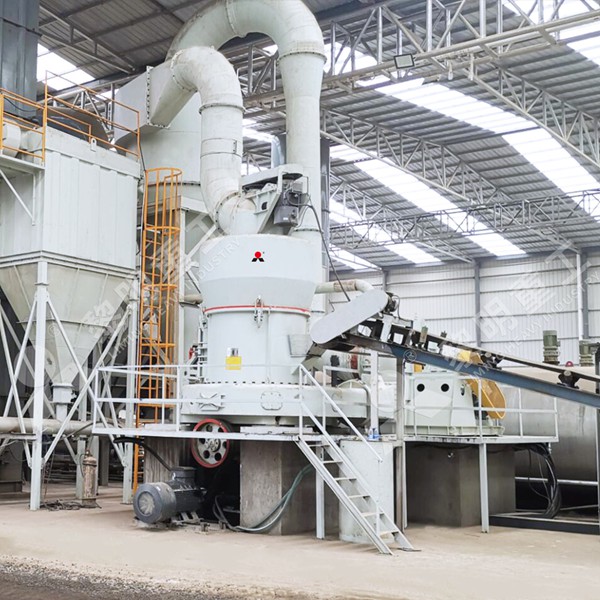
Working Principle Overview
In a typical gypsum grinding line, raw material (gypsum rock or synthetic gypsum) is first crushed by a jaw crusher to a uniform size (10–30 mm). It is then fed via a variable-frequency belt feeder into the mill's grinding chamber. Inside, the material is ground between rotating rollers (or a roller and ring) and lifted by an air stream. A classifier separates fine particles from coarse ones; oversize material falls back for regrinding. The fine powder is collected by a cyclone separator and pulse dust collector, while the air is recirculated in a closed-loop system. This design minimizes dust emission and product loss—critical for food-grade operations.
Why Choose Liming Heavy Industry for Food-Grade Gypsum Milling?
Founded in 1987, Liming Heavy Industry has over three decades of experience manufacturing crushing and grinding equipment. Our headquarters in Zhengzhou's HI-TECH Zone spans 80,000 m², with an additional 67,000 m² workshop in Shangjie. We hold ISO 9001 quality management certification, and all mills undergo rigorous testing before shipment. For food-grade applications, we offer customized solutions including:
- Stainless steel or rubber-lined grinding chambers
- Ceramic or tungsten carbide grinding elements for zero metal contamination
- Inert gas blanketing for explosive environments (though gypsum is non-flammable)
- Automated bagging and palletizing systems
Our engineering team can design a complete turnkey system from crusher to packaging, ensuring seamless integration with existing production lines.
Conclusion
Selecting the right gypsum grinding mill for food additive production hinges on capacity, fineness, purity requirements, and budget. Liming Heavy Industry offers a diverse portfolio—from the versatile Raymond mill to the ultra-precise MW micro powder mill—each capable of meeting food-grade standards. With proper configuration (sealed systems, food-grade materials, and advanced classification), these mills deliver consistent, high-quality gypsum powder suitable for the most demanding food applications. Contact our sales team for a process flow diagram and quotation tailored to your specific needs.
Frequently Asked Questions (FAQ)
- Can Liming's gypsum mills achieve the purity required for direct food additive use?
Yes, when configured with food-grade contact surfaces (e.g., stainless steel, ceramic rollers) and proper sealing, all our mills can produce powder meeting FDA or EU food additive purity standards. We recommend a pre-cleaning system and periodic swab testing. - What is the typical particle size distribution for food-grade gypsum from your MTW mill?
The MTW mill with a high-efficiency classifier can produce 99% passing 200 mesh (74 µm) with a D50 around 40–50 µm. For finer grades, the MW mill achieves D50 as low as 5 µm (3250 mesh). - How do you prevent moisture from causing clogging during grinding?
Our LM vertical mill integrates a hot air generator that dries the material in the grinding zone. For other mills, we recommend pre-drying gypsum to below 5% moisture using a rotary dryer or by mixing with dry recycle material. - What maintenance is required for food-grade gypsum mills?
Regular inspection of seals, gaskets, and filter bags is essential. Wear parts (rollers, rings, liners) should be checked monthly. For food-grade use, we recommend quarterly sanitization of the grinding chamber and air ducts. - Can you provide a complete line including crusher, mill, and packaging?
Absolutely. Liming designs turnkey systems: a jaw crusher reduces rock to 10–30 mm, a bucket elevator feeds the mill, and a screw conveyor moves powder to an automatic bagging machine. All components are compatible and food-grade certified.


