Gypsum is the backbone of medical plaster production, where precision grinding determines the quality and safety of the final product. For over three decades, Liming Heavy Industry has engineered grinding solutions that meet the exacting standards of medical-grade gypsum processing. From high-purity calcium sulfate hemihydrate to controlled particle size distribution, our mills ensure consistent performance, energy efficiency, and zero contamination. This article explores how our advanced grinding technologies—from Raymond mills to vertical roller mills—are tailored for medical plaster manufacturing, delivering fineness from 44μm to superfine levels, while complying with stringent hygiene and environmental regulations.
Why Gypsum Grinding Matters for Medical Plaster
Medical plaster requires gypsum with specific properties: rapid setting time, high compressive strength, and smooth surface finish. Grinding directly influences these parameters. Over-grinding can cause excessive heat, altering the dehydration process and weakening the plaster. Under-grinding leaves coarse particles that reduce workability and patient comfort. Liming Heavy Industry's equipment addresses these challenges by offering precise control over particle size and distribution, with automated systems that maintain stability during continuous operation.
Liming Heavy Industry: A Heritage of Grinding Excellence
Founded in 1987, Liming Heavy Industry Co., Ltd. has grown into a global leader in crushing and grinding machinery. Our headquarters in Zhengzhou's Hi-Tech Zone spans 80,000 m², complemented by a 67,000 m² workshop in Shangjie. With a focus on scientific research and technological innovation, we have developed a comprehensive product line that serves cement, power, metallurgy, and medical industries. Each mill is engineered to meet ISO standards, with pulse dust collectors and closed-loop systems that minimize emissions—critical for medical material processing.
Core Grinding Solutions for Medical Gypsum
1. Raymond Mill for Standard Medical Grade
Our Raymond Mill is a trusted workhorse for gypsum grinding in medical applications. It processes non-flammable, non-explosive materials with Mohs hardness below 7 and humidity under 6%. For medical plaster, output fineness ranges from 613μm to 44μm, adjustable via classifier speed. Capacity sits at 1.2–4.5 T/H with input size of 15–25mm. The mill's integral grinding ring and roller design ensures uniform wear, reducing downtime. Applications include calcium carbonate processing and gypsum crushing for plaster of Paris production.
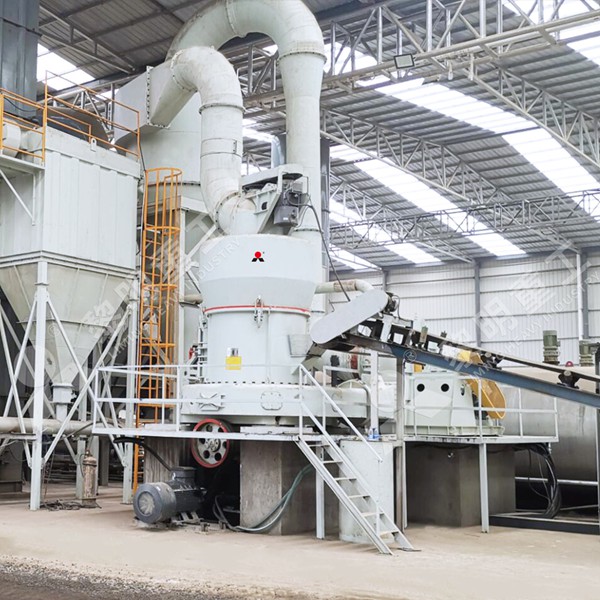
2. MTW European Type Trapezium Mill for High-Throughput
As an upgrade of traditional Raymond mills, the MTW European Type Trapezium Mill offers patented technology for stable performance and energy savings. It handles capacities of 3–55 TPH with input sizes up to 50mm. The mill integrates drying, grinding, and classification in one system. For medical gypsum, it produces particles with uniform shape and low fines content, ideal for plaster bandages. The pulse dust collector complies with environmental standards, while the closed airflow system prevents contamination.
Working Principle: Bulk gypsum is crushed to ≤50mm by a jaw crusher, fed via variable-frequency belt feeder into the mill, ground between rings and rollers, then classified by separator. Oversized particles return for regrinding; fines are collected as product. Air recirculates, reducing energy waste.
3. LM Vertical Roller Mill for Large-Scale Medical Production
For high-volume medical plaster manufacturing, the LM Vertical Roller Mill excels. With capacities from 10 to 400 T/H and input sizes of 30–55mm, it integrates drying, grinding, and powder selection. The mill's automatic control system ensures consistent fineness (adjustable down to 44μm), crucial for batch-to-batch reliability in medical applications. It is particularly suited for non-metallic minerals like gypsum and slag, offering lower power consumption than ball mills.
4. MW Micro Powder Mill for Superfine Medical Grades
When medical plaster demands superfine particles (down to d97 ≤5μm, 325–3250 mesh), the MW Micro Powder Mill is the solution. Absorbing Swedish grinding technology, this medium-speed mill processes gypsum with capacities of 0.5–25 T/H and input size of 10–20mm. The reducer drives dozens of rollers against a raceway ring, achieving ultra-fine grinding. Equipped with pulse precipitators, it meets green manufacturing standards. This mill is ideal for specialty medical formulations requiring enhanced setting speed or radiopacity.
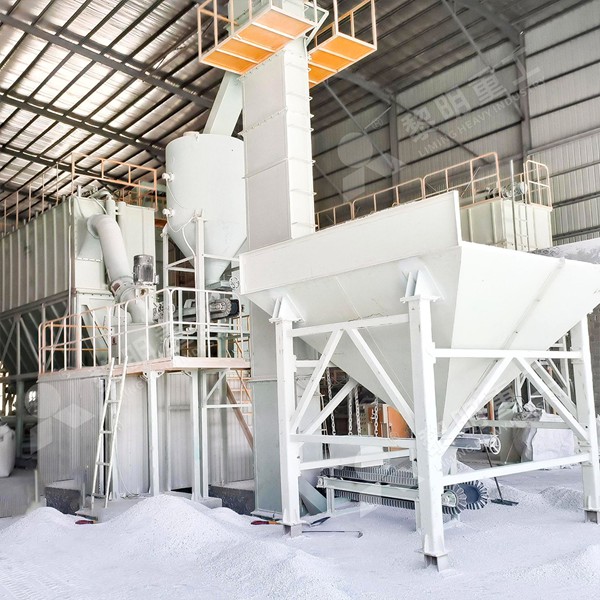
5. Ball Mill for Traditional and Specialty Applications
Ball mills remain relevant for crushing and grinding gypsum where a simple, robust design is preferred. Our ball mill, with capacity 0.65–50 T/H and input size ≤25mm, is a horizontal rotating device using steel balls to impact and grind material. It is widely used in cement and construction materials, but for medical plaster, it can process gypsum to <100μm when combined with classifiers. However, the higher energy consumption and potential contamination risk make it less common for medical grades unless specialized linings are used.
Key Considerations for Gypsum Grinding in Medical Plaster
- Purity Control: Liming mills use ceramic or high-chrome liners to avoid iron contamination, which can discolor medical plaster.
- Moisture Management: Pre-drying gypsum to below 6% humidity prevents clogging and ensures consistent grinding.
- Heat Generation: Vertical and trapezium mills operate at lower temperatures, preserving the gypsum's crystal structure.
- Particle Shape: Roller mills produce more cubic particles compared to ball mills, improving plaster workability.
- Automation: All Liming mills offer PLC control for remote monitoring and fineness adjustment, reducing operator error.
Conclusion
Selecting the right gypsum grinding mill for medical plaster depends on production scale, fineness requirements, and budget. Liming Heavy Industry provides tailored solutions: Raymond mills for standard grades, MTW for high throughput, LM for large-scale operations, and MW for superfine applications. Our 30-year legacy, coupled with modern R&D and precision manufacturing, ensures that every mill delivers consistent, medical-grade gypsum powder. Whether you need 44μm plaster for bandages or 5μm particles for dental applications, our equipment meets the challenge.
Frequently Asked Questions
- Can a Raymond mill produce gypsum powder suitable for medical plaster?
Yes, the Raymond mill can grind gypsum to 44–613μm fineness, which covers standard medical plaster requirements. However, for ultra-fine or high-purity needs, consider the MW Micro Powder Mill. - What is the typical capacity for a gypsum grinding mill in medical applications?
Capacities vary by model: Raymond mills handle 1.2–4.5 T/H, MTW mills 3–55 T/H, and MW mills 0.5–25 T/H. Choose based on your daily production targets. - How does Liming Heavy Industry prevent contamination in medical gypsum grinding?
We offer ceramic-lined grinding chambers and special alloy rollers to minimize iron or heavy metal contamination. Closed-loop airflow and pulse dust collectors further protect purity. - Is the MTW mill energy-efficient for long-term medical plaster production?
Yes, the MTW European Type Trapezium Mill is designed for energy savings, using a variable-frequency feeder and recycled airflow to reduce power consumption by 15–30% compared to traditional mills. - What maintenance is required for a gypsum grinding mill?
Routine checks include roller and ring wear (typically replaced every 6–12 months based on tonnage), lubrication of bearings, and cleaning of dust collectors. Liming provides full maintenance manuals and remote support.


