Published: October 26, 2023
Gypsum is a cornerstone material in the production of soundproof boards, offering excellent acoustic insulation and fire resistance properties. The performance and quality of these boards are directly influenced by the fineness and consistency of the gypsum powder used. A dedicated gypsum grinding mill, designed for high efficiency and precise particle size control, is essential for manufacturers aiming to produce soundproof boards that meet stringent building and acoustic standards. This article explores the critical role of specialized grinding equipment—particularly advanced technologies like vertical roller mills, Raymond mills, and European type trapezium mills—in optimizing gypsum processing for soundproof board production. We examine key parameters such as capacity, fineness, moisture control, and energy efficiency, drawing on decades of industrial expertise to provide a comprehensive guide for plant operators and production managers.
The Importance of Gypsum Particle Size in Soundproof Board Manufacturing
Soundproof boards, often made from gypsum plaster or gypsum-based composites, rely on a dense, uniform matrix to achieve high sound transmission class (STC) ratings. The grinding process determines the surface area and reactivity of the gypsum hemihydrate or anhydrite, which in turn affects board density, strength, and acoustic damping. A consistent particle size distribution, typically in the range of 80 to 200 mesh (180–75 microns) for standard boards, is critical. Finer powders can improve board smoothness but risk compromising the air permeability required for optimal sound absorption, while coarser particles may lead to structural weaknesses. The ideal grinding mill allows the operator to precisely adjust the output fineness, ensuring that the final product meets the exact specifications of the soundproof board formulation.
Key Grinding Mill Technologies for Gypsum Processing
LM Vertical Roller Mill: High Capacity and Integrated Drying
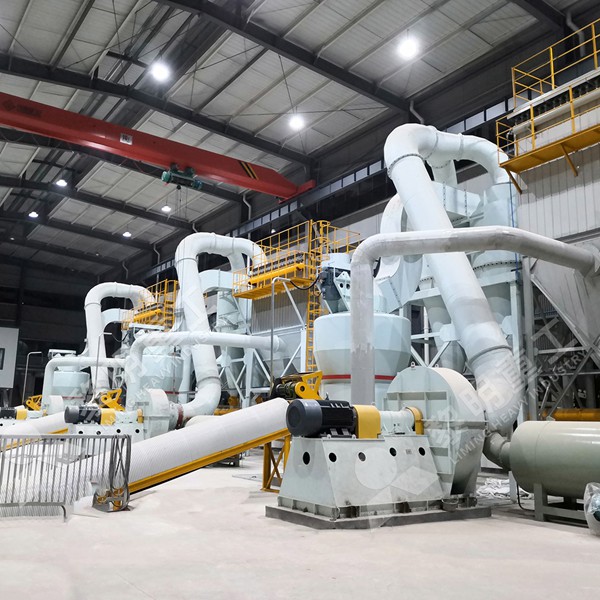
For large-scale soundproof board production lines, the LM Vertical Roller Mill offers significant advantages. With capacities ranging from 10 to 400 tons per hour and an input size of 30 to 55 mm, it is engineered for continuous, high-throughput operation. The LM mill integrates drying, grinding, and powder selection into a single unit, which is particularly beneficial when processing natural gypsum or flue gas desulfurization (FGD) gypsum that contains residual moisture. The automatic electric control system maintains consistent product fineness by adjusting the separator speed and grinding pressure in real time. This results in a uniform gypsum powder that enhances the homogeneity of soundproof boards, reducing defects and waste. The mill's robust construction and wear-resistant components also minimize downtime, a critical factor for meeting tight production schedules in the building materials industry.
Raymond Mill: Established Reliability for Medium-Scale Operations
The Raymond mill remains a trusted workhorse for medium-scale gypsum grinding. Suitable for processing non-flammable, non-explosive materials with a Mohs hardness below 7 and humidity under 6%, it is ideal for gypsum. Its output fineness is adjustable between 613 and 44 microns, covering the common particle size requirements for soundproof boards. For a typical production line with a capacity of 1.2 to 4.5 tons per hour, the Raymond mill provides a cost-effective solution with low capital investment. The grinding mechanism, involving a suspended roller assembly that rotates around a central shaft, delivers a consistent grind with minimal vibration. When equipped with a pulse dust collector, the Raymond mill also meets environmental standards for airborne particulate control, an important consideration for factory compliance.
MTW European Type Trapezium Mill: Upgrade for Precision and Energy Savings
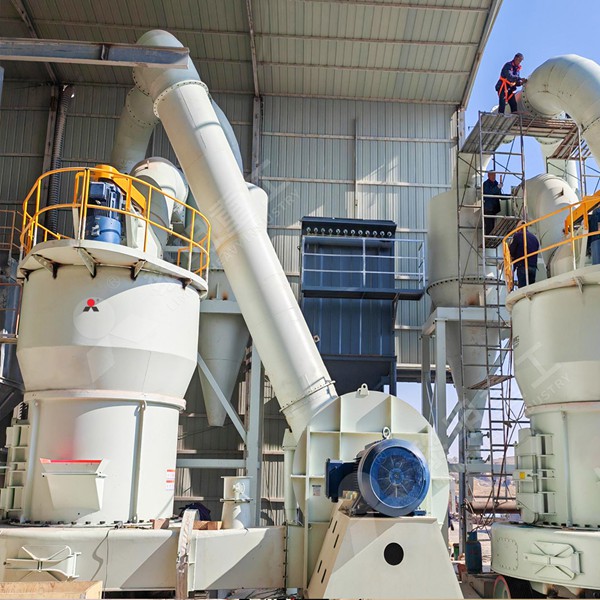
As an evolution of traditional pendulum mills, the MTW European Type Trapezium Mill incorporates patented technologies that improve productivity and energy efficiency while reducing noise and vibration. With capacities from 3 to 55 tons per hour and input sizes of 30 to 50 mm, it is suitable for medium to large-scale gypsum processing. The trapezium grinding ring and roller design create a larger grinding area, which enhances the grinding efficiency and allows for finer particle size control. The sealed gearbox and centralized lubrication system reduce maintenance intervals, while the variable-frequency drive on the separator ensures precise fineness adjustment. For manufacturers seeking to upgrade existing equipment without a complete overhaul, the MTW mill offers a modular path to higher throughput and improved product quality, directly benefiting the acoustic performance of soundproof boards.
Process Optimization for Soundproof Board Gypsum
To achieve the best results, the grinding system must be integrated with upstream and downstream processes. Pre-crushing of gypsum lumps using a jaw crusher or hammer crusher ensures a consistent feed size to the mill. A vibrating feeder with variable frequency control allows for precise material metering, preventing mill overload or starvation. The air flow within the closed-loop system must be carefully balanced: sufficient velocity to carry the ground particles to the separator, but not so high that it causes excessive recirculation or wear. For gypsum with high surface moisture, an integrated hot air generator can be used with vertical roller mills to dry the material in situ, maintaining a moisture content below 1% before it enters the board-forming stage.
Environmental and Economic Considerations
Modern gypsum grinding mills are designed with sustainability in mind. Pulse dust collectors capture fine particles, preventing emissions and allowing for material recovery. Closed-circuit air systems reduce energy consumption by recycling heated air. The ball mill, while versatile for a range of particle sizes, typically has higher energy consumption per ton compared to vertical roller mills. For dedicated gypsum grinding for soundproof boards, the selection of mill type should factor in electricity costs, production volume, and required product fineness. Additionally, the use of FGD gypsum—a byproduct of coal-fired power plants—as feedstock reduces waste and promotes circular economy principles, but requires careful handling of moisture and chloride content.
Conclusion
Selecting the right gypsum grinding mill for soundproof board production involves balancing capacity, fineness, energy efficiency, and operating costs. From the high-capacity LM Vertical Roller Mill to the versatile Raymond Mill and the precision-engineered MTW Trapezium Mill, each technology offers distinct advantages. Liming Heavy Industry, with over three decades of expertise in manufacturing grinding equipment, provides turnkey solutions that integrate robust machinery, advanced control systems, and comprehensive after-sales support. By understanding the specific requirements of soundproof board manufacturing, plant operators can achieve consistent product quality, reduce operational expenses, and meet evolving acoustic standards.
Frequently Asked Questions (FAQ)
- What is the ideal fineness of gypsum powder for soundproof board production?
Typical fineness ranges from 100 to 200 mesh (about 150 to 75 microns) for standard boards, but higher-end acoustic boards may require finer powders down to 325 mesh (44 microns). The specific target depends on the board density and formulation. - Can the same grinding mill handle both natural gypsum and FGD gypsum?
Yes, most modern mills like the LM Vertical Roller Mill and MTW Trapezium Mill are designed to process both types. However, FGD gypsum often has higher moisture (10–20%) and requires an integrated drying system within the mill. - How does moisture content in gypsum affect the grinding process?
High moisture can cause material buildup on grinding rollers and rings, leading to reduced capacity and increased energy consumption. Proper drying, either through pre-treatment or in-mill hot air, is essential for maintaining throughput and product quality. - What maintenance is required for a gypsum grinding mill used for soundproof boards?
Routine maintenance includes checking wear parts (rollers, rings, liners), lubricating bearings and gearboxes, inspecting seals for dust leakage, and cleaning the separator and dust collector. Regular preventive maintenance extends equipment life by 2–3 times. - Is it necessary to use a classifier or separator after the mill?
Yes, a classifier or separator is critical for achieving precise particle size distribution. Integrated separators in vertical roller mills and the dynamic classifier in MTW mills ensure that only particles meeting the size specification proceed to the product collector.


