Published on: October 26, 2023
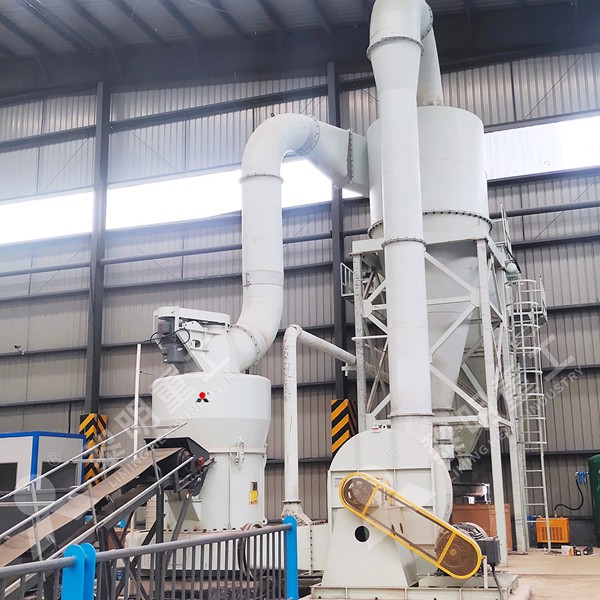
Gypsum is a critical raw material in the production of fireproof building materials, such as gypsum boards, plasters, and fire-resistant coatings. Selecting the right grinding mill is essential to achieve the fine particle size, uniform distribution, and consistent quality required for fireproof applications. Liming Heavy Industry, a leading manufacturer in the crushing and grinding equipment sector, offers a range of advanced mills specifically designed for gypsum processing. With over 30 years of expertise, Liming provides solutions that integrate drying, grinding, and classification in a single system, ensuring high efficiency, low energy consumption, and strict compliance with environmental standards. From Raymond mills for moderate fineness to micro powder mills for superfine powders, Liming’s product line addresses various production scales and end-use specifications. This article explores the optimal gypsum grinding mills for fireproof material, their working principles, and key selection factors, alongside practical FAQs.
Why Gypsum Grinding Matters for Fireproof Materials
Gypsum’s fire-resistant properties stem from its chemically bound water, which releases as steam when exposed to heat, slowing fire spread. In fireproof boards or plasters, fine gypsum powder ensures better binding, smoother texture, and enhanced thermal performance. Grinding must achieve a specific fineness—typically 80-325 mesh for standard boards or finer for specialty coatings—without overheating the material, which could dehydrate the gypsum. Mills like Liming’s Raymond Mill, MTW European Trapezium Mill, and MW Micro Powder Mill are engineered to handle gypsum’s low hardness (Mohs < 2) and moderate moisture content, offering adjustable fineness and built-in drying capabilities. This precision grinding is foundational for producing fireproof materials that meet building safety codes.
Liming’s Gypsum Grinding Mill Portfolio
Liming Heavy Industry offers four primary mill types suitable for gypsum in fireproof applications, each with distinct features and optimal use cases:
1. Raymond Mill – Classic Reliability for Standard Gypsum Powder
The Raymond Mill is a time-tested solution for gypsum grinding, with a capacity of 1.2-4.5 T/H and input size up to 25mm. It produces fineness between 613μm and 44μm (30-325 mesh), ideal for fireproof plaster and board production. The mill uses a roller-grinding ring mechanism, where gypsum is crushed and ground between rotating rollers and a stationary ring. Its closed-circuit system with a classifier ensures uniform particle distribution, while the pulse dust collector meets environmental regulations. For fireproof material manufacturers, the Raymond mill offers simplicity, low maintenance, and proven reliability in continuous operations.
2. MTW European Type Trapezium Mill – Upgraded Efficiency for Large-Scale Production
The MTW European Type Trapezium Mill is an advanced upgrade of traditional Raymond mills. With a capacity of 3-55 TPH and input size up to 50mm, it is designed for high-volume gypsum processing in fireproof board plants. Its trapezoidal grinding rollers and rings reduce material slippage, increasing grinding efficiency by 20-30%. The integrated automatic control system optimizes feeding and classification, delivering fineness from 80 to 400 mesh. The mill’s working principle involves a main shaft driving the grinding ring and rollers; materials are fed via a variable-frequency belt feeder, ground, and then classified by air flow. Oversized particles return for re-grinding, while fines are collected. This mill is particularly suited for continuous, large-scale operations where consistency and energy savings are critical.
3. MW Micro Powder Mill – Superfine Grinding for High-Performance Fireproof Coatings
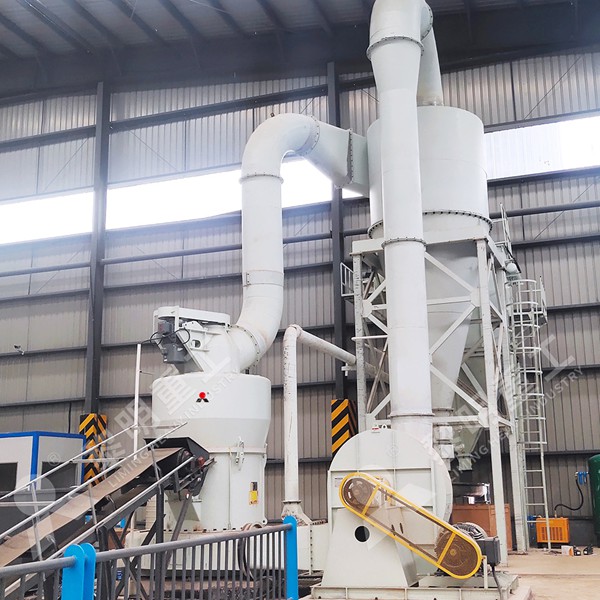
For fireproof coatings and specialty plasters requiring ultra-fine powders, the MW Micro Powder Mill excels. It processes gypsum at 0.5-25 T/H with input sizes up to 20mm, achieving fineness from 325 to 3250 mesh (d97 ≤ 5μm). This mill employs a multi-roller grinding system where dozens of rollers rotate against a raceway ring, powered by a main shaft and reducer. Gypsum moves through a hammer crusher, elevator, hopper, and vibrating feeder to the central part of an upper turnplate, then falls by centrifugal force into the grinding zone. The high-speed rotation creates intense shear and impact forces, producing ultra-fine particles. The system includes an efficient pulse precipitator for dust control, making it ideal for eco-conscious production. This mill is the top choice for manufacturers seeking premium gypsum powders for high-end fireproof materials.
4. Ball Mill – Traditional Versatility for Large-Volume Grinding
The Ball Mill remains a robust option for gypsum grinding in fireproof material production, with a capacity of 0.65-50 T/H and input size ≤25mm. It works by rotating a horizontal barrel filled with steel balls of varying sizes. As the barrel rotates, centrifugal force lifts the balls, which then fall and impact the gypsum, reducing it to powder. A ladder or ripple liner enhances grinding efficiency. For gypsum, the ball mill can achieve fineness around 200 mesh, suitable for basic fireproof boards. However, it consumes more energy than roller mills and requires more maintenance. Liming’s ball mill is often used in combination with classifiers for finer control, but for dedicated gypsum fireproof applications, roller-type mills (Raymond, MTW, MW) are typically preferred due to better energy efficiency and product uniformity.
Key Considerations for Selecting a Gypsum Grinding Mill
Several factors determine the optimal mill for gypsum in fireproof materials:
- Capacity Requirements: Small plants (1-5 T/H) suit Raymond or small Ball Mills; medium plants (5-30 T/H) benefit from MTW mills; large facilities (30+ T/H) may use multiple MTW units or large Ball Mills.
- Fineness Needs: Standard fireproof boards require 100-200 mesh (Raymond or MTW); high-performance coatings need 325-800 mesh (MW Micro Powder Mill).
- Moisture Handling: Gypsum often contains residual moisture (5-10%). Mills with integrated drying (like MTW and MW, which use hot air flow) are advantageous.
- Energy Efficiency: MTW and MW mills consume 20-30% less energy than Ball Mills due to advanced roller designs, reducing operational costs.
- Environmental Compliance: All Liming mills feature pulse dust collectors, ensuring emissions meet global standards for fireproof material production.
Working Principle in Focus: Gypsum Grinding with Liming Mills
Liming’s grinding systems follow a standardized workflow. First, a jaw crusher reduces large gypsum lumps (up to 100mm) to the mill’s input size (10-55mm). The crushed material is stored in a hopper and fed evenly into the mill via a vibrating feeder or variable-frequency belt feeder. Inside the mill, grinding occurs between rollers and a ring (Raymond, MTW, MW) or between balls and a liner (Ball Mill). Air flow from a blower carries ground particles upward through a separator or classifier. Particles meeting fineness targets pass through to a cyclone or dust collector for collection as finished product, while coarse particles return for re-grinding. This closed-loop system ensures high efficiency, with minimal material loss. For fireproof gypsum, the process must avoid overheating (above 150°C) to prevent dehydration, which Liming mills manage through controlled air temperature and volume.
Conclusion
Choosing the right gypsum grinding mill for fireproof material production is a strategic decision that impacts product quality, cost, and compliance. Liming Heavy Industry’s Raymond, MTW, MW, and Ball mills offer tailored solutions for every scale and specification. With decades of engineering innovation and a commitment to scientific research, Liming ensures that each mill delivers precise fineness, high throughput, and environmental sustainability. Whether producing standard fireproof boards or advanced coatings, Liming’s equipment helps manufacturers achieve consistent, fire-safe results.
Frequently Asked Questions (FAQ)
Q1: What fineness of gypsum powder is required for fireproof board production?
A: For standard fireproof gypsum boards, fineness of 80-150 mesh (180-100 μm) is typical. For high-performance coatings or plasters, finer powders up to 325 mesh (44 μm) or beyond are required, which mills like MTW or MW Micro Powder can achieve.
Q2: Can Liming’s grinding mills handle gypsum with high moisture content?
A: Yes. MTW and MW Mills incorporate hot air flow during grinding, allowing them to dry gypsum with moisture up to 10-15% simultaneously. Raymond and Ball mills may require pre-drying or additional equipment for damp feed.
Q3: How does the MW Micro Powder Mill differ from the Raymond Mill for gypsum?
A: The MW mill uses high-speed multi-roller grinding to achieve ultra-fine powders (325-3250 mesh), while the Raymond mill operates at lower speeds for standard fineness (30-325 mesh). MW is preferred for premium fireproof applications; Raymond is more cost-effective for bulk production.
Q4: What maintenance is needed for a gypsum grinding mill in fireproof material production?
A: Regular checks include lubricating roller bearings, inspecting grinding rings and rollers for wear, cleaning the classifier and dust collector filters, and monitoring air flow and temperature. Liming mills are designed for easy access, with wear parts typically lasting 6-12 months under continuous operation.
Q5: Are Liming mills compliant with environmental regulations for fireproof material manufacturing?
A: Absolutely. All Liming grinding mills are equipped with pulse dust collectors and operate in closed-loop systems, ensuring particulate emissions are controlled to meet international standards like EU and US EPA requirements for fireproof material plants.


