This article provides a comprehensive overview of gypsum grinding mills specifically engineered for the production of rubber additives. Drawing from decades of industrial expertise at Liming Heavy Industry, we delve into the critical role of finely ground gypsum in enhancing the mechanical properties, processing characteristics, and sustainability of rubber compounds. Our portfolio of grinding solutions—including the LM Vertical Roller Mill, MTW European Type Trapezium Mill, Raymond Mill, MW Micro Powder Mill, and Ball Mill—offers tailored approaches to achieve the precise particle size distribution and purity required for high-performance rubber additives. Key aspects such as capacity ranges, input size tolerances, working principles, and environmental compliance are examined, supported by detailed equipment specifications. The article concludes with practical insights into selecting the optimal mill configuration for your specific additive needs, along with a FAQ section addressing common technical queries.
Gypsum, a naturally occurring calcium sulfate dihydrate (CaSO₄·2H₂O), has emerged as a versatile and cost-effective filler in the rubber industry. When processed to a fine, uniform powder, it serves as a functional additive that improves dimensional stability, reduces shrinkage, enhances flame retardancy, and optimizes curing characteristics in various rubber products, from automotive seals to industrial belting. However, the efficacy of gypsum as a rubber additive is directly proportional to the quality of its grinding. Inconsistent particle size, moisture content, or contamination can compromise compound homogeneity and final product performance. Therefore, selecting the right grinding mill is not merely a processing decision—it is a strategic one that affects product quality, operational efficiency, and long-term profitability.
At Liming Heavy Industry, we have been at the forefront of crushing and grinding technology since 1987. Our headquarters in the Zhengzhou Hi-Tech Industry Development Zone, alongside our expansive manufacturing workshop in Shangjie Industry Park, house state-of-the-art production facilities spanning over 147,000 square meters. With a focus on precision manufacturing and continuous innovation, we have developed a complete line of grinding mills that address the specific challenges of gypsum processing for rubber additive applications. Below, we explore the most suitable solutions from our extensive product range.
Understanding the Grinding Requirements for Gypsum Additives
Gypsum intended for rubber compounding must meet stringent specifications. Typically, the target fineness ranges from 200 mesh (74 μm) to 800 mesh (15 μm), depending on the intended rubber formulation and application. Moisture content must be carefully controlled—ideally below 1%—to prevent agglomeration and ensure consistent dispersion. Additionally, the grinding process must minimize iron contamination, which can cause discoloration or catalyze unwanted degradation reactions. Our mills are engineered with wear-resistant materials and advanced separation technologies to meet these demands.
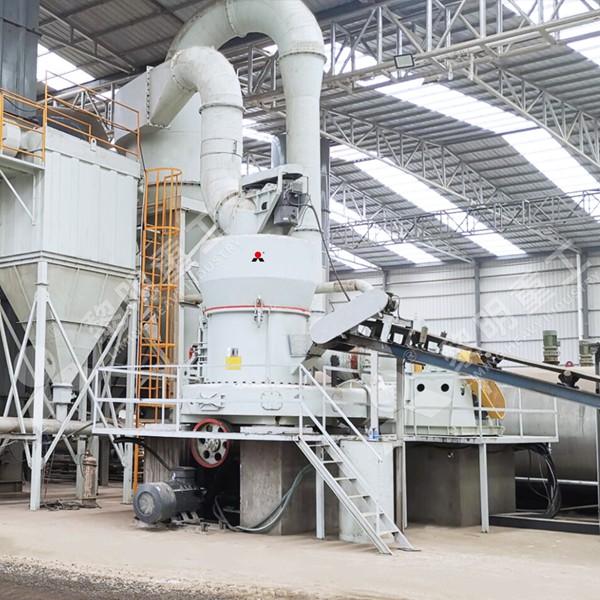
LM Vertical Roller Mill: High-Capacity and Multi-Functional
For large-scale gypsum additive production, the LM Vertical Roller Mill is an outstanding choice. With a capacity of 10–400 T/H and input size tolerance up to 55 mm, this mill integrates drying, grinding, powder selection, and conveying into a single compact system. The vertical design incorporates a unique milling device that ensures efficient grinding of gypsum to the required fineness, while the automatic electric control system maintains stable operation. The integrated drying capability is particularly advantageous when processing gypsum with residual moisture, as hot gases can be introduced directly into the mill to achieve optimal moisture levels for rubber compounding. Applications in non-metallic mineral processing, coal grinding, and slag preparation have proven the reliability of this mill in continuous industrial environments.
MTW European Type Trapezium Mill: Precision and Efficiency
The MTW European Type Trapezium Mill represents the next evolution of traditional Raymond and pendulum mills. With a capacity of 3–55 TPH and input size of 30–50 mm, it is ideal for medium to large-scale gypsum additive operations that prioritize particle size consistency and energy efficiency. The patented trapezium-shaped grinding rollers and ring increase grinding efficiency by guiding material to the grinding zone more effectively. The mill operates on a closed-loop system: air flow carries ground particles to a separator, where oversized material is returned for regrinding, while fine particles are collected as finished product. The integrated pulse dust collector meets stringent environmental standards, making this mill suitable for modern, green manufacturing facilities. For gypsum rubber additives, the MTW mill delivers a uniform particle size distribution critical for achieving consistent compound rheology and mechanical strength.
Raymond Mill: Proven Reliability for Moderate Outputs
For smaller-scale production or applications where simplicity and cost-effectiveness are paramount, the Raymond Mill remains a staple. With a capacity of 1.2–4.5 T/H and fineness ranging from 613 μm to 44 μm (30–325 mesh), this mill is adept at processing gypsum with Mohs hardness below 7 and humidity under 6%. Its robust construction and straightforward operation make it a favored choice for gypsum crushing in rubber additive manufacturing lines. The Raymond mill's ability to produce a moderately fine powder with consistent particle shape is particularly valuable when gypsum is used as a processing aid rather than a primary reinforcing filler. It is also an excellent option for pilot plants or smaller compounding facilities seeking to incorporate gypsum additives without significant capital outlay.
MW Micro Powder Mill: Ultra-Fine Grinding for Specialty Additives
When the rubber compound demands exceptionally fine gypsum—down to 5 μm (d97)—the MW Micro Powder Mill is the go-to solution. With a capacity of 0.5–25 T/H and input size of 10–20 mm, this mill incorporates Swedish-influenced micro-grinding technology to produce powders ranging from 325 mesh to 3250 mesh. The working principle involves a main shaft driving rollers to rotate against a raceway ring, with material fed centrally and distributed by centrifugal force. The pulse dust collector ensures environmental compliance, while the adjustable fineness allows precise tuning for different rubber formulations. This mill is particularly valuable for producing high-value gypsum additives used in specialty rubber applications, such as medical-grade components or high-temperature seals, where ultra-fine particle dispersion directly impacts performance.
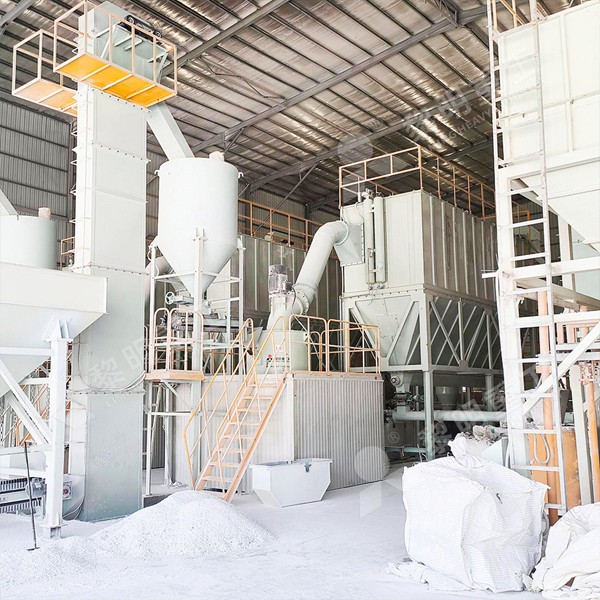
Ball Mill: Versatile and Durable for Diverse Formulations
The Ball Mill remains a versatile workhorse in the grinding industry, with a capacity of 0.65–50 T/H and input size up to 25 mm. Its horizontal rotating drum, lined with ladder or ripple liners and charged with steel balls, delivers a grinding action based on impact and attrition. For gypsum additive production, the ball mill excels when multiple grind sizes are needed from the same feedstock. By adjusting rotation speed, ball charge, and discharge configuration, operators can produce powders suitable for different rubber compounds—ranging from coarse filler grades for industrial matting to finer grades for molded goods. The ball mill's robust construction makes it ideal for continuous operation in demanding 24/7 production environments.
Selecting the Right Mill: A Strategic Decision
Choosing among these mills depends on several factors: desired production capacity, required fineness, moisture content of the raw gypsum, available floor space, and energy consumption targets. For high-volume operations prioritizing automation and integration, the LM Vertical Roller Mill offers unparalleled throughput. For those needing intermediate capacity with excellent particle size control, the MTW European Type Trapezium Mill represents a balanced solution. Smaller operations or those experimenting with gypsum formulations may start with the Raymond Mill or Ball Mill, while companies targeting specialty ultra-fine additives should evaluate the MW Micro Powder Mill.
Liming Heavy Industry offers comprehensive support, from initial consultation and mill selection to installation, commissioning, and after-sales service. With over three decades of experience in the crushing and grinding sector, our technical team can assist in optimizing your gypsum grinding process for rubber additive applications, ensuring that your final product meets the rigorous demands of the rubber industry.
Conclusion
Gypsum grinding mills for rubber additives represent a critical link in the value chain of rubber manufacturing. By selecting a mill that delivers the precise particle size, purity, and moisture control required, compounders can achieve superior product performance, process efficiency, and cost savings. Liming Heavy Industry's diversified mill range—from the high-capacity LM Vertical Roller Mill to the ultra-fine MW Micro Powder Mill—provides tailored solutions for every scale and specification. As the rubber industry continues to seek sustainable and functional filler alternatives, gypsum will play an increasingly important role, and the right grinding technology will be key to unlocking its full potential.
Frequently Asked Questions (FAQ)
- What particle size is ideal for gypsum used as a rubber additive? Typical requirements range from 200 mesh (74 μm) for general-purpose fillers to 800 mesh (15 μm) or finer for specialty applications. The MW Micro Powder Mill can achieve up to 5 μm (d97) for ultra-fine additives.
- Can these mills handle gypsum with high moisture content? Yes. For example, the LM Vertical Roller Mill integrates a drying function that can process materials with moisture levels up to 15–20% by introducing hot gases. The Raymond Mill suits materials with humidity below 6%.
- How do I prevent iron contamination during grinding? Liming mills are equipped with wear-resistant liners and grinding elements to minimize metal pickup. Additionally, magnetic separators can be installed downstream for critical applications.
- What is the typical energy consumption per ton of gypsum processed? Energy consumption varies by mill type and fineness. For the MTW European Type Trapezium Mill, it typically ranges from 20–40 kWh per ton for 200-mesh product. Operational optimization can reduce costs.
- Do you provide on-site installation and commissioning services? Absolutely. Liming Heavy Industry offers full installation, commissioning, and training services globally. Our engineering team ensures that your mill is configured for optimal performance in your specific rubber additive production line.


