Published: October 26, 2023
Gypsum, chemically known as calcium sulfate dihydrate, has become an indispensable mineral filler in the paper industry due to its unique properties, including high brightness, excellent opacity, good printability, and cost-effectiveness. When processed into a fine powder, gypsum serves as a partial or complete substitute for traditional fillers like calcium carbonate and talc in paper manufacturing. However, achieving the optimal particle size distribution, controlled whiteness, and consistent purity required for high-quality paper filler demands sophisticated milling technology. Liming Heavy Industry Co., Ltd., with its 30+ years of expertise in manufacturing crushing and grinding equipment, offers a comprehensive range of gypsum grinding mills specifically engineered to meet the stringent demands of the paper filler sector. Our solutions—spanning Raymond mills, European type trapezium mills, micro powder mills, vertical roller mills, and ball mills—provide paper manufacturers with reliable, high-capacity, and energy-efficient systems to produce gypsum powder with a fineness ranging from 325 mesh to over 3000 mesh, ensuring the perfect balance between paper strength, brightness, and production economy.
The Role of Gypsum in Paper Filler Applications
In the paper industry, fillers are added to the pulp to improve optical properties, enhance smoothness, and reduce production costs by replacing more expensive fiber. Gypsum, particularly in its finely ground form, offers several advantages: it naturally provides high brightness and whiteness, improves ink receptivity, and acts as a bulking agent, reducing fiber usage without sacrificing sheet thickness. Key quality parameters for gypsum used as paper filler include a particle size typically below 325 mesh (44 microns) with a narrow distribution, minimal grit content, and a moisture level below 1%. The grinding process must also avoid thermal degradation of the gypsum into calcium sulfate hemihydrate or anhydrite, which could negatively impact paper properties. Therefore, selecting the correct grinding mill type and configuration is critical.
Liming Heavy Industry: A Foundation of Excellence
Since its founding in 1987, Liming Heavy Industry Co., Ltd. has evolved into a modern joint-stock enterprise integrating research, manufacturing, and sales. Our headquarters, located in the HI-TECH Industry Development Zone of Zhengzhou, covers 80,000 m², while an additional workshop in Shangjie Industry Park spans 67,000 m². With over three decades of experience, we have adhered to a philosophy of precision manufacturing and continuous innovation. Our mature scientific research team focuses on enhancing product competitiveness by tackling key technological challenges and staying at the forefront of industry trends. This commitment ensures that every gypsum grinding mill we deliver benefits from cutting-edge engineering, robust construction, and strict quality control, making Liming a trusted name in both domestic and overseas market.
Optimal Gypsum Mill Solutions for Paper Filler Production
Depending on the desired production capacity, final fineness, and process flow, Liming Heavy Industry offers several proven mill configurations. Below, we detail the most suitable options for gypsum filler applications.
1. MTW European Type Trapezium Mill
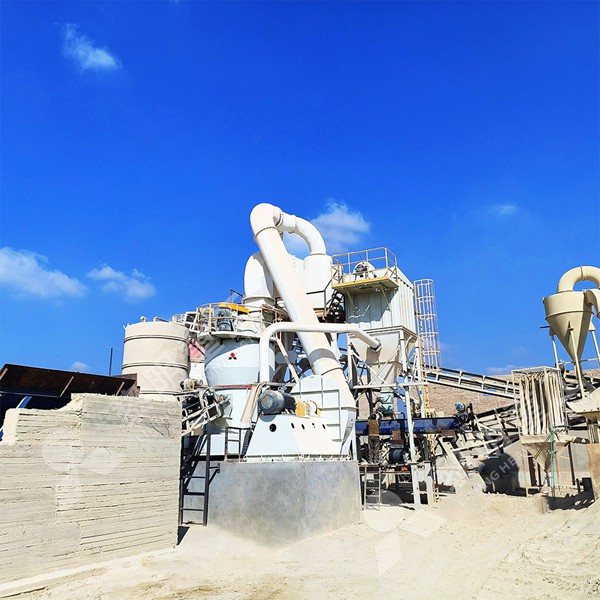
The MTW Series is widely regarded as the gold standard for gypsum grinding in the paper industry when capacities range from 3 to 55 tons per hour. As the upgrade of traditional Raymond and pendulum mills, it features patented technologies that ensure stable performance and high productivity. For gypsum filler, the MTW mill consistently produces a product fineness between 100 and 325 mesh, with excellent uniformity. Its integrated system includes a jaw crusher for primary size reduction to 30-50mm, a vibrating feeder, the main grinding unit, a separator, dust collector, and an air blower. The closed-circuit system minimizes material waste while maintaining a clean, environmentally compliant operation. The pulse dust collector ensures emissions meet strict national standards, which is increasingly important for modern paper mills.
Working Principle for Gypsum Filler:
Large gypsum lumps are first crushed to the required size by a jaw crusher. The material is then evenly and continuously fed into the mill via a variable-frequency belt feeder. Inside the grinding chamber, the material is ground between the ring and rollers. The ground particles are carried upward by an air stream. Particles that do not pass the separator return for regrinding, while finished fine powder is collected. The air flow is recirculated within a closed loop, optimizing energy consumption.
2. Raymond Mill
For smaller-scale operations or applications where a product fineness of 613μm to 44μm (30-325 mesh) is acceptable, the traditional Raymond mill remains a highly reliable and cost-effective choice. Liming's Raymond mill can process gypsum with a Mohs hardness under 7 and humidity below 6%, making it perfectly suited for gypsum filler. It offers a capacity of 1.2 to 4.5 tons per hour with an input size of 15-25mm. The Raymond mill is particularly favored by smaller paper mills or those requiring a simple, easy-to-operate system for producing standard 325-mesh gypsum filler. Its robust construction ensures longevity with minimal maintenance requirements.
3. LM Vertical Roller Mill
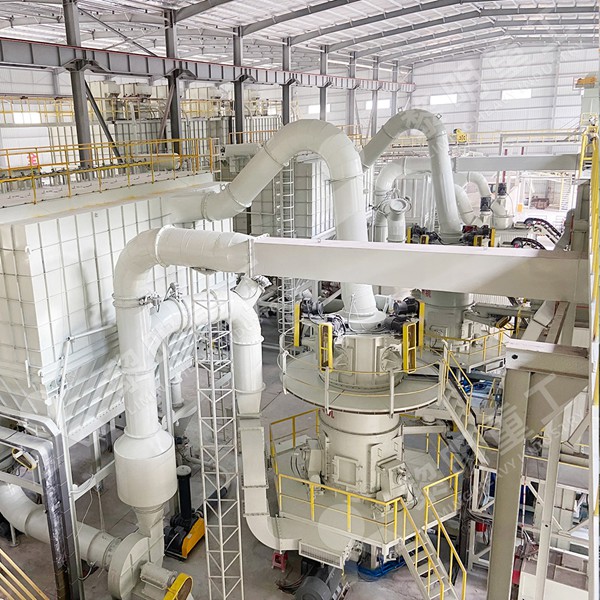
When very high throughput (10-400 T/H) is required for large-scale integrated paper production facilities, the LM Vertical Roller Mill is the optimal solution. The LM mill integrates drying, grinding, powder selection, and conveying into a single, compact unit. For gypsum filler applications, it provides exceptional grinding efficiency and precise control over product fineness. The hydraulic system allows for easy adjustment of the grinding pressure, ensuring consistent powder quality even with variations in feed material. The LM mill is ideal for non-metallic minerals like gypsum, offering a low specific energy consumption compared to ball mills.
4. MW Micro Powder Mill
For specialty paper grades requiring ultra-fine gypsum filler with a particle size up to 3250 mesh (d97 ≤ 5μm), the MW Micro Powder Mill is the premier choice. Based on advanced Swedish grinding technology, this mill excels at superfine processing. It is equipped with a pulse precipitator for a greener production environment. The capacity ranges from 0.5 to 25 tons per hour, with an input size of 10-20mm. The MW mill features dozens of rollers rotating against a raceway ring. The high-speed rotation generates intense centrifugal force, enabling precise micronization of gypsum. This product is especially valuable in high-end coated paper and specialty board applications where surface smoothness and gloss are critical.
5. Ball Mill
Although often seen as traditional, Liming's Ball Mill remains a key player in certain gypsum filler applications, particularly where large quantities of uniform product are needed, or where the plant layout favors a horizontal grinding system. The ball mill can handle an input size of up to 25mm and produce material suitable for filler with capacities ranging from 0.65 to 50 T/H. It is widely used in beneficiation and construction material industries as well. For paper filler, the ball mill is often used in series with a classifier to achieve the required fineness, offering a robust and proven solution.
Key Considerations for Selecting a Gypsum Grinding Mill for Paper Filler
- Fineness Requirement: Standard paper filler requires 325 mesh (44 microns). Ultra-fine papers may need finer grades. Match the mill (Raymond, MTW, MW) to your specific mesh target.
- Capacity: Assess your hourly or daily gypsum filler demand. LM Vertical Mill suits high capacity; MTW suits medium capacity; Raymond suits low capacity.
- Moisture Content: Gypsum contains crystalline water. The mill's drying capacity (especially in LM and MTW) must be adequate to keep final moisture below 1%.
- Environmental Compliance: All Liming mills can be equipped with advanced pulse dust collectors to meet stringent environmental regulations.
- Energy Efficiency: Vertical roller mills and MTW trapezium mills offer the lowest operating costs per ton of finished product.
Conclusion
Liming Heavy Industry Co., Ltd. provides a complete spectrum of gypsum grinding solutions tailored for the paper filler industry. From the robust Raymond mill to the high-capacity LM vertical roller mill and the ultra-fine MW micro powder mill, our equipment is designed to maximize production efficiency while ensuring the highest product quality. With decades of engineering expertise, a focus on scientific R&D, and a global service network, Liming is your reliable partner for optimizing your gypsum filler production line.
Frequently Asked Questions (FAQ)
Q1: What is the ideal fineness of ground gypsum for use as paper filler?
A1: For most standard paper filler applications, a particle size of 325 mesh (44 microns) or finer is considered ideal. This fineness provides optimal brightness, opacity, and smoothness without negatively impacting paper strength. For specialty or coated papers, fineness up to 2500 mesh may be required.
Q2: Can gypsum be ground without altering its crystal structure during the milling process?
A2: Yes, all Liming grinding mills are designed to operate at controlled temperatures. By avoiding excessive heat generation, we prevent the calcination of gypsum (conversion to hemihydrate) during grinding. Proper mill selection and operation ensure the final product retains its dihydrate structure, which is essential for paper filler performance.
Q3: Which Liming mill is most energy-efficient for gypsum filler production at 10 tons per hour?
A3: For a capacity of 10 tons per hour, both the MTW European Type Trapezium Mill and the LM Vertical Roller Mill are excellent options. The LM Vertical Mill generally offers the lowest energy consumption due to its integrated grinding and drying system and efficient material transport, making it highly cost-effective for continuous operation.
Q4: How does the presence of impurities in gypsum feedstock affect the grinding mill performance?
A4: Impurities such as clay, silica, or anhydrite can increase abrasion on wear parts (rollers, rings, liners) and may affect the brightness of the final filler. It is recommended to pre-screen or beneficiate the gypsum feed to remove large impurities. Liming mills are built with durable materials to handle typical gypsum contaminants, but regular inspection of wear components is advised.
Q5: What is the typical lifespan of wear parts when grinding gypsum in a Raymond or MTW mill?
A5: When grinding gypsum, which is a relatively soft material (Mohs 2), the lifespan of wear parts such as grinding rollers and rings can be very long, typically ranging from 6 months to over 2 years of continuous operation, depending on the feed purity and operational parameters. Liming uses high-chrome steel alloys to maximize wear life, reducing downtime and maintenance costs.


