Published: October 26, 2023
Gypsum, a naturally abundant sulfate mineral, has gained significant traction as a functional filler and thickener in the paint and coating industry. Its ability to enhance viscosity, improve texture, and provide matting effects makes it an indispensable component in water-based and solvent-based formulations. However, the effectiveness of gypsum as a paint thickener is directly proportional to its fineness, particle size distribution, and purity. Achieving the ideal micrometric profile—typically between 325 mesh and 1250 mesh—requires specialized grinding equipment that can deliver consistent output while maintaining energy efficiency and operational stability. Liming Heavy Industry, with over three decades of expertise in crushing and grinding technology, offers a comprehensive range of gypsum grinding mills engineered to meet the stringent demands of the paint thickener market. From the high-capacity LM Vertical Roller Mill for large-scale production to the precision-oriented MW Micro Powder Mill for superfine applications, our solutions integrate advanced automation, dust control, and energy-saving features. This article provides a technical deep-dive into the selection, working principles, and operational best practices for gypsum grinding mills tailored for paint thickener manufacturing, supported by real-world application insights from Liming's extensive product portfolio.
Why Gypsum Grinding Matters for Paint Thickener
In paint formulations, thickeners are used to control rheology, prevent sedimentation, and improve brushability. Gypsum, when ground to a fine powder, acts as a cost-effective rheological modifier. The key quality parameters for gypsum used as a paint thickener include:
- Fineness: Typically required to pass 325 mesh (44 μm) for standard thickeners or up to 1250 mesh (10 μm) for high-performance matte paints.
- Purity: Calcium sulfate dihydrate content above 90% is recommended to avoid impurities that could react with paint binders.
- Moisture Content: Should be below 6% to prevent clumping and ensure smooth dispersion.
These parameters can only be consistently achieved through dedicated grinding equipment that combines effective crushing, precision classification, and dust-free operation. Liming Heavy Industry's mills are designed to process gypsum with hardness up to Mohs 3.5 and moisture content as high as 10% (pre-dried), delivering a finished product that meets the most stringent paint manufacturer specifications.
Core Grinding Technologies for Gypsum Thickener Production
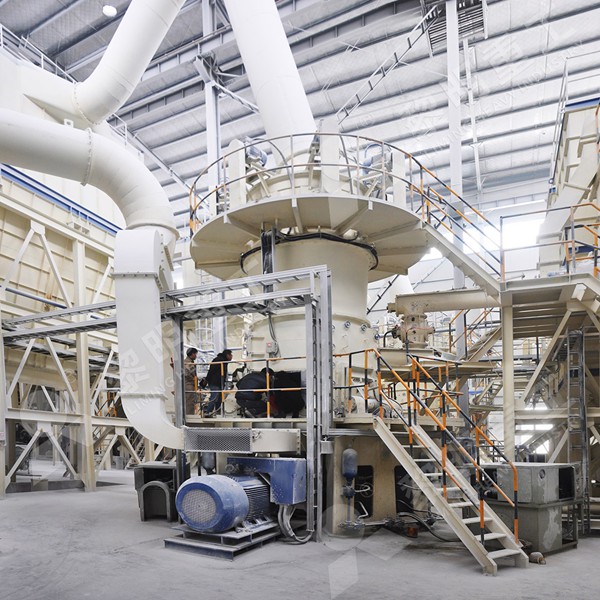
1. LM Vertical Roller Mill: Large-Scale, High-Efficiency Gypsum Grinding
For paint thickener production lines requiring throughputs of 10 to 400 tons per hour, the LM Vertical Roller Mill is the flagship solution. Its integrated drying, grinding, and classifying system simplifies the process flow, reducing capital investment and operational costs. Key features include:
- Integrated Drying: Can handle gypsum with high moisture content (up to 15%) by utilizing hot air from the kiln or auxiliary heat source.
- Automatic Control: The electric control system adjusts mill parameters (speed, pressure, classifier speed) in real time to maintain consistent product fineness.
- Low Energy Consumption: Compared to ball mills, the LM mill reduces power consumption by 30-50% for the same output fineness.
In a typical gypsum thickener plant, the LM mill grinds 30 mm feed gypsum to a 325 mesh powder at a rate of 50 TPH, with a specific energy consumption of just 18 kWh per ton.
2. MTW European Type Trapezium Mill: Versatile Mid-Range Grinding
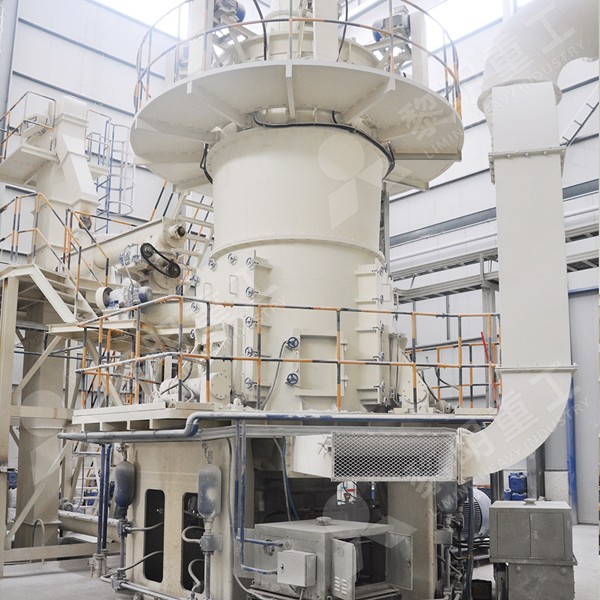
When production needs fall between 3 and 55 TPH, the MTW European Type Trapezium Mill offers an ideal balance of throughput and fineness control. This mill is an evolution of the traditional Raymond mill, incorporating patented technologies for improved performance:
- Bevel Gear Drive: Provides higher transmission efficiency and lower noise.
- Three-Dimensional Curved Classifier: Ensures sharper particle size distribution, critical for consistent paint thickener rheology.
- Environmental Protection: The closed-circuit system with pulse dust collector ensures zero dust emission, compliant with strict environmental regulations.
3. MW Micro Powder Mill: Superfine Grinding for Premium Thickeners
For manufacturers targeting the high-end matte paint market where particle sizes below 10 μm are required, the MW Micro Powder Mill is the preferred choice. This mill is based on Swedish grinding technology and can produce powders from 325 mesh up to 3250 mesh (d97 ≤ 5μm). Its working principle involves:
- Multi-roller grinding against a race way, driven by a central turnplate.
- High-speed classifier that separates fine particles from coarse ones, ensuring a uniform product.
When processing gypsum for paint thickener, the MW mill is often paired with a hammer crusher for pre-crushing to 10-20 mm. The final product achieves a specific surface area of 600-800 m²/kg, significantly enhancing the thickening efficiency in paint formulations.
Application Case Study: Gypsum Thickener for Water-Based Paints
A mid-sized paint manufacturer in Southeast Asia recently upgraded their production line using a Liming Heavy Industry MTW138 Trapezium Mill. They required a gypsum powder of 600 mesh (D90) with a daily output of 30 tons. The mill was configured with:
- Input size: 30 mm (pre-crushed gypsum rock).
- Moisture content: 4% (pre-dried).
- Product fineness: d90=20 μm.
After installation, the mill achieved a consistent throughput of 25 TPH with a fineness variability of less than ±5%. The paint formulations using this gypsum showed a 15% improvement in viscosity stability compared to the previous supplier's material. The client also reported a 20% reduction in energy costs compared to their old ball mill system.
Operational Best Practices for Gypsum Grinding Mills
To maximize the lifespan and performance of your gypsum grinding mill for paint thickener production, consider the following tips:
- Feed Size Control: Ensure that the feed material does not exceed the mill's maximum input size (e.g., 30 mm for MTW, 55 mm for LM). Use a jaw crusher or hammer crusher for primary reduction.
- Moisture Management: If the gypsum moisture exceeds 6%, use the mill's drying capability or pre-dry the material in a rotary dryer to prevent ring build-up and reduced grinding efficiency.
- Regular Inspections: Check the roller and ring wear every 500 operating hours. Replace worn parts promptly to maintain product fineness.
- Classifier Calibration: Adjust the classifier speed according to the target fineness. For paint thickener, start with a classifier RPM that yields a product between 325 and 600 mesh.
- Dust Collector Maintenance: Clean the pulse jet filter bags weekly to ensure the system remains under negative pressure, preventing dust leakage and maintaining a safe working environment.
Why Choose Liming Heavy Industry for Your Gypsum Grinding Needs?
Liming Heavy Industry Co., Ltd., established in 1987, has grown from a domestic equipment manufacturer into a global leader in crushing and grinding technology. With two major production bases covering over 147,000 m² and a dedicated R&D team, we offer:
- Customized Solutions: Our engineers analyze your raw material characteristics (hardness, moisture, feed size) and target product specifications to recommend the most suitable mill configuration.
- Comprehensive After-Sales Service: Including on-site installation, operator training, and 24/7 spare parts supply.
- Proven Track Record: Over 10,000 grinding mills installed worldwide, with hundreds dedicated to gypsum processing in the paint, construction, and chemical industries.
Our commitment to scientific research and technological innovation ensures that every mill is built with the latest advancements in energy efficiency, automation, and environmental compliance. Whether you need a single mill or a complete turnkey grinding plant, Liming Heavy Industry is your reliable partner.
Frequently Asked Questions (FAQ)
- Q: What is the ideal fineness of gypsum for use as a paint thickener?
A: The ideal fineness typically ranges from 325 mesh (44 μm) for standard applications to 1250 mesh (10 μm) for premium matte paints. The specific requirement depends on the desired viscosity and rheological behavior of the paint formulation. - Q: Can a Raymond mill be used for gypsum paint thickener production?
A: Yes, Liming's Raymond mill is suitable for small to medium-scale production (1.2-4.5 TPH) and can achieve fineness between 44 μm and 613 μm. However, for higher throughput or finer products, we recommend the MTW European Mill or MW Micro Powder Mill. - Q: How does moisture in gypsum affect the grinding process?
A: High moisture content (above 6%) can cause material to stick to grinding rollers and the mill housing, reducing efficiency and potentially causing blockages. Our LM Vertical Mill and MW Micro Powder Mill have integrated drying systems to handle up to 15% moisture in the feed. - Q: What auxiliary equipment is needed for a complete gypsum grinding plant?
A: Typical auxiliary equipment includes a jaw crusher for primary crushing, a vibrating feeder, an elevator, a dust collector (pulse jet type), a storage silo, and a control cabinet. For superfine production, a classifier may be added. - Q: Can Liming Heavy Industry help design a turnkey gypsum processing plant?
A: Absolutely. Our project team offers complete EPC (Engineering, Procurement, Construction) services for gypsum grinding plants, from raw material analysis to equipment selection, plant layout, and commissioning. Contact us for a customized proposal.


