Published: October 5, 2023
In the stucco production industry, the gypsum roller mill plays a pivotal role in transforming raw gypsum into high-quality stucco powder. Liming Heavy Industry Co., Ltd., established in 1987, has engineered advanced roller mill solutions that optimize grinding efficiency, product fineness, and energy consumption. Our gypsum roller mills, including LM Vertical Roller Mill and MTW European Type Trapezium Mill, are specifically designed to handle the unique properties of gypsum, such as its moderate hardness and moisture content. By integrating drying, grinding, and classification into a single system, these mills ensure consistent stucco quality while meeting environmental standards. This article explores the technical specifications, working principles, and application benefits of using a gypsum roller mill for stucco production, drawing from our decades of experience in crushing and grinding equipment manufacturing.
Why Gypsum Roller Mills Are Essential for Stucco
Gypsum, a soft sulfate mineral, is the primary raw material for stucco, a cementitious coating used in construction. The stucco manufacturing process requires grinding gypsum into a fine powder, which is then calcined to remove water content. A gypsum roller mill is ideal for this task because it offers precise control over particle size distribution, ensuring the final stucco has optimal workability and setting time. Unlike traditional ball mills, roller mills reduce energy consumption by up to 30% while maintaining high throughput. Liming Heavy Industry’s roller mills, such as the LM Vertical Roller Mill, achieve capacities from 10 to 400 T/H, making them suitable for both small-scale and large-scale stucco plants. Additionally, the closed-loop system with pulse dust collectors aligns with global environmental regulations, making the production process cleaner and safer.
Key Products for Stucco Grinding
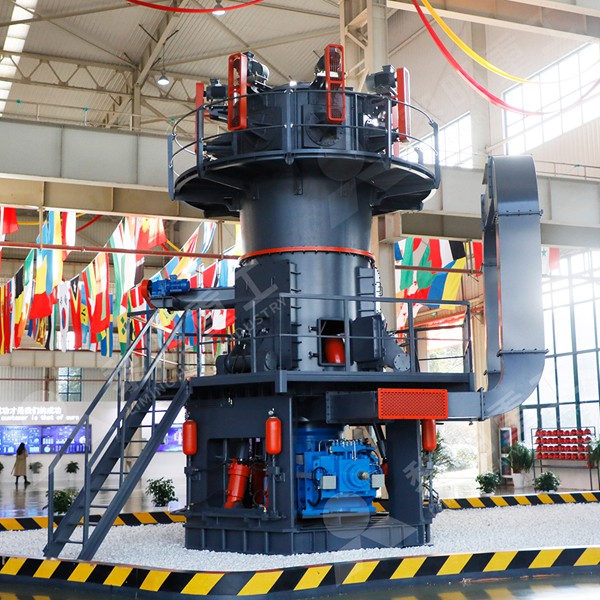
LM Vertical Roller Mill
Our LM Vertical Roller Mill is a flagship product for stucco production. It integrates drying, grinding, powder selection, and conveying into one efficient unit. The mill’s novel grinding device and automatic electric control system allow for easy adjustment of product fineness and output. For stucco, the typical fineness ranges from 200 to 325 mesh, which is achievable with this mill. The input size of 30-55 mm gypsum lumps is crushed by a jaw crusher before entering the mill. The LM vertical mill’s capacity of 10-400 T/H ensures it can handle continuous industrial demands. Its application extends beyond stucco to cement, power plant desulfurization, and non-metallic minerals.
MTW European Type Trapezium Mill
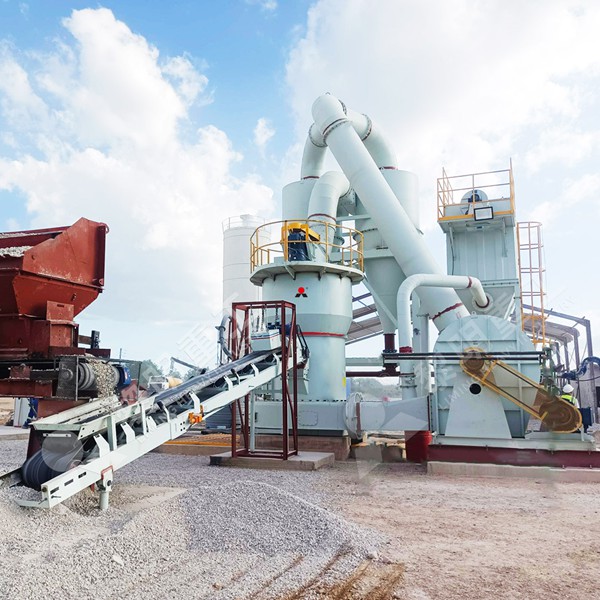
The MTW European Type Trapezium Mill is an upgrade of traditional Raymond and pendulum mills, featuring patented technology for higher productivity and energy efficiency. It is particularly effective for stucco production due to its ability to process gypsum with 6% humidity or less. The mill’s capacity ranges from 3 to 55 T/H, with input sizes up to 50 mm. The working principle involves a jaw crusher reducing large gypsum lumps, which are then fed via a variable-frequency belt feeder into the mill. Inside, the material is ground between the ring and rollers, then lifted by airflow to a separator. Oversized particles fall back for regrinding, while fine powder is collected as finished stucco. The system is closed-loop, with air recirculated through a blower, and a pulse dust collector ensures compliance with environmental standards. This mill is ideal for medium-scale stucco plants seeking high fineness and low operating costs.
Working Principle of Gypsum Roller Mills
In a typical gypsum roller mill system, raw gypsum is first crushed by a jaw crusher to the required size (e.g., 30-50 mm for MTW mill). The crushed material is stored in a hopper and then fed uniformly into the mill by a vibrating feeder or belt feeder. Inside the mill, the gypsum falls onto a rotating grinding table or is directed between rollers and a grinding ring. The rollers exert pressure on the material, pulverizing it into fine powder. Hot air or gas is introduced to dry the gypsum simultaneously, which is crucial for stucco production. The fine particles are carried upward by the airflow to a classifier or separator. Particles that meet the desired fineness pass through and are collected in a dust collector or cyclone, while coarse particles return to the grinding zone for further reduction. The air is recirculated in a closed system, reducing energy loss. This process ensures high efficiency, uniform product quality, and minimal dust emission, making it suitable for modern stucco plants.
Advantages of Using Liming Heavy Industry Mills for Stucco
Liming Heavy Industry’s gypsum roller mills offer several benefits tailored to stucco production:
- High Efficiency: Integrated drying and grinding reduce the need for separate equipment, saving space and energy.
- Consistent Quality: Advanced separators ensure tight particle size distribution, which is critical for stucco setting properties.
- Environmental Compliance: Pulse dust collectors capture fine particles, minimizing emissions.
- Versatility: Our mills can process gypsum with varying moisture levels, from dry to slightly damp.
- Low Maintenance: Robust design and wear-resistant materials extend service intervals, reducing downtime.
FAQ
- Q: What type of gypsum roller mill is best for small-scale stucco production?
A: For small-scale operations, the MTW European Type Trapezium Mill (capacity 3-55 T/H) or the MW Micro Powder Mill (0.5-25 T/H) are ideal. They offer precise fineness control and lower energy consumption. - Q: Can the same mill be used for both gypsum grinding and drying?
A: Yes, both LM Vertical Roller Mill and MTW mill integrate drying and grinding. Hot air is introduced into the mill to evaporate moisture from gypsum, making them suitable for stucco production. - Q: What fineness is required for stucco powder?
A: Typical stucco fineness ranges from 200 to 325 mesh (74 to 44 μm). Our mills can achieve this range with high accuracy. - Q: How does the closed-loop system benefit the environment?
A: The closed-loop system recirculates air and captures dust using a pulse dust collector, reducing particulate emissions to comply with environmental standards. - Q: What is the lifespan of grinding rollers in a gypsum roller mill?
A: With proper maintenance, grinding rollers can last 2-5 years, depending on gypsum hardness and operating conditions. Liming Heavy Industry uses wear-resistant materials to extend lifespan.


